







































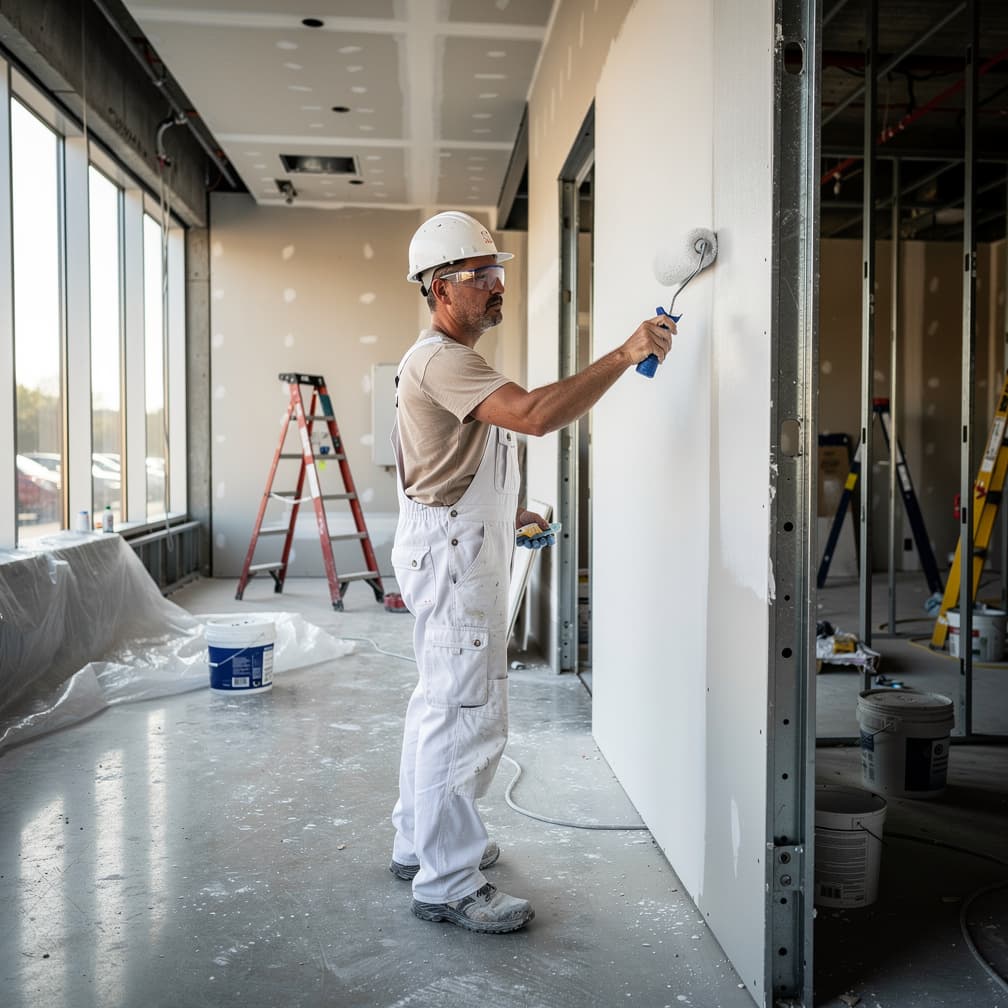

As a painting contractor in Cleveland, you are hired to change one surface and expected to leave every other surface exactly as you found it. That is the whole job description, and it is also the whole liability picture. Masking fails. A tarp slides. A sprayer tip drifts. The client's tile, carpet, or countertop absorbs the difference, and the repair comes out of your margin or out of a policy. Painting contractor insurance in Cleveland exists for the gap between careful work and a bad ten seconds. Put a crew on the payroll and a second obligation arrives, because injuries to your own people run on rules that change at the state line. The sections below take those two problems in order, with what each one costs.
What Makes Cleveland Different
About 31,500 businesses operate in Cuyahoga County, and that number is the commercial repaint market plus all of its paperwork. Volume of buildings is not the interesting part, because volume of different insurance requirements is. Every landlord, chain, and facility runs its own template, and none of them will ever adopt yours. You cannot memorize the standard, because at that scale there is no single standard to memorize. What you can do is buy limits and endorsements that clear the highest bar you have seen so far. Then every new request becomes a lookup rather than a purchase made under somebody else's start date. A repaint in Cleveland stops being an insurance conversation and goes back to being a paint conversation. That is what a crowded market actually costs you, paid once, up front, in limits.
Local Risk Factors in Cleveland
Severe storms in Cleveland arrive fast and leave a painting crew with two problems: a job site full of scattered staging and a schedule that has to be rebuilt. Wind lifts drop cloths, tips ladders, and can put an unsecured sprayer through somebody's window. Damage you cause to a client's property during a storm is still damage you caused, and General Liability may be asked about it depending on how the loss actually happened. Your own gear is a separate purchase entirely. Securing the site at the end of each day is the control nobody bills for, and it is the one that keeps this out of the Ohio claim files.
What Coverage Does a Painting Contractor in Cleveland Need?
General Liability
Builders, property managers, and homeowners ask for this one by name before a crew opens a can. It is the line that typically answers when your work damages somebody else's property or injures somebody who is not on your payroll. Correcting your own defective coat generally sits outside it, and so does damage to your own tools.
Example: A ladder shifts against a bay window and the glass cracks while the client watches from the driveway. The replacement and the trim repair could fall to this line, subject to your deductible.
Workers Compensation
Injuries to your own crew sit outside a liability form entirely, and that gap is what this line exists to close. Medical care and a share of lost wages for a painter hurt on a ladder are what it is generally built around. Thresholds and rates differ by state, and contracts often demand it regardless of what any threshold says.
Example: A painter misses the last rung carrying a five-gallon bucket and lands wrong on a concrete slab. The emergency visit and the weeks he cannot hold a roller are the sort of cost this coverage is meant to absorb.
Commercial Auto
The truck hauling your crew, your ladder rack, and a trailer full of sprayers is doing business work, and personal auto policies typically exclude exactly that use. This line is intended for vehicles owned by or titled to the business, and it prices on who is behind the wheel. Comprehensive is the piece that takes on hail, theft, and a tree in the parking lot.
Example: Your foreman rear-ends a sedan on the way to a job in Cleveland with the trailer still hitched. Injury claims and the other driver's repairs may run through this policy rather than out of your bank account.
Tools & Equipment (Inland Marine)
Liability forms look at what you did to other people; this one looks at what happened to your own portable equipment. Sprayers, compressors, ladders, staging, and sanders are what it generally schedules, whether they sit in a truck, a trailer, or a locked shop. Wear, mechanical breakdown, and flood are common exclusions worth reading before you buy.
Example: A trailer gets popped open overnight and two sprayers and a stack of ladders are gone by morning. What you can recover depends on the schedule you filed and on where that trailer was parked.
How Much Does Painting Contractor Insurance Cost in Cleveland?
Painting Contractor Insurance is a bundle of separate policies, priced separately. The ranges below are typical figures for Cleveland for each line, except workers compensation, which is set by the state fund; a quote prices each one against your own operations.
| Coverage | Typical range | What moves your price |
|---|---|---|
| General Liability Insurance | $85 - $300 per month | Industry and risk classification, annual revenue, number of employees |
| Workers Compensation Insurance | Set by the state fund | Employee classification codes, total annual payroll, experience modification rate |
| Commercial Auto Insurance | $160 - $440 per month | Fleet size and vehicle types, driver records and experience, coverage limits and deductibles |
| Inland Marine Insurance | $20 - $95 per month | Total insured value of the scheduled property, type and age of the equipment, where it is stored and how far it travels |
Prices shown are general estimates, not guaranteed rates or quotes. Your actual premium will depend on the insurer, coverage selected, business details, location, claims history, and other underwriting factors. Learn about our pricing methodology.
What Are the Insurance Requirements for a Painting Contractor in Cleveland?
Workers' comp is generally required once you have your first employee, through the state fund. Ohio runs workers' compensation through a state fund: employers buy coverage from the Ohio Bureau of Workers' Compensation (BWC), not from private carriers. Common exemptions include sole proprietors, partners, and LLC members. Confirm current requirements directly with the fund before you hire.
State auto liability minimums apply to business vehicles. Ohio's minimum auto liability limits are $25,000/$50,000/$25,000 (bodily injury per person / per accident / property damage). Contracts and lenders often require more than the state floor.
Where to verify licensing and coverage rules. The Ohio Department of Insurance publishes consumer guidance and current insurance requirements for Ohio businesses. When a contract or lease demands specific wording, the Ohio Department of Insurance's guidance is the authoritative place to check.
Get Your Painting Contractor Quote in Cleveland
Compare rates from multiple carriers. Free quotes, no obligation.
Operating in Cleveland
- Drop cloths bunch, cords stretch across doorways, and a wet edge looks dry from six feet away. A visitor who falls in that room becomes a third-party injury claim, and it starts with a phone call rather than a form.
- A builder in Cleveland can pull your crew off a site the moment a certificate expires, even with the work half finished. Getting reinstated takes longer than renewing on time ever would have.
- Lead and older coatings turn a routine repaint into a job with its own rules, its own paperwork, and its own underwriting questions. Assuming an older house is an ordinary job is how the surprises start.
- Crews ride to sites in company trucks with a rack overhead and a trailer behind, so one accident on the way across Cuyahoga County can involve payroll, tools, and strangers at once. That combination is what makes vehicle claims the expensive ones.
How to Buy: Advice for Cleveland Owners
Limits are the part of this decision you cannot fix after a claim, so spend your thinking there. A per-occurrence limit answers one loss, and the aggregate is the ceiling for the whole policy year. Two ruined floors and a fall in the same year can move you toward that ceiling faster than owners expect. Ask whether defense costs sit inside the limit or outside it, since legal bills eat the same pot under some forms. Deductibles run the other direction: a higher one lowers the monthly figure and hands you the first slice of every claim. For painting, small property damage claims are the frequent ones, so that trade-off is real. General Liability and Inland Marine can carry different deductibles, and nothing forces you to treat them alike. The Ohio Department of Insurance publishes consumer guidance on policy limits, and comparing quotes from participating carriers in Cleveland only works at matched limits.
FAQ
Painting Contractor Insurance in Cleveland: FAQ
Damage to a client's property while you work is usually a General Liability question, and the form can respond to the refinishing cost, subject to your deductible and your limit. Two things commonly sit outside it: redoing your own defective coat, and damage that was already there before you arrived. Photographs taken before the drop cloths go down settle that second argument fast.
Usually not. Personal auto policies typically exclude a vehicle in business use, and hauling crews, sprayers, and ladders between sites is business use. Commercial Auto is the form built for that, and it prices on drivers, radius, and what is titled to the business. A mismatch tends to surface after the accident, which is the expensive moment to learn about it.
General Liability does nothing for your own equipment, which surprises owners the first time it happens. Inland Marine is the line generally written for tools and portable gear that travel to job sites. What you can recover usually depends on the schedule you provided and on the circumstances, since theft from an unlocked vehicle is treated differently under many forms. Ask about that exact scenario before you buy.
Naming somebody as an additional insured extends rights under your policy to them for the work you perform on their property. Builders and building owners ask because they would rather your insurer answer a claim than theirs. It arrives as an endorsement, not as a line typed onto a certificate. Agreeing to it in a contract without buying it leaves you owing something you do not have.
It evidences that a policy existed on the day it was issued, and little else. A certificate does not amend the policy, and it does not create additional insured status on its own. That is why clients ask for the endorsement separately. If a client in Cleveland hands you a sample certificate to match, use it, because it shows exactly what they will accept.
Per occurrence is the ceiling on one claim. The aggregate is the ceiling on everything inside the policy year. A painting outfit with three small property damage claims and one injury can approach the aggregate without ever testing the per-occurrence figure. Ask whether defense costs come out of the limit as well, since that answer changes what the number is really worth.
Sources
- 1.U.S. Census Bureau, County Business Patterns (2022), Cuyahoga County(Cuyahoga County has about 31,500 business establishments.)
- 2.Ohio Department of Insurance(Ohio Department of Insurance publishes consumer guidance for insurance buyers.)


