







































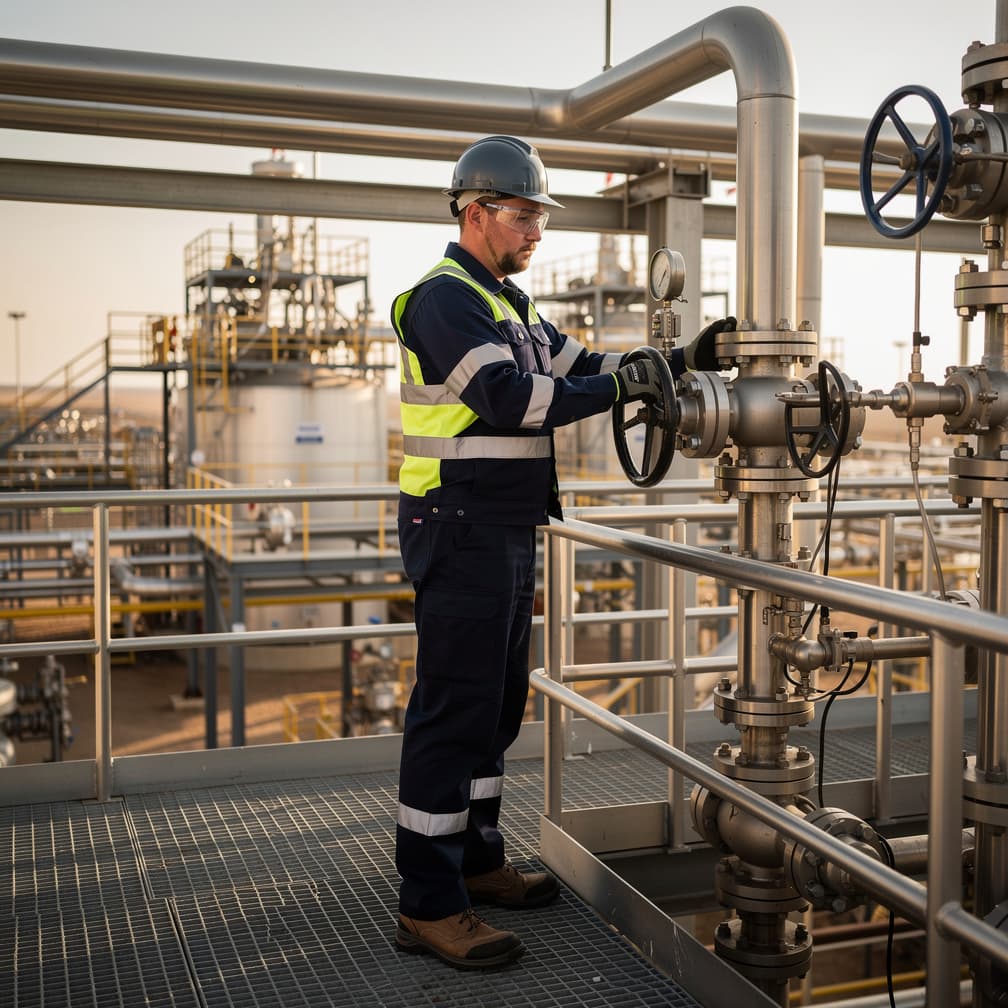

A wrench slips off a valve stack and lands on a third party's boot, and the operator's incident report starts moving before your crew leaves the pad. That is the ordinary shape of a claim in this trade, and it is why oil and gas contractor insurance in Columbus gets bought around contracts rather than around comfort. The master service agreement you signed already fixed the limits, the endorsement wording, and who defends whom. Your quote turns on payroll, the trucks on your list, and the losses sitting behind you. This page lays out which lines the field work actually tests, what a certificate has to say before a gate opens, and how quotes from participating carriers in Ohio split on one identical submission.
What Makes Columbus Different
Bigger operators run vendor compliance through a portal, and a portal has no interest in your explanation. It reads the expiration date, checks the limit against the contract, and flags you without a phone call. A flag can pull your crew off a schedule in Columbus while an office fixes a document. The fix usually needs your carrier, which means the delay is not yours to control. Busy markets also put more parties on one pad, and more parties mean more ways a single incident splits. A dropped tool can produce a claim from a company you have never billed or met. Ask what a policy in Ohio does about that before the portal asks you for proof. Paperwork discipline is cheap; the alternative is a stalled crew and an operator with plenty of options.
Local Risk Factors in Columbus
Scattered tools, a dented truck, and a half-secured site are the aftermath a straight-line wind leaves behind, often faster than any warning. The injury risk climbs in that scramble, because a crew rushing to tie things down is a crew more likely to get hurt, and workers compensation is the line standing behind a hand injured on the job. Its price follows your loss history, so a bad storm can raise a premium a year later through claims rather than weather. Damage to the equipment itself is a separate schedule question. Confirm how both are handled with a carrier in Franklin County before the season near Columbus that tends to bring these cells.
What Coverage Does an Oil & Gas Contractor in Columbus Need?
General Liability
Operators and landlords usually demand this before your crew mobilizes, because it is the line that answers third-party claims: a dropped tool that injures someone at a wellsite, or a customer's property damaged during your work. It generally does not touch your own tools or your employees' injuries, which sit on other lines.
Example: A length of pipe slips from a rack and catches a third-party inspector on the shoulder; the medical claim and the lawyer's letter that follow are the kind of thing this coverage may take on.
Workers Compensation
A hand hurt on a pad, a back wrenched loading a trailer, or an occupational illness from long exposure is what this line is built around, standing behind medical bills and a share of lost wages. It is priced against your payroll and class codes, and it does not respond to third-party injuries.
Example: A roustabout slips on an iced walkway and cannot work for a month; the treatment and the wage replacement that follow are where this coverage tends to step in.
Commercial Auto
Service trucks running from the yard to a lease road are the exposure here, and this line may respond to a wreck that injures someone or damages their property, plus physical damage to your own vehicle where that is added. A borrowed truck or a rented pump raises hired and non-owned questions a base policy may not answer.
Example: A crew truck rear-ends a flatbed on the way to a wellsite near Columbus; the other driver's repairs and injury claim are what this coverage is meant to address.
Tools & Equipment (Inland Marine)
What a general liability policy leaves out, this line picks up: the tongs, gauges, and portable equipment that travel with your crew on and off a lease. It can respond when gear is stolen, damaged in transit, or harmed by a covered peril, though wear and tear and, commonly, flood sit outside it.
Example: A trailer of hydraulic tongs disappears from a lease overnight; the cost to replace them fast, before a crew sits idle for a week, is what this coverage can help offset.
Commercial Umbrella
When a master service agreement demands limits higher than your primary policies carry, this line sits on top of them and lifts the ceiling, usually over general liability and commercial auto. It follows those underlying policies rather than replacing them, so it may not attach if the required underlying limits are not actually in place.
Example: A pad injury becomes a claim that blows past your general liability limit; the amount sitting above that ceiling is the part an umbrella might respond to.
How Much Does Oil & Gas Contractor Insurance Cost in Columbus?
Oil & Gas Contractor Insurance is a bundle of separate policies, priced separately. The ranges below are typical figures for Columbus for each line, except workers compensation, which is set by the state fund; a quote prices each one against your own operations.
| Coverage | Typical range | What moves your price |
|---|---|---|
| General Liability Insurance | $370 - $1,325 per month | Industry and risk classification, annual revenue, number of employees |
| Workers Compensation Insurance | Set by the state fund | Employee classification codes, total annual payroll, experience modification rate |
| Commercial Auto Insurance | $440 - $1,225 per month | Fleet size and vehicle types, driver records and experience, coverage limits and deductibles |
| Inland Marine Insurance | $80 - $370 per month | Total insured value of the scheduled property, type and age of the equipment, where it is stored and how far it travels |
| Commercial Umbrella Insurance | $200 - $800 per month | Umbrella limit requested, limits carried on the underlying policies, loss history on those underlying policies |
Prices shown are general estimates, not guaranteed rates or quotes. Your actual premium will depend on the insurer, coverage selected, business details, location, claims history, and other underwriting factors. Learn about our pricing methodology.
What Are the Insurance Requirements for an Oil & Gas Contractor in Columbus?
Workers' comp is generally required once you have your first employee, through the state fund. Ohio runs workers' compensation through a state fund: employers buy coverage from the Ohio Bureau of Workers' Compensation (BWC), not from private carriers. Common exemptions include sole proprietors, partners, and LLC members. Confirm current requirements directly with the fund before you hire.
State auto liability minimums apply to business vehicles. Ohio's minimum auto liability limits are $25,000/$50,000/$25,000 (bodily injury per person / per accident / property damage). Contracts and lenders often require more than the state floor.
Where to verify licensing and coverage rules. The Ohio Department of Insurance publishes consumer guidance and current insurance requirements for Ohio businesses. When a contract or lease demands specific wording, the Ohio Department of Insurance's guidance is the authoritative place to check.
Get Your Oil & Gas Contractor Quote in Columbus
Compare rates from multiple carriers. Free quotes, no obligation.
Operating in Columbus
- Tools walk. A trailer of hydraulic tongs and torque wrenches left on a lease overnight is a target, and the equipment limit you set at binding decides how fast you replace them and get a crew back to work.
- When a service truck goes down after a wreck, the replacement rental and a crew that can cover your scope may both be a long drive from Columbus, and the operator's schedule does not pause while you find them.
- Equipment rental desks want proof of coverage before they release a machine, and a job that depends on that machine stops until the certificate clears. The document, not the deposit, is what frees the rig.
- The master service agreement, not your carrier, sets your real program: limits, endorsements, notice, and who defends whom are fixed in the insurance exhibit before a carrier in Ohio ever returns a quote.
How to Buy: Advice for Columbus Owners
Rented equipment is where a field contractor quietly takes on risk that its own policy never contemplated. A rental contract can hold you responsible for the machine from the moment it leaves the yard, and Inland Marine does not automatically extend to gear you do not own unless the policy says so. Ask that question before you sign the rental, not after the pump goes down. General Liability still answers third-party injury and property damage during the work, which is a separate exposure from the equipment itself. Keep your owned-equipment schedule current in the same breath, since a stolen trailer near Columbus is the more common loss. A field program in Ohio varies by carrier on exactly these terms, so compare quotes from participating carriers on what each form actually allows, weighing the wording as heavily as the headline price.
FAQ
Oil & Gas Contractor Insurance in Columbus: FAQ
It can. The per-occurrence limit is the most a policy may pay for a single incident, while the aggregate caps everything across the term, so a run of pad injuries and property claims can eat the aggregate while each occurrence limit still looks healthy. That matters when a contract sets a required limit, because a partly exhausted aggregate can leave you technically short mid-job.
That is what Inland Marine is generally built for, since it tends to travel with equipment on and off a site near Columbus rather than staying at a fixed address. The catch is the limit: a schedule written years ago may not reflect what a full trailer of tongs and torque tools costs to replace today. Keep the values current so a claim does not arrive short of the loss.
Rules on who counts as an employee vary by state, and uninsured subcontractors can sometimes be treated as your employees at audit. The safe move is to collect certificates from every sub and confirm how Ohio handles it. The Ohio Department of Insurance publishes the current requirements for workers compensation coverage. Assuming a sub is covered is how an unexpected audit bill starts.
A hired auto provision may extend to a rented truck, but it is not automatic, and a personal vehicle a hand borrows raises a separate non-owned question. Confirm both are on the policy before a driver improvises. A wreck on a lease road near Columbus is your largest moving exposure, and the schedule you hand the carrier decides what actually responds.
The master service agreement, not the carrier, usually sets the floor, and large operators standardize those exhibits at limits a starter program does not reach. A Commercial Umbrella can lift your limits to meet the contract, but it has to sit over qualifying underlying policies. If the underlying limits are wrong, the umbrella may not attach where the exhibit assumes it does.
A deductible comes off your side of every loss, so a low one buys a smaller out-of-pocket hit and a higher premium, while a high one saves premium until two things break in one week. Treat it as a cash decision rather than a coverage decision, and size it to what your business can absorb without stalling a crew mid-job.
Sources
- 1.Ohio Department of Insurance(Ohio Department of Insurance publishes consumer guidance for insurance buyers.)


