







































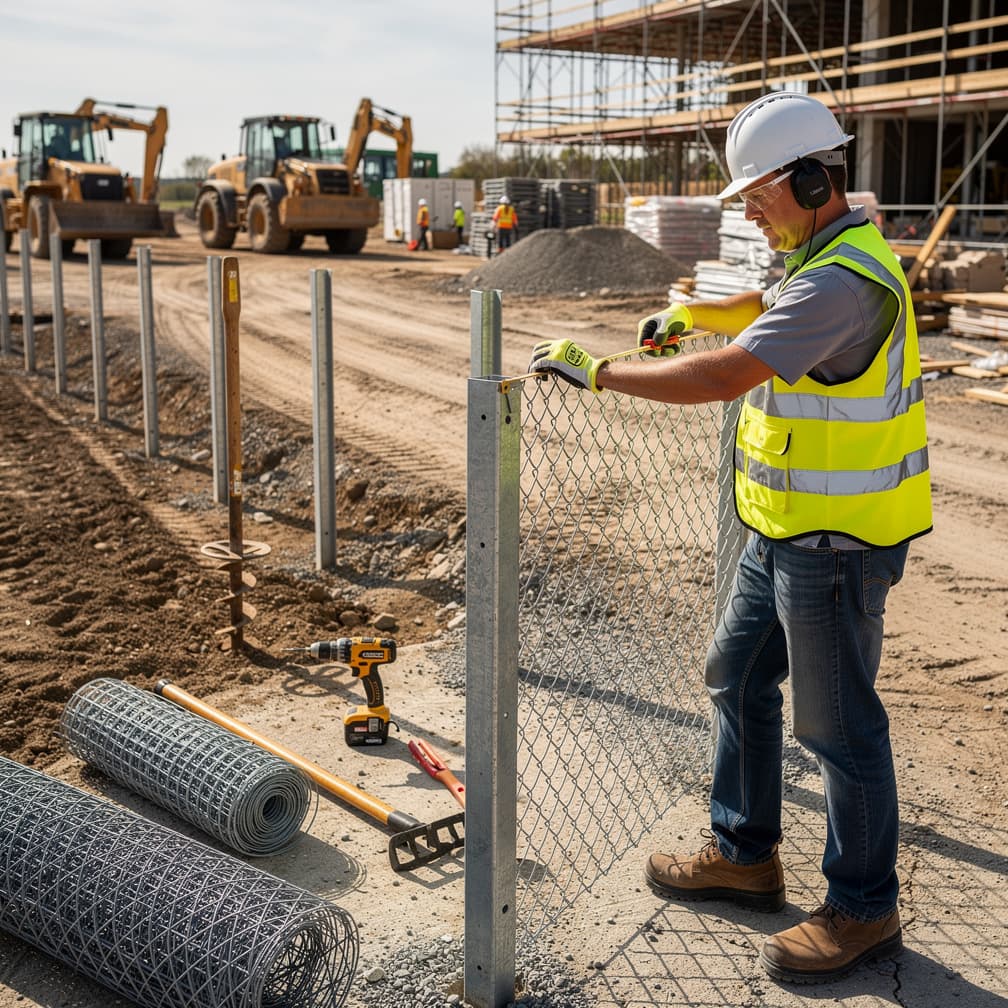

A post hole opened on the wrong side of a boundary line becomes a legal problem before it becomes a construction problem. The neighbor who complains never signed your contract, and they can still put your name in a filing. That is the exposure behind fencing contractor insurance in Dayton, and it is why owners buy before the first load of panels leaves the yard. Pulling posts, re-staking the line, and resetting rails costs real money, and the argument over who pays starts within a day. General Liability sits in the middle of that fight, though what it takes on depends on the form and the limits you chose. This page walks through the exposures a Dayton fence job actually creates, and where the paperwork usually gets stuck.
What Makes Dayton Different
Certificates are the currency of this trade, and they get demanded by people who never touch a shovel. A property manager can hold your start date until a current certificate names the right entity. The homeowner rarely asks; the third party standing behind the homeowner tends to. Getting a certificate reissued midweek is easy when your policy already contains the wording it needs. It is not easy when the wording has to be endorsed and the carrier wants a week to think. So the real question for a Dayton contractor is what your paper can say, and how fast. Ask which entities a policy will add and how the request actually reaches the carrier. That answer decides whether a signed Dayton job starts on time or waits.
Local Risk Factors in Dayton
Severe storms hit a fence contractor twice: they flatten what you installed and they interrupt what you were installing. A run that goes down in straight-line wind brings a phone call about workmanship even when the wind was the whole story, and defending that is its own cost. General Liability is the line most likely to be tested by a third-party claim after a panel travels, though what it takes on depends on the facts and the form. The bigger operational hit is the stall: open post holes, stacked material, and an idle crew on a Dayton lot nobody is watching. Document the site at every stop, because a storm claim in Montgomery County gets decided on the photographs somebody took before it rather than the ones taken after.
What Coverage Does a Fencing Contractor in Dayton Need?
General Liability
The neighbor, the visitor, and the property you were never hired to touch: that is who this line is about. General Liability may respond when a fence lands over a boundary, an auger opens a sprinkler line, or somebody trips near an open hole. Redoing your own defective run is commonly excluded, and that gap surprises people.
Example: A crew sets forty feet of cedar three feet inside the neighbor's yard, and the neighbor demands removal plus damages. Defense and the third-party claim are what a liability form is generally meant to take on.
Workers Compensation
Backs, hands, and knees do the work in this trade, and an employer carries the cost when one gives out. Workers Compensation is built for employee injury, and it typically handles medical care and lost wages while generally limiting an employee's ability to sue you. Rules vary by state, and the Ohio Department of Insurance publishes the current requirements for employers.
Example: A helper lifting a wet post on uneven ground tears something in his back and misses six weeks. The medical bills and part of the wages he does not earn may fall to this policy rather than to you.
Commercial Auto
Nothing reaches the job without the truck, and personal auto forms commonly exclude business use. Commercial Auto is written for the vehicles, trailers, and hired equipment that haul posts and panels, and it typically addresses injury to others plus damage to the vehicle itself depending on what you buy. Tools inside generally sit on another form.
Example: A gust catches a privacy panel off the trailer on the way to a Dayton job and it goes through the windshield behind you. The other driver's injuries and repairs are the kind of loss this policy may take up.
Tools & Equipment (Inland Marine)
Augers, post drivers, compressors, levels, and the saw all live on a trailer rather than in a shop. Inland Marine is meant for property that moves, and it could respond to theft or damage between sites, subject to conditions about locks, attendance, and what you can prove you owned. Wear and tear is not a covered peril.
Example: A trailer gets broken into overnight at a stalled Dayton site, and the post driver and compressor are gone by morning. Replacing them quickly is what this coverage is intended to make possible, subject to the deductible.
How Much Does Fencing Contractor Insurance Cost in Dayton?
Fencing Contractor Insurance is a bundle of separate policies, priced separately. The ranges below are typical figures for Dayton for each line, except workers compensation, which is set by the state fund; a quote prices each one against your own operations.
| Coverage | Typical range | What moves your price |
|---|---|---|
| General Liability Insurance | $120 - $380 per month | Industry and risk classification, annual revenue, number of employees |
| Workers Compensation Insurance | Set by the state fund | Employee classification codes, total annual payroll, experience modification rate |
| Commercial Auto Insurance | $200 - $575 per month | Fleet size and vehicle types, driver records and experience, coverage limits and deductibles |
| Inland Marine Insurance | $25 - $120 per month | Total insured value of the scheduled property, type and age of the equipment, where it is stored and how far it travels |
Prices shown are general estimates, not guaranteed rates or quotes. Your actual premium will depend on the insurer, coverage selected, business details, location, claims history, and other underwriting factors. Learn about our pricing methodology.
What Are the Insurance Requirements for a Fencing Contractor in Dayton?
Workers' comp is generally required once you have your first employee, through the state fund. Ohio runs workers' compensation through a state fund: employers buy coverage from the Ohio Bureau of Workers' Compensation (BWC), not from private carriers. Common exemptions include sole proprietors, partners, and LLC members. Confirm current requirements directly with the fund before you hire.
State auto liability minimums apply to business vehicles. Ohio's minimum auto liability limits are $25,000/$50,000/$25,000 (bodily injury per person / per accident / property damage). Contracts and lenders often require more than the state floor.
Where to verify licensing and coverage rules. The Ohio Department of Insurance publishes consumer guidance and current insurance requirements for Ohio businesses. When a contract or lease demands specific wording, the Ohio Department of Insurance's guidance is the authoritative place to check.
Get Your Fencing Contractor Quote in Dayton
Compare rates from multiple carriers. Free quotes, no obligation.
Operating in Dayton
- Your install truck and trailer spend the day parked where the work is, which is also where people back into things, and the claim often names you before anyone finds the other driver.
- Crews load and unload panels a dozen times a day on a Dayton install, and the moment a panel leaves the trailer is the moment two different policies start arguing about whose claim it is.
- A homeowner association can require a specific style, height, or color, and a fence built to the customer's wishes rather than the rules gets torn out at somebody's expense.
- Rain stops a fence job cold, and a stalled site with stacked panels and open holes stays yours all week. A stalled Dayton site is an exposure question rather than only a scheduling one.
How to Buy: Advice for Dayton Owners
Certificates are a workflow rather than a document, and the workflow is what fails. Decide now who requests them, from which contact, and how fast that contact answers, because a job start can hang on it. Ask a prospective carrier whether blanket additional-insured wording is available, since per-request endorsements add friction to every Dayton job. Keep a current copy where your office can reach it without calling anyone. Note your renewal date on the same calendar as your install schedule, because a lapse discovered by a property manager is a lapse that costs an account. General Liability is the line most certificates evidence, and the wording on it is what a counterparty actually reads. The Ohio Department of Insurance publishes the current requirements for proof of business coverage. Then compare what participating carriers can put in writing, not only what they charge.
FAQ
Fencing Contractor Insurance in Dayton: FAQ
Rarely, and that gap surprises one-truck operations every year. Personal auto forms commonly exclude vehicles used in a business, so an accident while hauling panels may be denied under the policy you assumed would answer. Commercial Auto exists for that use, and it also raises the question of hired and borrowed vehicles for the days you rent a trailer. Ask before the hitch, not after.
It is an endorsement that extends rights under your policy to another party for the work you do for them. Contracts demand it so the party hiring you can lean on your coverage instead of their own when something goes wrong. A certificate alone does not create it. The endorsement does, so ask which form a carrier attaches and whether blanket wording is available before you promise anything.
Per-occurrence caps what one event can spend. The aggregate caps the policy year. A contested boundary job can consume a real share of the aggregate before anyone decides you were right, because defense costs start accruing immediately. Two of those in twelve months leaves less room than owners expect for the third. Ask whether defense sits inside or outside the limit, since that changes what the same number buys.
Usually the question is the wording rather than the carrier. A request typically names the entity, the limit, and the endorsements the contract requires, and a certificate that misses one gets bounced. Sort the wording out at the quote stage, because reissuing paper midweek is easy only when the policy already contains what is being asked for. A Dayton job start can sit on that document.
Coverage generally follows the operations described on your application, so the honest answer depends on what you told the carrier. If jobs regularly run past the edge of Montgomery County, the travel radius on your Commercial Auto answer matters, and a low number entered for convenience can create an argument later. Describe your real job map before binding. It is a free correction now and an expensive one during a claim.
Payroll broken out by the kind of labor, annual mileage, a vehicle list with drivers, a schedule of the tools you haul, and an honest description of how deep the work goes. Gate operators, stonework, and retaining structures belong in that description even when they are a small share of revenue. Vague inputs get priced defensively, so the effort you spend here comes back as a real comparison.
Sources
- 1.Ohio Department of Insurance(Ohio Department of Insurance publishes consumer guidance for insurance buyers.)


