







































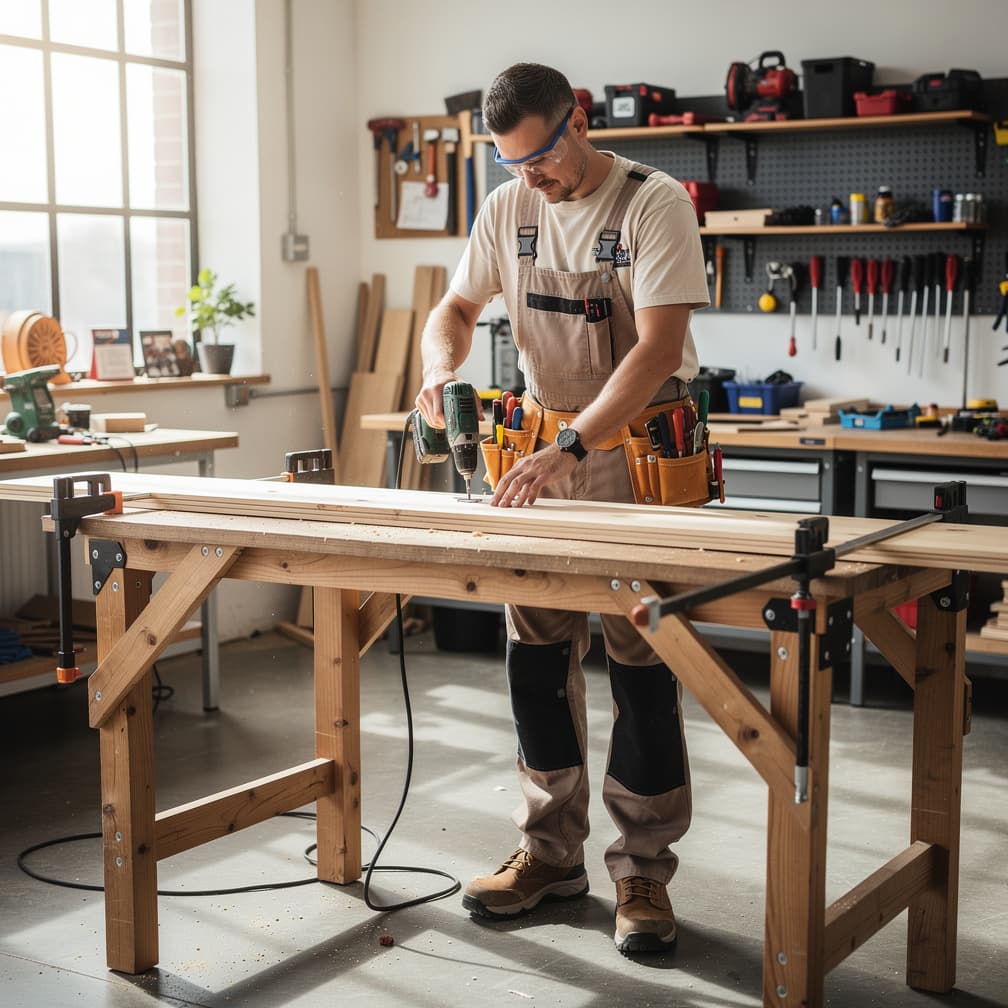

A drill bit finds a water line behind drywall, and the repair lands on you, not on the homeowner who hired you. Handyman insurance in Dayton exists for that half second, and for the ladder that walks out from under you, and for the ceiling fan that comes down with a chunk of plaster. Residential repair work happens inside occupied homes, so the property you damage is usually the property you were hired to improve. That is why a homeowner can ask for proof of coverage before you carry a toolbox through the door, and why a property manager can ask for wording on top of that. Rates move with your payroll, your vehicle, your claims history, and the tasks you actually accept. Comparing quotes from participating carriers is the fastest way to see how those pieces price out in Ohio.
What Makes Dayton Different
Landlords are the most consistent source of insurance demands a handyman will ever meet. Turnover work on rentals arrives in batches, and batches come with vendor terms attached. A landlord can require you to name their LLC as an additional insured on every unit touched. Say yes to that once and you have a standing obligation, rather than a one-time favor. Renewals then matter more, since a lapse breaks the promise across every property at once. A Montgomery County portfolio owner with forty doors can drop you with one email and never explain. Calendar the renewal, confirm the endorsement carried over, and send the new certificate unprompted. Doing that in Dayton keeps you on the list while competitors get quietly removed.
Local Risk Factors in Dayton
Severe storms hand a handyman a week of the same three jobs: fences down, siding off, water coming through a window that no longer closes. The work is outdoors, fast, and full of debris, which is a different risk profile than an ordinary day spent hanging blinds. Nails, torn metal, and a saw used in a hurry produce injuries, and a hurt helper in Dayton becomes a Workers Compensation question before it becomes anything else. The storm itself creates no liability for you; what you do afterward can. Keep the debris pile off the sidewalk, keep the ladder off soft ground, and tell the carrier in Ohio when you take storm work you would normally decline.
What Coverage Does a Handyman in Dayton Need?
General Liability
Clients ask about this one by name, and it is the line most vendor packets, leases, and contracts are actually demanding. For a handyman it can help cover third-party injury and damage to a customer's property caused by your work: the ceiling that came down, the guest who slipped past your cords. Your own faulty workmanship is typically excluded, and so is property left in your care.
Example: A ceiling fan bracket lets go a week after the install and the fixture takes out a glass table below; General Liability could help cover the table and the injury claim that follows, though the bracket itself is likely your own cost.
Commercial Auto
A personal auto policy commonly stops the moment the vehicle is used for the business, which is the gap this line exists to close. It can respond to accidents involving a work truck or van hauling ladders, lumber, and gear between jobs, including damage you cause to other people and, where you add physical damage coverage, to the vehicle itself. Tools inside ride on a separate form.
Example: You back a loaded van into a client's garage door while turning around in a narrow driveway; Commercial Auto can respond to the door and the vehicle, subject to the deductible you picked.
Tools & Equipment (Inland Marine)
Business tools sit outside a homeowners policy, and a liability policy does not answer for your own stolen property either. This is the form written for gear that moves: drills, saws, ladders, meters, and the contents of a locked van or a jobsite box. It usually pays against a schedule you file, so the values you list are the values you get back. Wear and tear stays excluded.
Example: A truck window goes in overnight outside a Dayton jobsite and the tool bags go with it; Inland Marine might pick up the scheduled gear, with the payout shaped by whether you chose replacement cost or actual cash value.
Workers Compensation
Helpers change everything. Once somebody works for you, their injury stops being a liability question, and this is the coverage built for it: medical care and lost wages for an employee hurt on the job, plus the part that may answer if they sue. Rules and rates differ by state, and a sole proprietor is commonly excluded by default unless the coverage is elected.
Example: Your helper steps off a ladder wrong while handing up a light fixture and breaks a wrist in Dayton; Workers Compensation is generally where the medical bill and the missed weeks get handled.
How Much Does Handyman Insurance Cost in Dayton?
Handyman Insurance is a bundle of separate policies, priced separately. The ranges below are typical figures for Dayton for each line, except workers compensation, which is set by the state fund; a quote prices each one against your own operations.
| Coverage | Typical range | What moves your price |
|---|---|---|
| General Liability Insurance | $70 - $220 per month | Industry and risk classification, annual revenue, number of employees |
| Commercial Auto Insurance | $140 - $360 per month | Fleet size and vehicle types, driver records and experience, coverage limits and deductibles |
| Inland Marine Insurance | $15 - $55 per month | Total insured value of the scheduled property, type and age of the equipment, where it is stored and how far it travels |
| Workers Compensation Insurance | Set by the state fund | Employee classification codes, total annual payroll, experience modification rate |
Prices shown are general estimates, not guaranteed rates or quotes. Your actual premium will depend on the insurer, coverage selected, business details, location, claims history, and other underwriting factors. Learn about our pricing methodology.
What Are the Insurance Requirements for a Handyman in Dayton?
Workers' comp is generally required once you have your first employee, through the state fund. Ohio runs workers' compensation through a state fund: employers buy coverage from the Ohio Bureau of Workers' Compensation (BWC), not from private carriers. Common exemptions include sole proprietors, partners, and LLC members. Confirm current requirements directly with the fund before you hire.
State auto liability minimums apply to business vehicles. Ohio's minimum auto liability limits are $25,000/$50,000/$25,000 (bodily injury per person / per accident / property damage). Contracts and lenders often require more than the state floor.
Where to verify licensing and coverage rules. The Ohio Department of Insurance publishes consumer guidance and current insurance requirements for Ohio businesses. When a contract or lease demands specific wording, the Ohio Department of Insurance's guidance is the authoritative place to check.
Get Your Handyman Quote in Dayton
Compare rates from multiple carriers. Free quotes, no obligation.
Operating in Dayton
- Invoices get held rather than disputed. A missing certificate is the reason accounting gives, and it can sit unpaid for weeks after the work is already finished.
- Most of your work happens in rooms where people live, so the floor you cover with a drop cloth is also the floor a child runs across while you are on a ladder.
- Tools live in a vehicle overnight, which is where they get stolen, and a truck parked at your own house in Dayton is still a jobsite for the purposes of that loss.
- Scope creep arrives as a question: while you are here, could you look at the panel. The answer decides whether the job stays inside the work your policy describes.
How to Buy: Advice for Dayton Owners
Take a photo of everything in your van and price it honestly; that inventory is the fastest hour of insurance work you will ever do. Handymen consistently underestimate the total, because gear accumulated over ten years never arrived as one purchase. That number drives Inland Marine, and it decides whether a stolen van sets you back a week or a year. While you are looking at the van, check whether it sits on a personal policy, because business use is commonly excluded and Commercial Auto is the line meant for a work vehicle hauling materials. A ladder rack and a company name on the door are facts an adjuster notices. Check the Ohio Department of Insurance's guidance before deciding how to insure a vehicle used for both work and errands. Then compare quotes from participating carriers in Dayton with the real inventory attached.
FAQ
Handyman Insurance in Dayton: FAQ
Not by a homeowners policy, which typically excludes business property, and not automatically by a liability policy either. Inland Marine is the form written for tools that move, and it usually pays against a schedule you provide. Read the storage conditions, because many forms treat a locked vehicle differently from an open trailer or an unlocked garage. Check whether the payout is replacement cost or actual cash value, since a ten-year-old saw depreciates.
It is an endorsement that extends part of your policy to another party, usually the client who hired you. A property manager asks for it so a claim arising from your work can be handled under your policy rather than theirs. The certificate alone does not create it; the carrier has to add it, and it often carries a cost. When a contract requires it, get it issued before the first day on site.
Often not, and this one catches people. Liability forms commonly exclude your own work product, so the bracket you mounted wrong in a Dayton living room stays your problem. The damage that bracket causes to the wall, the television, and the floor is a separate question and may well be picked up. Learn the distinction before an adjuster explains it to you: your labor is rarely insured, the consequences of it can be.
Yes, through the contract, and that is the most common way limits actually get chosen in this trade. A vendor agreement or a lease can name the limit, the wording, and the entity to be added. Nothing forces you to sign it, though signing it and not carrying it is the worst of the available options. Price the endorsement before you agree to the job, then decide whether the work still makes sense.
The per-occurrence limit is the most a policy may pay for one claim; the aggregate is the ceiling for the whole term. A handyman touching a dozen homes a month in Dayton can reach an aggregate through a run of small claims, without ever having one catastrophic loss. Frequency matters here as much as severity. Ask what the aggregate is before you assume a single number describes your position.
A certificate of insurance is the standard document, and the carrier or the agent who wrote the policy issues it. The certificate names you, the coverage, the limits, and the dates. It does not amend the policy, so a client who needs additional insured status needs an endorsement as well. If a manager in Dayton asks for proof, ask what entity to name and where to send it, because a certificate with the wrong name buys you nothing.
Sources
- 1.Ohio Department of Insurance(Ohio Department of Insurance publishes consumer guidance for insurance buyers.)


