







































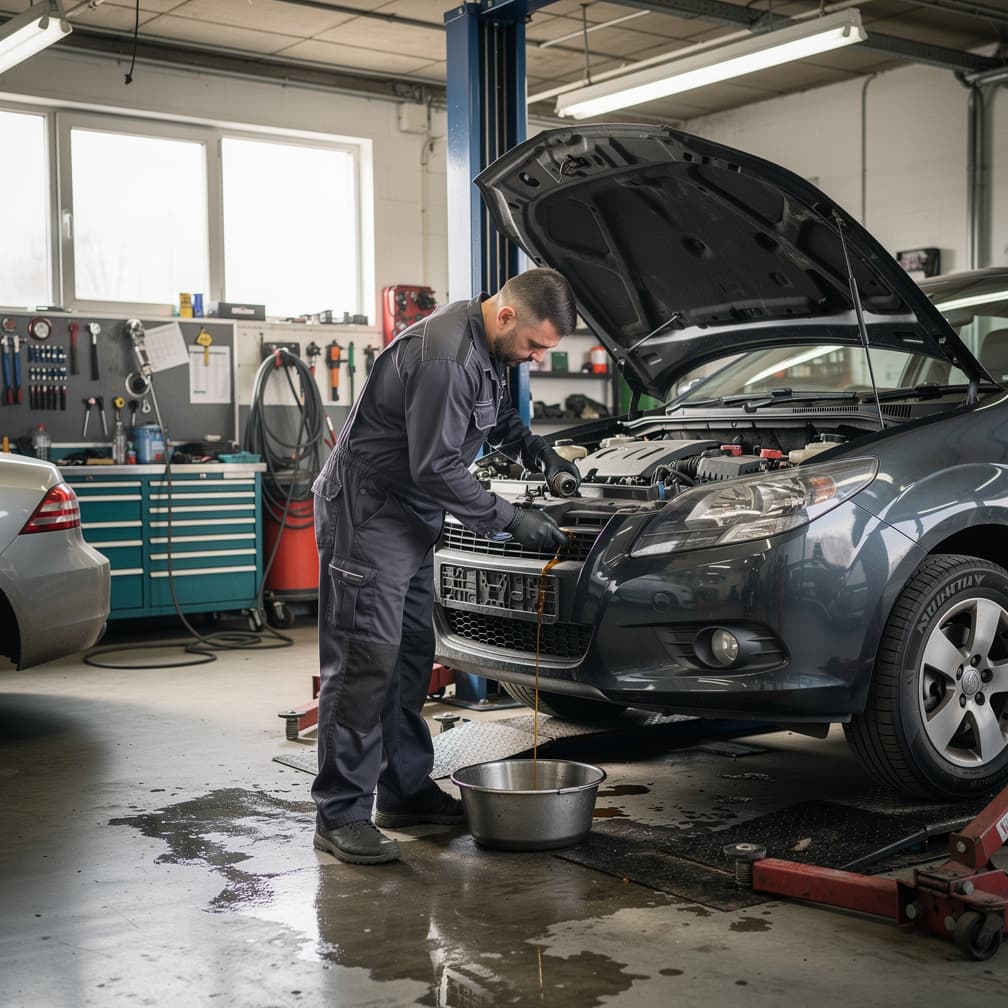

Gravity does the damage nobody planned for. A car left out of park drifts off the ramp, a bumper finds a tool cart, and a ten minute service turns into an argument about who pays for the bodywork. That is the everyday shape of oil change station insurance in Dayton: small, fast, physical losses with a customer watching from the waiting room. Every vehicle in your bay belongs to somebody else, so the moment you touch it you inherit the dispute over what it looked like before. Your payroll, your bay count, and your loss history move the price far more than anything you write on the application. Participating carriers in Ohio read the same submission and come back with different numbers, which is the whole reason to compare before you buy.
What Makes Dayton Different
Certificates travel ahead of the work in this trade, and the party asking rarely explains why they want one. A landlord in Dayton can withhold the keys until a certificate names the building owner exactly right. A fleet account can hold back its vehicles for the same reason, and neither party is bluffing. The demand is administrative, so it lands on whoever opens the mail rather than whoever turns wrenches. That is the quiet arithmetic of this shop: paperwork gates revenue you already agreed to earn. Wrong entity names, missing addresses, and stale expiration dates get certificates bounced back without any explanation. Keep the legal name on your policy identical to the name on your lease and your invoices. Participating carriers in Ohio issue certificates on their own schedule, so build lead time into every renewal.
Local Risk Factors in Dayton
Tornado and severe storm damage arrives fast and unevenly. The unit beside yours loses a roof while your bay doors get pulled off their tracks and the lifts underneath sit untouched. Debris across the lot dents customer cars that were fine an hour earlier, and those cars are not your property. Commercial Property may respond to wind damage to the building, your equipment, and your stock of oil and filters, subject to the values you stated at purchase. Vehicles in your care are a separate argument that turns on care, custody, and control wording. Find out which of the two a Dayton claim would fall under, and confirm it before the next Ohio storm line.
What Coverage Does an Oil Change Station in Dayton Need?
General Liability
Landlords, franchise brands, and fleet accounts ask for this one by name, and it answers to the public rather than to you. Third party bodily injury and property damage arising from your operations sit inside it, subject to the limits you buy. Damage to a customer's vehicle in your care usually does not, and neither does pollution.
Example: A customer leaves the waiting area, crosses a patch of fresh oil near the bay door, and lands hard on the concrete. A claim like that is typically where this coverage starts working.
Commercial Property
Lifts, pumps, compressors, air lines, the parts shelf, the waiting room, and your inventory of oil and filters are what this line is built around, plus the building itself if you own it. The values you state at purchase drive what a partial loss settles at. Flood and ordinary wear typically sit outside it.
Example: Fire starts in an electrical panel behind the parts wall overnight and takes the shelving, the stock, and a compressor with it. A loss on that scale is generally what this line is meant to answer.
Workers Compensation
Your customers are somebody else's problem here; this line concerns only the people on your payroll. Medical care and lost wages after a technician is hurt lifting a wheel, handling hot fluid, or moving a car are what it is intended for. Who must carry it varies by state, and the Ohio Department of Insurance publishes the current requirements.
Example: A technician wrestling a seized drain plug wrenches a shoulder and misses three weeks of shifts. The wage and medical side of that absence is what this coverage commonly picks up.
Business Owners Policy
Rather than buying liability and property separately, a smaller shop can take them as one package, often with a limited amount of lost income folded in. Many quick lube operations qualify, though fluid storage or building size can push a shop out of it. The sub-limits inside the package are where the real reading lives.
Example: A storm tears the canopy off the apron and closes both bays for nine days in Dayton. The repairs and some of the income you did not earn can fall inside one package like this.
How Much Does Oil Change Station Insurance Cost in Dayton?
Oil Change Station Insurance is a bundle of separate policies, priced separately. The ranges below are typical figures for Dayton for each line, except workers compensation, which is set by the state fund; a quote prices each one against your own operations.
| Coverage | Typical range | What moves your price |
|---|---|---|
| General Liability Insurance | $80 - $280 per month | Industry and risk classification, annual revenue, number of employees |
| Commercial Property Insurance | $100 - $330 per month | Building value and construction type, roof age and condition, fire protection class |
| Workers Compensation Insurance | Set by the state fund | Employee classification codes, total annual payroll, experience modification rate |
| Business Owners Policy Insurance | $120 - $410 per month | Annual revenue and industry class, building and contents values, square footage and building age |
Prices shown are general estimates, not guaranteed rates or quotes. Your actual premium will depend on the insurer, coverage selected, business details, location, claims history, and other underwriting factors. Learn about our pricing methodology.
What Are the Insurance Requirements for an Oil Change Station in Dayton?
Workers' comp is generally required once you have your first employee, through the state fund. Ohio runs workers' compensation through a state fund: employers buy coverage from the Ohio Bureau of Workers' Compensation (BWC), not from private carriers. Common exemptions include sole proprietors, partners, and LLC members. Confirm current requirements directly with the fund before you hire.
Flood damage is typically excluded from standard policies. Standard commercial property and builders-risk-type policies typically exclude flood damage. Flood exposure varies address by address, so check your premises in FEMA's Flood Map Service Center before deciding; if you sit in a mapped flood zone, a separate policy through the National Flood Insurance Program is the usual starting point.
Where to verify licensing and coverage rules. The Ohio Department of Insurance publishes consumer guidance and current insurance requirements for Ohio businesses. When a contract or lease demands specific wording, the Ohio Department of Insurance's guidance is the authoritative place to check.
Get Your Oil Change Station Quote in Dayton
Compare rates from multiple carriers. Free quotes, no obligation.
Operating in Dayton
- Whoever moves a customer's car is the person your policy is really underwriting. Write down who is allowed to do it, keep the list short, and be able to produce it the day an adjuster asks.
- One compressor usually runs every bay, and a Dayton shop with a single unit has no second answer when it quits. The loss is the day you could not sell, rather than the part you had to buy.
- Cases of oil, filters, and wipers stack along a wall that doubles as your fire load. An underwriter in Ohio will ask how much you store and where, and your answer moves the property number.
- Concrete in a lube bay is never entirely dry. The floor you walk past a hundred times a day is the floor a customer crosses once, and only one of you is watching for it.
How to Buy: Advice for Dayton Owners
The loss owners least expect is the one to a car they were paid to touch. A vehicle damaged while it sits on your lift is property in your care, and General Liability commonly excludes exactly that. Ask every quote how customer vehicles are treated and whether the exclusion can be bought back. Ask the same about your own equipment: a hoist that fails is a property question rather than a liability one, and a Business Owners Policy may or may not reach breakdown without an endorsement. Write the answers down rather than trusting a summary page. Check the Ohio Department of Insurance's guidance before deciding what a standard form ought to include in Ohio. Then put the identical question to several participating carriers and compare the answers, not the premiums.
FAQ
Oil Change Station Insurance in Dayton: FAQ
The answer hides in a care, custody, and control clause. A customer's vehicle in your care is property you do not own, and general liability commonly excludes damage to property in your custody. Some carriers offer a buy back or a separate form for it. Put the question in writing at the quote stage, because once a car has been dropped the answer is already fixed.
Often it can, when the car strikes another person or somebody else's property, since that is third party bodily injury or property damage. If the vehicle that rolls is the one you were servicing, damage to that car may land in a care, custody, and control exclusion instead. Two very similar events, two different answers. Read the exclusion pages before assuming either.
Possibly, and it is the classic claim in this trade. A wet floor in a place you invited the public into is the kind of injury general liability is meant to answer for, subject to your limits and your deductible. Legal responsibility is a separate question from whether a claim gets defended. Mats, absorbent, and a written spill routine reduce how often the question arises.
It is an endorsement that can extend part of your policy toward another party, usually for claims arising out of your operations. Landlords ask for it because a customer injured at your shop may sue the building owner too. Blanket wording can pick up whoever your contract requires, while scheduled wording reaches only the names listed on it. Confirm which version your quote includes before you promise anything.
Per occurrence is the most a policy might pay for one claim. The aggregate is the ceiling across the whole policy term, and it does not reset because a second car got damaged in the same year. A shop with two serious losses can finish the year on whatever is left. When a lease names both numbers, that is exactly why.
Sometimes, and rarely by default. Sudden mechanical or electrical breakdown is typically handled by an equipment breakdown endorsement rather than by a base property form, which is written around fire, wind, and similar causes. Ordinary wear, rust, and a part that simply reached the end of its life are usually excluded either way. Ask what triggers the endorsement before a busy week in Dayton tests it.
Sources
- 1.Ohio Department of Insurance(Ohio Department of Insurance publishes consumer guidance for insurance buyers.)
- 2.FEMA / FloodSmart(Flood coverage is typically purchased separately; FEMA administers the National Flood Insurance Program.)


