







































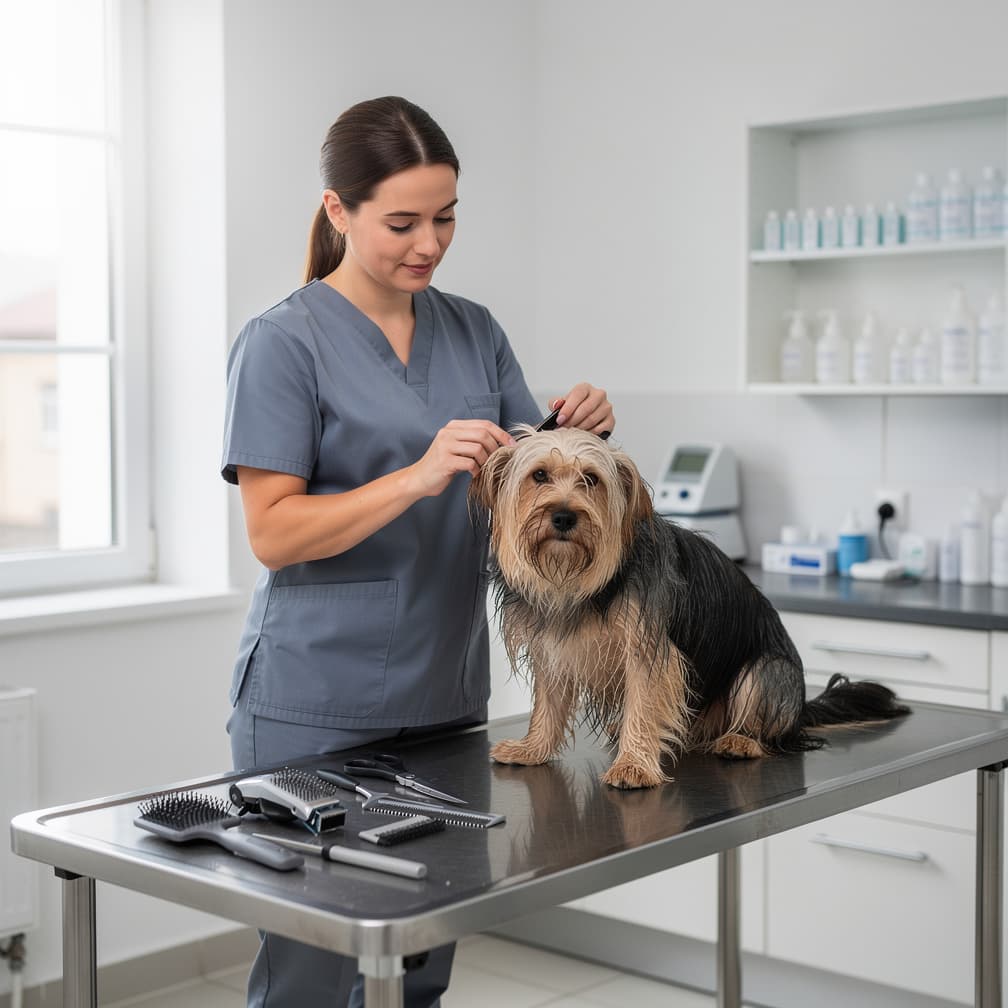

As a pet groomer in Dayton, you take custody of an animal that someone else loves and hand it back two hours later. Everything about your insurance follows from that transfer. A dog hurt during restraint or drying is not a property claim in the owner's mind, it is a family claim, and it arrives with vet invoices and a tone. Pet grooming insurance in Dayton has to answer that without turning into an argument about whether the dog was already limping. Intake photos and signed authorizations do more work than any clause. The policy is the backstop; the paperwork is the case. Get both in place before the first appointment of the season, then compare quotes on how each one treats animals in your care.
What Makes Dayton Different
A storm week does not have to damage your building at all to cost you the whole month. Clients cancel when roads are bad, and a grooming appointment is the easiest thing on a calendar to move. Rescheduling a full book into the following week does not work, because the following week is already full. That is lost revenue with rent still due, and only some policies speak to that situation at all. Power matters too, since dryers, clippers, and hot water are not optional to the work you do. A shop in Dayton without power cannot finish the dog already standing in the tub. Ask what a quote says about utility interruption and about income during a closure of any length. Weather in Ohio gets treated as an inconvenience until it becomes an accounting problem.
Local Risk Factors in Dayton
Move the gear first and argue about the policy later. Fifteen minutes spent putting clipper cases, dryer heads, and product on high shelves is loss control no carrier can sell you. A grooming shop's value is concentrated in items you can lift, which is unusual and useful. After a storm the building is often the landlord's claim and the contents are yours, so know which side of that line your build-out sits on before you need to. If the Dayton lease made you responsible for the plumbing you installed for the tubs, that plumbing is on your schedule. Commercial Property can help cover contents at the values you declared and nothing beyond them, so a stale inventory in Ohio is a self-inflicted gap.
What Coverage Does a Pet Grooming in Dayton Need?
General Liability
Landlords, host clinics, and corporate accounts ask for this one by name. It is the line typically aimed at people rather than pets: the client who slips on a wet floor at pickup, the person bitten in your waiting area, the damage you cause to somebody else's property. Injury to an animal in your care is often excluded and usually needs separate wording, so ask.
Example: A client leans over the desk to sign, slips on water tracked from the tub room, and lands hard; General Liability could help cover the medical bills and the claim that follows.
Professional Liability
Nobody was hurt and the owner is still furious: the coat came off too short, the shave down was never authorized, a sore is blamed on your blade. Those complaints are about the service rather than an injury, and General Liability generally leaves them alone. Professional Liability is the line meant for that argument, and it often funds the defense even when a claim goes nowhere.
Example: An owner books a full groom before a show, returns to a coat clipped shorter than agreed, and demands compensation; Professional Liability might answer the claim and the lawyer's bill.
Commercial Property
Tubs, hydraulic tables, high-velocity dryers, clipper sets, and the product on the shelf are the money in a grooming shop, and they all sit in one room. This line is intended for that room: fire, theft, vandalism, and sudden water from inside the building. Flood is typically excluded and bought separately, and wear on an aging dryer motor is treated as maintenance.
Example: A break-in overnight empties the clipper drawer and takes both dryers from a salon in Dayton; Commercial Property may respond up to the values you scheduled, which is why the inventory matters.
Workers Compensation
A bite to a client and a bite to your bather travel down different roads. This is the employee road: medical care and lost wages when a groomer is hurt lifting a ninety-pound dog, scratched on the table, or injured on a wet floor at work. Rules on who must carry it vary by state and headcount. Rating runs per hundred dollars of payroll rather than as a flat monthly figure.
Example: A bather reaches into a tub, takes a bite that needs stitches, and misses a week of shifts; Workers Compensation is generally intended to handle the medical care and the lost wages.
How Much Does Pet Grooming Insurance Cost in Dayton?
Pet Grooming Insurance is a bundle of separate policies, priced separately. The ranges below are typical figures for Dayton for each line, except workers compensation, which is set by the state fund; a quote prices each one against your own operations.
| Coverage | Typical range | What moves your price |
|---|---|---|
| General Liability Insurance | $45 - $130 per month | Industry and risk classification, annual revenue, number of employees |
| Professional Liability Insurance | $35 - $110 per month | The services you actually perform, annual revenue or billed fees, limit and retention selected |
| Commercial Property Insurance | $55 - $190 per month | Building value and construction type, roof age and condition, fire protection class |
| Workers Compensation Insurance | Set by the state fund | Employee classification codes, total annual payroll, experience modification rate |
Prices shown are general estimates, not guaranteed rates or quotes. Your actual premium will depend on the insurer, coverage selected, business details, location, claims history, and other underwriting factors. Learn about our pricing methodology.
What Are the Insurance Requirements for a Pet Grooming in Dayton?
Workers' comp is generally required once you have your first employee, through the state fund. Ohio runs workers' compensation through a state fund: employers buy coverage from the Ohio Bureau of Workers' Compensation (BWC), not from private carriers. Common exemptions include sole proprietors, partners, and LLC members. Confirm current requirements directly with the fund before you hire.
Flood damage is typically excluded from standard policies. Standard commercial property and builders-risk-type policies typically exclude flood damage. Flood exposure varies address by address, so check your premises in FEMA's Flood Map Service Center before deciding; if you sit in a mapped flood zone, a separate policy through the National Flood Insurance Program is the usual starting point.
Where to verify licensing and coverage rules. The Ohio Department of Insurance publishes consumer guidance and current insurance requirements for Ohio businesses. When a contract or lease demands specific wording, the Ohio Department of Insurance's guidance is the authoritative place to check.
Get Your Pet Grooming Quote in Dayton
Compare rates from multiple carriers. Free quotes, no obligation.
Operating in Dayton
- A claim can arrive three weeks after the appointment, by letter, with a vet invoice attached and a tone that was nowhere in the room at pickup.
- Montgomery County has about 11,000 businesses, so the restoration crews and equipment suppliers you need after a loss are booked solid by larger accounts before they return your call.
- A shave down the owner did not expect is a service complaint rather than an injury, and it travels down a different road inside your policy than a bite does.
- Product on the shelf is inventory, and a burst pipe over a retail wall can take every bottle of shampoo and conditioner you own in one night.
How to Buy: Advice for Dayton Owners
Hiring a bather changes your insurance more than doubling your appointment book does. The day someone clocks in, wages create a payroll base, and Workers Compensation gets rated against it per hundred dollars rather than as a flat premium. A bite to your own employee is an on-the-job injury rather than a General Liability claim, and the two lines sit on opposite sides of that fence. Rules on who must carry it vary by state and by headcount, so never take a rule of thumb from another Ohio owner as fact. The Ohio Department of Insurance publishes the current requirements for employers. Get your job classifications right at the start, because a misclassified groomer reprices at audit. Then bring the payroll figures to CPK and compare quotes from participating carriers that all priced the same headcount.
FAQ
Pet Grooming Insurance in Dayton: FAQ
Price moves on a handful of inputs: payroll if you have employees, annual revenue, the value of your equipment, the limits you choose, and your claims history. A solo groomer with one table prices differently from a three-station shop with a lease. Published ranges are statewide starting points, and a quote for your own shop in Ohio may land anywhere across them. Bring accurate figures, because an estimate corrected later reprices the whole year.
Not automatically. Many General Liability forms exclude damage to property in your care, custody, or control, and an animal you are handling is legally property. Some carriers add that exposure back by endorsement; others handle it through a different form entirely. Ask the specific question before you buy, because this is the claim a grooming shop is most likely to see and the one where wording decides the outcome.
Adding a party as an additional insured can extend your policy's defense and response to that party for claims arising out of your work. A landlord wants it so a slip in your doorway is argued against your policy first. The certificate you send is proof the endorsement exists, not the endorsement itself. Ask your carrier to confirm the actual form was added, and keep a copy of it.
A fall on your premises is a third-party bodily injury claim, and General Liability is the line usually built for it. Wet floors are the specific hazard in grooming, since water travels from the tub room to the entry on paws and shoes. Mats and signage cut the frequency, not the severity. Ask whether medical payments coverage is included, because a small no-fault payment early can end a claim that would otherwise grow.
Expect questions about payroll by role, annual revenue, animal volume, whether you accept aggressive or large dogs, your equipment values, your building or lease, and any claims in the last five years. Two quotes built from different guesses are not comparable, so write your figures down once and use the same set everywhere. Estimates get corrected at audit, and corrections arrive as a bill.
Standard property forms typically exclude flood, meaning water that rises from outside the building. A pipe that bursts inside the wall is usually a different question and often falls inside the form. Flood is priced and bought separately, and a salon's tubs, dryers, and product sit low enough that even shallow water finishes them. Confirm what your form says about surface water before the season, not after it.
Sources
- 1.U.S. Census Bureau, County Business Patterns (2022), Montgomery County(Montgomery County has about 11,000 business establishments.)
- 2.Ohio Department of Insurance(Ohio Department of Insurance publishes consumer guidance for insurance buyers.)
- 3.FEMA / FloodSmart(Flood coverage is typically purchased separately; FEMA administers the National Flood Insurance Program.)


