







































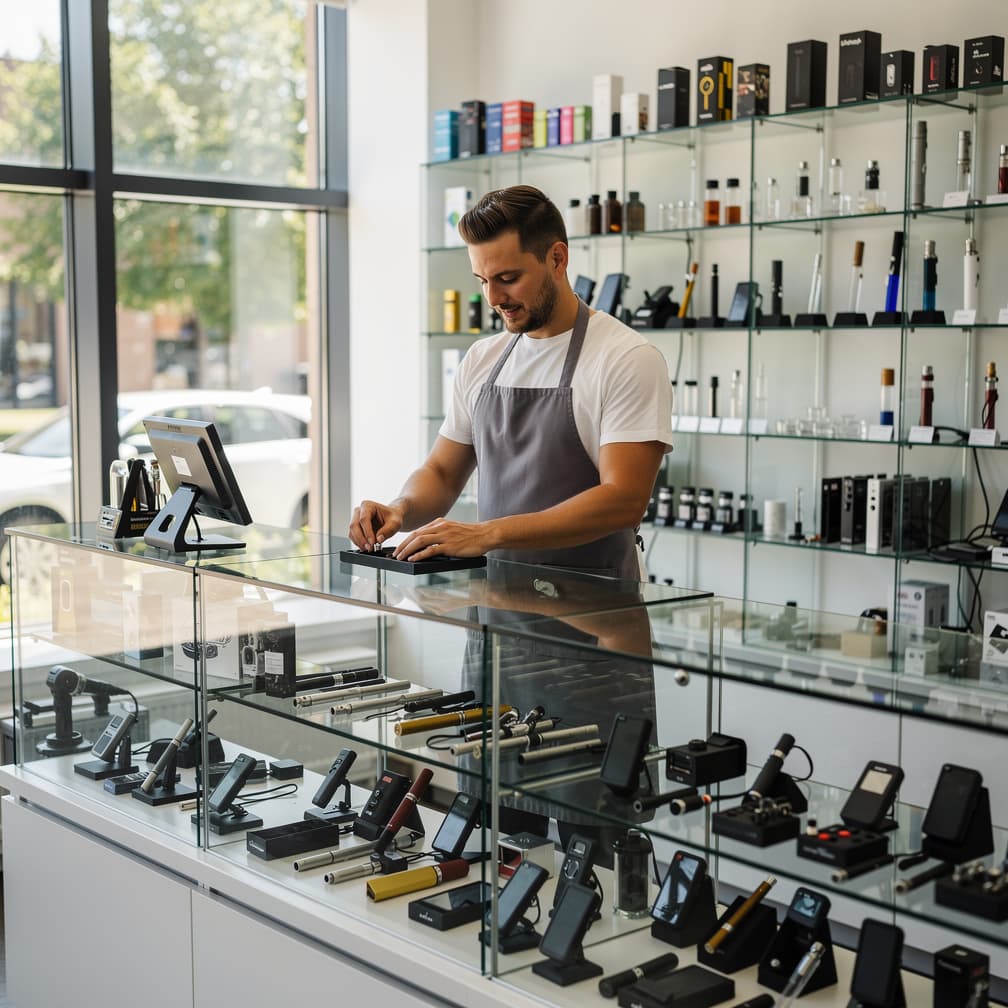

As a smoke shop in Dayton, you hold inventory that is small, valuable, and easy to pocket, and you take a meaningful share of your sales in cash. Both facts sit at the center of smoke shop insurance in Dayton. Theft here is three problems wearing one word: the customer who palms a display item, the after-hours entry through the front glass, and the employee who has keys and knows the count. Damage and shortage exposures overlap in ways a generic retail quote can miss. Add the shopper who slips near a wet entryway and the picture is complete. What follows breaks down what this trade usually carries, what the published monthly ranges look like, and which inputs a carrier will ask you for, so the quotes you compare are actually comparable.
What Makes Dayton Different
Your premium moves on things you control and things you merely report, and both deserve accuracy. Payroll, revenue, hours open, inventory value, and loss history are the levers Ohio carriers read. Guess any of them high and you overpay; guess low and you fund the shortfall at claim time. Underinsured stock is the classic retail error, because shelves fill up faster than policies get reviewed. The value you insured two years ago is not the value sitting behind your counter tonight. Recount before renewal, and adjust rather than rolling the same figure forward out of habit. A carrier quoting a shop in Dayton can only price what your application says is there. Feed it true numbers and compare quotes from participating carriers on identical limits and deductibles.
Local Risk Factors in Dayton
Power goes out, the registers go dark, and a shop full of undamaged product cannot sell any of it. That is the frustrating part of severe storms: a closure without a covered physical loss usually triggers nothing, because lost income provisions generally start from damage rather than from inconvenience. Where the storm does break something, the property side may respond to fixtures, stock, and the glass that failed first. A small shop in Dayton should also ask what happens when the damage is to the building rather than to your unit, since your landlord's repair timeline quietly becomes yours. Read the restoration period language before Ohio weather makes it urgent.
What Coverage Does a Smoke Shop in Dayton Need?
General Liability
A customer who goes down near your entry mat is the claim this line exists for. General Liability might respond to third-party injury and property damage arising from your operations, and in many cases to the defense costs behind them. Landlords commonly require it before handing over keys. It does not answer for injuries to your own staff.
Example: A shopper catches a heel on a curled floor mat and lands beside the counter; the injury claim and the lawyer's letter behind it are what this line is generally meant to absorb.
Commercial Property
Rising water sits outside this form, which surprises owners more than anything else in it. Otherwise Commercial Property is the line for the room itself: shelving, fixtures, point-of-sale equipment, and the stock on the floor and in back. It can help cover fire, storm, and vandalism damage, and it is rated off the inventory value you report, so an outdated figure costs you either way.
Example: A fire starts in a stockroom stacked with packaging and takes the shelving, the registers, and a full wall of product with it; this coverage could answer for the rebuild and the stock.
Commercial Crime
Where a property form stops, this one starts. Employee dishonesty, forgery, and stolen money are typically excluded from the policy covering your shelves, and Commercial Crime is designed for those losses instead. Underwriters ask who opens, who counts, and who banks, because separated duties are the control they price. A shop where one person does all three is a harder file to place.
Example: A long-trusted keyholder skims from the drawer for months and the shortage surfaces only at a quarterly count; a crime form could respond where a property policy would not.
Workers Compensation
This one is driven by state rules rather than by your landlord. Workers Compensation is rated against payroll and job duties, and it typically responds to medical costs and lost wages when an employee is hurt on shift: a stocker off a ladder, a cashier lifting a case. Thresholds vary by state and often include part-time staff. Estimated payroll gets audited later, so accurate figures matter now.
Example: A closing employee steps off a stool wrong while restocking a high shelf in Dayton and misses three weeks; this line might help cover the medical bills and part of the lost wages.
How Much Does Smoke Shop Insurance Cost in Dayton?
Smoke Shop Insurance is a bundle of separate policies, priced separately. The ranges below are typical figures for Dayton for each line, except workers compensation, which is set by the state fund; a quote prices each one against your own operations.
| Coverage | Typical range | What moves your price |
|---|---|---|
| General Liability Insurance | $70 - $240 per month | Industry and risk classification, annual revenue, number of employees |
| Commercial Property Insurance | $110 - $390 per month | Building value and construction type, roof age and condition, fire protection class |
| Commercial Crime Insurance | $25 - $85 per month | Employees who handle money or inventory, internal controls and separation of duties, funds and securities on hand |
| Workers Compensation Insurance | Set by the state fund | Employee classification codes, total annual payroll, experience modification rate |
Prices shown are general estimates, not guaranteed rates or quotes. Your actual premium will depend on the insurer, coverage selected, business details, location, claims history, and other underwriting factors. Learn about our pricing methodology.
What Are the Insurance Requirements for a Smoke Shop in Dayton?
Workers' comp is generally required once you have your first employee, through the state fund. Ohio runs workers' compensation through a state fund: employers buy coverage from the Ohio Bureau of Workers' Compensation (BWC), not from private carriers. Common exemptions include sole proprietors, partners, and LLC members. Confirm current requirements directly with the fund before you hire.
Flood damage is typically excluded from standard policies. Standard commercial property and builders-risk-type policies typically exclude flood damage. Flood exposure varies address by address, so check your premises in FEMA's Flood Map Service Center before deciding; if you sit in a mapped flood zone, a separate policy through the National Flood Insurance Program is the usual starting point.
Where to verify licensing and coverage rules. The Ohio Department of Insurance publishes consumer guidance and current insurance requirements for Ohio businesses. When a contract or lease demands specific wording, the Ohio Department of Insurance's guidance is the authoritative place to check.
Get Your Smoke Shop Quote in Dayton
Compare rates from multiple carriers. Free quotes, no obligation.
Operating in Dayton
- Cameras that record over themselves every two days are cameras with nothing to show on the morning a claim gets questioned.
- A customer's lawyer will ask for your policy details long before you decide whether to report the incident, and that call is a poor moment to read your own coverage for the first time.
- A leasing office in Dayton can hold your keys until a certificate carrying the exact entity name and limits is on file, so a lapsed policy can push an opening date by weeks.
- Premium stock lives behind locked glass for a reason, and underwriters quoting a shop in Dayton ask which items actually sit there, because a case left open during busy hours is a control that exists only on paper.
How to Buy: Advice for Dayton Owners
Before opening day, three pieces of paper decide whether the date holds: the lease exhibit, the certificate that satisfies it, and the payroll records behind any staff you hire. Read the exhibit first and note the limits it names, because a General Liability policy bought to the wrong number has to be reissued. Line up Commercial Property against a build-out you paid for, since improvements you install are frequently your problem rather than the landlord's. If you are hiring before you open, do not leave Workers Compensation until the first shift. The Ohio Department of Insurance publishes the current requirements for coverage before hiring. Give yourself weeks, not days. Then compare quotes from participating carriers with your Dayton opening date in view, and choose on terms rather than on speed.
FAQ
Smoke Shop Insurance in Dayton: FAQ
Read the lease, because glass is one of the most commonly disputed lines in a retail tenancy. Some leases put exterior glass on the building owner, some hand it to the tenant, and plenty are simply silent. Whoever owns the obligation should be the one insuring it. A smashed pane in the middle of the night is a bad moment to discover the answer was you.
Usually yes, at least on paper. Commercial leases routinely require a certificate showing specific limits and additional insured wording before you take possession, and a landlord can hold the keys until it lands. Ask for the insurance exhibit while you are still negotiating rather than after signing. General Liability is the line such clauses commonly name, though a lease may also make you insure the improvements you paid for.
Your own numbers, mostly: annual revenue, square footage, hours open, employee payroll, the value of stock on the shelves, and how many claims you have already filed. Security controls matter too, since a monitored alarm and locked cases give an underwriter something concrete to price. Location plays a part, and a Dayton address is one input among many, but it is rarely the biggest lever. Change the inputs and the quote changes with them.
General Liability is the line built for that. It can help cover a third party's injury claim and, in many cases, the defense costs that follow once a demand letter arrives. It does not answer for injuries to your own staff, which is what workers coverage exists to handle. A written cleaning log will not stop the claim, but it changes the argument about who was paying attention that morning.
It depends on which line you bought and how the loss happened. Commercial Property might respond to stolen stock and to the damage a break-in leaves behind, like a forced door or a ruined display case. Commercial Crime is generally aimed at money, securities, and dishonesty by your own people. The two overlap less than owners assume, so read what each form actually names before relying on either one.
Often, though not by the policy most owners assume. Employee dishonesty is typically excluded from a standard property form, and Commercial Crime is the line designed to address it. Underwriters ask how duties are separated: who opens, who counts, who banks, and whether one person does two of those jobs. A shop in Dayton where a single person controls the whole cash cycle is a harder file to place.
Sources
- 1.Ohio Department of Insurance(Ohio Department of Insurance publishes consumer guidance for insurance buyers.)
- 2.FEMA / FloodSmart(Flood coverage is typically purchased separately; FEMA administers the National Flood Insurance Program.)


