







































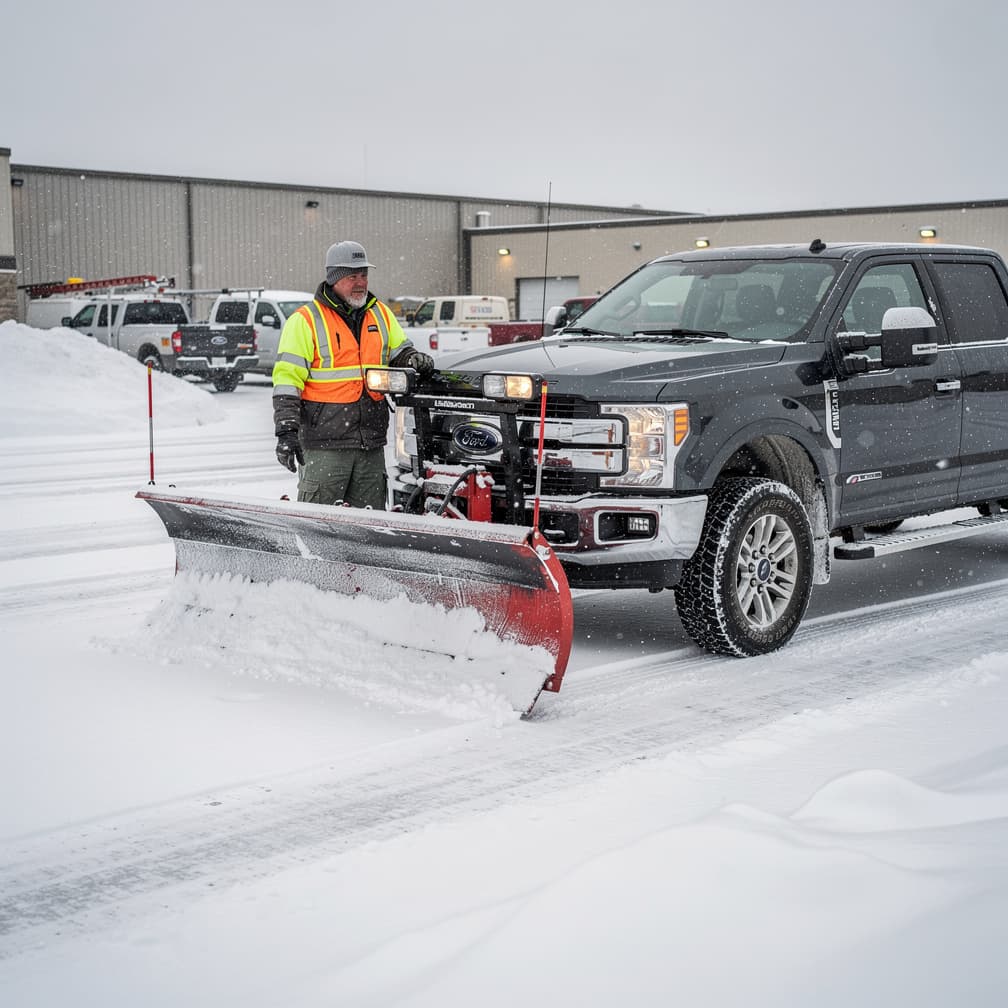

About 12 snow plowing contractors work in Montgomery County, which tells you how quickly a property manager can replace one whose certificate lapsed. That is the practical frame for snow plowing contractor insurance in Dayton: coverage is a condition of the work, checked before the season and again whenever a policy date rolls. The underlying risk is what you would expect from the job. Crews push snow in low visibility around parked cars and loading docks, pedestrians cross lots hours after the last pass, and trucks run winter routes when the roads are at their worst. The rest of this page is the coverage breakdown, the published ranges, and what a quote asks you for, in the order you actually need them.
What Makes Dayton Different
Market size shows up in your policy long before it shows up in your revenue. A contractor with three commercial lots and one municipal contract is underwritten differently than one with thirty driveways. The count of accounts matters less than the kind of foot traffic each one carries after a storm. Grocery lots, medical offices, and apartment complexes generate slip claims; a rural warehouse yard at night generates far fewer. Montgomery County holds about 11,000 businesses, and their mix decides what a commercial route through it looks like. Ask any quote how it classifies your work, because a driveway list and a commercial lot route price differently. Carriers also look at whether you sub out sidewalks, since hand crews and walk-behind machines change the injury picture. Answer those questions with real numbers and the quote you get back means something.
Local Risk Factors in Dayton
Tornado and severe-storm damage lands on a plow contractor's yard, and the yard is where the whole season lives. A shop roof opened by straight-line winds exposes trucks, blades, and stockpiled salt in one event, and the timing rarely respects your calendar. Wind on parked equipment is a property question, but the client-facing problem is different: debris in a lot you contract to clear is not snow, and a handshake to haul it is a change in operations. Tell the carrier before you do it. General Liability may respond to damage you cause while moving something you were never hired to move, subject to the policy's terms and how you described the work. Confirm what a Dayton route includes in writing, and keep the Ohio paperwork current.
What Coverage Does a Snow Plowing Contractor in Dayton Need?
General Liability
Property managers and lot owners demand this line before a plow truck moves, because the pedestrian who falls on a cleared surface sues the contractor who cleared it. It can help cover third-party bodily injury, damage your blade does to someone else's property, and the defense bill that arrives first. Your own trucks and equipment sit outside it.
Example: A tenant slips on refrozen melt two days after your crew cleared the lot and sues the property owner, who tenders it to you; general liability could respond to the defense and any settlement.
Commercial Auto
A plow truck is a business vehicle with a blade that changes how it stops, and personal auto forms typically exclude that use entirely. This line rates on your trucks, your drivers, and the radius the route runs, and it can respond to injury and property damage you cause on a winter route. Physical damage to your own truck is a separate choice on the same policy.
Example: Your driver backs into a parked car in a dark lot at the end of a fourteen-hour shift; commercial auto is the line most likely to answer for the repair and the injury claim behind it.
Workers Compensation
Crews get hurt stepping out of trucks, shoveling steps, and walking the lots they just cleared, and long shifts on ice make that worse. This coverage is meant to handle medical costs and lost wages after a work injury, and clients often demand proof of it in the contract. Rules for owners, officers, and seasonal crews vary by state, so check what applies to yours.
Example: A crew member shoveling a walkway at 4 a.m. tears a shoulder and misses six weeks of the season; workers' compensation is generally the line that picks up medical care and lost wages.
Commercial Umbrella
One fall on ice can produce a claim larger than the limits a plow contractor bought before the season. An umbrella sits above your liability and auto limits and may extend them once the underlying limit is exhausted, which is often how a portfolio's insurance exhibit gets satisfied without rebuilding every policy. It does not fill gaps the underlying form excludes.
Example: A pileup on a route your truck was salting produces claims from three drivers at once; a commercial umbrella could pick up what the underlying auto limit cannot reach in Dayton.
How Much Does Snow Plowing Contractor Insurance Cost in Dayton?
Snow Plowing Contractor Insurance is a bundle of separate policies, priced separately. The ranges below are typical figures for Dayton for each line, except workers compensation, which is set by the state fund; a quote prices each one against your own operations.
| Coverage | Typical range | What moves your price |
|---|---|---|
| General Liability Insurance | $180 - $650 per month | Industry and risk classification, annual revenue, number of employees |
| Commercial Auto Insurance | $380 - $1,100 per month | Fleet size and vehicle types, driver records and experience, coverage limits and deductibles |
| Workers Compensation Insurance | Set by the state fund | Employee classification codes, total annual payroll, experience modification rate |
| Commercial Umbrella Insurance | $90 - $350 per month | Umbrella limit requested, limits carried on the underlying policies, loss history on those underlying policies |
Prices shown are general estimates, not guaranteed rates or quotes. Your actual premium will depend on the insurer, coverage selected, business details, location, claims history, and other underwriting factors. Learn about our pricing methodology.
What Are the Insurance Requirements for a Snow Plowing Contractor in Dayton?
Workers' comp is generally required once you have your first employee, through the state fund. Ohio runs workers' compensation through a state fund: employers buy coverage from the Ohio Bureau of Workers' Compensation (BWC), not from private carriers. Common exemptions include sole proprietors, partners, and LLC members. Confirm current requirements directly with the fund before you hire.
State auto liability minimums apply to business vehicles. Ohio's minimum auto liability limits are $25,000/$50,000/$25,000 (bodily injury per person / per accident / property damage). Contracts and lenders often require more than the state floor.
Where to verify licensing and coverage rules. The Ohio Department of Insurance publishes consumer guidance and current insurance requirements for Ohio businesses. When a contract or lease demands specific wording, the Ohio Department of Insurance's guidance is the authoritative place to check.
Get Your Snow Plowing Contractor Quote in Dayton
Compare rates from multiple carriers. Free quotes, no obligation.
Operating in Dayton
- A plow blade changes how a truck stops and a full hopper changes how it corners, which is why a personal auto form generally excludes the work outright.
- Municipal and institutional bids often arrive with an insurance exhibit copied from a much larger contract, and the limits it names do not shrink for a small Dayton lot.
- Compliance portals reject certificates over a typo in a policy number or a missing entity name, and nobody calls to tell you the payment hold has started.
- The season starts on a forecast rather than a calendar, and carriers can restrict new business once winter weather is imminent, so shopping during a storm week leaves you no leverage.
How to Buy: Advice for Dayton Owners
The blade and the spreader belong on the schedule alongside the truck. Physical damage on a Commercial Auto policy responds to the vehicle, but a plow attachment and a salt hopper often have to be listed as equipment before an adjuster will touch them, so inventory every unit with its serial number before you shop. General Liability answers for what that blade does to someone else's property, not to your own gear, which is the split contractors misread when they buy only what a client demanded. Bring the full equipment list, the truck list, and the driver records to the conversation, because a quote built on a partial picture is a quote you cannot lean on midwinter. The Ohio Department of Insurance publishes consumer guidance on what physical damage coverage does and does not include. Then send the same equipment list to every quote, so the offers you compare from participating carriers in Dayton are describing the same fleet.
FAQ
Snow Plowing Contractor Insurance in Dayton: FAQ
Get their certificate before the storm, not after the claim. A sub without their own coverage generally gets treated as your employee at audit, which lands on your payroll and your Workers' Compensation cost. If their truck causes damage on a route you sold, the client calls you first. Ask each sub for proof naming your business, keep it on file for the policy term, and check it again at renewal.
Frequency matters more than any single loss. A string of small property claims, blades against curbs, signs, sprinkler heads, tends to move a renewal more than one larger event that reads as an accident. This is why some contractors fix small damage themselves rather than reporting it. That only works if the cash exists mid-season, and it is a decision to make deliberately rather than discover after the fact.
It sits above them. An umbrella can extend limits over your general liability and auto lines once the underlying limit is exhausted, and it usually requires those underlying limits to sit at a minimum level. For a plow operation the appeal is one purchase lifting every contract's requirement at once instead of endorsing each policy separately. It does not fill gaps the underlying form excludes, which is the part owners misread.
Payroll by class, annual revenue, a vehicle list with plow and spreader details, driver names and records, a description of the surfaces you clear, and loss runs from prior years. Subcontractor certificates help too. The description matters as much as the numbers, since sidewalks, steps, and ice management change the picture. Send the same packet to every quote, or the numbers coming back are answering different questions.
Yes, and they routinely do. Lenders and management companies show up on insurance exhibits alongside the owner, and each name is another party whose attorney can tender a claim to your policy. The request is normal; the thing to check is the wording, since some contracts demand primary and noncontributory language your policy may not include by default. Ask for the exhibit before you bid a Dayton route, not after the award.
Intentional damage, wear and tear on your own equipment, and faulty work you have to redo typically sit outside a liability form. Damage to a customer's property caused by your work can be limited by exclusions worth reading before a claim rather than after one. Flood is not part of a liability policy at all. Ask a quote to walk you through the exclusions in Ohio and get the answer in writing.
Sources
- 1.U.S. Census Bureau, County Business Patterns (2022), Montgomery County(Montgomery County has about 11,000 business establishments.; Montgomery County has about 12 businesses in this trade's category (NAICS group 561790).)
- 2.Ohio Department of Insurance(Ohio Department of Insurance publishes consumer guidance for insurance buyers.)


