







































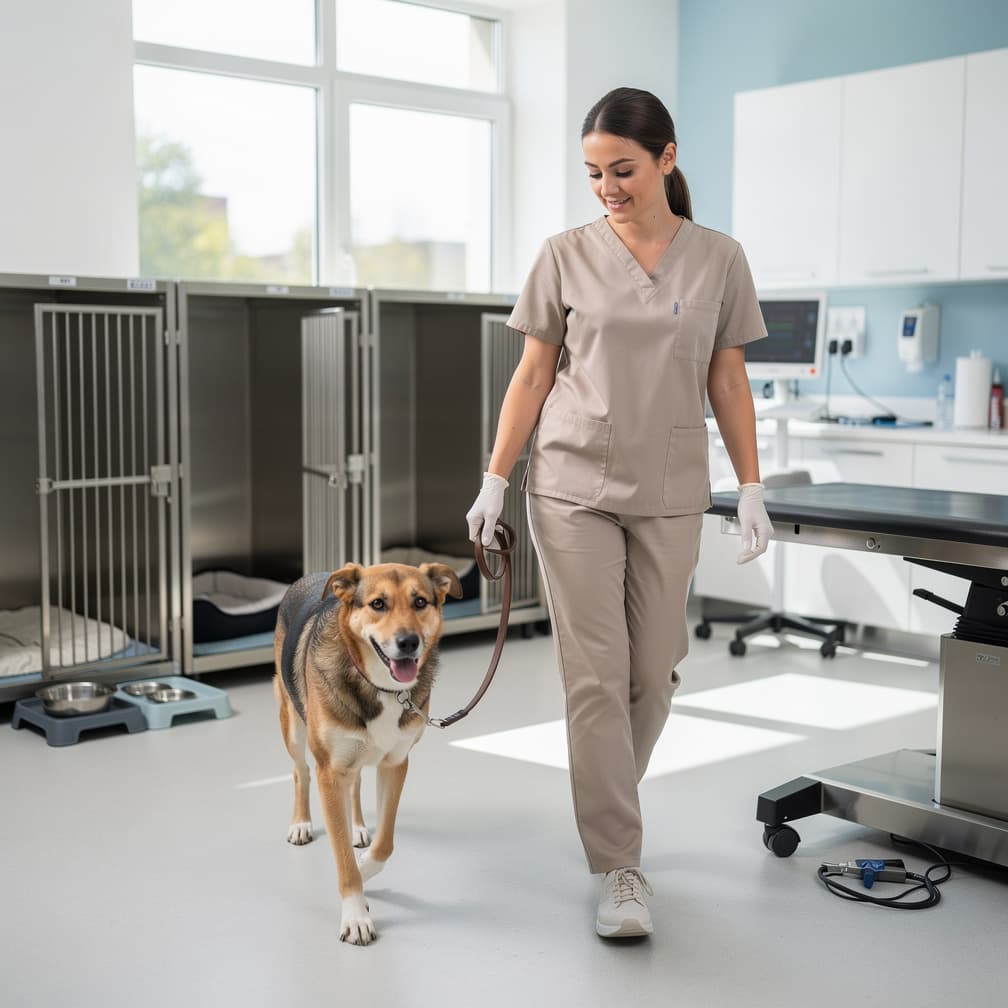

Two dogs in a playgroup scuffle, and one leaves with stitches and a vet bill the owner hands straight to you. That moment is the reason dog boarding insurance in Toledo exists, and it is why your limit matters more than your monthly premium. A signed boarding agreement does not stop an owner from hiring a lawyer. General Liability is the line most often tested when a boarded animal injures another animal or a person, and defense costs begin the day a demand letter lands. Your building, fencing, and runs sit on a different side of the ledger entirely. Participating carriers in Ohio price the same boarding operation differently, so the spread between quotes is worth reading closely. This page sets out what those carriers ask about before they put a number on your kennel.
What Makes Toledo Different
Competition sets what you charge per night, and what you charge per night sets what you can absorb. A kennel squeezed on nightly rates has thin margins, and thin margins make any deductible feel enormous. That is a pricing decision dressed up as an insurance decision, and it goes wrong in both directions. Cutting limits to protect a margin works until one bite claim exceeds them and the remainder is yours. Buying limits you cannot fund out of the nightly rate is a different kind of mistake entirely. Look at your worst plausible claim, then at your annual revenue, and put the limit between them. Market conditions in Toledo shape the rate you can charge, so they shape the policy you can afford. Bring both numbers to participating carriers in Ohio and the conversation stops being abstract.
Local Risk Factors in Toledo
A fence flattened by straight-line wind is an escape risk before it is a repair bill. Dogs get out through the gap while you are still counting the damage, and an escape that ends at a road is a liability claim rather than a property one. That is the sequence severe storms produce in this trade: property damage first, then a third-party claim growing out of it. General Liability may answer the injury side while the building side sits on an entirely different form. Board the gap the same day, photograph all of it, and tell a carrier in Toledo early, because the second claim in Lucas County is the expensive one.
What Coverage Does a Dog Boarding in Toledo Need?
General Liability
Landlords, referral vets, and booking platforms ask for this line by name before they let you open or list. It is generally the coverage reached for when a visitor slips at the pickup counter or a boarded dog bites a person, and it commonly picks up the legal defense that arrives with the demand. Injury to an animal in your custody is treated differently, so ask about that wording specifically.
Example: A neighbor leans over the fence to pet a boarder, gets nipped, and files a claim two months later for stitches and time off work. Third-party injury of that kind is what the line is generally meant to answer.
Commercial Property
Flood sits outside this form and gets bought separately, which matters more to a kennel than to most tenants because runs sit at ground level. What it can help cover is the building, the fencing, the kennel doors, the washers, and the ventilation, subject to how the policy values them. A chewed gate stays maintenance.
Example: A dryer packed with bedding overheats overnight and the fire takes the laundry room, two runs, and the food store. Damage of that sort may fall to this line, subject to your deductible and the valuation basis.
Professional Liability
A dose missed, a feeding chart ignored, a dog put in the wrong playgroup: allegations about the care you were paid to provide sit here rather than with a straightforward injury claim. Cover is typically built around errors, omissions, and supervision failures, and it usually turns on what your records can show. It settles no argument about whether the owner believes you.
Example: An owner alleges her dog's illness started in your kennel and that staff ignored the diet she left in writing. A supervision and care allegation like that is what this line is intended to address.
Workers Compensation
Where liability handles the visitor, this line handles the handler. Lifting, restraining, cleaning, and breaking up a scuffle are how kennel staff get hurt, and medical costs plus lost wages are what it is meant to answer. Whether it is mandatory at your headcount varies by state, and it is rated per $100 of payroll rather than as a flat premium.
Example: A handler takes a bite through the forearm separating two dogs and spends the next two weeks off the schedule. Medical bills and a share of the wages lost are commonly what this coverage picks up.
How Much Does Dog Boarding Insurance Cost in Toledo?
Dog Boarding Insurance is a bundle of separate policies, priced separately. The ranges below are typical figures for Toledo for each line, except workers compensation, which is set by the state fund; a quote prices each one against your own operations.
| Coverage | Typical range | What moves your price |
|---|---|---|
| General Liability Insurance | $80 - $270 per month | Industry and risk classification, annual revenue, number of employees |
| Commercial Property Insurance | $75 - $250 per month | Building value and construction type, roof age and condition, fire protection class |
| Professional Liability Insurance | $35 - $150 per month | The services you actually perform, annual revenue or billed fees, limit and retention selected |
| Workers Compensation Insurance | Set by the state fund | Employee classification codes, total annual payroll, experience modification rate |
Prices shown are general estimates, not guaranteed rates or quotes. Your actual premium will depend on the insurer, coverage selected, business details, location, claims history, and other underwriting factors. Learn about our pricing methodology.
What Are the Insurance Requirements for a Dog Boarding in Toledo?
Workers' comp is generally required once you have your first employee, through the state fund. Ohio runs workers' compensation through a state fund: employers buy coverage from the Ohio Bureau of Workers' Compensation (BWC), not from private carriers. Common exemptions include sole proprietors, partners, and LLC members. Confirm current requirements directly with the fund before you hire.
Flood damage is typically excluded from standard policies. Standard commercial property and builders-risk-type policies typically exclude flood damage. Flood exposure varies address by address, so check your premises in FEMA's Flood Map Service Center before deciding; if you sit in a mapped flood zone, a separate policy through the National Flood Insurance Program is the usual starting point.
Where to verify licensing and coverage rules. The Ohio Department of Insurance publishes consumer guidance and current insurance requirements for Ohio businesses. When a contract or lease demands specific wording, the Ohio Department of Insurance's guidance is the authoritative place to check.
Get Your Dog Boarding Quote in Toledo
Compare rates from multiple carriers. Free quotes, no obligation.
Operating in Toledo
- Vaccination proof gets checked at the counter or it does not get checked at all. Requirements for animal facilities vary across Ohio, and the record you meant to collect is the first document an owner's lawyer asks for.
- Gates fail in the boring way: a latch that closes without catching, a hinge that sags through a wet season. The escape claim that follows gets argued over your fencing, never over your intentions.
- Owners are late. A dog booked for four nights in Toledo stays six because a flight slipped, and your capacity plan, your staffing, and your food order all move with it.
- A property manager in Toledo can withhold a lease renewal until a current certificate sits in the file, and certificates expire quietly on a date nobody wrote down.
How to Buy: Advice for Toledo Owners
Walk the building with a notepad before you shop. Write down the runs, the fencing, the kennel doors, the washers and dryers, the ventilation, the generator if you have one, and the cameras. Commercial Property is priced against replacing that list, and owners routinely insure a kennel for what they paid for it a decade ago. Ask what a rebuild costs now, then ask what your business does for the months the runs sit unusable, because those are two questions with two different answers. General Liability does nothing for either one, and it was never meant to. The Ohio Department of Insurance publishes consumer guidance on property coverage basics. Take the completed list to participating carriers in Toledo and compare how each one values the same kennel.
FAQ
Dog Boarding Insurance in Toledo: FAQ
The per-occurrence limit is the most a policy may pay for one incident, such as a single scuffle in the play yard. The aggregate caps what it may pay across the whole term, however many separate incidents your kennel logs. Three bad afternoons in a busy year can reach that ceiling long before renewal, and once it is used the rest of the term runs thin. Ask a carrier what happens after the aggregate is exhausted.
Illness allegations are about supervision, feeding, and medication rather than an accident, so they tend to land as a care question instead of a straightforward injury one. Professional Liability may respond where an owner alleges a failure or omission in the care you provided. What no form does is settle the argument about whether the illness started in your building, which is why intake records and medication logs earn their keep.
Standard property forms typically exclude flood, and flood coverage is written and priced separately. That catches owners after a storm, because water from a burst pipe and water rising off the ground are treated as different events by the same policy. If your runs sit low or your building is near water, ask about a separate flood policy rather than assuming the property form reaches that far.
Expect questions on dog capacity, average and peak dogs on site, overnight numbers, whether you run open playgroups, staff headcount, gross payroll, building size and construction, and several years of claims history. Intake screening and vaccination policy come up as well, because they predict claims. Participating carriers in Ohio ask the same core questions even where their forms differ, so bring real numbers: payroll gets reconciled at audit and a low guess turns into a bill.
Give every carrier identical inputs, then compare structure before price. Ask each for the per-occurrence limit, whether defense costs sit inside or outside that limit, what the aggregate does after a first claim, and whether property is valued at replacement cost. Participating carriers in Ohio weigh the same submission differently, so a spread is normal. The smallest number attached to the narrowest terms is rarely the useful one.
A boarding agreement helps and it ends nothing. Waivers get argued about, narrowed, and occasionally set aside, and having that argument costs money on its own. Defense costs begin when a demand letter arrives, long before anybody decides whether your waiver holds up. That is the part owners underestimate: a policy is paying for the fight at least as much as for the outcome.
Sources
- 1.Ohio Department of Insurance(Ohio Department of Insurance publishes consumer guidance for insurance buyers.)
- 2.FEMA / FloodSmart(Flood coverage is typically purchased separately; FEMA administers the National Flood Insurance Program.)


