







































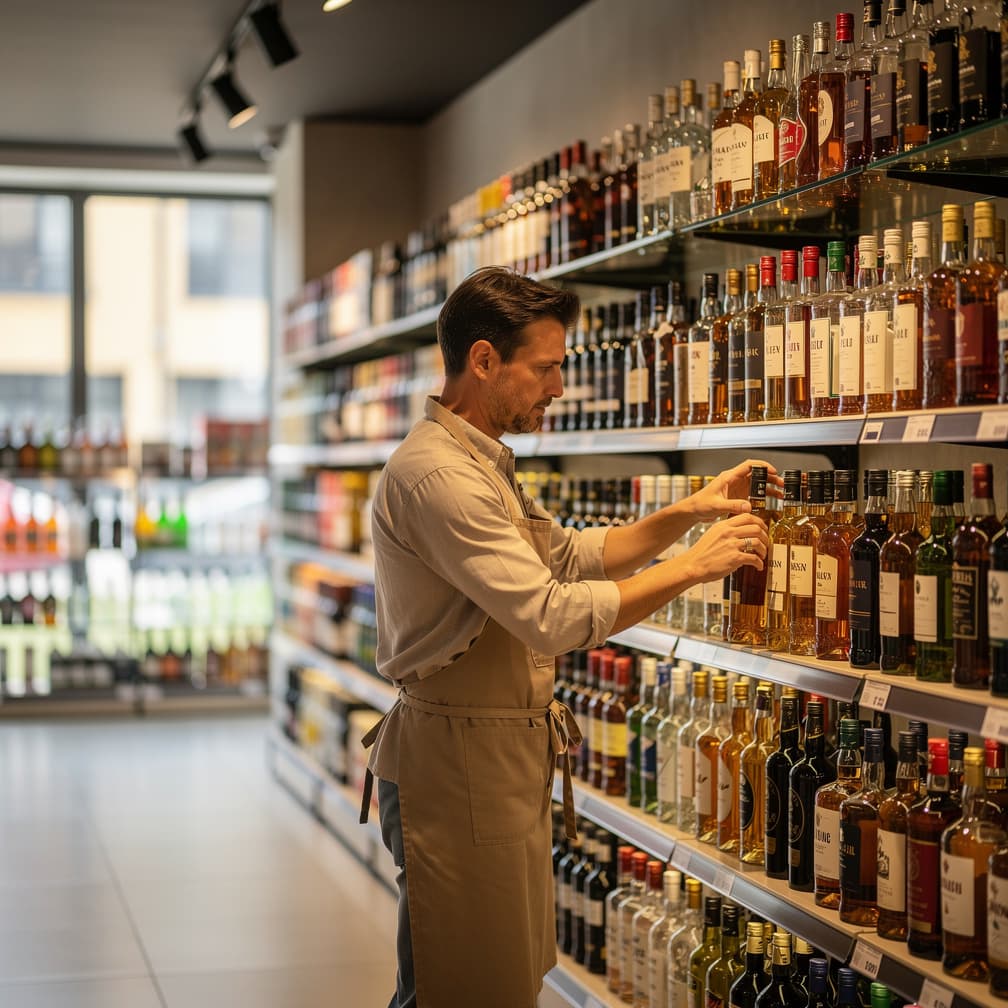

A driver's license gets a two second look at the end of a long shift, and months later that sale is sitting on a subpoena. Liquor store insurance in Toledo has to answer for it, because dram shop exposure follows the license and the license is yours. A dram shop claim can be built out of a register log and a still frame, wherever in Ohio the store happens to sit. The customer who fell in your aisle gets handled by a different part of the policy, and the theft that empties your cooler by another part still. None of it turns on how nice the store looks. It turns on your training, your drawer procedure, and what the camera recorded. The sections below lay out what each piece is meant to do and where it stops, so you can compare quotes without guessing at the gaps.
What Makes Toledo Different
A storm week that keeps shoppers home costs a liquor store its best hours and none of its fixed bills. Power loss is the second hit, because refrigerated stock does not wait for a utility crew to arrive. Whether any of that comes back depends on wording about lost income and spoilage, which varies a great deal. Ask before the season turns rather than after, since a policy cannot be edited once the sky opens. Water finding its way under a Toledo storefront door is a property question with a famous exception attached. Standard property forms typically exclude flood, and that gets priced as an entirely separate decision. Wind, hail, and falling limbs sit on a different footing and usually belong to the same form. Read which of those your building faces in Ohio before deciding how much wording to buy.
Local Risk Factors in Toledo
Tornado and severe storm damage arrives in seconds and leaves a liquor store with a roof problem and a glass problem at once. Wind gets under a roof edge, rain follows it down onto the top shelves, and the stock nearest the wall soaks before anyone can move it. A Commercial Property form usually recognizes wind and hail as causes of loss, so the building damage and the ruined inventory can land in one claim, subject to your deductible. What surprises owners is how contents get valued, since replacement cost and actual cash value settle a stockroom very differently. Ask which one an Ohio quote assumes. Then ask how quickly a Toledo store would have to document what was on the shelves.
What Coverage Does a Liquor Store in Toledo Need?
General Liability
A shopper goes down on a wet tile by the entrance, and the store rather than the shopper answers for it. General Liability is built around customer injury and damage you do to someone else's property, and it usually funds the defense as well. Claims tied to alcohol you sold are typically excluded and belong to Liquor Liability instead.
Example: A case slips off a hand truck and lands on a customer's foot during a busy evening; general liability may respond to the medical bills and the demand letter that follows.
Commercial Property
Landlords ask about this one and lenders insist on it. Commercial Property is aimed at the building where you hold an interest in it, plus the shelving, coolers, registers, and the alcohol inventory inside. Fire, storm damage, and vandalism are common causes of loss, while flood and wear and tear generally sit outside the form.
Example: A fire in a neighboring unit smokes out your stockroom overnight and the coolers quit; commercial property could help with the repairs and the inventory that has to be written off.
Liquor Liability
General Liability will not touch a claim tied to the alcohol you sold, and that gap is the space this line fills. Liquor Liability is meant for dram shop exposure: a sale to a minor, a sale to someone already impaired, and the suit that shows up long afterward. Intentional acts and unlicensed sales usually stay outside it.
Example: A sale made near closing becomes a lawsuit months later, assembled from a receipt and camera footage; liquor liability might carry the defense costs and whatever settlement lands.
Commercial Crime
Money is the exposure here, together with the stock that leaves in a staff bag. Commercial Crime is intended for employee theft, forgery, robbery, and losses tied to cash handling, subject to what you can document. Unexplained shrink generally falls outside the form, which is why counts and camera retention earn their keep.
Example: A clerk with the safe code skims deposits for six months before the numbers stop matching; commercial crime is designed to answer for documented employee dishonesty like that.
Workers Compensation
Where General Liability deals with the customer, this line deals with the person on your payroll. Workers Compensation is meant for medical bills and lost wages after a work injury: a back strained lifting cases, a cut from broken glass, a fall in the stockroom. Requirements vary by state, and it is rated per hundred dollars of payroll.
Example: A clerk breaks a bottle while restocking a cooler in Toledo and needs stitches; workers compensation can generally take on the treatment and the shifts missed afterward.
How Much Does Liquor Store Insurance Cost in Toledo?
Liquor Store Insurance is a bundle of separate policies, priced separately. The ranges below are typical figures for Toledo for each line, except workers compensation, which is set by the state fund; a quote prices each one against your own operations.
| Coverage | Typical range | What moves your price |
|---|---|---|
| General Liability Insurance | $65 - $200 per month | Industry and risk classification, annual revenue, number of employees |
| Commercial Property Insurance | $140 - $500 per month | Building value and construction type, roof age and condition, fire protection class |
| Liquor Liability Insurance | $75 - $300 per month | Share of sales that comes from alcohol, type of venue and how late you serve, server training and service procedures |
| Commercial Crime Insurance | $25 - $70 per month | Employees who handle money or inventory, internal controls and separation of duties, funds and securities on hand |
| Workers Compensation Insurance | Set by the state fund | Employee classification codes, total annual payroll, experience modification rate |
Prices shown are general estimates, not guaranteed rates or quotes. Your actual premium will depend on the insurer, coverage selected, business details, location, claims history, and other underwriting factors. Learn about our pricing methodology.
What Are the Insurance Requirements for a Liquor Store in Toledo?
Workers' comp is generally required once you have your first employee, through the state fund. Ohio runs workers' compensation through a state fund: employers buy coverage from the Ohio Bureau of Workers' Compensation (BWC), not from private carriers. Common exemptions include sole proprietors, partners, and LLC members. Confirm current requirements directly with the fund before you hire.
Flood damage is typically excluded from standard policies. Standard commercial property and builders-risk-type policies typically exclude flood damage. Flood exposure varies address by address, so check your premises in FEMA's Flood Map Service Center before deciding; if you sit in a mapped flood zone, a separate policy through the National Flood Insurance Program is the usual starting point.
Where to verify licensing and coverage rules. The Ohio Department of Insurance publishes consumer guidance and current insurance requirements for Ohio businesses. When a contract or lease demands specific wording, the Ohio Department of Insurance's guidance is the authoritative place to check.
Get Your Liquor Store Quote in Toledo
Compare rates from multiple carriers. Free quotes, no obligation.
Operating in Toledo
- Delivery drivers stack cases in the aisle while customers walk past them, and the fall that follows is your claim rather than the distributor's.
- The register in a Toledo store is the busiest risk point in the building, since every sale is an age decision and one wrong call can surface as a lawsuit months later.
- A property manager in Toledo can require a fresh certificate at every lease renewal, so a policy that lapses for two days can create a default you never knew about.
- Spirits carry more value per shelf foot than nearly anything else in retail, which is why a break-in lasting ninety seconds can empty a year of margin.
How to Buy: Advice for Toledo Owners
What you do after closing changes what you pay, so bring it to the quote in writing. Cameras with real retention, a monitored alarm, a bolted safe, and a rule about how much stays in the drawer are all answers carriers ask for. Commercial Property and Commercial Crime both look at those controls from opposite directions: one at the stock, the other at the money. If your alarm was upgraded last year, say so rather than assuming it sits on file somewhere. Photographs of the storefront and the stockroom help more than adjectives do. The Ohio Department of Insurance publishes consumer guidance on loss prevention for retailers in Ohio. Present the store you actually run, then let participating carriers price it against each other.
FAQ
Liquor Store Insurance in Toledo: FAQ
It is aimed at money and stock leaving through the inside: employee theft, forged checks, and losses tied to cash handling. Robbery and safe burglary are often included, depending on which form you buy. What it generally does not reach is unexplained shrink you cannot document, which is why counts and records earn their keep.
A lease can treat missing proof as a default, whatever your actual coverage looks like underneath. That is a paperwork problem with real consequences, and it lands on stores that renew late. A landlord in Toledo can also require notice before the policy lapses. Contracts vary across Ohio, so a calendar reminder and a copy on file are the cheap defense.
Tell the carrier the truth about the range and ask how the form treats fluctuation. Some wordings offer a peak season provision; others rate on a flat declared value and settle claims against it. Declaring an average and then losing a full stockroom is the mismatch owners find out about afterward. Review the number every year rather than inheriting last year's.
Before, in practice. A landlord can make a certificate a condition of handing over the keys to a Toledo storefront, and a license file can sit incomplete without proof attached to it. Buying early also buys you time to read what you bought, which is never a luxury you have on opening day.
Selling sealed stock does not put you outside dram shop exposure, because a claim usually turns on who bought the alcohol rather than where they opened it. Liquor Liability is the line written for that exposure. General Liability typically excludes alcohol-related claims entirely, which is why the two get quoted as separate decisions rather than one.
Expect questions about revenue, payroll, hours of operation, the value of stock on an average night, and your losses over the last three years. Carriers also ask about alarms, cameras, and how cash gets handled at closing in a Toledo store. Thin answers get you a thin quote and an unpleasant audit later. Gather the numbers first.
Sources
- 1.Ohio Department of Insurance(Ohio Department of Insurance publishes consumer guidance for insurance buyers.)
- 2.FEMA / FloodSmart(Flood coverage is typically purchased separately; FEMA administers the National Flood Insurance Program.)


