







































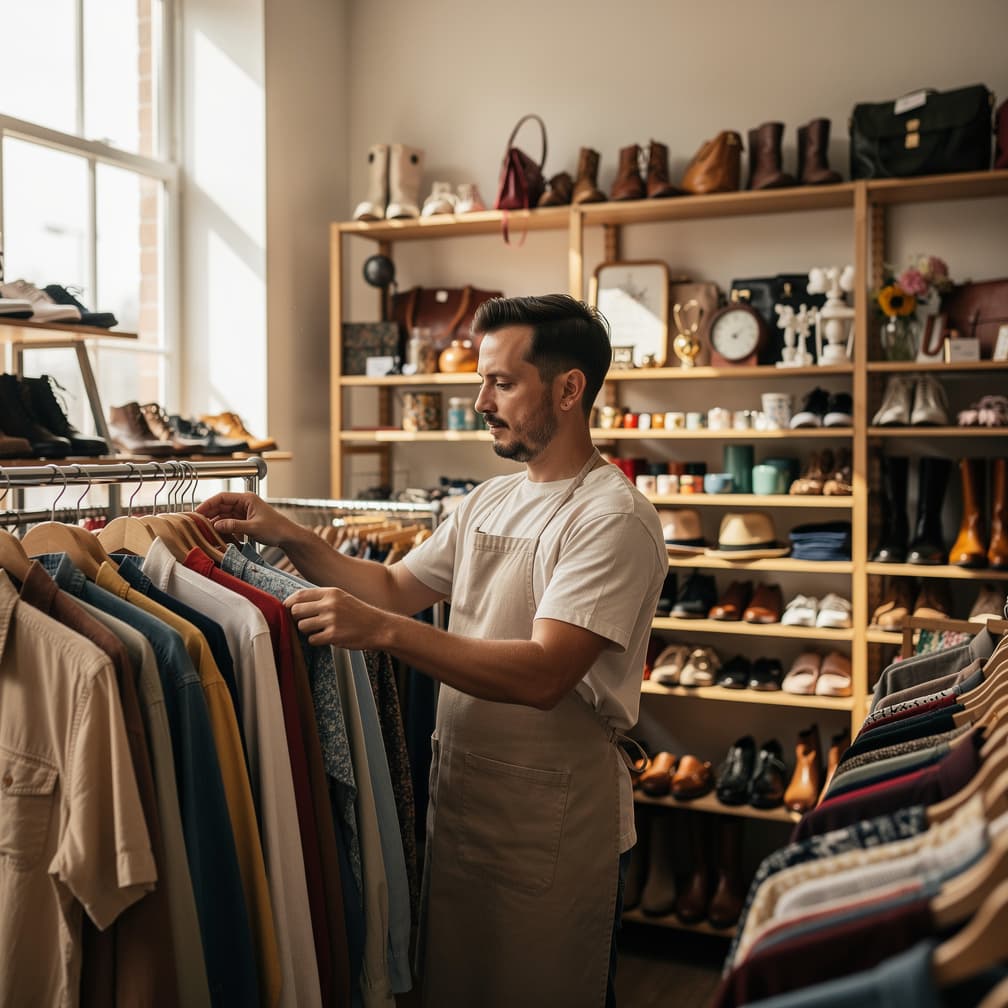

As a thrift store in Broken Arrow, you run a warehouse and a shop inside the same square footage, and the policy has to know about both halves. The back half is sorting, stacking, and lifting. The front half is the public. Thrift store insurance in Broken Arrow gets mispriced when an owner describes only the front. Underwriters in Oklahoma price the same store differently depending on how the operation is described, so the description deserves attention before you shop it anywhere. Tell them about the intake door, the height you stack, the heaters you run in winter, the volunteers if you use them. It feels like handing over ammunition. It is how you avoid a denied claim over an operation nobody disclosed.
What Makes Broken Arrow Different
Power failures do more damage to a store than most owners expect, and they arrive without warning. A dead point-of-sale terminal stops sales entirely, even when nothing on the floor has been touched. Lights out in a windowless back room stops sorting, which stops tomorrow's stock from reaching the shelves. The floor looks fine, the losses are real, and property forms in Oklahoma often want physical damage first. That requirement is where a weather claim for lost trading quietly dies before it is ever filed. Restoration and electrical crews triage by account size after an outage, whatever the size of your market. A store in Broken Arrow waiting behind larger accounts is losing days it will never sell back. Ask about the physical damage trigger and the waiting period before assuming a closure has an answer.
Local Risk Factors in Broken Arrow
Glass in a sales floor means every soft item within reach gets thrown away rather than swept off. That is the part owners underestimate about a severe storm: the merchandise you can still see is the merchandise you are about to lose. Staff clearing debris and hauling ruined stock are doing the most injury-prone work of their year, and a workers compensation claim during cleanup is common enough to plan around. Bring in help instead of pushing your own crew through it. In Tulsa County, waiting on a boarding contractor can take longer than the cleanup itself, and a store in Broken Arrow sitting open to the weather accumulates a bigger loss every hour.
What Coverage Does a Thrift Store in Broken Arrow Need?
General Liability
Your landlord asks for this one by name, and a center office will ask again before you open the doors. General Liability is aimed at third-party injury and property damage: a customer who slips in an aisle, a shopper struck by falling merchandise, damage you cause to the space you rent. It does not answer for your own employees, and it typically excludes anything done deliberately.
Example: A child tugs a boxed lamp off a top shelf and it catches a shopper's shoulder on the way down. The medical bill and the demand letter that follows are the kind of claim this line is meant to meet.
Commercial Property
Flood is the first thing to know about here, since standard property forms leave it out and price it on its own. What remains is your side of the building: shelving, fixtures, terminals, the improvements you installed, and the donated stock on the floor. Fire, burst pipes, and storm damage are the usual triggers, and the valuation language on inventory without invoices decides what a claim is worth.
Example: A power strip behind a display shorts overnight and smoke reaches every rack in your Broken Arrow store. The fixtures survive, the clothing does not, and a claim on that stock could turn on the photographs you took.
Business Owners Policy
Buying liability and property apart gives you control; a Business Owners Policy gives you a package that usually costs less. It folds both into one form for a single-location store and often carries business interruption terms inside it. The catch is sublimits: categories like stock may be capped tighter than you would choose, and the package wording is not yours to negotiate.
Example: Your store closes for three weeks after a roof leak soaks the sales floor. The repairs sit on the property side of the package, while the lost trading weeks may fall to the interruption clause and its waiting period.
Workers Compensation
Someone lifts a box of hardback books wrong and cannot work for a month. Workers Compensation is built for your own staff rather than your customers, and it can help with medical treatment and a share of lost wages. It is rated against payroll, so hours at the sorting table drive the price. Whether unpaid help at your intake door counts as staff is a question your state answers, not your policy.
Example: A part-timer pricing furniture drops a drawer front on their foot during an intake rush. The treatment and the days missed afterward are what this coverage is generally intended to handle.
How Much Does Thrift Store Insurance Cost in Broken Arrow?
Thrift Store Insurance is a bundle of separate policies, priced separately. The ranges below are typical figures for Broken Arrow for each line, except workers compensation, which is rated per $100 of payroll; a quote prices each one against your own operations.
| Coverage | Typical range | What moves your price |
|---|---|---|
| General Liability Insurance | $50 - $150 per month | Industry and risk classification, annual revenue, number of employees |
| Commercial Property Insurance | $65 - $230 per month | Building value and construction type, roof age and condition, fire protection class |
| Business Owners Policy Insurance | $85 - $240 per month | Annual revenue and industry class, building and contents values, square footage and building age |
| Workers Compensation Insurance | $0.75 - $2.74 per $100 of payroll | Employee classification codes, total annual payroll, experience modification rate |
Prices shown are general estimates, not guaranteed rates or quotes. Your actual premium will depend on the insurer, coverage selected, business details, location, claims history, and other underwriting factors. Learn about our pricing methodology.
What Are the Insurance Requirements for a Thrift Store in Broken Arrow?
Workers' comp is generally required once you have your first employee. Oklahoma generally requires employers to carry workers' compensation at that point. Common exemptions include sole proprietors, partners, and members of LLCs. Confirm current thresholds with your state's workers' compensation agency before you hire.
Where to verify licensing and coverage rules. The Oklahoma Insurance Department publishes consumer guidance and current insurance requirements for Oklahoma businesses. When a contract or lease demands specific wording, the Oklahoma Insurance Department's guidance is the authoritative place to check.
Get Your Thrift Store Quote in Broken Arrow
Compare rates from multiple carriers. Free quotes, no obligation.
Operating in Broken Arrow
- A center office in Broken Arrow can hold your opening until the certificate matches its template exactly, and mismatched templates get returned rather than corrected on your behalf.
- Donations arrive when they arrive, and a full back room pushes the overflow onto the sales floor. Stock stacked in an aisle because there was nowhere else to put it is how a routine afternoon becomes a slip claim.
- A property manager in Broken Arrow can withhold a lease amendment until a current certificate sits on file, so a policy that lapsed quietly is able to stall a renewal you already negotiated.
- Price guns, terminals, and card readers die together when a surge hits, and a floor that cannot take payment is closed for the day no matter how good the merchandise looks.
How to Buy: Advice for Broken Arrow Owners
Set a reminder ninety days before renewal. That window is when you still have options: time to gather loss runs, time to document the floor, time for CPK to put participating carriers in Oklahoma in front of a Broken Arrow store without a deadline pressing. Inside the final week, you take what is offered. Use the window to reconsider structure too, since a shop that added a back room or hired staff since last year is a different risk than the one your Business Owners Policy was priced for. Undisclosed changes are how claims get denied. Tell the participating carrier what moved, including anything touching Workers Compensation, and let the price adjust honestly. Renewing blind is the most expensive habit in this trade, and comparing offers through CPK is the cure.
FAQ
Thrift Store Insurance in Broken Arrow: FAQ
Usually, though the price reflects it and fewer participating carriers in Oklahoma may want the submission. What moves the outcome is evidence of what changed: wider aisles, a spill routine, an incident pad someone fills in, a rule about stack height. Bring five years of loss runs and the explanation together, since an underwriter reading a bare claim count assumes the worse story.
Not automatically. Property coverage is usually tied to a described location, so stock held somewhere your policy never names can sit outside it. If you rent extra storage in Broken Arrow, tell the participating carrier and ask whether that address needs to be scheduled. The answer takes one call and heads off a denial that would otherwise arrive at the worst possible time.
Every time the policy changes, and again at each renewal. Certificates go stale quietly: a property manager moves on, your entity name shifts, a limit gets adjusted, and nobody notices until a claim or an audit exposes the mismatch. Keep a list of every party holding one. Check the Oklahoma Insurance Department's guidance before deciding what a certificate actually proves.
Usually, yes. A commercial lease routinely names an insurance requirement, and a property manager can hold the keys until a certificate lands on file with the right legal name and the right limit on it. Getting a corrected certificate reissued takes days you did not budget for, so read the insurance exhibit before signing rather than during move-in week.
Payroll, floor size, the limits you choose, and your claims history do most of the work. A store with staff sorting and lifting donated goods carries a workers compensation exposure a one-person shop does not, and that single difference moves the total further than address does. Two participating carriers can read the same store differently, which is why comparing beats guessing. Current ranges for each line sit in the table further down.
General Liability is the line usually pointed at a customer injury on your sales floor, and it may help with medical costs and a resulting lawsuit, subject to your limit and your deductible. It does not answer for your own employees getting hurt; that sits with workers compensation instead. Keep an incident pad at the register, because the claim tends to arrive months after the fall.
Sources
- 1.Oklahoma Insurance Department(Oklahoma Insurance Department publishes consumer guidance for insurance buyers.)


