







































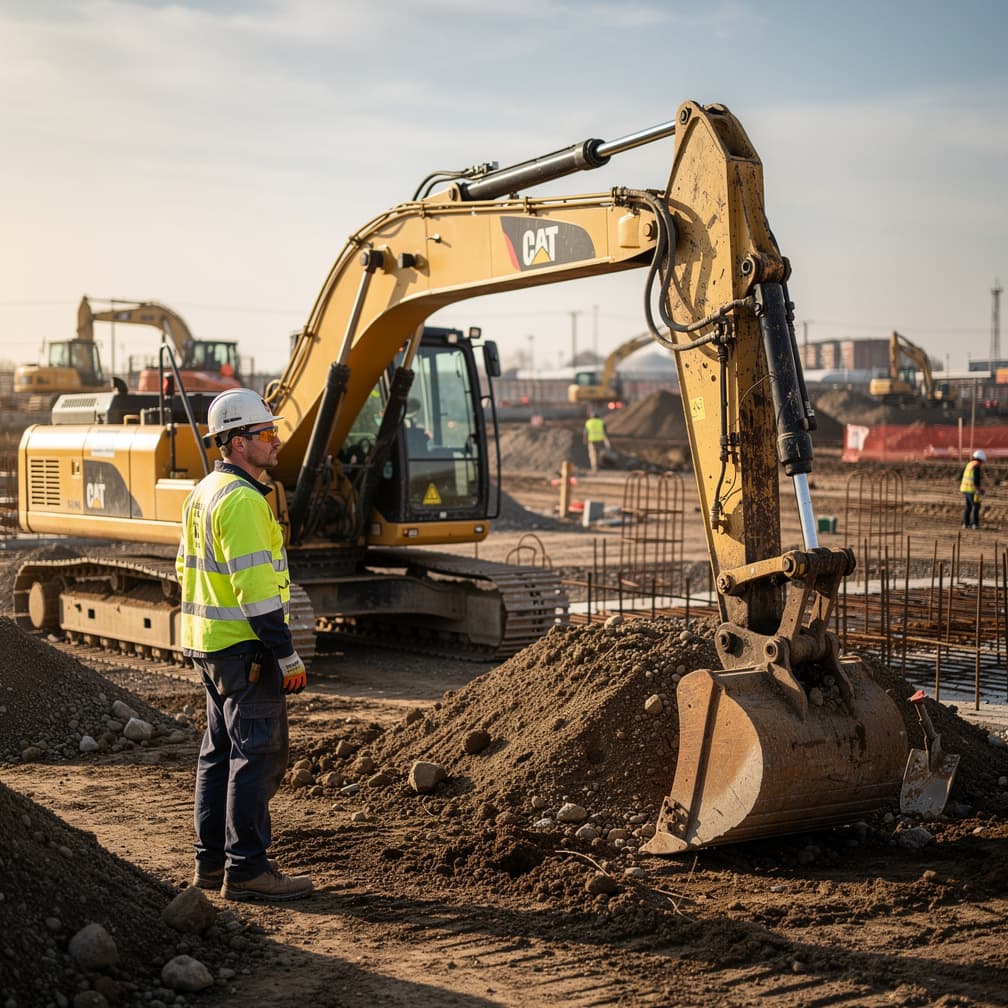

As an excavation contractor in Norman, you sign somebody else's insurance requirements before you ever move dirt. The subcontract sets the limits, names the additional insureds, and often demands a waiver of subrogation, all before you have priced a single cubic yard. Excavation contractor insurance in Norman gets built backward from those documents rather than from a generic checklist. Read the insurance exhibit before the scope, because the exhibit is what your policy has to satisfy. A certificate naming the wrong entity can hold your mobilization for a week while the general contractor waits. Payroll, machine list, and haul radius decide the price; the contract decides the shape. Bring both to a comparison of quotes from participating carriers.
What Makes Norman Different
A short list of builders can account for most of your Norman calendar when the local market runs thin. That concentration turns one client's insurance exhibit into the working specification for your entire program. If the largest builder in Cleveland County demands higher limits, you end up carrying those limits on every job you run. Losing that relationship over a lapsed certificate is not a paperwork problem, it is a revenue problem. Ask each repeat client whether its requirements have changed before renewal, rather than after a certificate gets rejected. Requirements drift quietly: a new lender, a new owner, a new attorney, and suddenly the old wording fails. Keep every signed exhibit in one place so you can price the next bid against real obligations. The contractor who knows the requirement before the bid rarely loses a week to it afterward.
Local Risk Factors in Norman
Tornado and severe storm risk reaches excavation contractors through the yard rather than the trench, since nobody is digging while the sky looks like that. Wind takes trailers, tips lightweight machines, and drives debris through truck glass and hydraulic lines. A Norman yard full of parked iron after hours is where those losses concentrate. Inland Marine is generally the line looking at machine damage, and the values on your schedule decide whether a recovery matches what replacement actually costs. Attachments stored loose, uncounted, and unlisted are the ones that quietly disappear from a claim. Update the schedule before Oklahoma storm season rather than after it.
What Coverage Does an Excavation Contractor in Norman Need?
General Liability
Every general contractor who hires you asks for this one, and the certificate they want is describing it. It can help cover third-party bodily injury and property damage arising from your work: a passerby who steps into an open cut, a cracked driveway, a neighbor's wall undermined by a trench line. Your own faulty workmanship and injuries to your own crew typically fall elsewhere.
Example: A trench runs three feet from a neighbor's retaining wall and the wall leans a week later; the repair bill and the demand letter behind it are what general liability exists to answer.
Workers Compensation
Trench work puts people in the one place nobody wants to be: below grade, beside a wall that might move. This line generally responds to medical costs and lost wages after a work injury, and general contractors commonly want proof of it before a subcontractor mobilizes. Thresholds vary by state and payroll, and the Oklahoma Insurance Department publishes the current requirements for employers.
Example: An operator swings down from a track machine onto uneven fill and tears a knee; the medical bills and the weeks off the schedule are what this coverage is meant to handle.
Commercial Auto
Your pickup, your dump truck, and the lowboy hauling an excavator are vehicles; the machine riding on the trailer is not. This line is intended for accidents involving those vehicles on the road: injuries, damage to other cars, and the suit that follows. Personal auto policies generally exclude business hauling, which is where owners get caught.
Example: A loaded trailer swings wide at a light in Norman and clips two cars; the injuries, the vehicle damage, and the legal bill can fall to commercial auto.
Tools & Equipment (Inland Marine)
Iron moves: yard to trailer, trailer to site, site to the next site. This is the line that typically follows excavators, skid steers, breakers, buckets, and grade control units through that cycle, including theft and damage away from the yard. Wear, mechanical breakdown, and machines you left off the schedule usually sit outside it.
Example: A breaker and two buckets disappear from an unfenced lot overnight; when the attachments are listed with real replacement values, this coverage might pick up the loss.
Commercial Umbrella
When the primary limit runs out, this sits above it. One struck gas main can produce an outage, a third-party interruption claim, and an injury on the same afternoon, and a contract demanding a combined limit rarely cares which policy supplies it. An umbrella generally follows the wording underneath, so a mismatch below can leave the requirement half met.
Example: A grading job damages a foundation and injures a passerby at once; once the underlying limit is exhausted, an umbrella could carry the rest of the claim.
How Much Does Excavation Contractor Insurance Cost in Norman?
Excavation Contractor Insurance is a bundle of separate policies, priced separately. The ranges below are typical figures for Norman for each line, except workers compensation, which is rated per $100 of payroll; a quote prices each one against your own operations.
| Coverage | Typical range | What moves your price |
|---|---|---|
| General Liability Insurance | $310 - $900 per month | Industry and risk classification, annual revenue, number of employees |
| Workers Compensation Insurance | $0.75 - $2.74 per $100 of payroll | Employee classification codes, total annual payroll, experience modification rate |
| Commercial Auto Insurance | $450 - $1,425 per month | Fleet size and vehicle types, driver records and experience, coverage limits and deductibles |
| Inland Marine Insurance | $130 - $525 per month | Total insured value of the scheduled property, type and age of the equipment, where it is stored and how far it travels |
| Commercial Umbrella Insurance | $160 - $525 per month | Umbrella limit requested, limits carried on the underlying policies, loss history on those underlying policies |
Prices shown are general estimates, not guaranteed rates or quotes. Your actual premium will depend on the insurer, coverage selected, business details, location, claims history, and other underwriting factors. Learn about our pricing methodology.
What Are the Insurance Requirements for an Excavation Contractor in Norman?
Workers' comp is generally required once you have your first employee. Oklahoma generally requires employers to carry workers' compensation at that point. Common exemptions include sole proprietors, partners, and members of LLCs. Confirm current thresholds with your state's workers' compensation agency before you hire.
State auto liability minimums apply to business vehicles. Oklahoma's minimum auto liability limits are $25,000/$50,000/$25,000 (bodily injury per person / per accident / property damage). Contracts and lenders often require more than the state floor.
Where to verify licensing and coverage rules. The Oklahoma Insurance Department publishes consumer guidance and current insurance requirements for Oklahoma businesses. When a contract or lease demands specific wording, the Oklahoma Insurance Department's guidance is the authoritative place to check.
Get Your Excavation Contractor Quote in Norman
Compare rates from multiple carriers. Free quotes, no obligation.
Operating in Norman
- Locate marks fade, wash out, or expire, and a ticket that ran out last week is worth nothing in the argument that follows a strike on a Norman job.
- Open trenches left overnight need plates, barricades, or fence, because a hole nobody is watching turns into a third-party injury claim before your crew gets back.
- Attachments walk off sites more often than machines do; a breaker or a bucket fits in a pickup bed and rarely gets missed until the next morning.
- A property manager in Norman can demand a certificate naming the owner and the lender before your machine ever crosses the curb line.
How to Buy: Advice for Norman Owners
Gather the paperwork before you shop, because a quote built on guesses gets corrected at audit. Underwriters want annual payroll split by role, gross receipts, a vehicle list with drivers, and an equipment schedule showing every machine and attachment at replacement cost. Workers Compensation gets rated per $100 of payroll, so a sloppy split between yard hours and trench hours can cost you at year end. Inland Marine values decide whether a stolen breaker becomes a real recovery or a rounding error. Add three years of loss runs even when the news is bad; underwriters find them anyway, and a documented fix reads better than a surprise. The Oklahoma Insurance Department publishes consumer guidance on how policy audits work. Excavation work in Norman moves faster than paperwork, so build the packet once, then compare quotes from participating carriers in an afternoon instead of a month.
FAQ
Excavation Contractor Insurance in Norman: FAQ
Bidding is usually free; working is not. General contractors, owners, and permit offices commonly ask for proof of coverage before a machine mobilizes, and some want it attached to the bid package itself. The certificate names your limits and any additional insureds the contract demands. Read the insurance exhibit before you price a job in Norman, because meeting it after you win costs more than pricing it in.
Payroll comes first, since Workers Compensation is rated against it and trench work sits in a class code underwriters watch closely. After that: the machines on your schedule and their replacement values, how far your trucks haul, the depth and type of digging you take, and your loss history. Two contractors in Cleveland County with identical revenue can price very differently on those inputs alone.
Almost any counterparty on the job: the general contractor who hired you, the property owner, a lender, a utility, and often the office issuing the permit. Each can set its own limits and its own wording, and they rarely agree with each other. Ask for every requirement in writing before you bid a Norman job, then buy once to satisfy the strictest one instead of adjusting a policy per contract.
The repair bill is only the opening. A struck line can bring an outage, claims from businesses that lost service, emergency response, and a long argument about whether the locate marks were accurate. General Liability is the line most likely to respond to third-party damage, though some policies handle underground work through specific wording rather than a general assumption. Ask your carrier to point at the page before you need it.
Damage to somebody else's property is the classic General Liability claim, and a cracked driveway or a crushed curb typically lands there. Damage to the part of the property you were hired to work on gets treated differently, and that distinction surprises contractors every year. Photograph existing cracks before you arrive on a Norman lot; that record settles many of these arguments faster than any policy language.
Machines in transit are generally an Inland Marine question rather than a Commercial Auto one, since the truck and trailer are vehicles and the excavator is mobile equipment riding along. If the trailer tips, two policies may look at the same event from different angles. Check that every attachment traveling with the machine appears on the schedule, because unlisted gear tends to be the piece that gets argued about.
Sources
- 1.Oklahoma Insurance Department(Oklahoma Insurance Department publishes consumer guidance for insurance buyers.)


