







































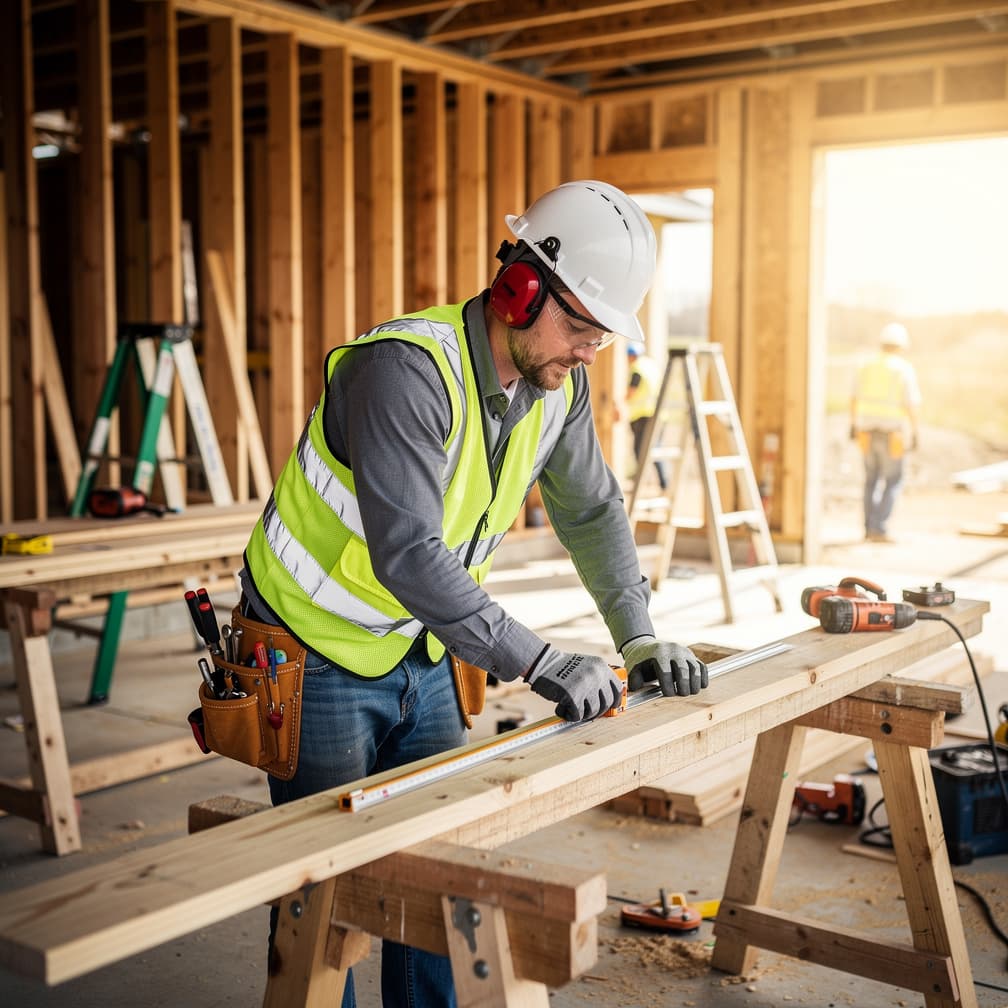

As a carpenter in Bend, you own the finish work, which means you own the blame for anything marked, gouged, or cracked while you are in the room. Carpenter insurance in Bend is mostly about that: other people's property, damaged during work you were hired to do. General liability may respond to the countertop a helper chipped, though the policy carries its own language about damage to your own work, and that distinction catches people out. Read the exclusions before you need them. Clients rarely care whose hand slipped; they care who is paying to replace the slab. A helper hurt on the same job starts a completely separate claim under a different policy. The sections below separate those threads so you can compare quotes knowing what each one actually buys.
What Makes Bend Different
Vehicle use drives more of a rural carpenter's premium than owners expect when they first read a quote. Long distances between jobs mean more hours on the road and more chances for what you cannot control. Radius, mileage, and who else drives the truck all sit on the application for a reason. Answering them accurately costs nothing; answering them casually can undo the part you were counting on. Work that crosses county lines belongs on the form, even when it feels like a rare exception. Tool value in the bed matters too, because what you haul is not the same as what you drive. List the equipment properly and a quote for Bend work reflects your operation instead of a generic one. Participating carriers in Oregon weigh those answers differently, which is the whole reason to compare them.
Local Risk Factors in Bend
A job inside an evacuation zone stops being your job for as long as the zone stands, and nothing in an Oregon policy speeds that up. Payroll, the lease on your bay, and the client's expectations all keep running anyway. Tools left behind in a closed area cannot be inventoried, moved, or protected, which is why a schedule listing models and serials matters more here than almost anywhere else. Commercial Property is where an equipment loss gets raised, subject to what the form says about property away from your premises. Keep the list off-site. Across Deschutes County, a crew that can load out in an hour has an advantage over one that cannot, and it is an operational advantage rather than a financial one.
What Coverage Does a Carpenter in Bend Need?
General Liability
The certificate a general contractor asks for is usually asking about this line. General Liability is meant for the harm your work does to other people and their property: a visitor who goes down on sawdust, a stone counter cracked during an install, a fixture caught by a ladder. Damage to your own workmanship is handled differently, and that split catches carpenters out.
Example: A router skates off its rail and gouges a client's counter three days before the kitchen is due; General Liability may answer for the replacement and for the argument that follows it.
Commercial Property
Flood typically sits outside this form, which owners discover at the worst moment. Commercial Property is where a shop, a bench, stock, and the tools that sleep there overnight get raised after a fire, a storm, or a break-in. What it says about equipment away from your premises deserves a direct question rather than an assumption.
Example: A break-in at a rented bay in Bend clears out the nailers, the track saw, and a planer bought last spring; Commercial Property could take up the replacement, depending on the schedule you filed.
Workers Compensation
A helper puts a nail through his hand at ten in the morning, and the rest of the day turns into medical bills, lost wages, and forms. Workers Compensation is the line intended for exactly that, and general contractors commonly want proof of it before your crew is allowed through the gate. Whether it reaches you as the owner depends on how the business is structured.
Example: A framer steps off a bench wrong and misses six weeks of work; Workers Compensation might pick up the medical costs and a share of the wages while the claim runs its course.
Commercial Auto
Personal auto policies commonly exclude business use, so the pickup hauling trim to a job can sit in a gap you learn about from the roadside. Commercial Auto is written for vehicles doing work, and carriers rate radius, cargo, and everyone who takes the wheel. The tools in the bed are a separate question from the truck around them.
Example: A loaded trailer jackknifes on a wet ramp and takes the tailgate with it; Commercial Auto is generally the line raised for the vehicle, with the cargo inside treated on its own terms.
How Much Does Carpenter Insurance Cost in Bend?
Carpenter Insurance is a bundle of separate policies, priced separately. The ranges below are typical figures for Bend for each line, except workers compensation, which is rated per $100 of payroll; a quote prices each one against your own operations.
| Coverage | Typical range | What moves your price |
|---|---|---|
| General Liability Insurance | $100 - $330 per month | Industry and risk classification, annual revenue, number of employees |
| Commercial Property Insurance | $65 - $240 per month | Building value and construction type, roof age and condition, fire protection class |
| Workers Compensation Insurance | $0.75 - $2.74 per $100 of payroll | Employee classification codes, total annual payroll, experience modification rate |
| Commercial Auto Insurance | $180 - $490 per month | Fleet size and vehicle types, driver records and experience, coverage limits and deductibles |
Prices shown are general estimates, not guaranteed rates or quotes. Your actual premium will depend on the insurer, coverage selected, business details, location, claims history, and other underwriting factors. Learn about our pricing methodology.
What Are the Insurance Requirements for a Carpenter in Bend?
Workers' comp is generally required once you have your first employee. Oregon generally requires employers to carry workers' compensation at that point. Common exemptions include sole proprietors, partners, and corporate officers. Confirm current thresholds with your state's workers' compensation agency before you hire.
State auto liability minimums apply to business vehicles. Oregon's minimum auto liability limits are $25,000/$50,000/$20,000 (bodily injury per person / per accident / property damage). Contracts and lenders often require more than the state floor.
Flood damage is typically excluded from standard policies. Standard commercial property and builders-risk-type policies typically exclude flood damage. Flood exposure varies address by address, so check your premises in FEMA's Flood Map Service Center before deciding; if you sit in a mapped flood zone, a separate policy through the National Flood Insurance Program is the usual starting point.
Where to verify licensing and coverage rules. The Oregon Division of Financial Regulation publishes consumer guidance and current insurance requirements for Oregon businesses. When a contract or lease demands specific wording, the Oregon Division of Financial Regulation's guidance is the authoritative place to check.
Get Your Carpenter Quote in Bend
Compare rates from multiple carriers. Free quotes, no obligation.
Operating in Bend
- Long drives between jobs across Deschutes County put more hours on the truck than the work itself does, and mileage gets priced on the application whether or not you volunteer it.
- Photographs of the site condition on day one settle arguments on day thirty, because a scratch nobody noticed at the start becomes your scratch by default once someone spots it.
- Replacement tools can take a week to source when the nearest supplier sits a long drive from Bend, and the job you promised does not pause while you go find them.
- About 47 carpenters operate in Deschutes County, which is the number that decides how fast a general contractor can replace you on the day your paperwork turns out not to be current.
How to Buy: Advice for Bend Owners
The day you put someone else on a saw, the shape of your insurance changes. Workers Compensation prices against payroll, so a helper is not a rounding error, and the medical costs and lost wages behind a real injury are what the line exists for. General Liability generally does not answer for your own employee's injury, which is the most common misunderstanding in this trade. Get the classification right at the start, since a wrong code follows you through the term and into the audit. Ask what documentation a carrier expects for casual labor. The Oregon Division of Financial Regulation publishes consumer guidance on workers coverage requirements for employers in Oregon. With the payroll numbers straight, participating carriers can price the same operation and you can compare them honestly.
FAQ
Carpenter Insurance in Bend: FAQ
Payroll by role, annual revenue, a vehicle list with drivers, a tool inventory with values, and your claims history. Those five answers price most of what you buy. Under-report payroll and the audit corrects it for you at term end, usually at an awkward moment; over-report and you pay for crew you never had. Gather them once and the folder serves every renewal after.
No. A certificate is a snapshot showing coverage existed on the day it was issued. It does not change what the policy says, and it does not promise the policy will still be in force next month. If a contract requires notice of cancellation, that has to be arranged with the carrier itself. Treat the certificate as evidence, not as the agreement.
Claims follow you for years, and participating carriers in Oregon weigh them differently from one another. Two small damage claims can cost more in renewal pricing than the repairs would have cost out of pocket, which is the argument for a deductible high enough to keep minor losses off the record. Ask what a claim of a given size does to renewal in Oregon before you file it.
Tell the carrier. An unhappy phone call is not a claim, but notice to the insurer is, and the delay between the two is where a small problem grows teeth. Photograph the condition, keep the messages, and avoid promising a repair before anyone with authority has looked at it. Small losses can still be cheaper to absorb than to file, though that is a decision made with information rather than in the moment.
One policy serves every job, which is exactly why the strictest contract you sign ends up setting the requirements for all the others. You cannot buy coverage per project, so buying to one client's minimum can leave the next agreement unsatisfied. Pull the toughest insurance exhibit in your files and treat that as your specification, rather than the easiest one.
Most general contractors require proof before your crew sets foot on a Bend site, and the requirement usually comes from their own contract with the owner further up the chain. General Liability is the line they ask about most, though plenty of agreements also want proof of workers coverage for anyone you bring with you. The certificate is what satisfies them. The limits sitting behind it are what actually matter to you.
Sources
- 1.U.S. Census Bureau, County Business Patterns (2022), Deschutes County(Deschutes County has about 47 businesses in this trade's category (NAICS group 238350).)
- 2.Oregon Division of Financial Regulation(Oregon Division of Financial Regulation publishes consumer guidance for insurance buyers.)
- 3.FEMA / FloodSmart(Flood coverage is typically purchased separately; FEMA administers the National Flood Insurance Program.)


