







































Updated July 6, 2026

Painting Contractor Insurance in Oregon
One Oregon painting business may be owner-only, focused on occupied homes, cabinet repaints, and small exterior jobs with one van, a few ladders, and tight customer schedules. Another may run several crews across tenant improvements, retail interiors, and larger commercial repaints, with sprayers, scaffolding, and materials moving between sites all week. Painting contractor insurance in Oregon should separate those setups, because the coverage issues are different long before a claim happens. An owner-only shop may be deciding whether to elect workers compensation, while a growing contractor with even one employee needs to review that requirement carefully. If your tools, sprayers, and staging equipment travel constantly, inland marine deserves the same attention as liability. Start your quote around how you actually bid, staff, and stage work, then compare options with a licensed insurance professional before the next certificate request lands in your inbox.
Climate Risk Profile
Natural Disaster Risk in Oregon
Understanding climate-related risks helps determine appropriate insurance coverage levels.
Wildfire
Very High
Earthquake
High
Flooding
Moderate
Landslide
Moderate
Expected Annual Loss from Natural Hazards
$620M
estimated economic loss per year across Oregon
Source: FEMA National Risk Index
How Much Does Painting Contractor Insurance Cost in Oregon?
Painting Contractor Insurance is a bundle of separate policies, priced separately. The ranges below are typical figures for Oregon for each line, except workers compensation, which is rated per $100 of payroll; a quote prices each one against your own operations.
| Coverage | Typical range | What moves your price |
|---|---|---|
| General Liability Insurance | $90 - $320 per month | Industry and risk classification, annual revenue, number of employees |
| Workers Compensation Insurance | $0.75 - $2.74 per $100 of payroll | Employee classification codes, total annual payroll, experience modification rate |
| Commercial Auto Insurance | $170 - $470 per month | Fleet size and vehicle types, driver records and experience, coverage limits and deductibles |
| Inland Marine Insurance | $20 - $90 per month | Total insured value of the scheduled property, type and age of the equipment, where it is stored and how far it travels |
Prices shown are general estimates, not guaranteed rates or quotes. Your actual premium will depend on the insurer, coverage selected, business details, location, claims history, and other underwriting factors. Learn about our pricing methodology.
Common Claims for Painting Contractor Businesses in Oregon
A crew leaves sprayers, ladders, and masking equipment loaded in a truck overnight between two Oregon job sites, then discovers tools missing the next morning and cannot start the scheduled interior repaint on time.
An owner adds the first employee for a busy exterior season, the worker gets hurt moving equipment on site, and the business suddenly faces an injury issue that turns on whether workers compensation was set up correctly.
During an occupied interior repaint, masking slips and paint reaches a customer's flooring and fixtures, which pauses the job, creates a property damage dispute, and puts the final payment at risk.
Coverage Considerations in Oregon
- Workers compensation insurance deserves early review in Oregon because it is generally required once your painting business has one employee, even if you started as an owner-only operation.
- Tools and equipment coverage should be matched to how your business actually stores and moves sprayers, ladders, scaffolding, and materials, because property that travels or stays on site can create a different loss pattern than property kept at one shop.
- Inland marine insurance matters when sprayers, ladders, scaffolding, and portable tools move from house to house or between commercial sites, because property that travels creates a different exposure than property kept at one shop.
- General liability insurance should be reviewed around the kinds of premises you enter, especially occupied homes, retail spaces, and active tenant improvement projects where a small mistake can stall the job and strain payment timing.
Get Your Painting Contractor Insurance Quote in Oregon
Compare rates from multiple carriers. Free quotes, no obligation.
Operating a Painting Contractor Business in Oregon
- Occupied residential painting in Oregon often means protecting customer schedules, furniture, and access paths while your crew works room by room instead of closing off the whole property.
- Retail interiors and tenant improvement jobs can require night or off-hour work, which changes supervision and how tools and sprayers are secured between shifts.
- Exterior repaint work in Oregon can involve moisture-sensitive scheduling and stop-start production, so equipment may stay loaded longer and crews may return to the same site repeatedly.
- A growing painting company with even one employee in Oregon needs to account for the state's workers compensation requirement, so hiring plans should be part of the quote conversation early.
Common Risks for Painting Contractor Businesses
- Paint spills on hardwood floors, carpet, tile, or finished surfaces during interior painting jobs
- Ladders, scaffolding, or tools damaging windows, trim, siding, or customer property
- Customer slip and fall incidents caused by wet floors, cords, drop cloths, or equipment in walkways
- Vehicle accident exposure while hauling crews, sprayers, ladders, and supplies between job sites
- Tool theft, breakage, or damage to contractors equipment stored in trucks or trailers
- Subcontractor coverage gaps or missing certificates that delay work on commercial or residential projects
Preparing for Your Painting Contractor Insurance Quote in Oregon
Prepare a clear breakdown of your Oregon work mix, including occupied residential jobs, exterior repaints, retail interiors, and tenant improvements, because each setup changes how underwriters view your exposure.
List every owner, employee, and crew role you use today, and note whether you are still owner-only or already hiring, because workers compensation treatment changes quickly as the business grows.
Gather details on where tools, sprayers, scaffolding, and materials are stored between jobs, including whether they stay at a shop, in a trailer, or on site overnight.
Build an equipment list that includes sprayers, scaffolding, ladders, and other mobile tools, then estimate where they are stored and how often they travel off premises.
What Happens Without Proper Coverage?
Painting contractors tend to feel the insurance issue at the exact moment a customer asks for a certificate or a claim interrupts a job already on a tight schedule. The need is practical. You may not be able to start certain projects without proof of coverage, and a single property damage claim can erase the profit from several smaller jobs if the policy does not match the work.
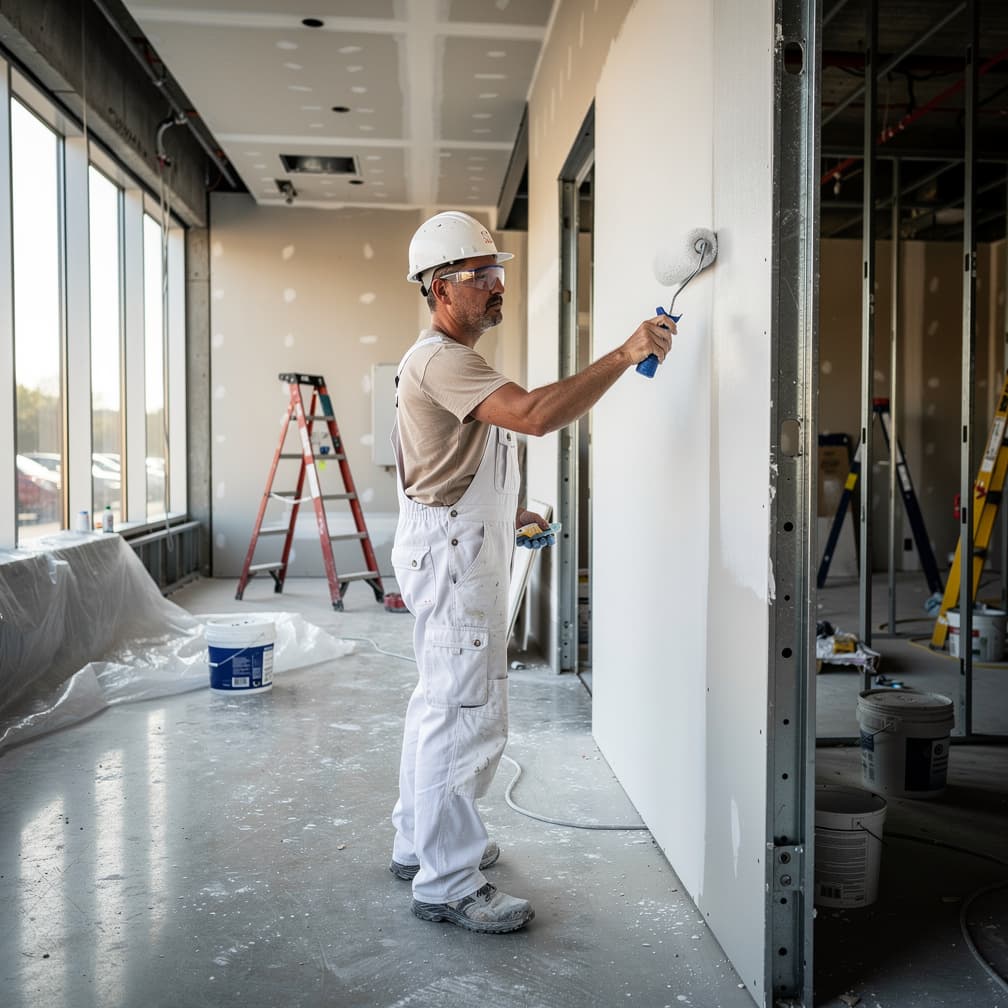
Consider one common sequence. An interior repaint in a furnished home, the crew masking around a kitchen, and a gallon that tips off a ladder shelf onto engineered hardwood. The cleanup fails, three boards need replacement, the flooring turns out to be discontinued, and the homeowner now wants the whole room refloored. What began as a two day job becomes a negotiation over someone else's floor while the next job on the calendar slips. Claims like this are why liability limits should track the finishes you work around, not the size of your invoice.
Two quieter exposures deserve equal respect. Payroll classification errors surface at audit time, when a helper listed as office staff turns out to spend four days a week on ladders, so describe duties accurately up front and the workers compensation policy will behave the way you expect. And because vans carry the whole operation, one auto claim can strand crew, sprayers, and schedule at once, which is why the vehicle and equipment coverages are really continuity policies in this trade.
Insurance also helps you qualify for better work. Larger residential projects, commercial repaints, tenant improvement jobs, and property management accounts often come with tighter documentation standards. If you want to bid those jobs confidently, line up your liability, workers compensation, auto, and equipment coverage together, and request quotes using your current contracts, payroll approach, and equipment list so the coverage matches the jobs you actually take.
Recommended Coverage for Painting Contractor Businesses
Based on the risks and requirements above, painting contractor businesses need these coverage types in Oregon:

General Liability
Essential coverage for every business, protect against third-party bodily injury, property damage, and advertising claims.

Workers Compensation
Help cover your employees' medical expenses and lost wages for work-related injuries and illnesses.

Commercial Auto
Protect your business vehicles and drivers with comprehensive commercial auto coverage.

Inland Marine
Protect tools, equipment, and goods in transit or stored at locations away from your primary premises.
Painting Contractor Insurance by City in Oregon
Insurance needs and pricing for painting contractor businesses can vary across Oregon. Find coverage information for your city:
Insurance Tips for Painting Contractor Owners
Size your general liability insurance against the largest interior or exterior jobs you accept, especially if you work in occupied homes or customer-facing commercial spaces where property damage can halt the project immediately.
Break out your payroll and job duties clearly before requesting workers compensation insurance, because estimators, painters, helpers, and office staff do not present the same injury exposure to an underwriter.
List every business-use vehicle, who drives it, and how it is used during the week so your commercial auto insurance reflects daily transport of ladders, sprayers, paint, and crew members.
Schedule your sprayers, ladders, pressure washers, scaffolding components, and other mobile contractors equipment under inland marine insurance if losing them would force you to delay or cancel booked work.
Bring sample contracts and certificate requirements to the quote process, because many painting jobs are awarded only after the client or general contractor checks your limits and coverage types.
Separate residential repaint work from commercial or tenant improvement work in your application details, since the jobsite conditions, customer expectations, and claim patterns can differ in ways that affect underwriting.
If you use subcontractors on overflow work, settle that labor setup before binding coverage so your policy and certificate process match how labor is actually supplied on the job.
Check your coverage before adding spray applications, larger exterior projects, or multi-crew scheduling, because growth changes your property damage, injury, vehicle, and equipment exposure at the same time.
FAQ
Frequently Asked Questions About Painting Contractor Insurance in Oregon
Oregon painting contractors usually need workers compensation once the business has one employee, with exemptions that can apply to sole proprietors, partners, and corporate officers. If you are adding staff for a busy season, review that change before the first day on site.
Oregon painters often need to separate mobile equipment from property kept at one shop, because sprayers, ladders, scaffolding, and tools can be stolen, damaged, or left unusable between jobs. Review inland marine and related equipment coverage around where items are stored overnight.
Oregon business insurance is regulated by the Oregon Division of Financial Regulation. If you are comparing policies, use that as the reference point for Oregon rules and consumer information while you review quote options with a licensed insurance professional.
Oregon owner-only painters often quote a different setup than multi-crew contractors because hiring status and mobile equipment exposure can change fast. A one-van residential operation and a contractor running several commercial crews usually need different workers comp and property reviews.
Oregon painting contractors should organize payroll or hiring plans and a mobile equipment list before requesting quotes. That helps separate general liability, inland marine, and workers compensation needs based on how your crews actually move through jobs.
General liability comes first, with workers compensation, commercial auto, and inland marine added as employees, business vehicles, or mobile tools enter daily operations. In practice the contract decides: most commercial and property management jobs specify the proof of coverage they expect before work begins.
That is the job general liability insurance is built for, provided the policy matches the work you perform. Damage to floors, windows, fixtures, or other customer property is the classic painting claim, so check limits and terms against the finishes and spaces you actually work around.
Yes, in most states, once anyone is on payroll. Crew size does not remove the exposure; ladders, lifting, and prep work do not get safer with fewer people. State requirements, payroll, and the actual duties your crew performs decide how the policy is set up.
Sources
- 1.Oregon Division of Financial Regulation(Workers compensation is generally required in Oregon once a business has one employee, with exemptions that can apply to sole proprietors, partners, and corporate officers.; Oregon business insurance is regulated by the Oregon Division of Financial Regulation.)
Updated July 6, 2026