


































Updated July 10, 2026

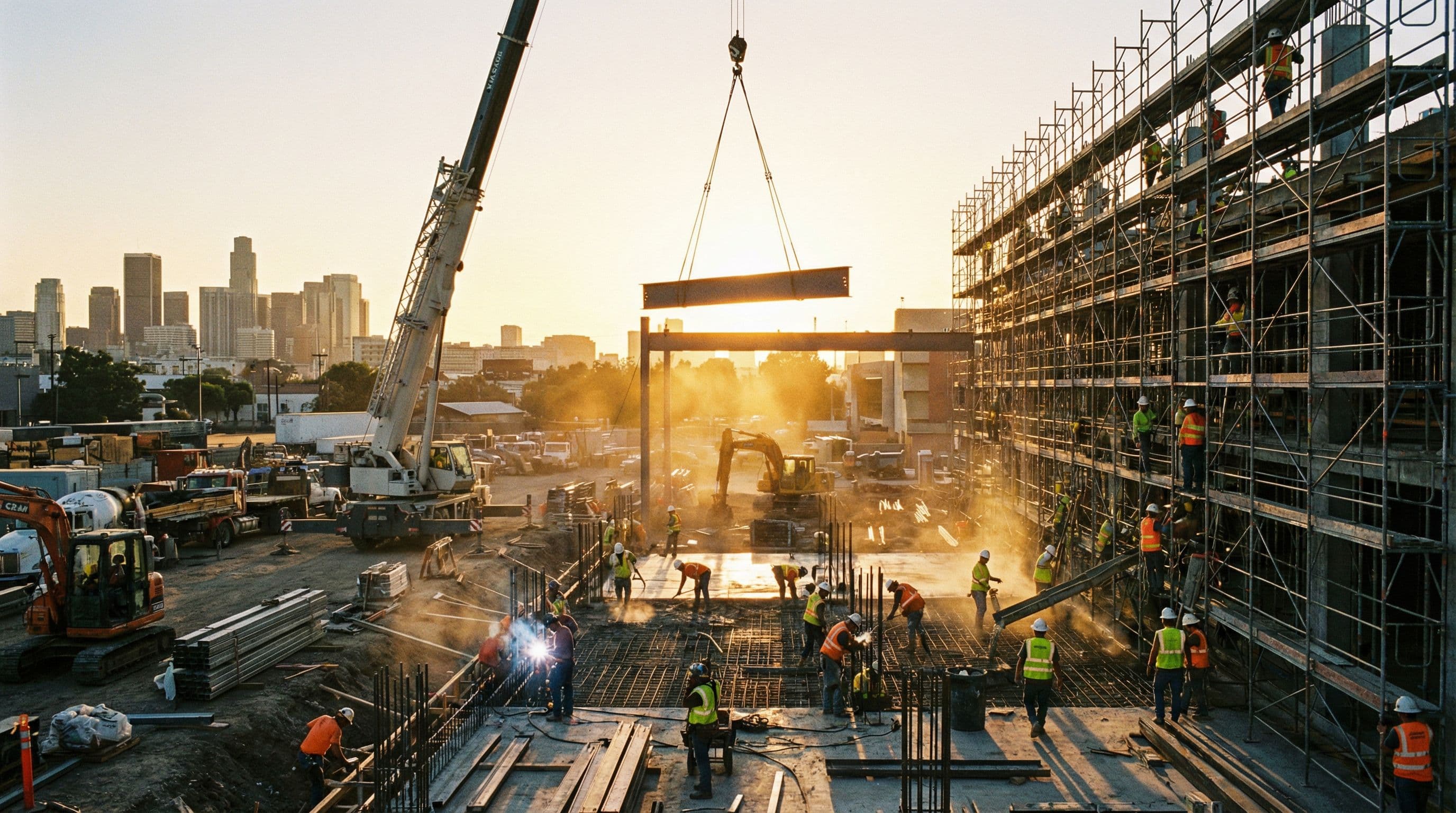
Construction support work in Oregon insures the gap between groundbreaking and handover, when weather, theft, and site injuries can reach an unfinished build. One rule in Oregon is set by statute, since workers compensation coverage is required from the first employee [1]. In parts of Oregon, wildfire risk decides which carriers quote a property at all. The sections below break down those cost drivers and the coverage that answers each.
Recommended Coverage for Builders Risk / Construction Support in Oregon
Builders Risk / Construction Support businesses face unique risks that require specific coverage types. Here are the policies most builders risk / construction support operations need:

General Liability
Essential coverage for every business, protect against third-party bodily injury, property damage, and advertising claims.

Commercial Property
Safeguard your business property, equipment, and inventory against damage and loss.

Inland Marine
Protect tools, equipment, and goods in transit or stored at locations away from your primary premises.

Workers Compensation
Help cover your employees' medical expenses and lost wages for work-related injuries and illnesses.

Commercial Umbrella
Extend your liability limits beyond your primary policies for extra protection against catastrophic claims.
Builders Risk / Construction Support Insurance Overview in Oregon
In Oregon, a project can move from framing to finish work while wildfire smoke, heavy rain, or a sudden earthquake changes the jobsite in a day. When you are comparing a quote, the details that matter most are the completed value, the build schedule, where materials are stored, and whether the site is a ground-up construction or residential renovation project. That is especially important in Portland, Eugene, and Salem, where construction activity is concentrated and project coordination often involves multiple trades working under tight deadlines.
A builders risk policy is usually built around the structure under construction, but the right request also needs to account for materials in transit, temporary storage, and project delay exposures that can affect the timeline. Oregon's regulatory environment, through the Oregon Division of Financial Regulation, and the state's workers compensation rules can also shape how a broader construction insurance program is assembled. The more concrete your project facts, the more precisely insurers can match a policy to your actual scope.
Why Builders Risk / Construction Support Businesses Need Insurance in Oregon
Oregon construction support work faces a mix of climate and jobsite risks that can change the claim picture quickly. The state's top hazards include wildfire, earthquake, flooding, and landslide, with severity ranging from very high for wildfire down to moderate for flood and landslide activity. For a project in progress, that can mean damage to framing, roofing, stored fixtures, or partially installed systems before the work is complete.
A builders risk policy can help cover project-specific losses like building damage, fire, theft, storm damage, vandalism, and equipment breakdown when those exposures are part of the build. State rules also matter, since the Oregon Division of Financial Regulation oversees the market and workers compensation is required for most employers with at least one employee, though sole proprietors, partners, and corporate officers may claim exemptions. That makes it important to separate the builders risk piece from the rest of the construction insurance program so each policy matches its role.
For example, builders risk coverage in Oregon may focus on the structure, materials, and labor in progress, while general liability can help address third-party injuries and property damage at the jobsite. Inland marine can help with tools and mobile property moved between locations.
Oregon requires workers' comp for businesses with employees (exemptions may apply: Sole proprietors; Partners). Non-compliance can result in fines and personal liability for owners. Commercial auto minimums are $25,000/$50,000/$20,000.
Key Risks for Builders Risk / Construction Support Businesses
Each of these risks can lead to claims that cost thousands, or more. Make sure your policy addresses every one:
- Damage to structures under construction
- Theft of building materials
- Weather-related project delays
- On-site worker injuries
- Subcontractor default
Cost Factors for Builders Risk / Construction Support Businesses in Oregon
Builders risk insurance cost in Oregon is shaped by project value, construction type, location, and schedule. A ground-up commercial build in Portland may present different exposure than a residential renovation in Eugene or a smaller project in Salem. Insurers also look at fire protection, theft exposure, whether the site is occupied, and how much material is being staged off-site or moved between locations.
Oregon's premium index is 104, meaning rates run about 4 percent above the national average. In practical terms, that means setting aside roughly four cents more per premium dollar than you would in a median-cost state. Because most Oregon businesses are small operations, many quotes are built around smaller crews and tighter timelines. That can affect your coverage requirements, especially when labor, materials, and soft costs need to be aligned with the completed value of the job.
If your project involves a renovation, new construction, or another type of build, be ready to explain the build method, the jobsite address, the project duration, and whether materials in transit coverage or project delay coverage is needed. Those specifics let insurers price the actual risk rather than relying on assumptions. As a baseline, general liability, the coverage nearly every builders risk construction support business carries, averages about $150 to $575 per month in Oregon. That range reflects the difference between a small operation with minimal payroll and a larger outfit with multiple active jobsites. Your final premium depends on payroll, annual revenue, claims history, and the specific risk class of your work.
Builders Risk / Construction Support businesses typically carry several separately priced policies. The ranges below are typical figures for Oregon for each line, except workers compensation, which is rated per $100 of payroll; a quote prices each one against your own operations.
| Coverage | Typical range | What moves your price |
|---|---|---|
| General Liability Insurance | $150 - $575 per month | Industry and risk classification, annual revenue, number of employees |
| Commercial Property Insurance | $130 - $600 per month | Building value and construction type, roof age and condition, fire protection class |
| Inland Marine Insurance | $55 - $210 per month | Total insured value of the scheduled property, type and age of the equipment, where it is stored and how far it travels |
| Workers Compensation Insurance | $0.75 - $2.74 per $100 of payroll | Employee classification codes, total annual payroll, experience modification rate |
| Commercial Umbrella Insurance | $80 - $320 per month | Umbrella limit requested, limits carried on the underlying policies, loss history on those underlying policies |
Prices shown are general estimates, not guaranteed rates or quotes. Your actual premium will depend on the insurer, coverage selected, business details, location, claims history, and other underwriting factors. Learn about our pricing methodology.
State Requirements
Insurance Regulations in Oregon
Key regulatory requirements for businesses operating in OR.
Regulatory Authority
Workers' Compensation InsuranceRequired
Required for employers with 1+ employee.
Exempt categories
- Sole proprietors
- Partners
- Corporate officers
Commercial Auto Minimum Liability
$25,000/$50,000/$20,000 (bodily injury per person / per accident / property damage)
Source: Oregon Department of Insurance, U.S. Department of Labor
What Drives Builders Risk / Construction Support Insurance Costs in Oregon
The unfinished structure
Builders risk insurance can help cover a structure while it is being built, including materials on site. Coverage typically runs from ground break to completion.
Materials and equipment theft
Material theft claims track site access and storage practices. Inland marine insurance typically covers movable property that a standard property policy leaves out.
Wildfire
Wildfire exposure can limit which carriers quote a property and on what terms, especially outside city cores. Defensible space, roof materials, and access for fire equipment all feed the underwriting file, so mitigation work is worth documenting as it happens.
What payroll does to a quote
Construction support wages in Oregon average $55,300 a year [2], and workers compensation pricing keys directly to payroll. Classification is the detail to verify first, since a misfiled class code can move the rate more than a new hire does.
Climate Risk Profile
Natural Disaster Risk in Oregon
Understanding climate-related risks helps determine appropriate insurance coverage levels.
Wildfire
Very High
Earthquake
High
Flooding
Moderate
Landslide
Moderate
Expected Annual Loss from Natural Hazards
$620M
estimated economic loss per year across Oregon
Source: FEMA National Risk Index
Insurance Tips for Builders Risk / Construction Support Business Owners in Oregon
Match the builders risk limit to the full completed value of the project, including labor, materials, and any contract soft costs that apply to the job.
If materials are stored off-site or moved between suppliers and the jobsite, ask how materials in transit coverage is handled under the construction insurance program.
For occupied renovation projects, confirm how the policy treats damage to structures under construction when owners, tenants, or other parties remain on site.
If the project is in wildfire-prone or storm-exposed parts of Oregon, ask whether the policy accounts for fire risk, storm damage, and weather-related project delay coverage.
When quoting a ground-up construction job, provide the build type, square footage, completion timeline, and jobsite security details to support a more accurate policy.
Pair the builders risk policy with general liability insurance for third-party injuries and property damage at the jobsite.
Add inland marine insurance when the project depends on tools or mobile property across multiple Oregon locations.
Check whether workers compensation is already in place for employees, since Oregon generally requires it for employers with at least one employee, with limited exemptions.
Get Builders Risk / Construction Support Insurance in Oregon
Enter your ZIP code to compare builders risk / construction support insurance rates from top carriers.
Business insurance starting at $25/mo
Builders Risk / Construction Support Business Types in Oregon
Find insurance tailored to your specific builders risk / construction support business. Select your business type for coverage recommendations, pricing, and quotes:

Renovation Contractor Insurance
Get a renovation contractor insurance quote built for remodeling jobs, hidden hazards, and project liability. Coverage can be tailored to your crew, jobsites, and project type.

Scaffolding Company Insurance
Get scaffolding company insurance built for collapse liability, fall injury claims, and equipment damage. Request a quote with the details your operation needs.

Crane Operator Insurance
Get coverage built for crane lifts, rigging work, and heavy lift operations. Request a crane operator insurance quote to review limits, certificates, and jobsite requirements.

Construction Equipment Rental Insurance
Get coverage built for rental yards, jobsite deliveries, and contractor disputes. A construction equipment rental insurance quote can help you compare limits, deductibles, and protection for rented machines.
Builders Risk / Construction Support Insurance by City in Oregon
Insurance rates and requirements can vary by city. Find builders risk / construction support insurance information for your area in Oregon:
FAQ
Builders Risk / Construction Support Insurance FAQ in Oregon
It can help cover the structure under construction, plus project materials and labor in progress, though options vary by insurer and project details. In Oregon, that can be especially relevant for fire risk, theft, storm damage, vandalism, and equipment breakdown exposures tied to the jobsite.
Be ready with the project address, build type, completed value, timeline, occupancy status, construction materials, storage plans, and whether the job is a renovation or a ground-up construction project. Those specifics let the insurer match the policy to your actual project scope.
New construction often centers on the full structure as it is being created, while a renovation may need to account for an existing building that is partially occupied or partially complete. The requirements vary by project scope, site conditions, and contract terms.
Project value, location, construction type, duration, theft exposure, fire protection, and weather risk all matter. Oregon's wildfire, earthquake, flood, and landslide hazards can also influence how underwriters view the project.
Yes, that is often the core purpose of the policy, but the exact terms vary. For a quote, it helps to specify whether the project includes stored materials, phased labor, or work that is already installed but not yet complete.
Many programs pair builders risk with general liability, inland marine, and workers compensation, depending on the project. That can help address third-party injuries, tools, mobile property, and required workforce coverage.
Some policies may address project delay coverage or theft-related losses, but the scope depends on the carrier and the policy form. If your Oregon jobsite faces wildfire smoke, storm damage, or material theft exposure, ask for those options during the quote process.
Timing varies by project complexity and how complete the information is. A well-prepared request with the completed value, schedule, location, and materials details can help move a builders risk insurance quote in Oregon forward more efficiently.
Sources
- 1.Oregon Division of Financial Regulation(Oregon requires workers compensation coverage from the first employee.)
- 2.BLS Quarterly Census of Employment and Wages (2024)(Construction support workers in Oregon earn an average of $55,300 a year.)