







































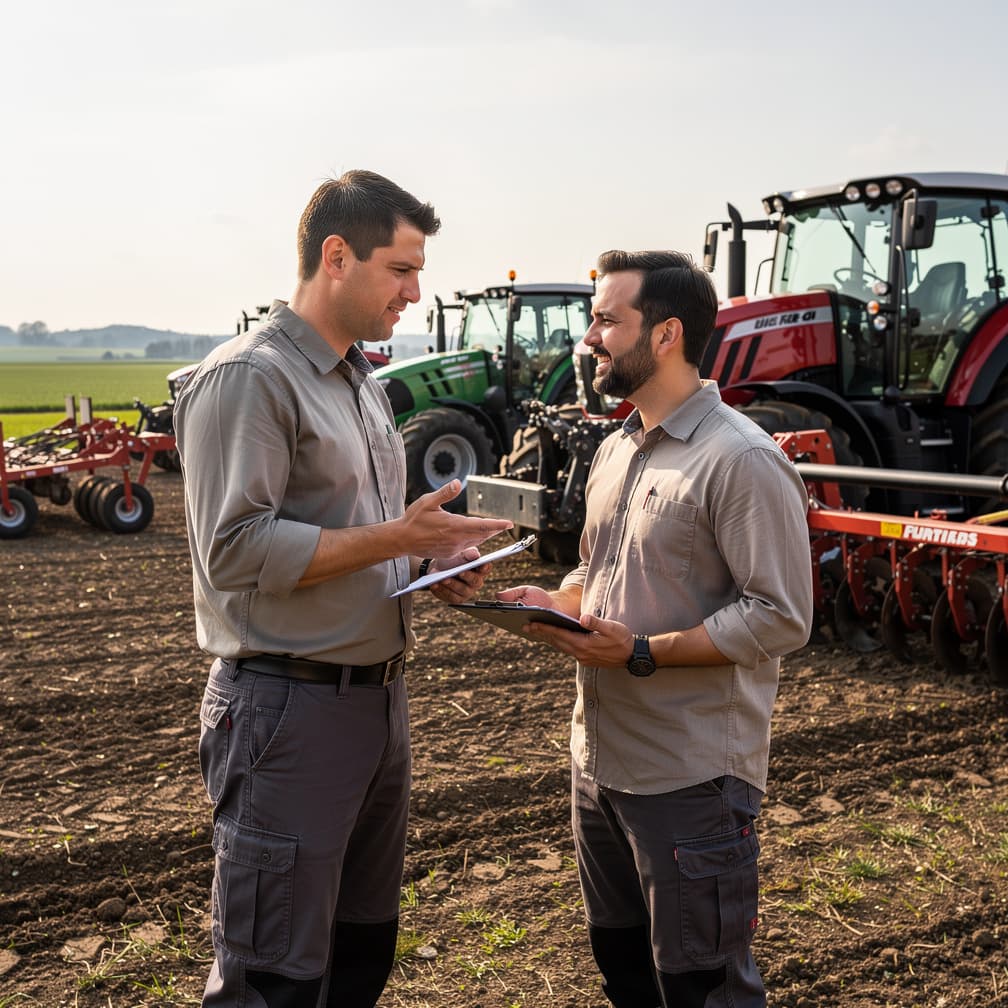

As an agricultural equipment dealer in Salem, you may be the only counter within an hour holding the part a customer needs during the worst week of the season. That position changes what agricultural equipment dealer insurance in Salem has to answer for. A shop closed by fire is a buyer driving somewhere else and staying there. Downtime bites harder in a thin market than a busy one, because the customers you lose while the doors are shut have farther to go and less reason to come back. So ask a quote how it handles lost income and the extra expense of working out of a temporary space. Ask what it does for the service and warranty records that prove your work. Price is the last question here, not the first.
What Makes Salem Different
Thin markets change who shows up after your loss more than who sells you the policy. A region with few dealerships also holds few people qualified to appraise a damaged combine or a torn-up baler. The adjuster assigned to you may never have handled a dealership file, and that friction shows up as time. Documentation is the countermeasure you actually control: photograph the yard, keep serial numbers current, keep the attachment schedule honest. A dealership near Salem that hands over a clean equipment list shortens its own claim by weeks. Nobody else is going to reconstruct what sat on that lot the morning before the storm. Carriers writing in Oregon differ in how much detail they want scheduled up front. Do the boring inventory work while the season is quiet.
Local Risk Factors in Salem
Wildfire reaches a dealership through smoke and ember long before any flame does, coating inventory in residue and forcing evacuations that empty the lot of staff. A dealership in Salem in a fire-prone stretch of Oregon can lose selling days to closures and air quality alone, before a single unit is touched. Smoke can work into cabs, filters, and electronics in ways that are slow to surface. Commercial property is generally the line that answers for fire and smoke damage to the building and to units on the lot, subject to the limit you carry. The exposure to watch is valuation, since a limit set for a partly stocked yard can fall well short of a full one at peak. Confirm how the lot is valued before fire season, not after.
What Coverage Does an Agricultural Equipment Dealer in Salem Need?
General Liability
When a customer slips at the parts counter or a bystander is struck during a demo, this is the line a claim usually starts on. It can help cover third-party bodily injury and property damage tied to your premises and operations, including damage you do on a buyer's ground during delivery. It generally does not extend to your own inventory or to your employees, which sit under other forms.
Example: A shopper climbs down from a display combine, catches a boot on the ladder, and breaks a wrist on the pavement. The injury claim and the legal costs behind it are the kind of loss this coverage may take on.
Commercial Property
The building, the parts inventory, the shop contents, and the units on your lot are what this line is built around. It may respond to fire, storm, theft, and vandalism damage to that property, whether it sits under roof or out in the yard, depending on how the form treats open-lot storage. Flood is the notable carve-out, typically excluded and arranged separately.
Example: A hailstorm rolls through overnight and dents every hood in the front row. Repair or replacement of the damaged units parked on the lot is the sort of claim this coverage can help absorb.
Tools & Equipment (Inland Marine)
Where a property form tends to stop at the edge of the lot, this line follows the machinery that moves. It could help cover units in transit between your yard, a customer site, and the service area, along with the portable shop tools and diagnostic gear your techs carry off-premises. What it typically does not address is faulty repair work itself, which is a separate exposure.
Example: A skid steer bound for a farm outside Salem shifts on the trailer when a strap fails, and the loader arm bends against the rail. Damage to that unit in transit is what this coverage is meant to answer.
Workers Compensation
The people most likely to get hurt at a dealership are the techs under the machines and the hands moving iron in the yard. This line is rated against payroll rather than headcount, and it could help cover medical costs and lost wages when an employee is injured on the job. It does not answer for a customer's injury, which belongs to the liability side instead.
Example: A mechanic straining to free a seized transmission wrenches his back and misses three weeks of the busy season. The medical bills and the wage replacement are what this coverage tends to pick up.
How Much Does Agricultural Equipment Dealer Insurance Cost in Salem?
Agricultural Equipment Dealer Insurance is a bundle of separate policies, priced separately. The ranges below are typical figures for Salem for each line, except workers compensation, which is rated per $100 of payroll; a quote prices each one against your own operations.
| Coverage | Typical range | What moves your price |
|---|---|---|
| General Liability Insurance | $120 - $460 per month | Industry and risk classification, annual revenue, number of employees |
| Commercial Property Insurance | $260 - $925 per month | Building value and construction type, roof age and condition, fire protection class |
| Inland Marine Insurance | $90 - $400 per month | Total insured value of the scheduled property, type and age of the equipment, where it is stored and how far it travels |
| Workers Compensation Insurance | $0.75 - $2.74 per $100 of payroll | Employee classification codes, total annual payroll, experience modification rate |
Prices shown are general estimates, not guaranteed rates or quotes. Your actual premium will depend on the insurer, coverage selected, business details, location, claims history, and other underwriting factors. Learn about our pricing methodology.
What Are the Insurance Requirements for an Agricultural Equipment Dealer in Salem?
Workers' comp is generally required once you have your first employee. Oregon generally requires employers to carry workers' compensation at that point. Common exemptions include sole proprietors, partners, and corporate officers. Confirm current thresholds with your state's workers' compensation agency before you hire.
Flood damage is typically excluded from standard policies. Standard commercial property and builders-risk-type policies typically exclude flood damage. Flood exposure varies address by address, so check your premises in FEMA's Flood Map Service Center before deciding; if you sit in a mapped flood zone, a separate policy through the National Flood Insurance Program is the usual starting point.
Where to verify licensing and coverage rules. The Oregon Division of Financial Regulation publishes consumer guidance and current insurance requirements for Oregon businesses. When a contract or lease demands specific wording, the Oregon Division of Financial Regulation's guidance is the authoritative place to check.
Get Your Agricultural Equipment Dealer Quote in Salem
Compare rates from multiple carriers. Free quotes, no obligation.
Operating in Salem
- Customers climb on equipment unsupervised. A buyer who wants to feel the seat height is up three steps before anyone at the counter looks over, which is where showroom injury claims tend to begin.
- A property manager behind a leased yard in Salem can hold the keys until a certificate naming the entity is on file, so a lapsed renewal stops occupancy rather than only paperwork.
- Delivery is the highest-risk half hour of the week for a dealership near Salem. A strap fails or a ramp shifts, and a unit worth more than the truck ends up on the ground.
- Demonstrations put your machine on somebody else's dirt. Ruts, a broken gate, or a cut tile line are third-party property damage, and the buyer calls you before calling anyone else.
How to Buy: Advice for Salem Owners
Gather four things before anyone can quote you: payroll broken out by job, the value of inventory on the lot, revenue, and a plain description of what happens in your Salem service bay. Workers Compensation is rated per $100 of payroll, so how you classify a parts clerk against a field mechanic changes both the number and the audit. Equipment schedules matter as much; list attachments, shop tools, and anything mobile carrying a serial number. General Liability pricing leans on foot traffic and on what customers are allowed to climb on unsupervised. Vague answers get loaded, which means you pay for an underwriter's uncertainty. The Oregon Division of Financial Regulation publishes consumer guidance on what to expect during a premium audit. Send the same clean packet to several participating carriers and let the spread do the arguing for you.
FAQ
Agricultural Equipment Dealer Insurance in Salem: FAQ
Valuable papers coverage sits on many property forms, though the sublimit is often modest. For a dealership the exposure is real: deal jackets, service history, and warranty documentation are what prove your work once the machines are gone. Digital backups stored away from the building are the cheap half of the answer. Ask what the sublimit is and whether it can be raised before you accept the default.
The paperwork usually arrives before the sale does. A floor plan lender can require proof on the inventory it financed, and a commercial buyer in Salem can attach an insurance clause to the purchase order. General Liability is the line those clauses commonly name. Requirements and contract customs vary, so the demand you face is whatever sits in your own agreements. Read them before you shop anything.
Cost tracks four things: payroll in the service bay, the value of iron on the lot, your revenue, and three years of loss history. A dealership running a busy shop prices differently than one that mostly moves units. Protection class and how isolated the yard sits overnight matter too. Nobody can quote you from a description of the trade alone, which is why the submission you send to carriers in Oregon does most of the work.
General Liability is generally the line asked about first when a member of the public is hurt on your premises. It could respond to medical costs and to the legal expense that follows, subject to your limit and the policy terms. Check whether defense sits inside that limit, because a serious injury can burn through it while fault is still being argued. Your own employees sit under a different line entirely.
Not automatically. A property form draws a line between what sits under roof and what sits in the open, and the yard is where a dealership in Salem keeps most of its value. Some forms limit what they do for property left outdoors overnight, and some leave it out. Ask in writing before you assume the lot is included, and ask how the limit gets set for a full yard rather than an empty one.
Property in transit is its own question. Inland Marine is typically the line that thinks about equipment moving between your yard, a customer site, and the service area. Whether it applies at a given moment can depend on who owns the unit once it leaves, which is a contract question as much as an insurance one. Get the transfer point written into the sale paperwork, then confirm the form matches it.
Sources
- 1.Oregon Division of Financial Regulation(Oregon Division of Financial Regulation publishes consumer guidance for insurance buyers.)
- 2.FEMA / FloodSmart(Flood coverage is typically purchased separately; FEMA administers the National Flood Insurance Program.)


