







































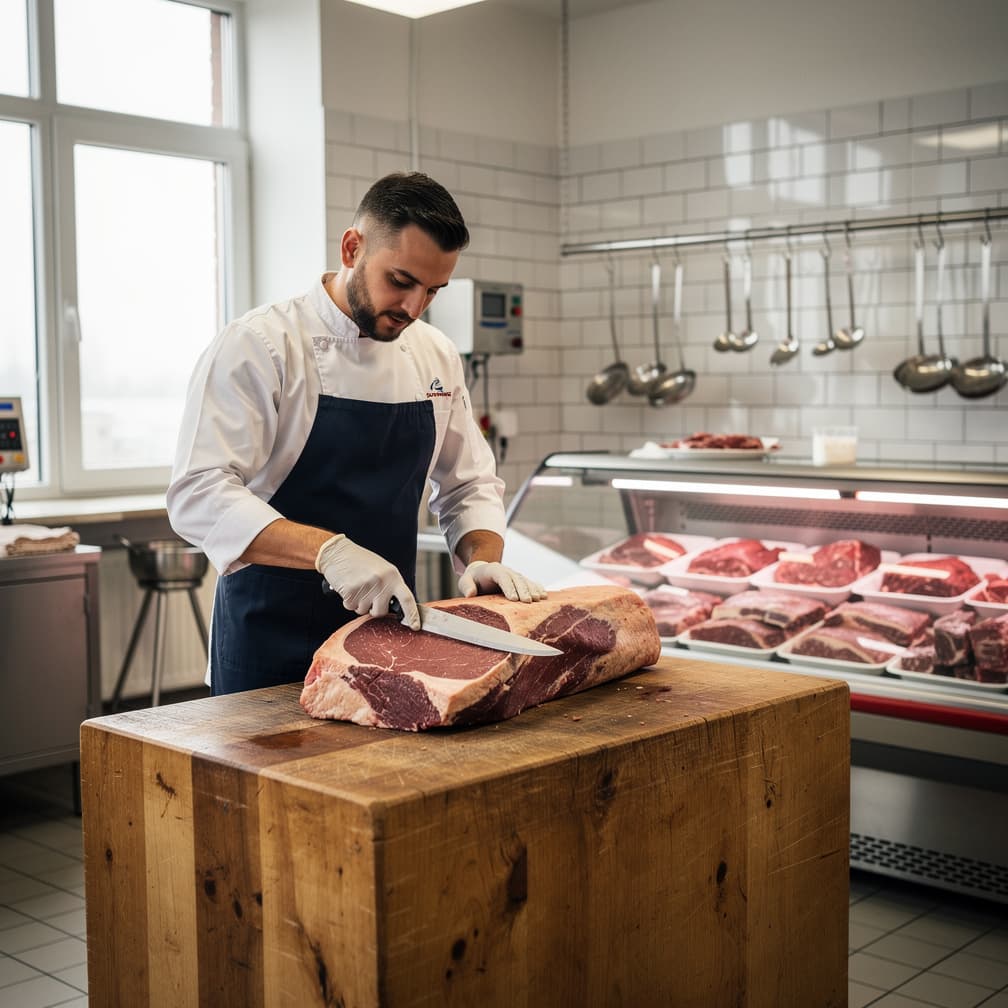

As a butcher shop in Salem, your reputation travels through a small number of regular customers, and one counter injury can reach all of them before the claim file opens. That is the quiet reason butcher shop insurance in Salem matters in a thin market: the money and the goodwill move together. A slip near the case, a cut from a sample knife, a delivery driver hurt in your back room, each one starts the same way, with a phone call you did not expect. Where the nearest shop is miles away you also absorb the outage yourself, because there is no neighbor with cooler space to hold your product while a compressor gets fixed. Ask what a policy expects of you when equipment fails and who decides what the lost product was worth. Then compare quotes from participating carriers on those terms.
What Makes Salem Different
Nobody asks for a certificate until the moment it stops your day, and then the request is urgent. A landlord in Salem can hold your keys over one missing page, and a wholesaler can hold your first delivery. In a thin market you may deal with the same handful of counterparties for years, which cuts both ways. The requests are fewer, so the paperwork feels optional right up until a new lease or a new supplier arrives. Keep a current certificate saved where you can send it from your phone in two minutes. Keep the policy dates in the same place, because a lapse is the one thing nobody forgives. If a request asks for wording your policy does not carry, that is a coverage question, not a filing question. Sort it with participating carriers in Oregon before you promise anything in writing.
Local Risk Factors in Salem
Days of heavy smoke keep customers home and pull staff back to their families, and a shop can lose a week without a flame reaching the building. The product does not survive that if the power drops with it. Smoke also settles into surfaces a food business cannot simply wipe down, which turns a cleanup into a closure. Interruption terms, where a policy carries them, generally require physical damage before anything begins, and smoke may or may not qualify depending on the wording. Ask exactly what counts, whose property must be damaged, and how long the waiting period runs. Then ask what proof of product loss a carrier expects in Salem, because a claim in Marion County moves on records rather than on how bad the week felt.
What Coverage Does a Butcher Shop in Salem Need?
General Liability
Landlords, market organizers, and wholesalers usually name this line when they ask for proof, and it is the one most butcher shops buy first. It can help cover third-party injury and property damage claims, a customer down on a wet floor or a cart through a neighbor's door, plus the defense behind them. Damage to your own equipment sits elsewhere.
Example: A customer steps off a wet mat near the case, breaks a wrist, and hires a lawyer six weeks later; general liability may answer for the injury claim and the defense that follows.
Commercial Property
Flood sits outside it, mechanical breakdown is commonly excluded, and wear on an aging compressor is not a claim. What remains is the core of a butcher shop's balance sheet: coolers, saws, slicers, scales, cases, and stock, against fire, theft, vandalism, and storm damage. Spoilage terms, where offered at all, usually arrive as a separate endorsement.
Example: A fire in the back room takes out two grinders and a wall of packaging overnight in Salem; commercial property could pick up the repairs and the equipment replacement, subject to your deductible.
Workers Compensation
A cut, a burn on a sealer, a slip in the cold room: staff injuries in this trade are hands-on and frequent enough that carriers price them by job code rather than headcount. This line is generally intended to address medical care and a share of lost wages for employees hurt at work. Rules on who must carry it vary by state.
Example: A helper's hand slips on a band saw during a busy stretch and the shift ends at an urgent care clinic; Workers Compensation is typically meant to handle the treatment and the wages missed while the hand heals.
Business Owners Policy
Where liability and property get bought as two policies, this package puts them under one, which is a common structure for an owner-operated counter. It can suit a shop with equipment, inventory, and public foot traffic in Salem. What sits inside varies by carrier, so the endorsement list, and what is missing from it, is the part worth reading.
Example: A pipe bursts over the display case and a customer slips in the runoff the same morning; a Business Owners Policy might address the property damage and the injury claim under one policy.
How Much Does Butcher Shop Insurance Cost in Salem?
Butcher Shop Insurance is a bundle of separate policies, priced separately. The ranges below are typical figures for Salem for each line, except workers compensation, which is rated per $100 of payroll; a quote prices each one against your own operations.
| Coverage | Typical range | What moves your price |
|---|---|---|
| General Liability Insurance | $60 - $210 per month | Industry and risk classification, annual revenue, number of employees |
| Commercial Property Insurance | $110 - $370 per month | Building value and construction type, roof age and condition, fire protection class |
| Workers Compensation Insurance | $0.75 - $2.74 per $100 of payroll | Employee classification codes, total annual payroll, experience modification rate |
| Business Owners Policy Insurance | $110 - $350 per month | Annual revenue and industry class, building and contents values, square footage and building age |
Prices shown are general estimates, not guaranteed rates or quotes. Your actual premium will depend on the insurer, coverage selected, business details, location, claims history, and other underwriting factors. Learn about our pricing methodology.
What Are the Insurance Requirements for a Butcher Shop in Salem?
Workers' comp is generally required once you have your first employee. Oregon generally requires employers to carry workers' compensation at that point. Common exemptions include sole proprietors, partners, and corporate officers. Confirm current thresholds with your state's workers' compensation agency before you hire.
Flood damage is typically excluded from standard policies. Standard commercial property and builders-risk-type policies typically exclude flood damage. Flood exposure varies address by address, so check your premises in FEMA's Flood Map Service Center before deciding; if you sit in a mapped flood zone, a separate policy through the National Flood Insurance Program is the usual starting point.
Where to verify licensing and coverage rules. The Oregon Division of Financial Regulation publishes consumer guidance and current insurance requirements for Oregon businesses. When a contract or lease demands specific wording, the Oregon Division of Financial Regulation's guidance is the authoritative place to check.
Get Your Butcher Shop Quote in Salem
Compare rates from multiple carriers. Free quotes, no obligation.
Operating in Salem
- A property manager in Salem can refuse your keys until the certificate names the right entity, so a policy bought in your own name against a lease signed by your company is a delay waiting to happen.
- Wholesalers open accounts on paperwork, and a missing certificate can push your first delivery to the next run, which for a Salem shop stocking an empty case is a lost week of sales.
- Knives, saws, and scales walk out of shops more often than owners admit, and a claim on stolen equipment moves on serial numbers and dated photographs rather than your memory of what was in the drawer.
- Refrigeration technicians in Marion County triage by contract, so a single storefront waits behind grocery chains and cold storage warehouses, and every hour of that wait gets paid for in warming product.
How to Buy: Advice for Salem Owners
Opening a shop puts three deadlines in front of you at once, and insurance touches all of them. The landlord behind your Salem storefront wants proof before keys, the lender wants naming before the equipment ships, and the first hire changes your obligations again. Sequence it: bind General Liability first because it satisfies the most requests, then add the property schedule as equipment arrives. A Business Owners Policy often makes sense once the coolers are installed and the shop looks like a shop rather than a plan. Do not insure equipment you have not received, and do not leave equipment sitting uninstalled in your back room without telling anyone. Describe exactly where things stand, because a policy built on an optimistic description becomes a claim problem later. Ask participating carriers in Oregon to quote the shop as it will be on opening day, then compare what each one puts in writing.
FAQ
Butcher Shop Insurance in Salem: FAQ
Landlords and lenders commonly ask for proof of coverage before keys change hands or equipment ships, so in practice the paperwork comes first. Opening requirements also vary by state and city. The Oregon Division of Financial Regulation publishes the current requirements for business coverage, and your lease names the rest. Line up General Liability and a certificate for whoever is asking, then compare quotes in Salem on limits rather than on the monthly figure.
Cost tracks a handful of facts: payroll and job codes, annual revenue, the replacement value of coolers, saws, and cases, your limits and deductibles, and your claims history. Two shops in Marion County on the same block can price very differently because one has staff cutting all day and the other mostly sells packaged product. The cost table on this page shows published ranges. Your own quotes will land where your own facts put them.
Not automatically. Standard property forms are generally built around fire, theft, and storm damage, and mechanical breakdown is commonly excluded. Spoilage and equipment breakdown usually arrive as endorsements with their own limits, deductibles, and conditions about how the failure started. Ask whether a utility outage counts, whether maintenance records are expected, and how lost product gets valued. Get that answer before the compressor gives you one.
Anyone with something at stake: the landlord, a lender that financed equipment, a market or hall organizer, a wholesaler opening an account, and sometimes a customer placing a large order. Each may want different wording, and a certificate naming the wrong entity gets bounced back. Collect every request in one list before you buy, so the policy is built to satisfy the strictest one rather than amended three times.
A customer going down on a wet floor is the classic General Liability scenario, and the line is generally intended to answer for the injury claim and the defense behind it. Nothing is automatic: the facts, the exclusions, and your limits all decide the outcome. What helps is documentation from the first hour, including photographs, names of anyone present, and the condition of the floor. A claim from a Salem counter can arrive months later, so file the report even when the customer waves it off.
Rules on who must carry it vary by state, and thresholds change, so no honest answer covers every place at once. The Oregon Division of Financial Regulation publishes the current requirements for employers. What stays consistent is that a cutting role prices differently from a register role, and rates run on payroll rather than headcount. If you are near a threshold, ask before you hire rather than after a blade sends someone to a clinic.
Sources
- 1.Oregon Division of Financial Regulation(Oregon Division of Financial Regulation publishes consumer guidance for insurance buyers.)
- 2.FEMA / FloodSmart(Flood coverage is typically purchased separately; FEMA administers the National Flood Insurance Program.)


