







































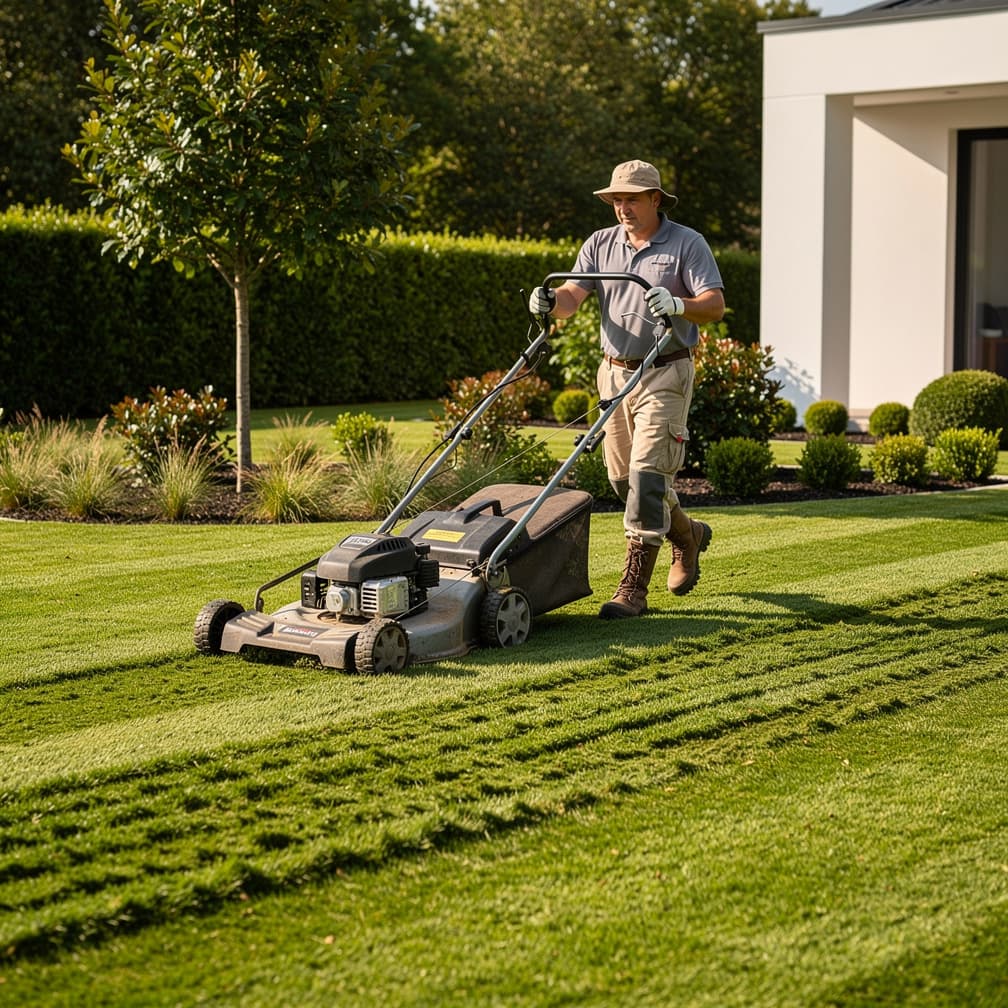

As a landscaper in Salem, you carry the risk of every property you touch, whether the crew is there ten minutes or all day. Damage to a client's fence, siding, or hardscape is the routine claim, and it arrives from equipment doing exactly what it was built to do. Clients rarely accept the argument that a thrown stone was unavoidable. Landscaping insurance in Salem is the thing standing between that conversation and your bank account. What you actually buy depends on how many people are on payroll, how many trucks leave the yard, and what your contracts already committed you to. The quote questions follow the work, which is why the sections below start there instead of at a price.
What Makes Salem Different
Bad weather in a thin market takes the whole route down at once rather than one property. Every account you have sits inside the same weather system, so a wet stretch means nobody gets cut and nobody gets billed. Cash flow is the exposure, and most policies are silent about a season that simply did not happen. Equipment staged at a distant property during a storm week is another quiet risk, since a trailer parked out of sight invites theft. A crew in Marion County covering long distances cannot retrieve gear from six properties in an afternoon. Ask how a policy treats tools stored away from your own yard before you leave them there. Storm cleanup is the flip side, and a client in Salem may ask for it the same week. That work puts your crew near roofs, chainsaws, and debris you never priced.
Local Risk Factors in Salem
Decide in advance how a crew clears a property when smoke rolls in, because the call always comes at the worst moment. Air quality closures cost a landscaping business days it never bills, and no standard policy makes up a canceled route. What can be insured is the physical side: a truck lost on a closed road, tools destroyed at a site you could not reach. Commercial Auto might answer vehicle damage where the right coverage part is on the policy, which not every landscaper carries. Ask participating carriers in Oregon what their forms say about fire, and ask a Salem client what happens to the contract when a crew cannot legally work.
What Coverage Does a Landscaping in Salem Need?
General Liability
Clients demand this one by name, and it is the coverage a certificate usually proves. General Liability is meant for third-party losses: the fence your mower clipped, the window a stone found, the visitor who slipped on wet clippings. It typically excludes injuries to your own crew and damage to the specific work you were performing.
Example: A trimmer line catches a stone and the client's patio door cracks during a routine cut. The glass, and the argument over who pays for it, could land on this line.
Workers Compensation
Crews get hurt in ordinary ways: a strained back lifting sod, a cut from a blade, heat illness on a long afternoon. Workers' Compensation is intended for those work-related injuries and the wages lost after them, and it is rated per $100 of payroll. Rules and thresholds differ by state, so the Oregon Division of Financial Regulation publishes the current requirements for employers.
Example: A helper slips on a saturated lawn while dragging a hose and tears a shoulder. Medical bills and the missed weeks may be handled here rather than out of your own account.
Commercial Auto
Personal auto policies commonly exclude business use, and that exclusion shows up after the accident. Commercial Auto is written for the pickups, trailers, and service vehicles that move a landscaping crew between properties all day, and it can answer damage you cause on the road. Physical damage to your own truck is a separate coverage part you have to ask for.
Example: A loaded trailer swings wide at a turn in Salem and clips a parked sedan. Repairs to the other vehicle might fall to this policy instead of to you.
Tools & Equipment (Inland Marine)
Tools do not stay put. Mowers, blowers, trimmers, and the trailer they ride in move between the yard and several properties a day, and Inland Marine is built around gear in motion or stored off site. It generally responds to theft and sudden damage to scheduled items, while wear, rust, and mechanical breakdown usually sit outside it.
Example: Someone lifts two backpack blowers and a hedge trimmer from an open trailer while the crew works a back yard. Scheduled gear with serial numbers on file may be replaced through this coverage.
How Much Does Landscaping Insurance Cost in Salem?
Landscaping Insurance is a bundle of separate policies, priced separately. The ranges below are typical figures for Salem for each line, except workers compensation, which is rated per $100 of payroll; a quote prices each one against your own operations.
| Coverage | Typical range | What moves your price |
|---|---|---|
| General Liability Insurance | $65 - $220 per month | Industry and risk classification, annual revenue, number of employees |
| Workers Compensation Insurance | $0.75 - $2.74 per $100 of payroll | Employee classification codes, total annual payroll, experience modification rate |
| Commercial Auto Insurance | $200 - $625 per month | Fleet size and vehicle types, driver records and experience, coverage limits and deductibles |
| Inland Marine Insurance | $25 - $100 per month | Total insured value of the scheduled property, type and age of the equipment, where it is stored and how far it travels |
Prices shown are general estimates, not guaranteed rates or quotes. Your actual premium will depend on the insurer, coverage selected, business details, location, claims history, and other underwriting factors. Learn about our pricing methodology.
What Are the Insurance Requirements for a Landscaping in Salem?
Workers' comp is generally required once you have your first employee. Oregon generally requires employers to carry workers' compensation at that point. Common exemptions include sole proprietors, partners, and corporate officers. Confirm current thresholds with your state's workers' compensation agency before you hire.
State auto liability minimums apply to business vehicles. Oregon's minimum auto liability limits are $25,000/$50,000/$20,000 (bodily injury per person / per accident / property damage). Contracts and lenders often require more than the state floor.
Where to verify licensing and coverage rules. The Oregon Division of Financial Regulation publishes consumer guidance and current insurance requirements for Oregon businesses. When a contract or lease demands specific wording, the Oregon Division of Financial Regulation's guidance is the authoritative place to check.
Get Your Landscaping Quote in Salem
Compare rates from multiple carriers. Free quotes, no obligation.
Operating in Salem
- A landscaping crew in Salem that photographs a property before the first cut owns the argument about what was already cracked, gouged, or dead.
- Certificates expire with the policy behind them, so a renewal that slips by a day quietly voids every copy sitting in a client's file.
- Crews load trailers before daylight, and gear that sits in an open trailer at a Salem yard overnight is the easiest thing on the property to steal. Underwriters ask where it sleeps, so answer honestly before a claim answers for you.
- A property manager in Salem can hold your gate code, your access badge, or your first invoice until a current certificate is on file, so a lapsed policy stops the work before it starts.
How to Buy: Advice for Salem Owners
Theft is the claim landscapers make most and prepare for least. Handhelds walk from trailers, yards, and jobsites, and they are gone before anyone notices. Photograph the gear, record serial numbers, and keep receipts in one place, because a schedule and a serial number are what turn a theft into a paid claim rather than an argument. Ask how the policy values older equipment, since replacement cost and actual cash value are very different answers on a five-year-old mower. Storage moves the price, so if a trailer parked overnight at a Salem property is your storage plan, say so on the application. General Liability will not answer a stolen blower, and owners discover that at the worst time, which is what Inland Marine exists for. The Oregon Division of Financial Regulation publishes consumer guidance on property and equipment coverage, which explains the valuation language. Then compare participating carriers on how they schedule your gear rather than on the premium alone.
FAQ
Landscaping Insurance in Salem: FAQ
Per-occurrence is the most a policy may pay for one event, like a truck backing into a garage door. Aggregate is the ceiling for the whole policy year across every event. A landscaping crew that files three small property claims in one season can spend more of the aggregate than expected, and it does not refill until renewal. Contracts usually name both numbers, so check which one your certificate shows.
Usually not on its own. Lost days, a schedule that slips, and clients who reschedule are business problems rather than insured losses under most forms. What can be covered is damage: equipment ruined, a trailer destroyed, a truck hit on the way. Flood is its own product and typically sits outside standard property forms, wherever in Oregon you work. If storm cleanup becomes part of your work, tell your carrier, because it changes what the crew is doing.
The agreement usually decides it. Commercial exhibits name a required limit and required wording, and a certificate showing less gets rejected at the gate. Beyond that minimum, size the limit against what your crew could actually break or injure rather than against your revenue. Higher limits often cost less than owners expect, so ask for the next step up to be priced on the same quote before you dismiss it.
Before, in nearly every case. Contracts commonly require a certificate as a condition of starting, and the crew cannot roll until that document exists. Carriers cannot backdate coverage to a day that already happened, so a job that starts uninsured stays uninsured. If a client in Salem hands you a start date, work backward from it and quote early, since endorsements and certificates take time nobody wants to spend on a deadline.
Usually yes, and it should happen the week you buy rather than at renewal. A vehicle that is not on the schedule is a vehicle the policy may not treat as yours, and a mower nobody added is a mower you replace yourself after a theft. Ask what a midterm change costs and get the confirmation in writing. Your declarations page is the only proof that the change actually landed.
Appetite. Each carrier reads a landscaping submission through its own history with the trade, and one that lost money on tree work prices it accordingly. Class codes, vehicle radius, storage, and loss history all get weighted differently. That spread is the reason to submit identical facts to several participating carriers in Oregon instead of accepting the first number. Two offers built on different versions of your crew tell you nothing.
Sources
- 1.Oregon Division of Financial Regulation(Oregon Division of Financial Regulation publishes consumer guidance for insurance buyers.)


