







































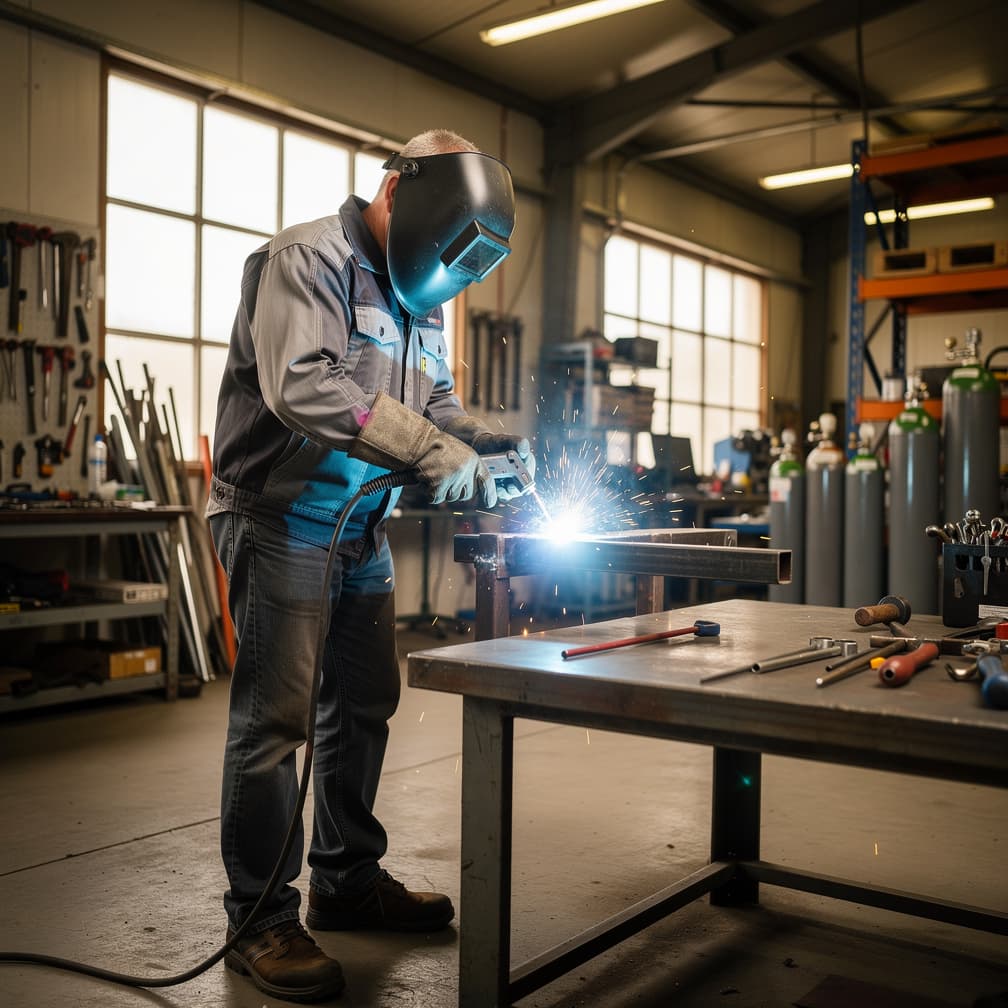

Pricing for a welding business moves on payroll, claims history, and how much hot work happens away from your own floor. General Liability for welding work commonly starts from $35 a month and climbs as limits and job sites stack up. Welding business insurance in Salem is never one price; it is four decisions quoted separately and delivered together. A shop with two welders and a rented bay prices nothing like a mobile outfit staging machines at a plant every week. Deductibles come off your side of the loss, so a low premium with a high retention can cost more the first time equipment walks. Payroll classification matters more than most owners expect, and calling a helper clerical is a correction you pay for at audit. Weigh the ranges below against what your contracts in Oregon actually demand.
What Makes Salem Different
Distance is a cost driver nobody prints on a quote sheet, and it announces itself after the loss. A shop far from a staffed station and a hydrant gets rated on that fact, whatever your extinguisher count. Slow response means a bigger fire, and bigger fires are the losses that move renewal pricing hardest. Travel time stretches repairs as well: a damaged machine may leave Salem on a truck and return weeks later. Business interruption terms deserve reading in a market like that, since waiting periods assume vendors are close. Payroll still drives the injury side, and a small crew with high wages prices higher than headcount suggests. Seasonality matters too, because a shop that runs hot for four months carries its annual exposure unevenly. Ask how Oregon rating treats your payroll and your location before assuming a small operation prices small.
Local Risk Factors in Salem
A red flag week can shut down every outdoor cut on your schedule, and the customers behind them rarely extend a deadline. Evacuation orders reach shops and job sites alike, and gear staged at a customer site in Salem can sit behind a closed road for days. Equipment terms sometimes distinguish property in transit from property at a temporary location, so ask which applies before you need to know. Income coverage generally requires physical damage at your own premises, meaning a shutdown ordered for smoke or access may trigger nothing. Plan the cash side separately from the coverage side. Then confirm what your Marion County operations look like on paper, because a policy describes work you may have outgrown.
What Coverage Does a Welding Business in Salem Need?
General Liability
General contractors, landlords, and plant managers ask for this one by name before hot work starts. It is the line generally meant for third-party trouble: a fire in a building you do not own, a visitor hurt at the shop door, a customer's wall scorched during an install. What it typically excludes is the cost of redoing your own defective weld.
Example: A spark drops behind a wall panel during a handrail install and the framing smolders until an alarm trips at midnight; the repair bill and the owner's claim may fall to General Liability.
Workers Compensation
Burns, arc flash to the eyes, crushed fingers, and heat illness are the injuries a welding payroll produces, and this coverage is intended for the medical bills and lost wages that follow. Pricing runs off payroll by class code rather than revenue. It does nothing for damage to a customer's property, and requirements vary by state.
Example: A helper lifts stock that came off the table minutes earlier and burns his hand through the glove; the treatment and the missed shifts are what Workers Compensation is typically there for.
Commercial Property
Your own bay is the blind spot: a landlord's policy is written for the building, and your benches, machines, stock, and installed improvements sit outside it. This line is intended for those, along with finished work waiting on pickup. Flood is typically excluded and priced separately, and reported values drift as the yard fills.
Example: A storm peels panels off the shop roof and rain soaks two welders and a rack of stock overnight; Commercial Property can help cover the building and the contents, subject to the deductible.
Tools & Equipment (Inland Marine)
Equipment refuses to stay put in this trade, so a policy tied to one address can leave the truck out. This coverage follows machines, leads, and hoods between the shop, the road, and a temporary site, and theft is the claim welding businesses actually file. Terms often differ for gear in transit versus gear left overnight, and mechanical breakdown is usually excluded.
Example: A trailer is cut open at a Salem job site overnight and two machines are gone before the crew arrives; Inland Marine terms usually decide whether that loss gets paid or absorbed.
How Much Does Welding Business Insurance Cost in Salem?
Welding Business Insurance is a bundle of separate policies, priced separately. The ranges below are typical figures for Salem for each line, except workers compensation, which is rated per $100 of payroll; a quote prices each one against your own operations.
| Coverage | Typical range | What moves your price |
|---|---|---|
| General Liability Insurance | $150 - $460 per month | Industry and risk classification, annual revenue, number of employees |
| Workers Compensation Insurance | $0.75 - $2.74 per $100 of payroll | Employee classification codes, total annual payroll, experience modification rate |
| Commercial Property Insurance | $90 - $300 per month | Building value and construction type, roof age and condition, fire protection class |
| Inland Marine Insurance | $35 - $140 per month | Total insured value of the scheduled property, type and age of the equipment, where it is stored and how far it travels |
Prices shown are general estimates, not guaranteed rates or quotes. Your actual premium will depend on the insurer, coverage selected, business details, location, claims history, and other underwriting factors. Learn about our pricing methodology.
What Are the Insurance Requirements for a Welding Business in Salem?
Workers' comp is generally required once you have your first employee. Oregon generally requires employers to carry workers' compensation at that point. Common exemptions include sole proprietors, partners, and corporate officers. Confirm current thresholds with your state's workers' compensation agency before you hire.
Flood damage is typically excluded from standard policies. Standard commercial property and builders-risk-type policies typically exclude flood damage. Flood exposure varies address by address, so check your premises in FEMA's Flood Map Service Center before deciding; if you sit in a mapped flood zone, a separate policy through the National Flood Insurance Program is the usual starting point.
Where to verify licensing and coverage rules. The Oregon Division of Financial Regulation publishes consumer guidance and current insurance requirements for Oregon businesses. When a contract or lease demands specific wording, the Oregon Division of Financial Regulation's guidance is the authoritative place to check.
Get Your Welding Business Quote in Salem
Compare rates from multiple carriers. Free quotes, no obligation.
Operating in Salem
- Rented machines carry their own paperwork: the rental company usually wants proof of coverage on the equipment, and their contract, rather than yours, decides what happens when it burns.
- Payroll audits arrive after the year is over, wherever in Oregon you worked, and a helper you classified generously twelve months ago becomes a bill nobody budgeted for.
- Scrap, stock, and finished work sitting in your Salem bay are worth more than owners tend to insure them for, because values drift upward as the yard fills.
- A Salem customer who cannot get you on site until a certificate is reissued calls somebody else, and that second call is what actually costs you the account.
How to Buy: Advice for Salem Owners
Ask for three quotes on identical terms, because a welding policy compared loosely is not compared at all. Identical means the same limit, the same deductible, the same equipment schedule, and the same description of where hot work happens. Change any one of those and the cheap quote wins on paper while losing on the day it counts. General Liability and Inland Marine are often the two lines a small shop weighs against each other when the budget is tight, and the honest answer depends on whether your worst month is a fire or a theft. Workers Compensation deserves its own conversation once a helper is on the payroll, since that payroll is auditable. If your Salem contracts already set the liability limit, that decision is made and the comparison narrows to terms and price. Bring payroll, loss runs, and the equipment list to every conversation, whether the job sits in Marion County or three counties over. Then compare quotes from participating carriers and pick with the differences visible.
FAQ
Welding Business Insurance in Salem: FAQ
Usually not different coverage, though your policy carries assumptions inside it. Territory, described operations, and where equipment is stored all appear in the paperwork, and work well outside your normal pattern can raise questions. If you start staging machines at sites across Marion County or bidding steady work in another state, say so at renewal. A policy written on a description you no longer match is the detail that surfaces at the worst moment.
No. A landlord's policy is written for the building, never for your benches, machines, stock, or the improvements you installed in the bay. Your own property and equipment coverage is what those depend on, and the lease usually makes that responsibility explicit. Read the clause about improvements and betterments, since owners are frequently surprised to learn the mezzanine they built is theirs to insure.
Ask for the insurance exhibit and read it before the price is agreed. It sets the limits, the additional-insured wording, and sometimes coverage you do not carry, and every one of those is a cost. Ask whether the limits apply per project, because an aggregate shared across several jobs behaves differently. Then price the work with those numbers included, since a contract in Salem that eats the margin is not a win.
Requirements change by state and sometimes by city, so treat any blanket answer with suspicion. The Oregon Division of Financial Regulation publishes the current requirements for business coverage in Oregon, and that beats relying on a customer's summary. Permit offices handle hot work rules separately, and the site you are working on may add its own. Your contracts sit on top of all of it, and they usually demand more than any baseline.
Usually the customer decides that for you. General contractors, plant managers, and landlords commonly ask for a certificate of insurance before hot work starts, and many will not open the gate without one. The request typically names a liability limit and asks for the customer to be added as an additional insured. That wording comes from an endorsement rather than from the certificate itself, so confirm your policy can produce it before you promise anything.
Cost tracks three things: payroll by class code, the value and location of the property you work on, and your claims history. A shop welding in its own bay usually prices below a mobile outfit doing hot work inside occupied buildings, because the fire exposure differs. Limits and deductibles move the number too. The cost table on this page shows published ranges by coverage, and a real quote for a Salem shop comes from your own payroll and equipment list.
Sources
- 1.Oregon Division of Financial Regulation(Oregon Division of Financial Regulation publishes consumer guidance for insurance buyers.)
- 2.FEMA / FloodSmart(Flood coverage is typically purchased separately; FEMA administers the National Flood Insurance Program.)


