Updated July 5, 2026

Builders Risk Insurance in Erie
A typical project here is not a greenfield build far from neighbors. It is often a house update on a tight residential block, a storefront refresh on an older commercial strip, or a phased rehab where materials arrive in small batches and the site sits exposed between trades. That operating pattern changes how you review builders risk insurance in Erie. You need the policy period, covered property description, and valuation method to match the actual job, especially if the work is a renovation rather than new construction. Erie’s median home value is $108,200, so many residential jobs involve improving modestly valued properties where a mismatch between completed value, renovation budget, and deductible can create a real out-of-pocket problem after a loss. If you are borrowing, bidding, or signing a construction contract, line up the named insured, project address, and any soft cost or delay-related needs before materials are delivered. That is usually the cleanest point to confirm whether the policy should follow the owner, contractor, or developer on this specific job.
Builders Risk Insurance Risk Factors in Erie
Local weather exposure is the part to focus on. The Pennsylvania state page already covers the broader hazard picture, but here the practical issue is how long partially enclosed structures, roof openings, and stored materials stay vulnerable during a renovation or rebuild. If your schedule includes exterior work, window replacement, roof replacement, or a staged interior gut, ask your agent to review **when coverage begins**, how property in transit or temporary storage is treated, and whether theft, water intrusion, or wind-driven damage is limited by policy terms. That matters more on projects that pause between trades or depend on special-order materials. A short vacancy before work starts, a delay in enclosing the structure, or materials left off-site can all change the loss scenario. Build your coverage review around the construction sequence, not just the contract price, and confirm who is responsible for securing the site at each phase.
Pennsylvania has a moderate climate risk rating. Top hazards: Flooding (High), Winter Storm (High), Severe Storm (Moderate), Tornado (Low). The state's expected annual loss from natural hazards is $1.6B, which influences builders risk insurance premiums and may affect coverage availability in high-risk areas.
What Builders Risk Insurance Covers
What matters is not the broad national definition of builders risk, but the property and project details that tend to create disputes if they are left vague. On many jobs, the first question is not whether the structure is being built, but which materials are already your responsibility and when that responsibility shifts from supplier to owner or contractor. If cabinets, windows, mechanical units, or finish materials are delivered early because lead times are tight, you should ask whether they are covered only once installed or while staged on site and, if needed, at a temporary storage location tied to the project.
Renovation work deserves extra attention. A partial remodel, historic update, or occupied-building improvement can involve old and new construction in the same footprint. That is where buyers should ask exactly how the policy treats existing structure, newly installed work, and materials waiting for installation. If the project includes owner-furnished items, leased equipment that becomes part of the job, or specialty components ordered months ahead, list them clearly instead of assuming they fit automatically.
Projects here also need practical attention to weather-related job interruptions and site conditions. Heavy snow loads in the northern counties and river flooding along the Susquehanna and Delaware can shut a site down for days, and your policy may help cover direct physical loss to insured property, debris removal, and temporary repairs to protect the work, though it typically will not pay for the delay itself. Ask your agent to walk through how your policy may handle direct physical loss, debris issues, temporary protection, and any conditions that apply when a site is partially enclosed or waiting on inspections. The goal is simple: match the policy language to the way your project is sequenced, stored, and secured.
Coverage Included

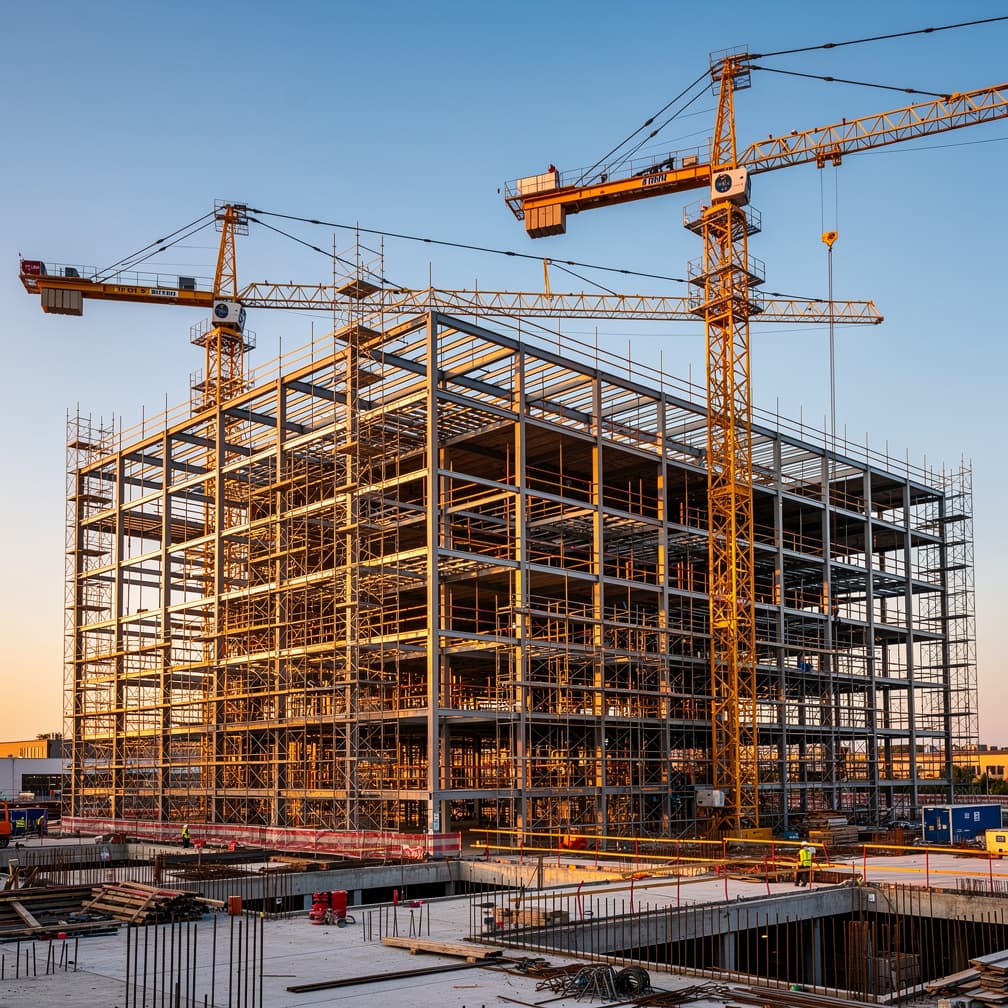
Structure Coverage
Covers the building or structure under construction.
Materials on Site
Covers building materials stored at the construction site.

Materials in Transit
Covers materials being transported to the job site.
Temporary Structures
Covers scaffolding, fencing, and temporary buildings.

Soft Costs
Covers additional expenses from construction delays due to covered losses.
Equipment Coverage
Covers permanently installed fixtures and equipment.
Industries & Insurance Needs in Erie
County project mix is a useful clue for how builders risk gets structured. Erie County has 6,165 business establishments, and the largest establishment shares are retail trade at 14.5%, health care and social assistance at 14.4%, and other services at 12.8%. So a lot of local commercial work is not ground-up development. It is tenant improvements, interior build-outs, occupied renovations, and smaller phased projects where business interruption concerns, access constraints, and coordination with landlords or facility operators can matter as much as the materials on site. If your job touches an occupied storefront, clinic-adjacent space, or service business location, review whether the policy description fits a remodel versus a new build, and whether any soft cost exposure should be considered. Those details often matter more than trying to benchmark a generic premium.
What Makes Erie Different
Older, lower-value property stock is the main thing that changes the buying decision here. Erie’s median household income is $43,397, so many residential and small commercial projects are budget-sensitive improvements rather than large new builds. That changes the builders risk conversation in a practical way: a policy that is technically issued but valued incorrectly can hurt more on a modest project, because one deductible, one coinsurance issue, or one gap around stored materials can consume a meaningful share of the job budget. For renovations, you should be especially careful about whether coverage is written on existing structure, new work, or both, depending on policy terms. It is also worth checking whether the limit tracks completed value or only the construction amount. In a market where many jobs are repairs, updates, and adaptive reuse, precision in the application usually matters more than broad, generic wording.
Our Recommendation for Erie
Start with the scope sheet, not the insurance application. For a local renovation or rebuild, list the project address, contract value, estimated completed value, construction type, start date, and expected completion date before you request terms. Then separate what is existing structure from what is new work, because that distinction often drives the most important coverage questions. If materials will be stored off-site or delivered in phases, ask for that wording to be reviewed early rather than assuming it is included. On commercial jobs, confirm whether the owner, general contractor, and lender all need to be scheduled or evidenced in a specific way. On residential jobs, compare the deductible against the actual contingency budget you can absorb. If the project may pause for permits, inspections, or trade availability, mention that up front. A short, accurate submission usually gets you a more usable quote than a rushed application built from the contract alone.
Get Builders Risk Insurance in Erie
Enter your ZIP code to compare builders risk insurance rates from carriers in Erie, PA.
Business insurance starting at $25/mo
FAQ
Frequently Asked Questions
Erie renovation projects often involve older homes with modest values. That makes it important to review whether the policy addresses new work, existing structure, or both, depending on the job and policy terms.
Erie County project demand often comes from smaller commercial spaces, not just new construction. With 6,165 business establishments countywide, many jobs are tenant improvements or phased remodels, so the policy should match occupied renovation conditions and delivery timing.
Erie County’s leading sectors are retail trade at 14.5%, health care and social assistance at 14.4%, and other services at 12.8%. That mix points to storefront, clinic, and service-space renovations where access, phasing, and soft cost questions deserve review.
Erie homeowners should not rely on a rough guess. With median household income at $43,397, a deductible or valuation mismatch can strain the project budget, so compare contract amount, completed value, and contingency funds carefully.
The buyer is usually the party the contract makes responsible for insuring the project, often the owner or builder. Check the agreement first, then confirm any lender requirements before materials are delivered or work starts.
Renovation projects often deserve a closer review because existing structure, new work, and staged materials can overlap. Ask how the policy treats each category before demolition, partial occupancy, or phased construction begins.
Lenders often expect proof of project coverage before releasing funds, especially on new construction or major renovation. Review the loan documents early so the policy term, value, and named interests match what the lender will accept.
Projects can involve early delivery of windows, mechanical units, or finish materials, so temporary storage should be reviewed specifically. Do not assume stored property is included the same way as materials already installed at the site.
Sources
- 1.U.S. Census Bureau, ACS 5-Year Estimates, table B25077(Erie’s median home value is $108,200, so many residential jobs involve improving modestly valued properties where a mismatch between completed value, renovation budget, and deductible can create a real out-of-pocket problem after a loss.)
- 2.U.S. Census Bureau, County Business Patterns, Erie County(Erie County has 6,165 business establishments, and the largest establishment shares are retail trade at 14.5%, health care and social assistance at 14.4%, and other services at 12.8%.)
- 3.U.S. Census Bureau, ACS 5-Year Estimates, table B19013(Erie’s median household income is $43,397, so many residential and small commercial projects are budget-sensitive improvements rather than large new builds.)
Updated July 5, 2026