







































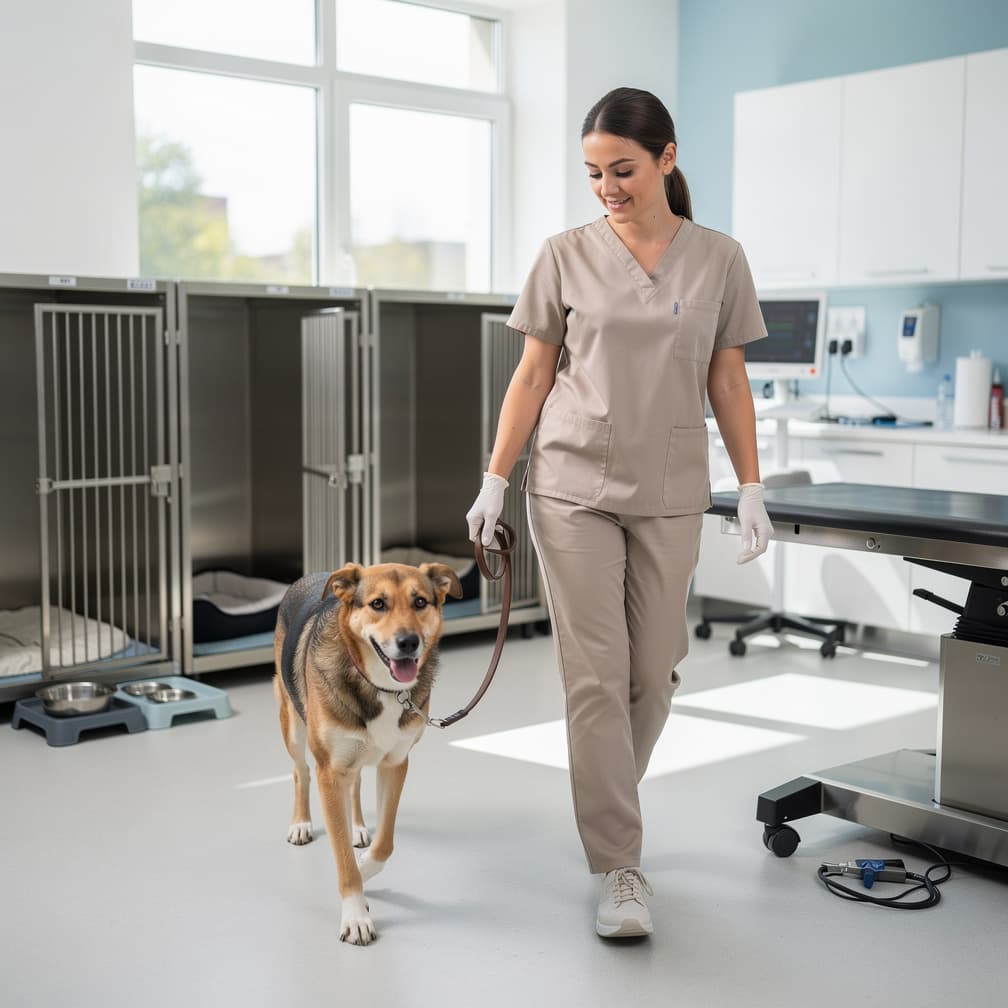

As a dog boarding business in Erie, the least insurable thing you own is an owner's trust at drop-off, and everything else follows from handling it badly or well. Cameras over the runs, a written feeding chart, two staff at intake: those cut claims more reliably than any endorsement you can buy. Insurance is what remains after prevention runs out, and dog boarding insurance in Erie is priced on how much is left over. Carriers look at whether you separate playgroups by size, how many handlers cover a night, and what your last three years produced in claims. Those answers move a quote further than shopping does. Improve the answers, then compare participating carriers on identical information. The page below lays out what they ask and why each question matters.
What Makes Erie Different
A storm week hits a kennel in Erie as a staffing crisis long before it hits as property damage. Dogs still need feeding, walking, and cleaning when roads are bad and half your handlers cannot get in. The owners cannot collect either, so your runs stay occupied past the nights you were actually paid for. Where help is scarce there is no relief crew to call, and the owner ends up sleeping at the kennel. Exhausted people make handling mistakes, and handling mistakes are what most animal claims get built from. Generators, water storage, and a written weather plan are risk controls worth documenting before a carrier asks. Damage to fencing and roofs is a property question, and the timing of repairs is a business one. Ask a carrier in Pennsylvania how it views a kennel that cannot close, because closing is not an option.
Local Risk Factors in Erie
Flooding reaches a kennel from the ground up, and kennel runs sit at ground level by design. Water in the runs is not a cleanup; it is the relocation of every dog you are holding, at an hour when the roads are already bad. Standard property forms typically exclude flood, and flood is written and priced separately, which is the gap owners in Erie discover once the water leaves. Commercial Property may answer a burst pipe and treat rising ground water as a wholly different event. Ask what a flood policy would cost for the building and for the equipment in Erie County, before a season answers the question for you.
What Coverage Does a Dog Boarding in Erie Need?
General Liability
Landlords, referral vets, and booking platforms ask for this line by name before they let you open or list. It is generally the coverage reached for when a visitor slips at the pickup counter or a boarded dog bites a person, and it commonly picks up the legal defense that arrives with the demand. Injury to an animal in your custody is treated differently, so ask about that wording specifically.
Example: A neighbor leans over the fence to pet a boarder, gets nipped, and files a claim two months later for stitches and time off work. Third-party injury of that kind is what the line is generally meant to answer.
Commercial Property
Flood sits outside this form and gets bought separately, which matters more to a kennel than to most tenants because runs sit at ground level. What it can help cover is the building, the fencing, the kennel doors, the washers, and the ventilation, subject to how the policy values them. A chewed gate stays maintenance.
Example: A dryer packed with bedding overheats overnight and the fire takes the laundry room, two runs, and the food store. Damage of that sort may fall to this line, subject to your deductible and the valuation basis.
Professional Liability
A dose missed, a feeding chart ignored, a dog put in the wrong playgroup: allegations about the care you were paid to provide sit here rather than with a straightforward injury claim. Cover is typically built around errors, omissions, and supervision failures, and it usually turns on what your records can show. It settles no argument about whether the owner believes you.
Example: An owner alleges her dog's illness started in your kennel and that staff ignored the diet she left in writing. A supervision and care allegation like that is what this line is intended to address.
Workers Compensation
Where liability handles the visitor, this line handles the handler. Lifting, restraining, cleaning, and breaking up a scuffle are how kennel staff get hurt, and medical costs plus lost wages are what it is meant to answer. Whether it is mandatory at your headcount varies by state, and it is rated per $100 of payroll rather than as a flat premium.
Example: A handler takes a bite through the forearm separating two dogs and spends the next two weeks off the schedule. Medical bills and a share of the wages lost are commonly what this coverage picks up.
How Much Does Dog Boarding Insurance Cost in Erie?
Dog Boarding Insurance is a bundle of separate policies, priced separately. The ranges below are typical figures for Erie for each line, except workers compensation, which is rated per $100 of payroll; a quote prices each one against your own operations.
| Coverage | Typical range | What moves your price |
|---|---|---|
| General Liability Insurance | $90 - $300 per month | Industry and risk classification, annual revenue, number of employees |
| Commercial Property Insurance | $85 - $290 per month | Building value and construction type, roof age and condition, fire protection class |
| Professional Liability Insurance | $40 - $170 per month | The services you actually perform, annual revenue or billed fees, limit and retention selected |
| Workers Compensation Insurance | $0.75 - $2.74 per $100 of payroll | Employee classification codes, total annual payroll, experience modification rate |
Prices shown are general estimates, not guaranteed rates or quotes. Your actual premium will depend on the insurer, coverage selected, business details, location, claims history, and other underwriting factors. Learn about our pricing methodology.
What Are the Insurance Requirements for a Dog Boarding in Erie?
Workers' comp is generally required once you have your first employee. Pennsylvania generally requires employers to carry workers' compensation at that point. Common exemptions include sole proprietors, general partners, and some agricultural workers. Confirm current thresholds with your state's workers' compensation agency before you hire.
Flood damage is typically excluded from standard policies. Standard commercial property and builders-risk-type policies typically exclude flood damage. Flood exposure varies address by address, so check your premises in FEMA's Flood Map Service Center before deciding; if you sit in a mapped flood zone, a separate policy through the National Flood Insurance Program is the usual starting point.
Where to verify licensing and coverage rules. The Pennsylvania Insurance Department publishes consumer guidance and current insurance requirements for Pennsylvania businesses. When a contract or lease demands specific wording, the Pennsylvania Insurance Department's guidance is the authoritative place to check.
Get Your Dog Boarding Quote in Erie
Compare rates from multiple carriers. Free quotes, no obligation.
Operating in Erie
- Group play looks like the fun part and produces most of the claims. A size mismatch, an over-tired dog, a toy on the ground, and two owners are exchanging vet bills through you.
- Medication schedules arrive handwritten on the back of a receipt. If a dose gets missed, the argument becomes about your process, and your process is whatever you can show in writing.
- Laundry runs constantly in a kennel, and a dryer is a fire the building does not survive well. Lint, bedding, and a machine left running overnight is the combination that becomes a property claim.
- A veterinary practice in Erie that sends you overflow bookings can ask to be named on your policy before the first dog arrives, and that request is an endorsement rather than a favor.
How to Buy: Advice for Erie Owners
Pull your loss runs before anybody asks for them. Three to five years of claims history is the one input you cannot improve by shopping, and carriers weigh it heavily on a boarding risk. If you have had a bite claim, write down what changed afterward: the intake rule you added, the playgroup size you capped, the handler you hired. That narrative belongs in the submission, because an underwriter reading a bare claim number fills the silence with the worst version. General Liability pricing moves on it, and Professional Liability pricing moves on the care allegations that never quite became claims. The Pennsylvania Insurance Department publishes consumer guidance on how claims history affects premiums. Then hand the same file to participating carriers in Erie and read the spread, because the spread tells you how each one read your story.
FAQ
Dog Boarding Insurance in Erie: FAQ
Expect questions on dog capacity, average and peak dogs on site, overnight numbers, whether you run open playgroups, staff headcount, gross payroll, building size and construction, and several years of claims history. Intake screening and vaccination policy come up as well, because they predict claims. Participating carriers in Pennsylvania ask the same core questions even where their forms differ, so bring real numbers: payroll gets reconciled at audit and a low guess turns into a bill.
Give every carrier identical inputs, then compare structure before price. Ask each for the per-occurrence limit, whether defense costs sit inside or outside that limit, what the aggregate does after a first claim, and whether property is valued at replacement cost. Participating carriers in Pennsylvania weigh the same submission differently, so a spread is normal. The smallest number attached to the narrowest terms is rarely the useful one.
A boarding agreement helps and it ends nothing. Waivers get argued about, narrowed, and occasionally set aside, and having that argument costs money on its own. Defense costs begin when a demand letter arrives, long before anybody decides whether your waiver holds up. That is the part owners underestimate: a policy is paying for the fight at least as much as for the outcome.
That is among the most common claims in the trade. An owner whose dog goes home with stitches hands you the vet bill, and declining it is how demand letters start. Whether your policy answers depends on how it treats animals in your custody, which is not uniform between forms. Ask a carrier specifically about dog-to-dog injury during group play before you buy anything.
Renting does not remove the property question; it moves it. Your landlord insures the shell, while the runs, fencing, kennel doors, washers, ventilation, and cameras you installed are usually yours. Commercial Property can extend to business personal property and tenant improvements, and the figure to insure is what replacing them costs now. A lease may also push parts of the building back onto you, so read the clause.
Underwriting a boarding risk means questions: playgroup policy, night staffing, intake screening, capacity. Add an endorsement naming a landlord and the file passes through more hands. Begin four to six weeks before you sign a lease or open, and earlier if a permit desk wants proof of coverage inside the application. Carriers control their own turnaround, so leave slack rather than counting on speed.
Sources
- 1.Pennsylvania Insurance Department(Pennsylvania Insurance Department publishes consumer guidance for insurance buyers.)
- 2.FEMA / FloodSmart(Flood coverage is typically purchased separately; FEMA administers the National Flood Insurance Program.)


