







































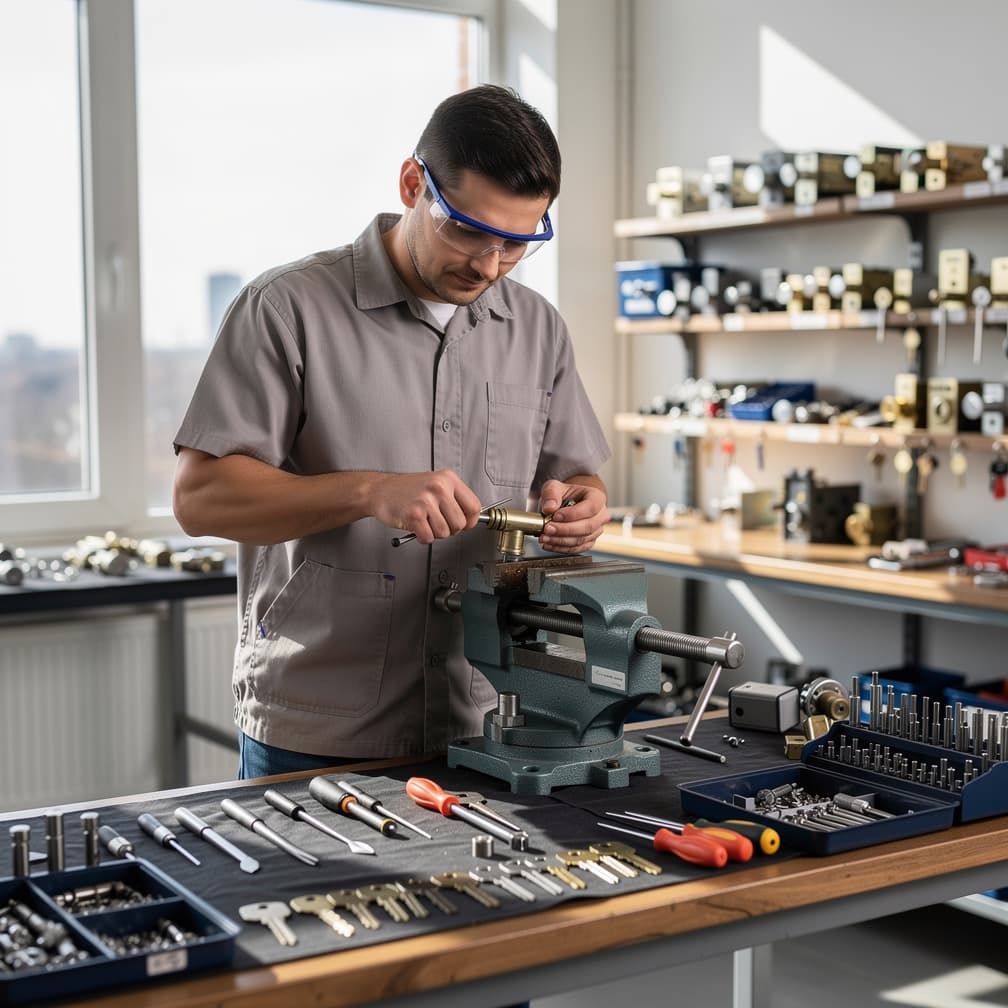

As a locksmith in Philadelphia, you are asked to prove coverage more often than you are asked to prove skill, which tells you something about how the work gets bought. Locksmith insurance in Philadelphia is the file a facilities manager wants before your name reaches a vendor list, and the reason that file exists is the day a door, a safe, or a tenant's belongings end up in dispute. The trade sits on a strange edge: small invoices, serious consequences. Opening a door wrong costs a frame; opening it for the wrong person costs a great deal more. Price the policy for the second outcome, not the first. What follows lays out the coverage, what pushes the cost up or down, and how to line up quotes from participating carriers.
What Makes Philadelphia Different
About 13 locksmiths work the same after-hours call lists, which changes what a bad job costs you beyond the repair. A property manager who has a rough experience does not file a complaint; the manager calls the next shop. Your loss history is a sales document in a market with that many alternatives, whether or not anyone reads it. Insurers ask about prior claims because claims predict claims, and buyers ask around for much the same reason. Small losses you pay yourself never enter either conversation, which is worth weighing before you file anything. There is a real tradeoff between a deductible and a record, and it belongs to you. Replacing a lost account in a market this size costs more effort than the door cost to fix. Compare quotes in Philadelphia on limits and deductible together, since the two decisions are one decision.
Local Risk Factors in Philadelphia
A week of impassable roads does not lower the number of calls, it just makes them impossible to reach. Customers still lock themselves out, a storefront in Philadelphia still needs securing after water gets in, and the demand arrives while the van is stuck. Work that does happen is emergency work: boarding, rekeying doors that swelled shut, replacing hardware corroded by standing water. Rushed jobs in bad conditions are where mistakes happen, and a claim about a rushed job can outlive the storm by a year. Coverage for the flood itself is a separate purchase from the policies that handle your work, and a shop in Philadelphia County should know which is which before the water arrives.
What Coverage Does a Locksmith in Philadelphia Need?
General Liability
Landlords, property managers, and dealerships ask for this one by name before a locksmith touches a door. It generally responds to third-party injury and to damage your work does to somebody else's property: a split frame, a cracked storefront, a customer who slips at your counter. It typically will not answer the claim that the service itself was performed wrong.
Example: A drill slips as a deadbolt comes out and the door frame splits down its length; general liability can help cover the repair and the claim the owner files afterwards.
Commercial Auto
The van does the work, and a personal auto policy commonly excludes the business use that puts it on the road. This line is generally aimed at the driving itself: collisions, third-party injury, and damage the vehicle does on the way to a call. Tools riding in the back are usually a separate question, and hired or non-owned vehicles are their own conversation.
Example: A rear-end collision on the way to a two in the morning lockout puts the van in a body shop for a week; commercial auto may respond to the damage and the injury claim behind it.
Professional Liability
Broken frames belong to another line; this one is aimed at the accusation that the work itself was wrong. A rekey that missed a cylinder, a master chart entered incorrectly, an access control system programmed to fail open: allegations of negligence or omissions in the service are what it is meant for. Defense costs often begin before fault is decided.
Example: A unit is entered a month after your rekey and the owner alleges the job was done incorrectly; professional liability is intended to answer that allegation and the defense it drags along.
Tools & Equipment (Inland Marine)
Key machines, transponder programmers, pick sets, scopes, and the stock of blanks in the van are the business, and they spend the day away from any fixed address. This line typically follows equipment that travels, whether it sits in the truck, at a site, or on a bench between jobs. Read how a form treats an unattended vehicle, because that condition decides claims.
Example: A van is emptied overnight outside a Philadelphia apartment building and the key machine goes with it; the truck and the tools can become two claims, with inland marine taking the gear side.
How Much Does Locksmith Insurance Cost in Philadelphia?
Locksmith Insurance is a bundle of separate policies, priced separately. The ranges below are typical figures for Philadelphia for each line; a quote prices each one against your own operations.
| Coverage | Typical range | What moves your price |
|---|---|---|
| General Liability Insurance | $75 - $220 per month | Industry and risk classification, annual revenue, number of employees |
| Commercial Auto Insurance | $200 - $575 per month | Fleet size and vehicle types, driver records and experience, coverage limits and deductibles |
| Professional Liability Insurance | $65 - $190 per month | The services you actually perform, annual revenue or billed fees, limit and retention selected |
| Inland Marine Insurance | $30 - $95 per month | Total insured value of the scheduled property, type and age of the equipment, where it is stored and how far it travels |
Prices shown are general estimates, not guaranteed rates or quotes. Your actual premium will depend on the insurer, coverage selected, business details, location, claims history, and other underwriting factors. Learn about our pricing methodology.
What Are the Insurance Requirements for a Locksmith in Philadelphia?
Workers' comp is generally required once you have your first employee. Pennsylvania generally requires employers to carry workers' compensation at that point. Common exemptions include sole proprietors, general partners, and some agricultural workers. Confirm current thresholds with your state's workers' compensation agency before you hire.
State auto liability minimums apply to business vehicles. Pennsylvania's minimum auto liability limits are $15,000/$30,000/$5,000 (bodily injury per person / per accident / property damage). Contracts and lenders often require more than the state floor.
Where to verify licensing and coverage rules. The Pennsylvania Insurance Department publishes consumer guidance and current insurance requirements for Pennsylvania businesses. When a contract or lease demands specific wording, the Pennsylvania Insurance Department's guidance is the authoritative place to check.
Get Your Locksmith Quote in Philadelphia
Compare rates from multiple carriers. Free quotes, no obligation.
Operating in Philadelphia
- A property manager in Philadelphia can freeze your work orders the moment a certificate shows expired, and the freeze is silent: no call, no warning, just a week of rekeys handed to somebody else.
- Key records are evidence: who signed for which key, on what date, at which address. When a tenant claims a unit was entered, that log is the difference between a conversation and a claim.
- The van is the shop, the storeroom, and the tool crib at once, so a stolen vehicle in Philadelphia takes the key machine, the transponder programmer, and next week's schedule with it.
- Emergency calls arrive at the hours when care is hardest. A pin stack set fast at two in the morning is the same work with far less margin for catching a mistake.
How to Buy: Advice for Philadelphia Owners
Price the policy against the work, and start with a realistic floor: General Liability for this trade is often quoted starting around $35 a month, which tells you the decision is about limits rather than affordability. What moves it from there is everything you do beyond cutting keys: after-hours calls, automotive work, access control programming, and how far the van travels in a week. Buy the thinnest version of a policy that does not match your contracts and you have bought a receipt. Look instead at what one serious claim would do to the business, then work backwards to a limit that survives it. Inland Marine deserves the same treatment, since the gear in the van is far easier to lose than the shop is. The Pennsylvania Insurance Department publishes consumer guidance on comparing commercial coverage. A locksmith in Philadelphia can settle both decisions in one afternoon of comparing quotes from participating carriers, once the numbers are honest.
FAQ
Locksmith Insurance in Philadelphia: FAQ
Revenue, the mix of residential, automotive, and commercial work, your service radius, the vehicles and the people who drive them, the replacement value of your equipment, your claims history, and the limits your contracts name. Cutting keys is not the driver. After-hours emergency work generally prices differently from scheduled work, because a hurried job leaves less room to catch a mistake before it becomes a claim.
Damage to a customer's property during your work is usually a General Liability question, and that line could help cover the repair along with any claim that follows. One exception is worth knowing: damage you caused deliberately, with the customer's authorization, to get a door open is typically a billing conversation rather than a claim. That is exactly why a signed authorization matters before the drill comes out on a Philadelphia call.
That allegation is about judgment rather than damage, so it points at Professional Liability, which is intended to answer for negligence or omissions in the service itself. A claim like that can arrive months after the visit and can be costly to defend even when the work was sound. Records of how authority was verified are what turn an accusation into a short conversation.
Not automatically. Equipment that travels is generally an Inland Marine question, and it sits apart from the policy on the vehicle itself. If a van in Philadelphia is broken into overnight, the truck and the key machine inside it can become two separate claims with two deductibles. Value the gear at what replacing it costs today, since code readers and programming tools drift upward in price.
It reaches certain protections of your policy over to another party, usually the owner or manager who hired you, for claims connected to your work. Contracts ask for it because it puts your coverage between their money and a problem you caused. It has to be added by endorsement, and writing it on a certificate does not make it true. Ask what wording the contract requires before signing.
Per occurrence is the most a policy might pay for one incident; the aggregate is the ceiling for the entire policy term. The gap matters in this trade, because a master key chart entered wrong can open many units, and every unit entered can be its own incident drawing on the same annual ceiling. Ask what the aggregate looks like after one bad system rekey, not after one broken door.
Sources
- 1.U.S. Census Bureau, County Business Patterns (2023), Philadelphia County(Philadelphia County has about 13 businesses in this trade's category (NAICS group 561622).)
- 2.Pennsylvania Insurance Department(Pennsylvania Insurance Department publishes consumer guidance for insurance buyers.)


