







































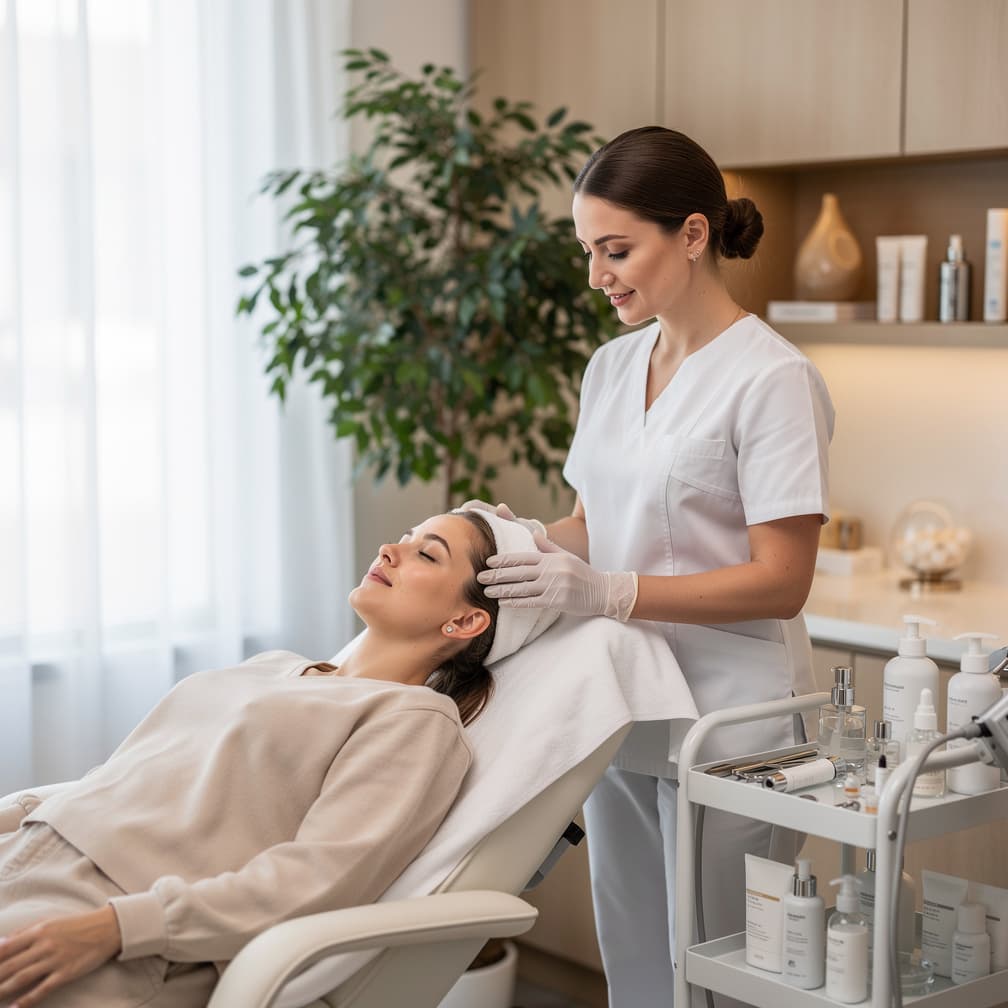

As a med spa in Philadelphia, your rent arrives with an insurance schedule attached, and in a market this dense the landlord wrote it. About 30,000 businesses sit in Philadelphia County, which is why the leasing side runs on templates and why your limits were decided before you toured the space. Read the schedule before signing, because raising a limit at renewal is easy and reopening a lease is not. Med spa insurance in Philadelphia in that setting is two purchases at once: the contract satisfier and the policy you would actually want on the worst day. They overlap. They do not match. A certificate proves the first, while the forms and the exclusions decide the second, and that is where this page spends its time.
What Makes Philadelphia Different
Client volume drives claim volume, and Philadelphia County supports about 140 med spas working through the same weekly traffic. A practice seeing more clients each week has more chances for a result that somebody disputes. That is arithmetic rather than a judgment about your skill, your protocols, or your injectors. Aggregate limits feel generous until two complaints from one busy month sit open at the same time. Per-occurrence money gets capped again by the annual number, and only the annual number can run out. Ask what your aggregate would look like after one defended claim, since defense costs can erode it. Where staffing runs hot and appointments run short, documentation is the first thing to slip. The busiest week of your year is the week your file has the least written in it.
Local Risk Factors in Philadelphia
A week of canceled appointments follows the water long after the street clears, because clients do not rebook a room that smells of damp. Drying, remediation, and a rebuilt floor can hold treatment rooms closed while rent and payroll keep running. Commercial Property may respond to damage a covered peril causes inside your suite, and flood is generally not that peril, which is the gap that catches owners in Philadelphia County. Business income wording deserves a read alongside it, since a closure without covered damage often triggers nothing at all. Ask what your policy would do if the building next door floods and yours is merely cut off. The answer decides what a Philadelphia practice actually needs to buy.
What Coverage Does a Med Spa in Philadelphia Need?
Professional Liability
A client who disputes a result is arguing about judgment, and that argument is what this line is built around: claims that a consultation, an injection, or a laser setting fell short of the accepted standard of care. It can respond to defense costs and to a settlement, subject to your limits and the form's exclusions. It typically does nothing for a fall in reception.
Example: A client returns six weeks after a laser series with pigment darker than when she started, then hires a lawyer arguing the settings were wrong for her skin. A claims-made policy might engage from the date you report the complaint.
General Liability
Landlords, building managers, and event organizers ask for this one by name, and they ask before you open the doors. It generally addresses bodily injury and property damage happening on your premises: the slip in reception, a client's coat ruined by a spill, the fall in a hallway. Injury arising out of a treatment is normally excluded, and that boundary is worth knowing before you lean on it.
Example: A client leaving a peel catches a heel on the threshold and breaks a wrist in the hallway of your Philadelphia suite. Her medical bills and the suit that follows could land inside this policy's limits.
Commercial Property
Flood sits outside it, wear and tear sits outside it, and mechanical breakdown usually does too. What remains is sudden damage a covered peril does to things you own: treatment beds, cabinetry, sinks, coolers, retail stock, and the buildout you paid for, each valued at the number you stated when you bought it. State those values low and coinsurance can trim the payment.
Example: A pipe above the ceiling lets go overnight and soaks two treatment rooms, the cabinetry, and a cart of product waiting for the morning list. The repair and the ruined stock may fall within this coverage, minus your deductible.
Workers Compensation
Payroll is the meter here, and the rate moves with the job, since a nurse injector, an aesthetician, and a front desk hire are not rated alike. It commonly addresses medical care and lost wages for an employee hurt at work, from a needlestick to a back strain lifting equipment. Requirements shift by state, so no national page can settle the thresholds for you.
Example: An aesthetician catches herself on a laser cart during a rushed afternoon and misses three weeks with a torn shoulder. Her medical bills and part of her lost pay would usually be handled here.
How Much Does Med Spa Insurance Cost in Philadelphia?
Med Spa Insurance is a bundle of separate policies, priced separately. The ranges below are typical figures for Philadelphia for each line, except workers compensation, which is rated per $100 of payroll; a quote prices each one against your own operations.
| Coverage | Typical range | What moves your price |
|---|---|---|
| Professional Liability Insurance | $260 - $900 per month | The services you actually perform, annual revenue or billed fees, limit and retention selected |
| General Liability Insurance | $110 - $350 per month | Industry and risk classification, annual revenue, number of employees |
| Commercial Property Insurance | $110 - $420 per month | Building value and construction type, roof age and condition, fire protection class |
| Workers Compensation Insurance | $0.75 - $2.74 per $100 of payroll | Employee classification codes, total annual payroll, experience modification rate |
Prices shown are general estimates, not guaranteed rates or quotes. Your actual premium will depend on the insurer, coverage selected, business details, location, claims history, and other underwriting factors. Learn about our pricing methodology.
What Are the Insurance Requirements for a Med Spa in Philadelphia?
Workers' comp is generally required once you have your first employee. Pennsylvania generally requires employers to carry workers' compensation at that point. Common exemptions include sole proprietors, general partners, and some agricultural workers. Confirm current thresholds with your state's workers' compensation agency before you hire.
Flood damage is typically excluded from standard policies. Standard commercial property and builders-risk-type policies typically exclude flood damage. Flood exposure varies address by address, so check your premises in FEMA's Flood Map Service Center before deciding; if you sit in a mapped flood zone, a separate policy through the National Flood Insurance Program is the usual starting point.
Where to verify licensing and coverage rules. The Pennsylvania Insurance Department publishes consumer guidance and current insurance requirements for Pennsylvania businesses. When a contract or lease demands specific wording, the Pennsylvania Insurance Department's guidance is the authoritative place to check.
Get Your Med Spa Quote in Philadelphia
Compare rates from multiple carriers. Free quotes, no obligation.
Operating in Philadelphia
- Your medical director's agreement decides who supervises what, and an underwriter reads that document as closely as it reads your loss runs.
- Retail skincare shelves make a med spa look like a store, and a quote written for a store misses everything happening behind the treatment room door of a Philadelphia practice.
- Every modality you add changes your rating class the day you start booking it, rather than at renewal when you finally remember to mention it.
- A device lender can name itself loss payee for the life of a finance agreement on a Philadelphia machine, so canceling coverage early breaks a contract rather than a habit.
How to Buy: Advice for Philadelphia Owners
When a claim opens, your file is either ready or it is not, and nothing you do afterward changes that. Report an incident the day it happens, even when nobody has threatened anything, because carriers treat late notice as a problem of its own. Keep the client's words, the photographs, the consent form, and the appointment history together in one place. Professional Liability defense counsel will ask for exactly that packet, and the practice holding it spends less time explaining itself. General Liability incidents in the reception area deserve the same handling, including the ones that look minor at the time. Ask each quote who selects defense counsel and whether you get any say. Ask whether settling needs your consent, since a settled aesthetic claim follows a Philadelphia practice for years. Weigh those terms alongside what participating carriers return through CPK in Pennsylvania.
FAQ
Med Spa Insurance in Philadelphia: FAQ
Typically not. Standard property forms usually exclude flood, and coverage for rising water gets bought separately, often through the National Flood Insurance Program. Water from a burst pipe inside your own wall is a different peril and may be handled by the property form you already hold. Work out which of the two actually worries you, because they are written and priced in separate places.
Tell the carrier before it arrives. A machine bought mid-term changes both your property schedule and your liability picture, and an unscheduled device is usually an uninsured device. Some forms condition coverage on documented operator training, so the paperwork matters as much as the purchase order does. Adding the machine costs a phone call; finding the gap during a Philadelphia claim costs considerably more.
Often it does not. Coverage generally attaches to the entity named on the policy and to work performed by its employees, and an independent contractor can sit outside that entirely. Ask your carrier directly, get the answer in writing, and ask the contractor for a certificate naming your practice. Read the dates on it, because a lapsed certificate in your folder is worse than none at all.
Each files its own rating plan and each holds its own appetite for aesthetic work. One may want a supervising physician named before it quotes at all; another may carve out a wavelength you use weekly. Participating carriers in Pennsylvania can read one submission and reach numbers that sit far apart, and the lower number is sometimes the narrower form. Compare exclusions before premiums.
The deductible comes off your side of the loss before any payment moves, on every claim you file. Property and liability deductibles are often separate figures, so one bad week can trigger both at once. Choosing a higher deductible lowers the premium and shifts cash risk into whatever month the claim happens to arrive. Pick a number you could pay twice in a slow quarter without borrowing.
A fall in reception, a hallway, or a waiting room is the classic premises claim, and General Liability is generally the line that would engage for medical bills and any suit that follows. It usually does nothing for a complaint about the treatment itself. Report the incident the day it happens, even when the client waves it off, because the file you build that day is what your carrier reads later.
Sources
- 1.U.S. Census Bureau, County Business Patterns (2022), Philadelphia County(Philadelphia County has about 30,000 business establishments.)
- 2.U.S. Census Bureau, County Business Patterns (2023), Philadelphia County(Philadelphia County has about 140 businesses in this trade's category (NAICS group 812199).)
- 3.Pennsylvania Insurance Department(Pennsylvania Insurance Department publishes consumer guidance for insurance buyers.)
- 4.FEMA / FloodSmart(Flood coverage is typically purchased separately; FEMA administers the National Flood Insurance Program.)


