







































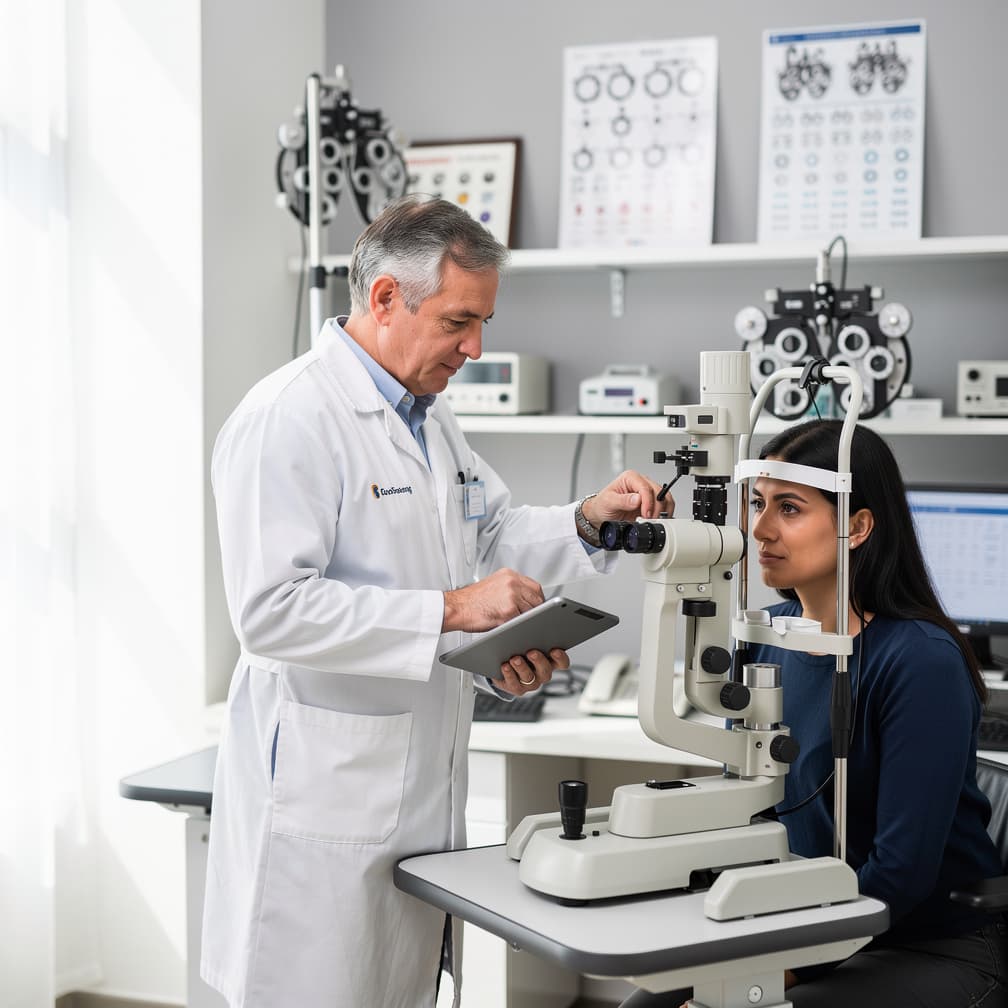

A patient calls six weeks after an exam to say the referral for a suspected retinal problem never reached the specialist. Nothing broke, nobody fell, and a single chart note is the whole dispute. That is where optometrist insurance in Pittsburgh usually starts: with the judgment calls made inside the exam lane, not the building around it. The allegation arrives as a letter, and the cost of answering it begins long before anyone decides whether the follow-up was actually late. Defense costs erode the limit on some forms and sit outside it on others, and that wording is worth reading before you bind anything. This page lays out the lines a practice in Pittsburgh can end up carrying, what moves the price, and where the honest gaps sit.
What Makes Pittsburgh Different
About 83 optometrists practice in Allegheny County, and a class that size gets rated off a thick book of claims. Underwriters are not guessing at your exposure, because they have seen the same disputes many times over. That cuts both ways at quote time, and the direction depends entirely on your own record. A clean loss run inside a well-mapped class tends to get priced sharply and priced quickly. A messy one gets priced against everyone else's mistakes, and the surcharge follows you for years. Density also puts more parties into one ordinary slip inside a shared medical building. Your practice, the landlord, and the management company can all land on the same demand letter. Ask how your limit is shared when that happens, because three defendants do not get three limits.
Local Risk Factors in Pittsburgh
A week of canceled exams often does more financial damage than the water itself. Patients rarely rebook routine appointments quickly, and the lanes only hold so many slots when they finally do. Commercial Property may respond to the equipment and the build-out once the peril fits the form, though flood generally sits outside that paper entirely and has to be arranged on its own. Income lost while a suite in Pittsburgh dries out gets tied to damage the policy actually recognizes, which is why the flood gap bites twice. Ask about the trigger, then ask about the waiting period, and confirm the details with the Pennsylvania Insurance Department.
What Coverage Does an Optometrist in Pittsburgh Need?
Professional Liability
Vision plan networks and hospital affiliations ask for this one by name before they will list you, and a claims-made form is the usual answer. It is meant to respond to allegations about the exam itself: a missed sign, a delayed referral, a prescription written wrong. It typically leaves out the fall in your waiting room, which belongs to General Liability.
Example: A patient returns a year later saying the retinal referral never went out, and their attorney wants the chart. Defense work starts before fault is settled, and the policy in force at reporting is generally the one that answers.
General Liability
Someone walks into your dispensary who is not a patient, browses the frame board, and trips on a display base. Third-party bodily injury and property damage of that kind is what this line is built around, and it is what a landlord's certificate request is really chasing. Allegations about the exam itself sit elsewhere, on the professional side.
Example: A patient leaves a lane with pupils still dilated, misjudges the step at your entrance, and breaks a wrist. General Liability can respond to the medical bills and the claim that follows, subject to your limit.
Commercial Property
Flood is typically excluded, and so is a device that simply wears out, which catches owners more often than anything else here. What sits inside is the sudden stuff: fire, storm damage, burst pipes, theft, and the harm those do to your lanes, your frame stock, and your build-out. Income lost while the space is unusable is usually a separate extension worth asking about.
Example: A supply line above the ceiling lets go overnight and soaks the edger, the frame board, and the carpet of a Pittsburgh dispensary. Commercial Property might answer for the equipment and the build-out, depending on the wording you hold.
Cyber Liability
Patient charts, billing files, and the appointment schedule are the assets a practice cannot rebuild by hand. This line is intended for what happens when they are stolen, exposed, or locked: notification letters, forensic review, legal advice, and the income lost while nobody can open a schedule. A property form generally will not reach data that was never physically harmed.
Example: Ransomware locks the records system on a full clinic day, and every chart, prescription history, and booking sits out of reach. Cyber Liability could pick up the forensic work and the patient notifications once your retention is met.
Workers Compensation
Where General Liability looks to people who do not work for you, this line looks to the ones who do: the optician at the edger, the technician running pre-tests, the staff at the front desk. It is rated against payroll by class rather than by headcount, and the point at which it becomes mandatory varies by state.
Example: An optician catches a hand on a lens edger mid-shift and needs stitches and time away. Workers Compensation is generally the line that handles the medical bills and a share of lost wages in Pennsylvania.
How Much Does Optometrist Insurance Cost in Pittsburgh?
Optometrist Insurance is a bundle of separate policies, priced separately. The ranges below are typical figures for Pittsburgh for each line, except workers compensation, which is rated per $100 of payroll; a quote prices each one against your own operations.
| Coverage | Typical range | What moves your price |
|---|---|---|
| Professional Liability Insurance | $120 - $380 per month | The services you actually perform, annual revenue or billed fees, limit and retention selected |
| General Liability Insurance | $45 - $150 per month | Industry and risk classification, annual revenue, number of employees |
| Commercial Property Insurance | $80 - $250 per month | Building value and construction type, roof age and condition, fire protection class |
| Cyber Liability Insurance | $50 - $180 per month | Records held and how sensitive they are, annual revenue and industry, multi-factor authentication and backup practices |
| Workers Compensation Insurance | $0.75 - $2.74 per $100 of payroll | Employee classification codes, total annual payroll, experience modification rate |
Prices shown are general estimates, not guaranteed rates or quotes. Your actual premium will depend on the insurer, coverage selected, business details, location, claims history, and other underwriting factors. Learn about our pricing methodology.
What Are the Insurance Requirements for an Optometrist in Pittsburgh?
Workers' comp is generally required once you have your first employee. Pennsylvania generally requires employers to carry workers' compensation at that point. Common exemptions include sole proprietors, general partners, and some agricultural workers. Confirm current thresholds with your state's workers' compensation agency before you hire.
Flood damage is typically excluded from standard policies. Standard commercial property and builders-risk-type policies typically exclude flood damage. Flood exposure varies address by address, so check your premises in FEMA's Flood Map Service Center before deciding; if you sit in a mapped flood zone, a separate policy through the National Flood Insurance Program is the usual starting point.
Where to verify licensing and coverage rules. The Pennsylvania Insurance Department publishes consumer guidance and current insurance requirements for Pennsylvania businesses. When a contract or lease demands specific wording, the Pennsylvania Insurance Department's guidance is the authoritative place to check.
Get Your Optometrist Quote in Pittsburgh
Compare rates from multiple carriers. Free quotes, no obligation.
Operating in Pittsburgh
- Every off-site vision screening across Allegheny County arrives with an employer's contract, an insurance exhibit, and usually a request to be named as an additional insured before your staff reach the site.
- Entry mats soak through in the first hour of bad weather, and the mat is the one piece of loss control in your practice that nobody schedules, inspects, or replaces on any plan.
- Equipment finance contracts name the lender against the device rather than against the practice, so the certificate they want is a different document from the one your landlord is chasing.
- An after-hours call from a patient with a red eye is clinical work performed outside your normal description, and a carrier in Pennsylvania rated your policy on that description.
How to Buy: Advice for Pittsburgh Owners
Timing decides more than shopping does. Coverage has to exist before the lease starts, before a vision plan lists you, and before an employer's screening date, because each of those parties wants the certificate first and the work second. Start the process a month early, never a week. A rushed submission gets priced conservatively, since an underwriter with missing information assumes the worse version of your practice. If you are moving a claims-made Professional Liability policy, the effective dates matter more than the premium, and a one-day gap can strand years of exams. The same is true of the General Liability the landlord is waiting on. The Pennsylvania Insurance Department publishes the current requirements for how a policy cancellation and replacement should be documented. Give yourself the runway, then compare quotes from participating carriers in Pittsburgh while you still have time to walk away from a bad one.
FAQ
Optometrist Insurance in Pittsburgh: FAQ
Contracts set your floor, so start by reading the highest limit anyone has demanded of you. Then ask a separate question: what would defending an allegation about an exam from four years ago actually cost, and does your form pay defense inside the limit or outside it. Inside means money spent defending you is money no longer available to settle. Ask for a quote at your target limit and at one step above.
That is one of the more common allegations in this trade, and it rarely arrives as a lawsuit first. It arrives as a letter, a records request, and a demand. Professional Liability is meant to respond to allegations about the clinical work and the documentation behind it, including defense costs while fault is still being argued. The chart note you wrote at the time is what the whole thing gets decided on.
Payroll split by role, annual revenue and patient volume, an equipment schedule with current replacement values, five years of loss runs, and the insurance exhibit from your lease. Add a plain description of what you actually do: dispensing, contact lens fitting, in-house grinding, after-hours calls, off-site screenings. Guess at any of it and the quote gets re-rated later, generally not in your favor. Participating carriers in Pennsylvania read the same packet differently.
Often not, and this catches practices out. Property forms are generally built around sudden physical loss, so a device that wears out, or whose board fails on its own, is commonly treated as maintenance rather than as a loss. Equipment breakdown is a separate endorsement on many forms and absent from others. Ask which of the two a carrier in Pennsylvania is quoting you, because the answer decides who pays for a lane that went dark.
Ask before you agree to the date rather than afterwards. Coverage territory and the location wording in your form decide whether work away from your own suite sits inside the policy. The employer or school will usually want naming as an additional insured for the day, which is an endorsement request with its own lead time. If staff go with you, the payroll follows them, and so does the workers compensation rating.
Routine exams are where most professional allegations start, because a missed sign or a delayed referral is a judgment call rather than an accident. Professional Liability is intended to answer allegations about the clinical work itself, including the cost of defending one that never reaches a courtroom. General Liability handles the slip in your waiting room and generally leaves the exam-lane dispute alone. The two are not interchangeable.
Sources
- 1.U.S. Census Bureau, County Business Patterns (2023), Allegheny County(Allegheny County has about 83 businesses in this trade's category (NAICS group 621320).)
- 2.Pennsylvania Insurance Department(Pennsylvania Insurance Department publishes consumer guidance for insurance buyers.)
- 3.FEMA / FloodSmart(Flood coverage is typically purchased separately; FEMA administers the National Flood Insurance Program.)


