







































Updated July 16, 2026

Garage Keepers Insurance in Pittsburgh
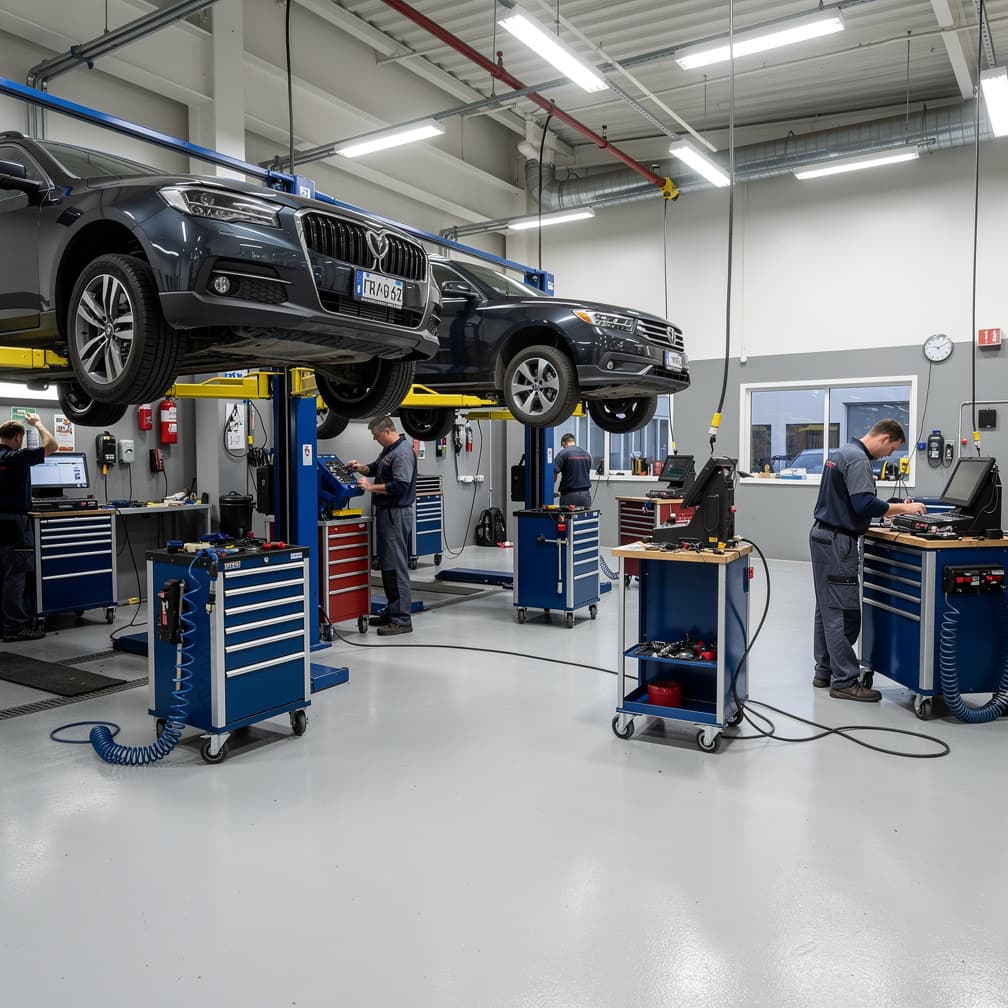
A Pittsburgh-area repair shop, body shop, or valet operation often works out of tight urban parcels, older commercial bays, and mixed indoor and outdoor storage. Customer pickups come from downtown commuters, neighborhood households, and nearby business fleets. Here, a claim can start with a customer car left in a fenced side lot, a vehicle staged overnight behind the building, or an employee moving units between bays during a busy week. Allegheny County has 33,827 business establishments, so a fair number of your potential customers are other companies maintaining fleets rather than just walk-in drivers. Those commercial accounts often expect clear documentation when their vehicles are left in your care. If your operation handles after-hours drop-offs, sublet work, or overflow parking away from the main bay, the specifics you provide up front can shape how a carrier views your custody exposure.
Garage Keepers Insurance Risk Factors in Pittsburgh
Pittsburgh's top risk factors include Severe weather, Property crime, Flooding, and Vehicle accidents.
Pennsylvania has a moderate climate risk rating. Top hazards: Flooding (High), Winter Storm (High), Severe Storm (Moderate), Tornado (Low). The state's expected annual loss from natural hazards is $1.6B, which influences garage keepers insurance premiums and may affect coverage availability in high-risk areas.
What Garage Keepers Insurance Covers
For your shop, the useful question is not the broad national definition. It is where loss can happen in your actual handoff process. A repair shop that keeps keys in a lockbox after hours faces a different exposure than a detailer moving vehicles across a shared lot. Both differ from a dealer service department that stores customer units for several days waiting on parts. Your coverage review should focus on those custody points.
Start with where vehicles are kept during the day, overnight, and on weekends. If customer cars rotate between indoor bays and outdoor parking, ask for each storage pattern to be reflected in the application. If you use a fenced lot, stacked parking, remote overflow space, or a neighboring parcel, disclose that early. Underwriters care because the loss scenario changes with every transfer, every key handoff, and every place a vehicle can sit unattended.
You should also review who is allowed to move customer vehicles and for what purpose. A shop foreman, porter, technician, tow operator, and lot attendant do not create the same exposure. If road testing happens, if vehicles are repositioned to clear bays, or if unfinished jobs stay on site while estimates are approved, those facts belong in the quote conversation. Match the policy to your business so a claim does not turn into an argument about how the vehicle was being stored, moved, or secured at the time of loss.
Coverage Included
Collision Coverage
Covers damage to customers' vehicles from collisions while in your care.

Comprehensive Coverage
Covers theft, vandalism, fire, and weather damage to customers' vehicles.
Specified Perils
Covers only specifically named perils at a lower premium.

Legal Liability
Covers damage you or your employees directly cause to a customer's vehicle.

Direct Primary
Pays regardless of fault, the broadest garage keepers coverage available.
Industries & Insurance Needs in Pittsburgh
County business mix is the useful local signal here. In Allegheny County, health care and social assistance accounts for 14.2% of establishments, professional, scientific, and technical services 12.1%, and retail trade 11.8%. That matters because a local shop may not just be holding personal vehicles, it may also be taking in cars, vans, and light-duty units tied to clinics, offices, and retail operators that need fast turnaround and documented handoff procedures. If your customer base includes business accounts, review whether your quote reflects where those vehicles are stored, whether they stay overnight, and how often staff reposition them. A garage keepers review should match the mix you actually service, especially if weekday volume swings between consumer repair work and commercial account vehicles.
What Makes Pittsburgh Different
Many operations here work with less surplus space than a suburban shop with a wide standalone lot, so vehicle custody often extends across narrow side yards, shared access drives, stacked parking patterns, or off-hours storage decisions made to keep bays moving. That means your exposure is not just about repair activity inside the building. It is also about where customer vehicles wait before teardown, after completion, or during parts delays, and who has authority to move them. Allegheny households have a median income of $64,137, so a meaningful share of your customers are watching every dollar they spend on vehicle repairs. Claim handling starts with better intake records, key control, and storage mapping.
Our Recommendation for Pittsburgh
Start with a walk-through of your actual custody chain. Map where customer vehicles sit at each stage from intake through overnight storage, then compare that against the locations and practices described in your current policy request. Any space that is not obvious from the storefront should go on the record before quoting, and the same applies if employees move vehicles between buildings, side lots, or shared parking areas. For local operators serving business accounts, separate personal-vehicle volume from fleet or company-owned units so the submission reflects the work mix you really handle. Intake photos, existing-damage notation, key sign-out logs, and written pickup authorization can all help when a loss turns into a dispute over condition or timing. When you are ready to compare options, request quote terms built around your indoor storage, outdoor storage, and overnight routine rather than one blended assumption.
Get Garage Keepers Insurance in Pittsburgh
Enter your ZIP code to compare garage keepers insurance rates from carriers in Pittsburgh, PA.
Business insurance starting at $25/mo
FAQ
Frequently Asked Questions
Pittsburgh shops often use side yards, rear spaces, or shared access areas, so storage layout can change how an underwriter views vehicle custody. Where customer vehicles sit during the day, overnight, and while waiting on parts tends to drive the accuracy of the quote you receive.
Pittsburgh operators should mention both. Overnight storage changes when a customer vehicle is in your care, and that timing can affect how your policy review accounts for keys, intake procedures, and parking locations.
Allegheny County has 33,827 business establishments, so a fair number of local repair volume comes from company vehicles, not just personal cars. If you service business accounts, the frequency of overnight fleet stays and their storage locations are worth documenting for the agent.
Allegheny County's leading sectors include health care and social assistance at 14.2%, professional services at 12.1%, and retail trade at 11.8%. Those fields rely heavily on service vehicles that end up at local shops. Fleet work, turnaround expectations, and storage practices are all relevant details for an accurate submission.
Allegheny households have a median income of $64,137, so a meaningful share of your customers are watching every dollar they spend on vehicle repairs. Customers in that position tend to scrutinize delays or condition issues closely when a vehicle is returned. Intake photos, prior-damage notes, and key logs give you a paper trail that can make a claim dispute easier to sort out.
Pennsylvania businesses often need both reviewed because they address different exposures. You should compare policy language, exclusions, and claim handling expectations before assuming one policy fills the other gap.
Pennsylvania repair shops get better quotes by showing where vehicles are stored, who moves them, how keys are controlled, and whether cars stay overnight. A detailed submission usually produces terms that are easier to compare than a generic application.
Pennsylvania outdoor storage can affect underwriting because the insurer may want a clear picture of security, key control, lighting, fencing, and peak vehicle count. If cars move between indoor and outdoor areas, disclose that workflow at quote time.
Sources
- 1.U.S. Census Bureau, County Business Patterns, Allegheny County(Allegheny County has 33,827 business establishments, so many local shops serve other businesses as well as retail drivers.; In Allegheny County, health care and social assistance accounts for 14.2% of establishments, professional, scientific, and technical services 12.1%, and retail trade 11.8%.)
- 2.U.S. Census Bureau, ACS 5-Year Estimates, table B19013(In a market where households have a median income of $64,137, customers may be more sensitive to delays, documentation gaps, and condition disputes when a vehicle is returned.)
Updated July 16, 2026





