







































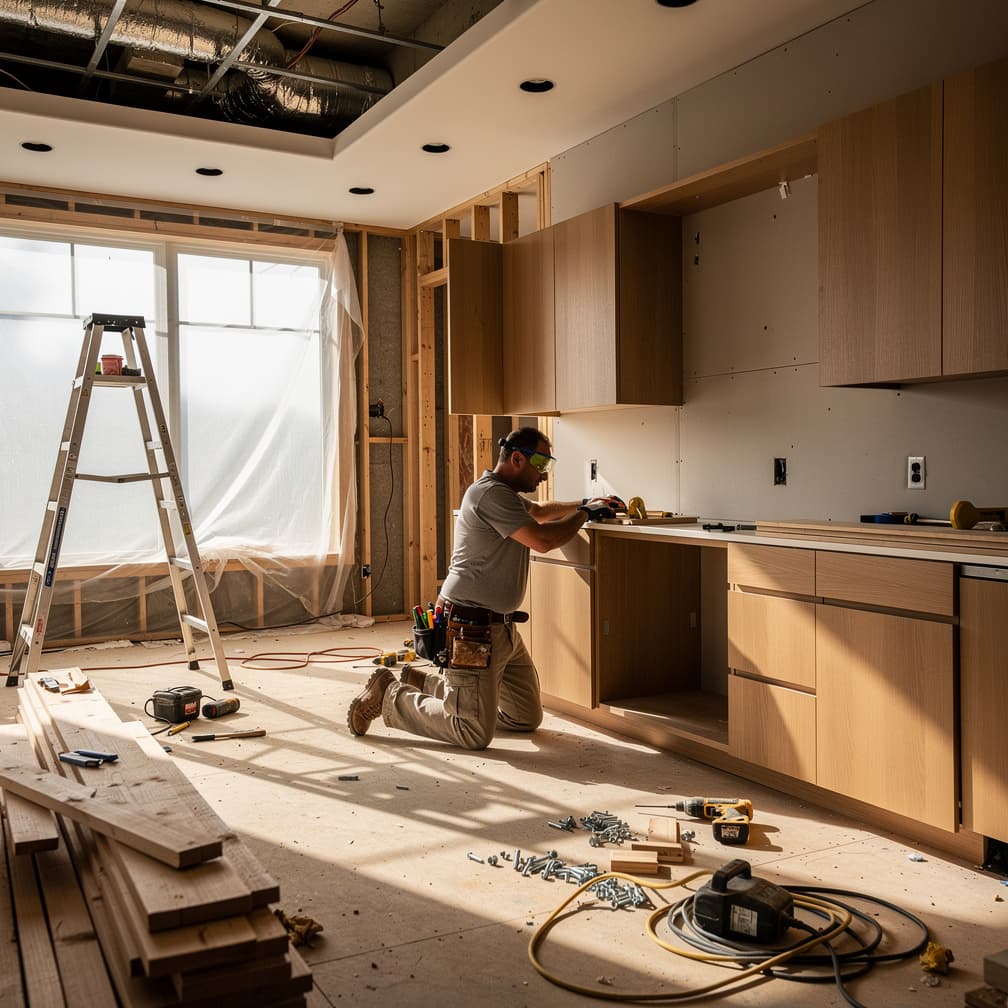

Trim damage is the quiet killer on a cabinet job: a bumped door casing, a chipped stair nose, a scuffed baseboard, every bit of it charged back at a finish carpenter's rate. When your schedule pulls you well outside Berks County to stay full, the same exposure rides along in the van, and so does the paperwork a builder wants on file. That is the practical case for cabinet installer insurance in Reading, whether the job is across town or two counties out. A thin market also means a homeowner may already know your last three clients, so a disputed scratch costs reputation on top of money. Coverage territory and additional insured wording are worth confirming before you take work across a line. What follows sorts the lines that carry that risk from the ones that quietly do not.
What Makes Reading Different
Handshake jobs still create contracts, they just create the ones nobody wrote down or read. A homeowner's expectation that you will fix a damaged floor is not actually a policy term. It is a dispute waiting for a form to be read closely by someone who bills hourly. Small markets run on informal agreements, which works right up until the week it does not. A one page scope naming who moves the appliances is worth more than most endorsements are. Write down who is responsible for protecting finished flooring before your first box comes inside. That sentence decides whether a scratch becomes a claim or becomes a conversation in Reading. Carriers in Pennsylvania rate you on losses reported, so the claims you never file matter.
Local Risk Factors in Reading
Flooding can put a cabinet job in Reading on hold for weeks, and the material is usually the first casualty. Boxes staged in a garage or a lower level soak up water fast, and particleboard does not come back from it. Your van and your tools may be sitting in the same water. Inland Marine can help cover equipment and material away from a fixed location, though the form decides whether rising water counts at all. That is the honest gap to check before the season: equipment and property forms commonly exclude flood, and flood coverage is bought separately with its own waiting period. Ask a carrier in Pennsylvania where your material is insured while it waits to be installed.
What Coverage Does a Cabinet Installer in Reading Need?
General Liability
Builders, property managers, and homeowners ask for proof of this line before a crew comes through the door. It may help cover injury to other people and damage you cause to property that is not yours, subject to what the form excludes. Damage to the cabinets you were installing, and the cost of redoing work that was simply done badly, typically sit outside it.
Example: A dolly loaded with wall boxes clips a finished stair nose on the way into a Reading kitchen, and the homeowner wants the whole run of trim replaced. That repair is the sort of claim this line may pick up.
Workers Compensation
Employee injuries sit here rather than on a liability form: a strain from lifting a tall pantry, a hand caught between a cabinet and a wall, heat illness inside a house with no cooling. It is rated on payroll, so the number moves the week you hire. Builders commonly demand proof before anyone badges onto a site, and rules on when it is mandatory vary by state.
Example: Your helper steadies a wall unit, the cleat gives, and the cabinet comes down on his wrist. Medical bills and the wages lost while it heals are what this line is generally meant to address.
Commercial Auto
A personal policy commonly stops applying the moment a van is used for the business, and cabinet work keeps a van loaded and moving every day. This line is written for the vehicles you drive to job sites, and it may respond to injury or damage you cause with them, subject to the drivers and vehicles actually listed on it.
Example: You back into a client's parked car while unloading a run in a tight driveway. Repairs to that car, and any injury claim that follows, are what the auto line is meant to answer.
Tools & Equipment (Inland Marine)
Tools never stay in one place in this trade: a track saw rides to three houses in a week and a cabinet jack lives in the van. This line is built for equipment and material away from a fixed location, and it may help cover theft or damage while they travel. Forms often narrow theft from an unattended vehicle, and some cap what any single item may collect.
Example: A window gets popped in a Reading driveway overnight, and the saw, the laser, and a bin of hardware are gone by morning. Replacing that kit is the loss this line typically speaks to.
Commercial Umbrella
When a builder demands a limit higher than your General Liability carries, this is usually how you reach it for less than raising the primary. It sits above the underlying policies and may respond once their limits are exhausted, subject to the terms of both. It does not broaden anything the underlying form already excludes.
Example: Water from a sink base spreads through a finished floor and into the unit below, and the primary limit runs out while three trades argue over fault. An umbrella could carry what is left.
How Much Does Cabinet Installer Insurance Cost in Reading?
Cabinet Installer Insurance is a bundle of separate policies, priced separately. The ranges below are typical figures for Reading for each line, except workers compensation, which is rated per $100 of payroll; a quote prices each one against your own operations.
| Coverage | Typical range | What moves your price |
|---|---|---|
| General Liability Insurance | $95 - $280 per month | Industry and risk classification, annual revenue, number of employees |
| Workers Compensation Insurance | $0.75 - $2.74 per $100 of payroll | Employee classification codes, total annual payroll, experience modification rate |
| Commercial Auto Insurance | $190 - $575 per month | Fleet size and vehicle types, driver records and experience, coverage limits and deductibles |
| Inland Marine Insurance | $25 - $110 per month | Total insured value of the scheduled property, type and age of the equipment, where it is stored and how far it travels |
| Commercial Umbrella Insurance | $45 - $160 per month | Umbrella limit requested, limits carried on the underlying policies, loss history on those underlying policies |
Prices shown are general estimates, not guaranteed rates or quotes. Your actual premium will depend on the insurer, coverage selected, business details, location, claims history, and other underwriting factors. Learn about our pricing methodology.
What Are the Insurance Requirements for a Cabinet Installer in Reading?
Workers' comp is generally required once you have your first employee. Pennsylvania generally requires employers to carry workers' compensation at that point. Common exemptions include sole proprietors, general partners, and some agricultural workers. Confirm current thresholds with your state's workers' compensation agency before you hire.
State auto liability minimums apply to business vehicles. Pennsylvania's minimum auto liability limits are $15,000/$30,000/$5,000 (bodily injury per person / per accident / property damage). Contracts and lenders often require more than the state floor.
Where to verify licensing and coverage rules. The Pennsylvania Insurance Department publishes consumer guidance and current insurance requirements for Pennsylvania businesses. When a contract or lease demands specific wording, the Pennsylvania Insurance Department's guidance is the authoritative place to check.
Get Your Cabinet Installer Quote in Reading
Compare rates from multiple carriers. Free quotes, no obligation.
Operating in Reading
- A shop in Berks County storing finished cabinets carries a concentrated exposure: one bad night can wipe out the material for several jobs at once, and those clients still expect their kitchens.
- A lender or an owner behind a project can set insurance requirements that the general contractor simply passes down to you, unchanged and not open to negotiation.
- A builder in Reading can hold your first draw until a current certificate sits in its file, which means an expired document costs you cash even when the policy behind it never lapsed.
- Cabinets get delivered days before you install them, and they sit in a garage or an unfinished room the whole time. Whose loss that is when something crushes a box depends on the contract, not on who paid the supplier.
How to Buy: Advice for Reading Owners
Nobody shops a policy well while a job is stalled, so do this work in a slow stretch. Pull your loss runs, list every certificate holder, and reread the contract you sign most often. Decide what limit you actually want rather than the one a builder picked, then price both. General Liability and Inland Marine are the two lines nearly every installer needs, and carriers in Pennsylvania will write them separately without any trouble. Workers Compensation joins them the moment you put someone on payroll. Ask about turnaround for certificates and endorsements before you need either in a hurry. When the file is ready, comparing quotes from participating carriers for your Reading operation is a short task with a clear answer.
FAQ
Cabinet Installer Insurance in Reading: FAQ
Report accurate payroll and revenue so the audit holds no surprises, hold your subcontractors' certificates as jobs run, and keep small losses off your record where you can genuinely absorb them. Ask for the same submission priced at two limits and two deductibles before you decide anything. Carriers in Pennsylvania weigh loss history heavily, so a few clean years is worth more than any negotiation.
Usually when a contract demands a limit higher than your primary carries, which tends to happen on larger projects. A Commercial Umbrella can sit above General Liability and respond once the underlying limit is exhausted, subject to the terms of both policies. It is frequently less expensive than raising the primary limit to the same number. Ask for it quoted both ways before assuming which route is cheaper for a Reading contract.
Most builders will not let a crew through the door without a certificate on file, so the practical answer is usually yes. The contract, rather than any statute, is what tends to create the obligation. Licensing and coverage rules do vary, and the Pennsylvania Insurance Department publishes the current requirements for contractors. Ask a builder for its insurance exhibit before you bid, because the limit named there changes your price.
Price comes out of payroll, revenue, claims history, the limits you choose, and the vehicles you drive. An installer working alone in occupied homes around Reading prices differently than a three person crew doing new construction. Carriers tend to read occupied residential work as messier, since finished floors and countertops are already in place. The cost table on this page shows current ranges, and your own number only appears once several carriers price one identical submission.
That is third party property damage, and General Liability is the line most likely to answer, subject to what the form excludes. The exclusion worth reading covers the particular work you were performing. Damage to the cabinets you were installing may sit outside the policy while damage to the floor around them does not. The boundary is narrower than most installers expect, and it is worth seeing in writing before you need it.
Inland Marine is the line built for tools away from a fixed location, and it may help cover theft in transit or at a job site. Read the conditions before you assume. Many forms narrow or exclude theft from an unattended vehicle unless it was locked and shows visible forced entry. Some also cap what any single item may collect, which stings when one saw is worth more than the rest of the kit.
Sources
- 1.Pennsylvania Insurance Department(Pennsylvania Insurance Department publishes consumer guidance for insurance buyers.)


