








































Water from a burst pipe overhead ruins more fabric in an hour than a thief takes in a year. Bolts wick, dye runs, and mildew finishes what the water started, so a small leak in a stockroom becomes a total loss on a whole rack. Fabric store insurance in Reading has to account for that quiet, fast damage as much as the dramatic kind. Plumbing failures and weather-driven water are handled differently in most forms, and rising water is a separate purchase entirely. Knowing which bucket your building falls into changes what you should ask for. Whether your stock sits on the floor or up on pallets changes it too. Participating carriers in Pennsylvania do not all draw that line in the same place, so start with where your inventory physically sits.
What Makes Reading Different
Utility outages last longer where the grid runs thin, and a dark store sells nothing at all. Your point-of-sale system, your lighting, and your climate control all stop at exactly the same moment. Fabric that sits in a humid, unconditioned building for days can mildew and become unsellable stock. Whether the policy may respond depends on what caused the outage and where the damage occurred. Off-premises power failure is excluded on many forms unless you specifically ask for the endorsement. Asking is free, and discovering the exclusion after a long outage in Pennsylvania is anything but. A generator solves the operational half of the problem and none of the wording half. Raise the question with every quote you gather in Reading, and never assume the answer is yes.
Local Risk Factors in Reading
Saturated stock cannot be salvaged, and that is what separates a flood from most other property losses in this trade. A bolt that spent an afternoon in dirty water is a disposal problem rather than a cleaning problem, and the whole bottom shelf goes with it. Your fixtures, your shelving feet, and the drywall behind them follow, and the store stays shut until the building dries out properly. Meanwhile the rent on a Reading unit keeps running on schedule. A business owners policy may help cover income lost while damage gets repaired, and it generally does so only where the underlying cause is a covered one, which flood usually is not under forms written in Pennsylvania. That is why the separate purchase matters here more than the limit debate does.
What Coverage Does a Fabric Store in Reading Need?
General Liability
Landlords, market organizers, and lenders ask for this one by name before they hand over keys or assign a booth. It may help cover a customer who slips in an aisle, a cut hand at your cutting table, or damage you cause to somebody else's property. Employee injuries sit outside it, and so does damage to your own inventory.
Example: A shopper catches a foot on a rolling remnant cart, goes down hard, and a demand letter for the emergency room visit lands six weeks later. General Liability is typically the line that answers.
Commercial Property
Rising floodwater and gradual wear sit outside this form from the start. What is inside is the stock and the contents: bolts, trims, notions, shelving, cutting tables, and the fit-out you paid to install in a leased unit. It may respond to fire, smoke, theft, storm damage, and sudden water from a burst pipe. Undercounting inventory is what costs owners at claim time.
Example: A sprinkler head lets go over the cotton wall on a cold night and soaks four racks before anyone arrives. Commercial Property might help cover the ruined bolts, subject to your deductible.
Workers Compensation
Payroll is what this one is priced on, at a rate per hundred dollars of wages that moves with how your staff get classified. It might help cover medical bills and lost wages when an employee is hurt lifting bolts, reaching a top shelf, or working a cutter. Whether it is mandatory at your headcount varies by state.
Example: A part-timer hauling a full bolt down from an overhead rack tears a shoulder and spends two months in physical therapy. This is the line that would ordinarily respond.
Business Owners Policy
Instead of buying the liability and the property separately, this bundles them into one form with one renewal date, and plenty of small retailers start here. It commonly adds a time element that may help cover lost income while a covered repair keeps the doors shut. The catch is the property cap inside the package, which may sit below what your shelves actually hold.
Example: A fire two units down leaves your bolts unsellable and the store shut for six weeks while the block gets rebuilt. A Business Owners Policy might pick up both the stock and the closed weeks.
How Much Does Fabric Store Insurance Cost in Reading?
Fabric Store Insurance is a bundle of separate policies, priced separately. The ranges below are typical figures for Reading for each line, except workers compensation, which is rated per $100 of payroll; a quote prices each one against your own operations.
| Coverage | Typical range | What moves your price |
|---|---|---|
| General Liability Insurance | $55 - $150 per month | Industry and risk classification, annual revenue, number of employees |
| Commercial Property Insurance | $100 - $340 per month | Building value and construction type, roof age and condition, fire protection class |
| Workers Compensation Insurance | $0.75 - $2.74 per $100 of payroll | Employee classification codes, total annual payroll, experience modification rate |
| Business Owners Policy Insurance | $100 - $310 per month | Annual revenue and industry class, building and contents values, square footage and building age |
Prices shown are general estimates, not guaranteed rates or quotes. Your actual premium will depend on the insurer, coverage selected, business details, location, claims history, and other underwriting factors. Learn about our pricing methodology.
What Are the Insurance Requirements for a Fabric Store in Reading?
Workers' comp is generally required once you have your first employee. Pennsylvania generally requires employers to carry workers' compensation at that point. Common exemptions include sole proprietors, general partners, and some agricultural workers. Confirm current thresholds with your state's workers' compensation agency before you hire.
Flood damage is typically excluded from standard policies. Standard commercial property and builders-risk-type policies typically exclude flood damage. Flood exposure varies address by address, so check your premises in FEMA's Flood Map Service Center before deciding; if you sit in a mapped flood zone, a separate policy through the National Flood Insurance Program is the usual starting point.
Where to verify licensing and coverage rules. The Pennsylvania Insurance Department publishes consumer guidance and current insurance requirements for Pennsylvania businesses. When a contract or lease demands specific wording, the Pennsylvania Insurance Department's guidance is the authoritative place to check.
Get Your Fabric Store Quote in Reading
Compare rates from multiple carriers. Free quotes, no obligation.
Operating in Reading
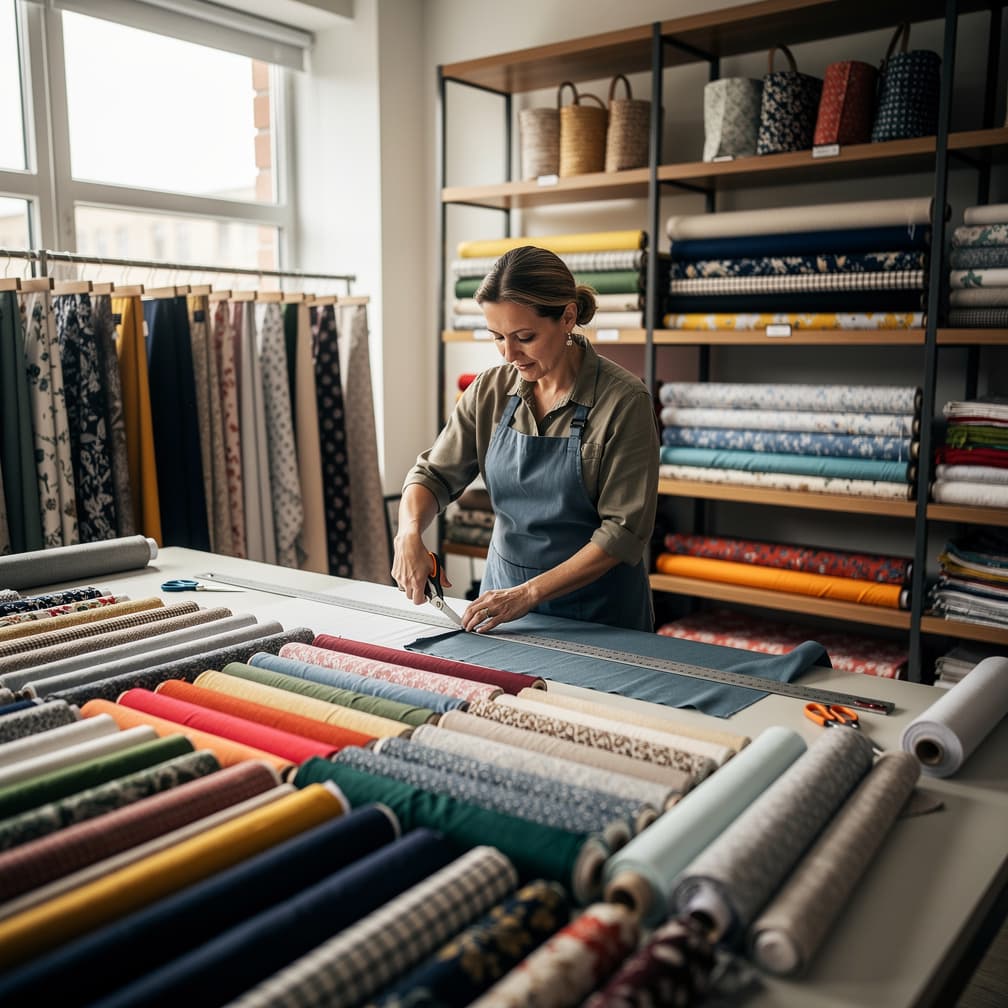
- Your cutting table is a public workstation with shears, rotary blades, and a hard edge at hip height. Customers reach across it, and a cut hand at your counter in Reading becomes a liability question the same afternoon.
- A landlord in Reading can withhold the keys until a certificate naming them correctly reaches the leasing office, so a slow endorsement request delays your opening rather than just your paperwork.
- Remnant bins, floor bolts, and rolling carts narrow an aisle without anybody deciding to narrow it. Aisle width is a claims-frequency lever you actually control, and frequency is what renewal pricing punishes hardest.
- Point-of-sale terminals, cutting machines, and the barcode scanner all fail eventually, and a register that will not open on a busy afternoon costs you the day's sales. A service call in Berks County may not arrive the same day.
How to Buy: Advice for Reading Owners
Betterments and improvements are the thing owners forget to insure. If you built out the shelving walls, the cutting station, and the lighting in a leased unit, the landlord's building policy is not going to replace your work. That falls to your Commercial Property limit, and only if somebody was told the improvements exist. Add up what the buildout cost and put the figure into the quote conversation for your Reading space. The lease decides who repairs the shell and who repairs the fit-out, so the two documents need to agree with each other. General Liability handles a customer hurt inside that space, which is a separate question entirely. The Pennsylvania Insurance Department publishes the current requirements for what a commercial property policy states about valuation. Once the buildout number is on paper, compare participating carriers through CPK on the same limit.
FAQ
Fabric Store Insurance in Reading: FAQ
It comes off your side of every loss before anything gets paid, so a higher deductible lowers the premium and raises what you fund yourself. Watch for separate wind or hail deductibles, which are commonly a percentage of building value rather than a flat amount and can be far larger than the front page implies. Read the declarations page on any Pennsylvania quote, since that is where the real number sits.
It often can, and unsellable stock is a real loss even when nothing on your floor burned. Fabric holds odor, and bolts that smell like a fire cannot be sold at any price. How smoke and odor damage to inventory gets treated varies noticeably between forms, so ask that specific question while comparing. Whether the neighbor's insurer eventually contributes is a separate argument that can take months to resolve.
Have your annual revenue, payroll broken out by job type, a replacement value for inventory, an equipment list with purchase dates, and your lease ready before you approach participating carriers in Pennsylvania. Add three years of claim history if you have any. Payroll drives the Workers Compensation number, inventory value drives the property side, and the lease dictates limits somebody else already chose for you. Guessed figures produce a price that moves the moment anyone checks.
Sometimes, and the honest answer is that off-premises terms are narrower than most owners assume. Goods in transit and goods at a temporary location get handled separately from stock at your fixed address. An organizer who asks to be named on your certificate will not verify whether the coverage actually reaches the booth. Ask before you commit to the date, since the answer takes one call and the alternative is an argument.
No. Policies respond to sudden, accidental events, and gradual deterioration sits outside them by design. Fabric that faded in a window over two seasons, shelving that sagged, or slow seepage nobody noticed are maintenance issues rather than claims. That line matters because a long-running leak discovered late can be denied for exactly this reason. Fixing small problems early protects both the stock and your ability to claim on the big one.
Most commercial leases make it a condition of getting the keys, so the answer is usually yes and the timing is tighter than owners expect. The clause behind a Reading storefront will name a liability limit and often ask for the building owner to be added as an additional insured. Read it before you sign, because agreeing to wording your policy will not grant leaves you exposed personally.
Sources
- 1.Pennsylvania Insurance Department(Pennsylvania Insurance Department publishes consumer guidance for insurance buyers.)
- 2.FEMA / FloodSmart(Flood coverage is typically purchased separately; FEMA administers the National Flood Insurance Program.)


