







































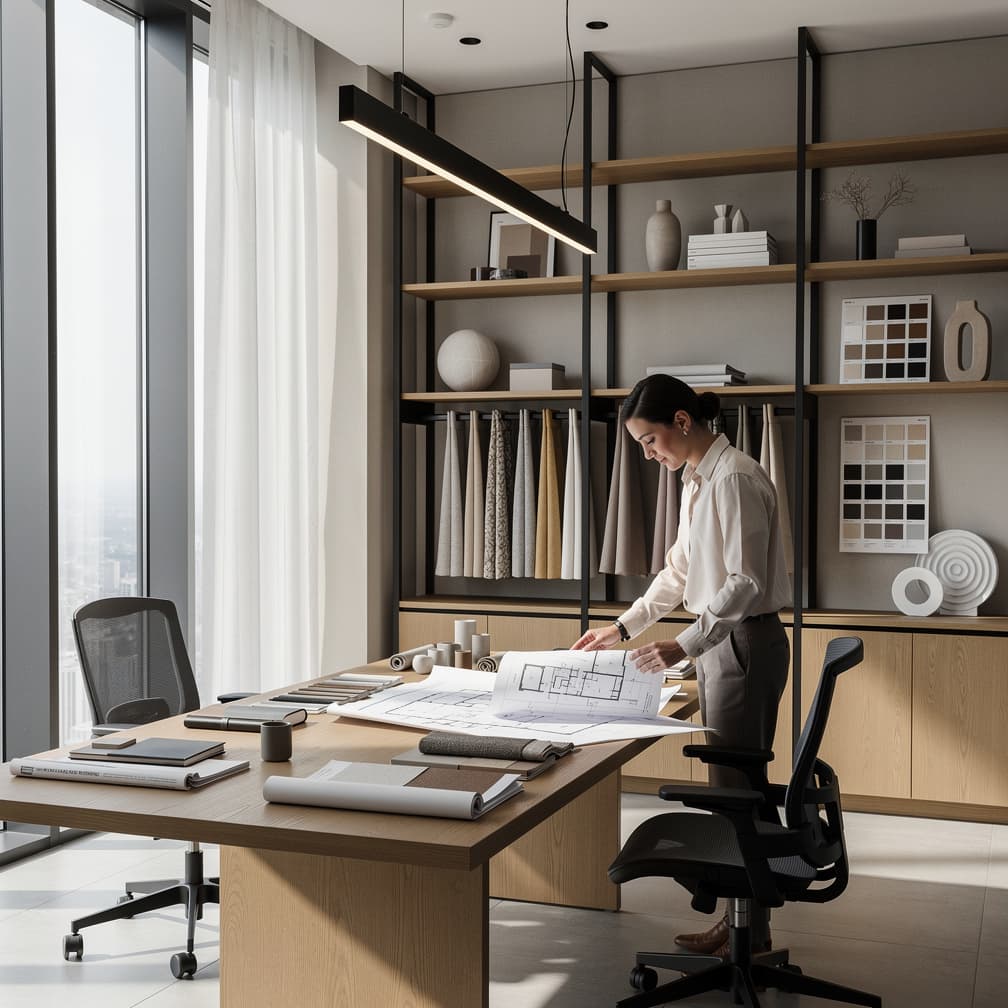

As an interior designer in Reading, you sign contracts that keep your judgment on the hook long after the last box is unpacked. A client can raise a specification dispute months after installation, when the room has been lived in and the receipts are cold. A design practice's largest exposure is rarely the ladder or the delivery: it is the sentence in your proposal that a client later reads differently than you wrote it. Document approvals in writing, keep the revision history, and treat every change order as evidence rather than admin. Interior designer insurance in Reading answers the claim; your paper answers the facts. Both matter, and only one of them can still be bought after the argument starts. The sections ahead break down the lines a Reading practice usually ends up comparing.
What Makes Reading Different
About 10 interior design establishments in Berks County is a small enough field that one dispute travels. Clients compare you against a handful of names rather than a directory, and that handful talk to each other. The insurance question that follows is not really about limits, it is about speed of resolution. A disagreement that drags on for a year does damage that no policy limit can undo afterward. Ask how a carrier handles the early weeks of a dispute, before anyone has decided who was right. Ask what a quote quietly assumes about your appetite to settle rather than fight. For a Reading practice in a thin market, a quiet resolution beats a headline number.
Local Risk Factors in Reading
Flooding reaches a design studio through the floor, and everything a designer owns sits low: sample cases, boxed furnishings, rolled rugs, boards leaned against a wall. Water that comes up from outside ruins fabric and paper in minutes and leaves nothing worth salvaging. A flooded client residence in Reading can also freeze a project you have already ordered against, with deposits spent on goods that now have nowhere to go. Standard property forms in Pennsylvania typically exclude flood, and that gap is bought back separately rather than added by asking nicely. Ask what your quote assumes about rising water before the season, and get the answer in writing.
What Coverage Does an Interior Designer in Reading Need?
Professional Liability
A client who says your layout, your product specification, or your advice created extra cost is making a claim about judgment, and this is the line generally built for that argument. It can help cover defense and settlement when negligence or an omission is alleged, whether or not the allegation turns out to be fair. Physical damage and injuries sit elsewhere.
Example: You specify a veneer that delaminates in a hot install, the client bills you for the rework, and professional liability may engage once the accusation lands, fairness aside.
General Liability
Landlords, building owners, and commercial clients ask for this one by name before your installers reach the freight elevator. It typically responds to third-party injury and to damage you cause in someone else's space, and it is the line certificates usually reference. Claims about your professional judgment fall outside it, which is why designers rarely carry it alone.
Example: A client catches a foot on a rolled rug during a consultation in your Reading studio; the injury claim that follows is what this line is intended to answer.
Commercial Property
Samples, boards, rugs held for a reveal, the plotter, and the machine your renderings live on are the assets designers forget to count. This line is priced off the contents figure you declare, and it can help cover fire, theft, vandalism, storm damage, and equipment breakdown. Rising water is typically excluded and gets bought back separately.
Example: A pipe above a leased studio lets go over a long weekend and a whole sample library absorbs the water; coverage could respond up to the limit you declared.
Business Owners Policy
Bundling is the point here: a package that folds the liability and property pieces together for practices that fit a standard mold, often with interruption terms attached. It can be a sensible base for a small studio in Reading. The professional exposure, which is the claim designers actually face, usually sits outside the package and needs its own line.
Example: Fire closes your studio for six weeks and both the ruined contents and the income you lose while it dries out may fall inside a single package, depending on the form.
How Much Does Interior Designer Insurance Cost in Reading?
Interior Designer Insurance is a bundle of separate policies, priced separately. The ranges below are typical figures for Reading for each line; a quote prices each one against your own operations.
| Coverage | Typical range | What moves your price |
|---|---|---|
| Professional Liability Insurance | $75 - $240 per month | The services you actually perform, annual revenue or billed fees, limit and retention selected |
| General Liability Insurance | $45 - $130 per month | Industry and risk classification, annual revenue, number of employees |
| Commercial Property Insurance | $45 - $140 per month | Building value and construction type, roof age and condition, fire protection class |
| Business Owners Policy Insurance | $70 - $180 per month | Annual revenue and industry class, building and contents values, square footage and building age |
Prices shown are general estimates, not guaranteed rates or quotes. Your actual premium will depend on the insurer, coverage selected, business details, location, claims history, and other underwriting factors. Learn about our pricing methodology.
What Are the Insurance Requirements for an Interior Designer in Reading?
Workers' comp is generally required once you have your first employee. Pennsylvania generally requires employers to carry workers' compensation at that point. Common exemptions include sole proprietors, general partners, and some agricultural workers. Confirm current thresholds with your state's workers' compensation agency before you hire.
Flood damage is typically excluded from standard policies. Standard commercial property and builders-risk-type policies typically exclude flood damage. Flood exposure varies address by address, so check your premises in FEMA's Flood Map Service Center before deciding; if you sit in a mapped flood zone, a separate policy through the National Flood Insurance Program is the usual starting point.
Where to verify licensing and coverage rules. The Pennsylvania Insurance Department publishes consumer guidance and current insurance requirements for Pennsylvania businesses. When a contract or lease demands specific wording, the Pennsylvania Insurance Department's guidance is the authoritative place to check.
Get Your Interior Designer Quote in Reading
Compare rates from multiple carriers. Free quotes, no obligation.
Operating in Reading
- Freight damage discovered at delivery starts a clock: photograph the crate before it moves, because a carrier's liability window closes faster than a client's patience does.
- Overflow inventory ends up in a rented unit or a garage, and a policy written around your Reading studio address may not follow it there without someone asking.
- A consultation held in your studio turns a client into a visitor, and a visitor who trips over a rolled rug is a third-party injury claim rather than an awkward moment.
- Change orders on a Reading job that stay verbal because the relationship is good become the exact document your defense needs eighteen months later when the relationship is no longer good.
How to Buy: Advice for Reading Owners
Vendor problems are the exposure designers underbuy for, because the shipment is somebody else's mistake and the client's anger is yours. A wrong finish, a six-week delay, or a damaged crate becomes a project dispute with your name on it. Professional Liability is the line that engages when the argument turns to whether you should have caught it, so ask each quote how it treats claims arising from procurement rather than drawings. Keep vendor acknowledgments, lead-time confirmations, and damage photographs in the project file from day one. Confirm the details with the Pennsylvania Insurance Department before deciding how much of the procurement role to take on in Reading. Then weigh what participating carriers say about it through CPK.
FAQ
Interior Designer Insurance in Reading: FAQ
The deductible is the part of a loss that stays on your side. If a fire ruins the sample library in a Reading studio, you absorb the deductible and the policy considers the rest, up to whatever limit you declared. A lower deductible costs more every month for comfort you may never use. A higher one is often the cheaper way to buy a bigger limit, which is the number that actually matters when a claim is large.
Rising water is generally excluded from a standard property form, and that catches owners off guard because the exclusion has nothing to do with how careful you are. Flood is priced and bought as its own decision. A burst pipe inside the building is a different event and is often treated differently from water arriving from outside. Ask which one your quote contemplates, and read the exclusion page rather than the summary sheet.
Revenue, declared contents, claims history, required limits, and how accurately you describe the work. The address on your letterhead is nowhere near the top of that list, which surprises owners who assume a metro postal code costs more. What does change with the market is the limit your clients demand, since larger projects come with stricter insurance exhibits. Chasing bigger Reading work is a pricing decision as much as a business one.
You can buy a policy today, and it will not reach backward to the delivery that went wrong last week. That is why timing matters more than shopping: a certificate has to exist before the first crate moves, not before the final invoice. Leases work the same way, and the landlord behind a Reading studio can require proof on the day you sign. Line the coverage up before the bid rather than after the award.
The client calls you, because you scheduled the work and your name is on the project. Fault may sit entirely with the installer, and that will not change who gets the first phone call. Collect a certificate from every trade you bring in and diary the expiration dates, because a lapsed one lands on your desk. Ask your own carrier how work performed on your behalf is treated on the quote in front of you.
Per occurrence describes the most a policy may pay for one claim. Aggregate describes the most it may pay across the whole policy year. A designer with one bad project rarely bumps the aggregate; a designer with three disputes in one year can. Client contracts often name both numbers, and meeting one while missing the other is the common failure. Check which number your quote is showing you before you decide it satisfies the exhibit.
Sources
- 1.U.S. Census Bureau, County Business Patterns (2023), Berks County(Berks County has about 10 businesses in this trade's category (NAICS group 541410).)
- 2.Pennsylvania Insurance Department(Pennsylvania Insurance Department publishes consumer guidance for insurance buyers.)
- 3.FEMA / FloodSmart(Flood coverage is typically purchased separately; FEMA administers the National Flood Insurance Program.)


