







































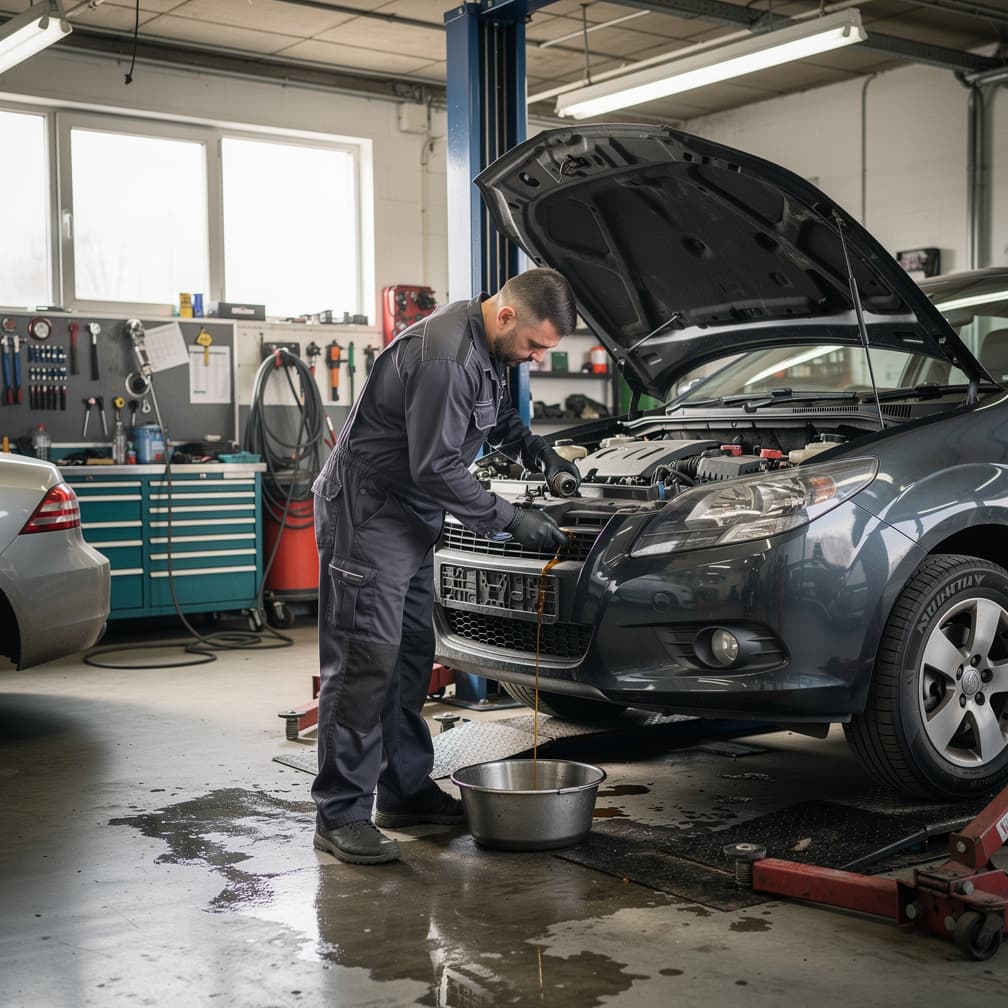

About 10 oil change stations operate in Berks County, and a shop count that thin means the repair vendors, the parts suppliers, and the claims adjusters are shared by everyone. When your lift goes down you wait behind whoever called first, and the wait is the real loss rather than the part. Oil change station insurance in Reading should therefore be judged on how it treats income you lose while the bay sits empty, not only on the liability limit. Reputation behaves the same way in a small market: one cracked pan becomes the story people repeat. Find out whether business income terms begin immediately or after a waiting period. Find out what proof of lost revenue looks like before you have to produce it. Compare quotes from participating carriers on those terms, not on the monthly figure alone.
What Makes Reading Different
The person who demands proof of coverage in a small market is often someone you know personally. That makes the ask feel optional, and it is not, because a signature does not care about friendship. A property owner in Reading can still hold a lease renewal over a certificate that never arrived. A local employer sending its vehicles to you can require the same document before approving your invoice. Handshake accounts turn formal the moment an accountant or an auditor opens the file. Get every request in writing, including the limits, the holder name, and the exact entity to list. Then keep a folder, because reproducing a certificate from memory two years later is a bad afternoon. Participating carriers in Pennsylvania vary in how fast they turn these around, which is worth asking before you bind.
Local Risk Factors in Reading
Before a wet season arrives, walk your shop with elevation in mind. What sits on the floor that belongs on a shelf, which records exist only in a desk drawer, and where does water leave the lot when the drain backs up? Those answers change what a flood would cost you and whether insuring it is worth doing. A separate flood policy, often written through the federal program, is the usual route, because standard Commercial Property forms typically leave flood out. Ask a participating carrier in Pennsylvania what documentation a Reading shop would need, and gather it while the floor is still dry.
What Coverage Does an Oil Change Station in Reading Need?
General Liability
Landlords, franchise brands, and fleet accounts ask for this one by name, and it answers to the public rather than to you. Third party bodily injury and property damage arising from your operations sit inside it, subject to the limits you buy. Damage to a customer's vehicle in your care usually does not, and neither does pollution.
Example: A customer leaves the waiting area, crosses a patch of fresh oil near the bay door, and lands hard on the concrete. A claim like that is typically where this coverage starts working.
Commercial Property
Lifts, pumps, compressors, air lines, the parts shelf, the waiting room, and your inventory of oil and filters are what this line is built around, plus the building itself if you own it. The values you state at purchase drive what a partial loss settles at. Flood and ordinary wear typically sit outside it.
Example: Fire starts in an electrical panel behind the parts wall overnight and takes the shelving, the stock, and a compressor with it. A loss on that scale is generally what this line is meant to answer.
Workers Compensation
Your customers are somebody else's problem here; this line concerns only the people on your payroll. Medical care and lost wages after a technician is hurt lifting a wheel, handling hot fluid, or moving a car are what it is intended for. Who must carry it varies by state, and the Pennsylvania Insurance Department publishes the current requirements.
Example: A technician wrestling a seized drain plug wrenches a shoulder and misses three weeks of shifts. The wage and medical side of that absence is what this coverage commonly picks up.
Business Owners Policy
Rather than buying liability and property separately, a smaller shop can take them as one package, often with a limited amount of lost income folded in. Many quick lube operations qualify, though fluid storage or building size can push a shop out of it. The sub-limits inside the package are where the real reading lives.
Example: A storm tears the canopy off the apron and closes both bays for nine days in Reading. The repairs and some of the income you did not earn can fall inside one package like this.
How Much Does Oil Change Station Insurance Cost in Reading?
Oil Change Station Insurance is a bundle of separate policies, priced separately. The ranges below are typical figures for Reading for each line, except workers compensation, which is rated per $100 of payroll; a quote prices each one against your own operations.
| Coverage | Typical range | What moves your price |
|---|---|---|
| General Liability Insurance | $100 - $340 per month | Industry and risk classification, annual revenue, number of employees |
| Commercial Property Insurance | $120 - $420 per month | Building value and construction type, roof age and condition, fire protection class |
| Workers Compensation Insurance | $0.75 - $2.74 per $100 of payroll | Employee classification codes, total annual payroll, experience modification rate |
| Business Owners Policy Insurance | $160 - $525 per month | Annual revenue and industry class, building and contents values, square footage and building age |
Prices shown are general estimates, not guaranteed rates or quotes. Your actual premium will depend on the insurer, coverage selected, business details, location, claims history, and other underwriting factors. Learn about our pricing methodology.
What Are the Insurance Requirements for an Oil Change Station in Reading?
Workers' comp is generally required once you have your first employee. Pennsylvania generally requires employers to carry workers' compensation at that point. Common exemptions include sole proprietors, general partners, and some agricultural workers. Confirm current thresholds with your state's workers' compensation agency before you hire.
Flood damage is typically excluded from standard policies. Standard commercial property and builders-risk-type policies typically exclude flood damage. Flood exposure varies address by address, so check your premises in FEMA's Flood Map Service Center before deciding; if you sit in a mapped flood zone, a separate policy through the National Flood Insurance Program is the usual starting point.
Where to verify licensing and coverage rules. The Pennsylvania Insurance Department publishes consumer guidance and current insurance requirements for Pennsylvania businesses. When a contract or lease demands specific wording, the Pennsylvania Insurance Department's guidance is the authoritative place to check.
Get Your Oil Change Station Quote in Reading
Compare rates from multiple carriers. Free quotes, no obligation.
Operating in Reading
- Your waste oil tank sits on a hauler's schedule rather than yours, and a hauler covering Reading runs its route to suit itself. If a pickup slips and the tank overflows, the cleanup is yours to explain, and pollution language is where that conversation lands.
- Keys sit in a box behind the counter all day, which means you have custody of vehicles worth more than everything else in the building combined. Find out what a policy says about property in your care long before you need the answer.
- Cars queue on the apron because the bays are full, and a customer waiting in a running vehicle is a claim looking for a distraction. A landlord in Reading can also treat that queue as a lease problem.
- Whoever moves a customer's car is the person your policy is really underwriting. Write down who is allowed to do it, keep the list short, and be able to produce it the day an adjuster asks.
How to Buy: Advice for Reading Owners
Loss runs are the least expensive negotiating tool you have. Ask your current carrier for three to five years of them before you shop, because a submission with no history gets priced defensively. If your record is clean, that is the argument. If it is not, bring the fix: the drain you regraded, the mats you added, the intake photos you now take on every vehicle. Underwriters discount stories and price evidence. Workers Compensation experience rating rewards that discipline over years and punishes the shop that reports nothing until it must. General Liability appetite moves faster than rates do, so a tidy file changes who is willing to look. Hand participating carriers in Pennsylvania the same file and let a Reading shop's record speak for itself.
FAQ
Oil Change Station Insurance in Reading: FAQ
Generally no. Standard property forms typically exclude flood, and it is written and priced separately, often through the federal program. That gap matters in a shop with a floor drain, a waste tank, and electrical equipment sitting low to the ground. Check what your policy calls flood against what it calls water damage from a burst line, because those are different perils with different answers in Pennsylvania.
The audit finds it. Workers compensation premium is built on actual payroll, so an estimate is only a placeholder until the year gets reconciled, and the difference arrives as a bill nobody budgeted. Filing a technician as counter staff ends the same way, usually with less patience attached. Report the real figures and let participating carriers in Pennsylvania price the real shop.
Normally yes, though a brand usually wants more than a mention: additional insured status, named limits, and sometimes notice if the policy lapses. The certificate is only evidence, while the endorsement does the actual work. Have your carrier confirm the wording matches what the agreement demands, since a certificate saying one thing and a policy saying another is a contract problem waiting to surface.
The deductible is money you spend before a policy ever notices. If it sits above what a bay repair costs, there is no claim to make, only a bill to pay. That is tolerable once and painful three times in a quarter. Higher deductibles lower premium, which makes it a cash flow decision rather than a coverage decision, and it is worth modeling against the losses you actually had.
No. The building owner's policy is written around the building, and your lifts, pumps, benches, inventory, and the tenant improvements you paid for stay your problem. Commercial property is where those values belong, and they have to be stated accurately, because a coinsurance clause can shrink a partial loss when the stated number is short. A Reading landlord may also require you to insure improvements by contract.
It packages liability with property, and often a limited amount of lost income, into one policy priced for smaller risks. Many quick lube shops qualify and some do not, usually because of fluid storage or the size of the building. The package is convenient, though the sub-limits inside it deserve the reading time. Ask participating carriers to quote it packaged and separately, then compare what each version leaves out.
Sources
- 1.U.S. Census Bureau, County Business Patterns (2023), Berks County(Berks County has about 10 businesses in this trade's category (NAICS group 811191).)
- 2.Pennsylvania Insurance Department(Pennsylvania Insurance Department publishes consumer guidance for insurance buyers.)
- 3.FEMA / FloodSmart(Flood coverage is typically purchased separately; FEMA administers the National Flood Insurance Program.)


