Updated July 16, 2026

Builders Risk Insurance in Cranston
Property managers, lenders, and prime contractors in Cranston usually want proof that your project is insured before they release funds, grant site access, or let subcontractors start staging materials. Satisfying that request often means showing a certificate that matches the job address, named insured, project value, and construction term without loose ends that slow your closing or mobilization. A residential addition in Garden City, a rehab of an older house near Pawtuxet Village, and a tenant build-out along Reservoir Avenue do not present the same documentation issues. Cranston's median home value is $348,800, which means a kitchen addition or second-story expansion can easily represent a sixth of the property's total worth before a single fixture goes in. When you request quotes, include the contract, draw schedule, site security details, and a realistic completion date so the policy can be reviewed against how the job will actually run.
Builders Risk Insurance Risk Factors in Cranston
Cranston's top risk factors include Flooding, Hurricane damage, Coastal storm surge, and Wind damage.
Rhode Island has a moderate climate risk rating. Top hazards: Hurricane (High), Flooding (High), Nor'easter (Moderate), Coastal Erosion (Moderate). The state's expected annual loss from natural hazards is $160M, which influences builders risk insurance premiums and may affect coverage availability in high-risk areas.
What Builders Risk Insurance Covers
The useful review focuses on how the policy matches the way your job is staged, not just the basic concept of builders risk coverage. A ground-up build, a phased addition, and a renovation inside an occupied structure create different property exposures during the course of construction. You want the quote to identify what property is included at the site, what property may be covered off-site or in transit if requested, and whether temporary works or stored materials need to be scheduled or specifically discussed.
A policy review should focus on the points where construction actually slows down or gets more expensive after a loss. That includes partially installed materials, equipment that becomes part of the structure, scaffolding or temporary protection, and the cost of restarting work after damage. If your contract pushes responsibility for certain materials to the owner before installation, that should be reflected in the application and the named insured structure.
Renovation work deserves extra attention because many jobs involve existing buildings rather than empty sites. In that setting, you should ask where the policy draws the line between existing property and new work, whether occupied portions of the building create underwriting conditions, and how water intrusion, theft of installed materials, or damage during a partial shutdown would be handled under the policy terms. The practical goal is simple: make sure the quote follows the job flow, the contract, and the property values actually at risk.
Coverage Included

Structure Coverage
Covers the building or structure under construction.

Materials on Site
Covers building materials stored at the construction site.

Materials in Transit
Covers materials being transported to the job site.
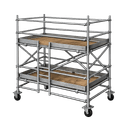
Temporary Structures
Covers scaffolding, fencing, and temporary buildings.

Soft Costs
Covers additional expenses from construction delays due to covered losses.

Equipment Coverage
Covers permanently installed fixtures and equipment.
Industries & Insurance Needs in Cranston
Providence County's business mix changes who may ask for builders risk and how quickly they ask for it. The county has 16,439 business establishments, with retail trade at 11.7%, construction at 11.5%, and health care and social assistance at 11.3% by establishment share. That matters because local projects often involve occupied commercial settings, medical office improvements, storefront renovations, and contractor-driven build-outs where lease obligations, lender conditions, and opening dates can tighten the insurance review. If your job touches a retail strip, clinic space, or another operating business, ask for a quote that addresses temporary storage, transit, and delay-sensitive exposures before work starts. The more clearly you show who owns the materials, who controls the site, and when the space is expected to open, the easier it is to avoid a policy that looks acceptable on paper but misses the way the project is actually being delivered.
What Makes Cranston Different
With a solid residential base and a steady mix of commercial improvement work, the friction point is often not whether a project should carry this coverage but whether the paperwork lines up well enough for the owner, lender, and contractor to move without delay. Cranston's median household income is $87,716, so homeowners here have typically built real equity and want the insurance details spelled out clearly. That pushes you to treat the insurance submission as part of the project file, not an afterthought. If the named insured does not match the contract structure, if the completed value is understated, or if soft costs are ignored where they matter, you can end up revising coverage midstream. Reconcile the budget, ownership interest, lender requirements, and construction schedule before binding so nothing has to be redone later.
Our Recommendation for Cranston
Start by matching the policy structure to the deal structure. If the contract names an owner, LLC, or trust that differs from the party requesting coverage, sort that out before asking for terms. For residential work, make sure the completed value accounts for current materials, installed labor, and any owner-supplied items sitting on site before use. For commercial renovations, check whether the lease, loan documents, or prime contract require specific loss payee or additional insured wording, then confirm those requests early rather than after closing. Projects with phased turnover or work in an occupied space may need the construction term set differently, and soft costs may deserve a closer look in those cases. Keep a running log of stored materials, security measures, and major change orders, because those details often determine whether your policy still fits the job halfway through the build. Request the quote with the latest plans and budget, not last month's version.
Get Builders Risk Insurance in Cranston
Enter your ZIP code to compare builders risk insurance rates from carriers in Cranston, RI.
Business insurance starting at $25/mo
FAQ
Frequently Asked Questions
Your certificate of coverage needs to match the job address, named insured, project value, and construction term. Any conflict between those details and the contract or loan file usually triggers follow-up before funds or site access are released.
With area home values in this range, even a renovation can tie up enough money that an understated completed value leaves you short after a loss. Review the figure against actual costs rather than relying on a rough early budget.
Providence County has 16,439 business establishments, which translates to enough tenant turnover that one delayed build-out can stall an opening date or disrupt a lender's draw schedule. If your project affects either one, align coverage details before work begins.
Providence County is led by retail trade at 11.7%, construction at 11.5%, and health care and social assistance at 11.3%. Those three sectors account for roughly a third of all county businesses, meaning much of the local work involves storefront improvements, contractor-led renovations, and medical office build-outs where contract wording and timing matter.
Start with the signed contract, current plans, project budget, draw schedule, and expected completion date. Note whether materials will be stored before installation or ownership is held in an LLC or trust, and include that information upfront.
Insurance oversight sits with the Department of Business Regulation, which maintains a database you can check to confirm a carrier or agent is properly licensed.
Renovation projects often deserve a closer review because the policy needs to separate existing property from the work in progress. That matters even more if the building stays partially occupied during construction.
Contractors can be the buyer if the contract places that responsibility on them, but the better question is whether the named insured structure matches the owner, lender, and project obligations at the outset.
Sources
- 1.U.S. Census Bureau, ACS 5-Year Estimates, table B25077(Cranston's median home value is $348,800, so even modest residential projects can involve enough value that owners and lenders want tighter alignment between the construction budget, soft cost needs, and who is responsible for materials before installation.)
- 2.U.S. Census Bureau, County Business Patterns, Providence County(Providence County has 16,439 business establishments, with retail trade at 11.7%, construction at 11.5%, and health care and social assistance at 11.3% by establishment share.)
- 3.U.S. Census Bureau, ACS 5-Year Estimates, table B19013(Cranston's median household income is $87,716, so many homeowners funding additions, major renovations, or rebuilds have meaningful equity at stake and tend to scrutinize contract terms, change orders, and draw requirements closely.)
Updated July 16, 2026