







































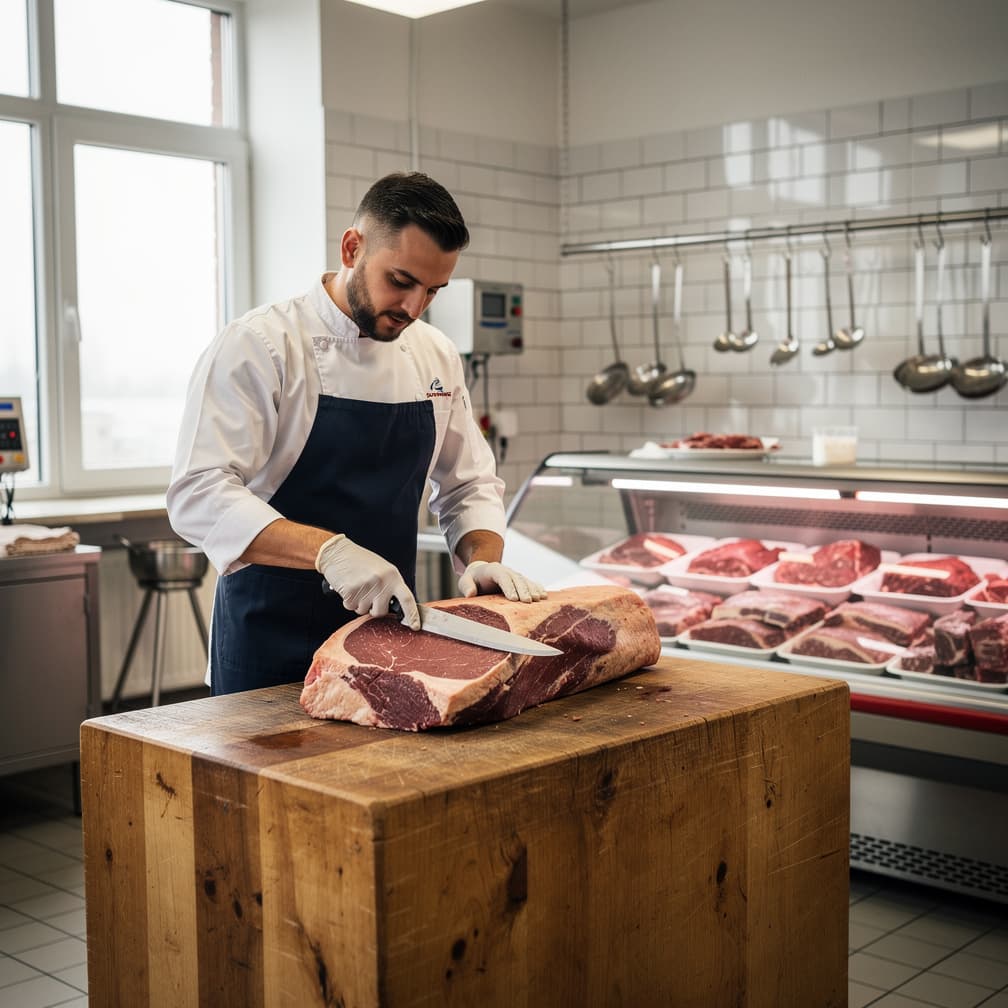

As a butcher shop in Cranston, you sit at the intersection of retail traffic and industrial equipment, an unusual place for a small business to stand. The public walks within a few feet of a band saw. Butcher shop insurance in Cranston exists because those two worlds meet at your counter every hour you are open. The exposures are ordinary right up until they are not: a wet floor, a dropped tray, a customer reaching for a sample with a child on her hip. Insurance for this trade comes down to decisions about limits, deductibles, and what happens to your inventory during an outage. Make those decisions deliberately and the shopping part gets simple. Then let participating carriers price the same set of facts and compare what comes back.
What Makes Cranston Different
Storm cleanup runs on a waiting list, and every business on your block joins it the same morning. Roofers, glass crews, and refrigeration technicians triage by contract size, and a single storefront sits near the bottom. Providence County has about 16,500 businesses, and a rough weather week points many of them at the same short vendor list. Your policy does not shorten that queue, and no carrier can honestly promise that it will. What it can be built to do is pay for the wait, where the wait follows damage the policy contemplates. Find out how lost income gets calculated and what documentation is expected from a shop your size. Then build a short vendor list of your own and keep the numbers where staff can find them. Preparation and paperwork are the two parts of this you actually control.
Local Risk Factors in Cranston
A week of boarded windows and empty streets costs a butcher shop twice: the sales that never happened and the inventory that could not wait. Reopening depends on power and on a supply chain that may restart more slowly than you do. Interruption terms, where a policy carries them, can help cover income lost while damage keeps you closed, though a dark block or a closed road is often not enough to trigger anything. That distinction catches owners in Cranston every storm season. Ask exactly what has to be physically damaged, whose property it has to be, and when the clock starts. Ask the same about spoiled product, because a warm case after a wind event is a different claim from a torn roof, and carriers in Rhode Island answer it differently.
What Coverage Does a Butcher Shop in Cranston Need?
General Liability
Landlords, market organizers, and wholesalers usually name this line when they ask for proof, and it is the one most butcher shops buy first. It might help cover third-party injury and property damage claims, a customer down on a wet floor or a cart through a neighbor's door, plus the defense behind them. Damage to your own equipment sits elsewhere.
Example: A customer steps off a wet mat near the case, breaks a wrist, and hires a lawyer six weeks later; general liability may answer for the injury claim and the defense that follows.
Commercial Property
Flood sits outside it, mechanical breakdown is commonly excluded, and wear on an aging compressor is not a claim. What remains is the core of a butcher shop's balance sheet: coolers, saws, slicers, scales, cases, and stock, against fire, theft, vandalism, and storm damage. Spoilage terms, where offered at all, usually arrive as a separate endorsement.
Example: A fire in the back room takes out two grinders and a wall of packaging overnight in Cranston; commercial property could pick up the repairs and the equipment replacement, subject to your deductible.
Workers Compensation
A cut, a burn on a sealer, a slip in the cold room: staff injuries in this trade are hands-on and frequent enough that carriers price them by job code rather than headcount. This line is generally intended to address medical care and a share of lost wages for employees hurt at work. Rules on who must carry it vary by state.
Example: A helper's hand slips on a band saw during a busy stretch and the shift ends at an urgent care clinic; Workers Compensation is typically meant to handle the treatment and the wages missed while the hand heals.
Business Owners Policy
Where liability and property get bought as two policies, this package puts them under one, which is a common structure for an owner-operated counter. It can suit a shop with equipment, inventory, and public foot traffic in Cranston. What sits inside varies by carrier, so the endorsement list, and what is missing from it, is the part worth reading.
Example: A pipe bursts over the display case and a customer slips in the runoff the same morning; a Business Owners Policy might address the property damage and the injury claim under one policy.
How Much Does Butcher Shop Insurance Cost in Cranston?
Butcher Shop Insurance is a bundle of separate policies, priced separately. The ranges below are typical figures for Cranston for each line, except workers compensation, which is rated per $100 of payroll; a quote prices each one against your own operations.
| Coverage | Typical range | What moves your price |
|---|---|---|
| General Liability Insurance | $55 - $210 per month | Industry and risk classification, annual revenue, number of employees |
| Commercial Property Insurance | $110 - $400 per month | Building value and construction type, roof age and condition, fire protection class |
| Workers Compensation Insurance | $0.75 - $2.74 per $100 of payroll | Employee classification codes, total annual payroll, experience modification rate |
| Business Owners Policy Insurance | $120 - $380 per month | Annual revenue and industry class, building and contents values, square footage and building age |
Prices shown are general estimates, not guaranteed rates or quotes. Your actual premium will depend on the insurer, coverage selected, business details, location, claims history, and other underwriting factors. Learn about our pricing methodology.
What Are the Insurance Requirements for a Butcher Shop in Cranston?
Workers' comp is generally required once you have your first employee. Rhode Island generally requires employers to carry workers' compensation at that point. Common exemptions include sole proprietors and partners. Confirm current thresholds with your state's workers' compensation agency before you hire.
Flood damage is typically excluded from standard policies. Standard commercial property and builders-risk-type policies typically exclude flood. Given Cranston's coastal flood exposure, a separate flood policy is worth pricing; FEMA's National Flood Insurance Program is the usual starting point.
Where to verify licensing and coverage rules. The Rhode Island Department of Business Regulation publishes consumer guidance and current insurance requirements for Rhode Island businesses. When a contract or lease demands specific wording, the Rhode Island Department of Business Regulation's guidance is the authoritative place to check.
Get Your Butcher Shop Quote in Cranston
Compare rates from multiple carriers. Free quotes, no obligation.
Operating in Cranston
- Wholesalers open accounts on paperwork, and a missing certificate can push your first delivery to the next run, which for a Cranston shop stocking an empty case is a lost week of sales.
- Knives, saws, and scales walk out of shops more often than owners admit, and a claim on stolen equipment moves on serial numbers and dated photographs rather than your memory of what was in the drawer.
- Refrigeration technicians in Providence County triage by contract, so a single storefront waits behind grocery chains and cold storage warehouses, and every hour of that wait gets paid for in warming product.
- Lenders that finance a walk-in usually want naming as loss payee for the life of the note, and that demand outlives your enthusiasm for the equipment by several years.
How to Buy: Advice for Cranston Owners
Limits and deductibles are the two dials that actually change what a policy does for you. Ask for the same General Liability quote at two limits, because the step up usually costs less than owners assume. Then look at the deductibles, plural, since property, liability, and any spoilage terms can each carry their own. The right property deductible is the one you could fund the week a cooler fails without touching payroll. Business Owners Policy pricing moves on both dials, and two quotes with the same monthly number can sit far apart on them. Ask what the aggregate limit is as well as the per-occurrence figure, because a bad year can exhaust one. Guidance varies by state, so check the Rhode Island Department of Business Regulation's guidance before deciding what limits to name. Then put the same limit and deductible structure to every participating carrier writing in Cranston.
FAQ
Butcher Shop Insurance in Cranston: FAQ
The per-occurrence limit is the most a policy may pay for one claim; the aggregate is the ceiling across the whole term. A shop that files a slip claim and a spoiled inventory dispute in the same year can press the aggregate harder than owners expect. When two quotes show the same monthly figure, the aggregate is often what separates them. Read both numbers before you compare price.
It can be a sensible core, since a Business Owners Policy generally bundles liability and property in one place for a small retail operation. Whether it is enough depends on what the package leaves out. Spoilage, equipment breakdown, and employee injuries are commonly handled separately or not at all. Read the endorsement list against your own equipment and staffing, and ask what must be added rather than assuming it sits inside.
Flood is generally excluded from standard property forms and gets handled as its own decision, priced separately. That surprises owners at street level, where a few inches of water can reach compressors, motors, and anything stored low. Ask what a policy says about water arriving from outside versus water from a burst pipe inside, because the two get treated very differently. The distinction decides whether you are filing a claim or paying for the repair.
An equipment schedule with ages and replacement costs, annual revenue, square footage, payroll by job code if you have staff, the insurance clause from your lease, and any loss runs. Estimates get priced defensively; facts get priced accurately. Send the same package to every carrier, because a comparison only means something when each one is reading the same shop.
An employee injury is the Workers Compensation question and a customer injury is the liability question, even when the same blade caused both. Those two lines sit in different places and answer to different rules, which vary by state. What tends to matter either way is the incident report written that day: time, task, guarding, training, and who was standing there. Write it before the shift ends.
More than one. Property and liability usually carry separate deductibles, and any spoilage or breakdown endorsement can carry its own terms on top. A single event can trigger two of them at once. The practical test is whether you could fund the property deductible the week a walk-in dies without touching payroll. If the answer is no, the premium you saved by raising it was borrowed from a bad month.
Sources
- 1.U.S. Census Bureau, County Business Patterns (2022), Providence County(Providence County has about 16,500 business establishments.)
- 2.Rhode Island Department of Business Regulation(Rhode Island Department of Business Regulation publishes consumer guidance for insurance buyers.)
- 3.FEMA / FloodSmart(Flood coverage is typically purchased separately; FEMA administers the National Flood Insurance Program.)


