







































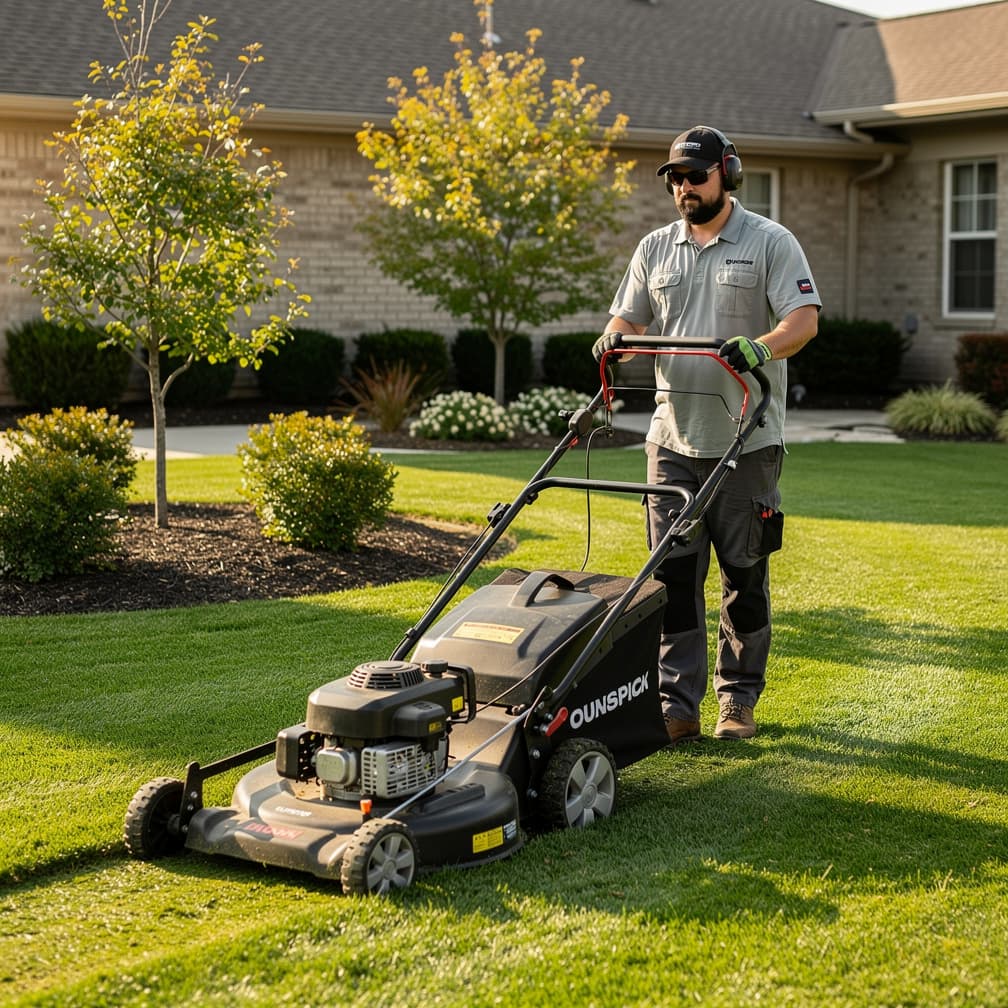

As a lawn care contractor in Cranston, you sign more contracts than you read, and the insurance clause is usually the part you skipped. Additional insured wording, minimum limits, and waiver language get decided by the other party, and there is rarely much negotiating. Lawn care contractor insurance in Cranston is far easier to buy once those clauses sit in front of you, because the contract is effectively your shopping list. Gather them, mark the highest limit anyone demands, and price that. Equipment values and payroll finish the picture, since both push the number harder than your address does. Then weigh participating carriers on identical terms in Rhode Island.
What Makes Cranston Different
Certificates get rejected over details that have nothing to do with how well you mow. The named insured must be your legal entity, never the name painted on the truck door. Coverage dates have to straddle the work, which gets awkward when a job starts before a renewal clears. A client in Cranston can reject a document for either reason and never tell you which one. Aggregate limits are the trap nobody reads: one rough season can exhaust the number your contract promised. A per-occurrence limit looks generous until three claims share the aggregate and a fourth client learns why. Ask each carrier how that aggregate resets and what a reset does to your certificate mid-term. The Rhode Island Department of Business Regulation publishes consumer guidance on policy limits, and an hour with it before renewal pays.
Local Risk Factors in Cranston
Before a season that can bring one, decide what happens to the trailers. Machines parked in an open lot are the property most likely to move in high wind, and the loss belongs to you whether or not the lease mentions it. Owners renting a bay often assume the building's policy reaches their gear, and it generally does not. A property form may answer for damage to scheduled equipment, subject to the perils it names and the deductible you picked. Read that list once, in Cranston, while the sky is quiet. The Rhode Island Department of Business Regulation publishes consumer guidance on storm coverage for Rhode Island businesses.
What Coverage Does a Lawn Care Contractor in Cranston Need?
General Liability
Property managers and homeowners association boards ask for this one by name before a crew sets foot on site. It generally answers when your machines damage somebody else's property, or when a person is hurt near your work area, subject to your limits. It does nothing for your own stolen mowers, and damage to the item you were hired to work on is usually treated separately.
Example: A trimmer throws a stone through a storefront window while a crew edges the walkway; General Liability may answer for the glass and for the demand that follows it.
Commercial Auto
Personal auto policies commonly exclude the truck that tows your trailer, and closing that gap is the whole point of this line. It typically covers vehicles you own, with the trailer listed, for accidents on the way to and between properties. Drivers move the price more than trucks do, and machines riding in the bed are a separate question.
Example: A loaded trailer clips a parked sedan as your driver backs into a client driveway before sunrise; the repair claim is one Commercial Auto could take on.
Workers Compensation
Blades, ramps, lifting, and long service days in heat put your crew in the path of injury, and this line exists for that. It is generally rated per $100 of payroll and intended to handle medical costs and lost wages for employees hurt on the job. Rules for owners and subcontractors vary, and unreported labor tends to surface at audit.
Example: A crew member tears a shoulder muscling a walk-behind up a ramp at the last stop of a hot day; Workers Compensation is meant to pick up medical bills and lost time.
Commercial Property
Sheds, fenced yards, trailers, and the mowers parked inside them are the property at issue for a lawn care outfit. The form generally responds to sudden damage from named perils at the location you list, and machines usually have to be scheduled to count at all. Flood typically sits outside it, and wear on an aging mower is maintenance rather than a peril.
Example: Somebody cuts the lock on your storage bay overnight and two zero-turns are gone before the first stop in Cranston; scheduled equipment might be replaced under this form.
How Much Does Lawn Care Contractor Insurance Cost in Cranston?
Lawn Care Contractor Insurance is a bundle of separate policies, priced separately. The ranges below are typical figures for Cranston for each line, except workers compensation, which is rated per $100 of payroll; a quote prices each one against your own operations.
| Coverage | Typical range | What moves your price |
|---|---|---|
| General Liability Insurance | $70 - $230 per month | Industry and risk classification, annual revenue, number of employees |
| Commercial Auto Insurance | $220 - $675 per month | Fleet size and vehicle types, driver records and experience, coverage limits and deductibles |
| Workers Compensation Insurance | $0.75 - $2.74 per $100 of payroll | Employee classification codes, total annual payroll, experience modification rate |
| Commercial Property Insurance | $70 - $250 per month | Building value and construction type, roof age and condition, fire protection class |
Prices shown are general estimates, not guaranteed rates or quotes. Your actual premium will depend on the insurer, coverage selected, business details, location, claims history, and other underwriting factors. Learn about our pricing methodology.
What Are the Insurance Requirements for a Lawn Care Contractor in Cranston?
Workers' comp is generally required once you have your first employee. Rhode Island generally requires employers to carry workers' compensation at that point. Common exemptions include sole proprietors and partners. Confirm current thresholds with your state's workers' compensation agency before you hire.
State auto liability minimums apply to business vehicles. Rhode Island's minimum auto liability limits are $25,000/$50,000/$25,000 (bodily injury per person / per accident / property damage). Contracts and lenders often require more than the state floor.
Flood damage is typically excluded from standard policies. Standard commercial property and builders-risk-type policies typically exclude flood. Given Cranston's coastal flood exposure, a separate flood policy is worth pricing; FEMA's National Flood Insurance Program is the usual starting point.
Where to verify licensing and coverage rules. The Rhode Island Department of Business Regulation publishes consumer guidance and current insurance requirements for Rhode Island businesses. When a contract or lease demands specific wording, the Rhode Island Department of Business Regulation's guidance is the authoritative place to check.
Get Your Lawn Care Contractor Quote in Cranston
Compare rates from multiple carriers. Free quotes, no obligation.
Operating in Cranston
- Seasonal hiring changes payroll immediately, and payroll gets audited after the fact, so a summer helper nobody reported becomes a bill that arrives in the quiet months.
- A homeowner in Cranston can post a photo of your damage before the crew reaches the next stop, which is why speed of repair often matters more than the size of a payout.
- Trailers disappear from driveways, storage lots, and the curb outside a shop, and a stolen trailer takes the week's schedule with it, not simply the metal.
- Fertilizer, fuel, and blade sharpening all happen in the same yard where your machines sleep, and one fire or storm there stops every route at once.
How to Buy: Advice for Cranston Owners
Certificates are operational, not clerical. Decide who in your shop can produce one on demand, because a client in Cranston can hold a work order until the document lands. Ask what each additional insured request costs and how an endorsement gets issued, since some carriers charge per certificate holder. Keep a list of every entity that needs naming, with the exact legal spelling, and update it when a property changes hands. General Liability limits are what those holders read first, so know yours before the request arrives. A lender financing a trailer may want naming too, and the machines on your Commercial Property schedule are what it cares about. The Rhode Island Department of Business Regulation publishes consumer guidance on certificates of insurance. Then ask participating carriers how they handle certificate requests during your busiest weeks, because that answer separates them more than price does.
FAQ
Lawn Care Contractor Insurance in Cranston: FAQ
The per-occurrence limit caps what a policy might pay on one claim; the aggregate caps the entire policy term. A route with frequent small property damage can chew through an aggregate quietly, and the certificate you sent a client in spring then means less than it appears to. Ask how the aggregate resets and whether a contract demands a number you have already spent.
Usually a bad assumption. Personal policies commonly exclude regular business use, and a truck built around a lawn trailer is business use by any reading. Commercial Auto exists for that vehicle, and it is often the largest premium in the program. The trailer typically needs listing as well. Ask what happens when a helper runs for parts in a personal truck.
Payroll by role, a list of vehicles and drivers, an equipment schedule with current values, and your prior loss runs. Carriers price from those four, and a missing one turns a quote into an estimate that shifts at binding. Motor vehicle records matter more than owners expect, since one surprise can reprice a schedule. Hand identical facts to every carrier quoting your Cranston operation.
Flooding is the usual gap. Standard property forms typically exclude flood, so rising water gets priced as its own decision, and machines parked in a low yard are exactly what that exclusion touches. Wind damage is normally handled a different way. Ask where your equipment sits in the policy, both at your yard and away from it, before a wet week answers for you.
That depends on your carrier, and it is worth asking before you need one. Some issue certificates through a portal you control; others route each request through a person. Every additional insured request can carry its own charge. Keep the exact legal name of each entity on file, because one misspelling sends the document back and stalls a first cut.
Residential clients rarely ask for proof, and that is precisely the risk. A trimmer throwing a stone into a homeowner's window creates the same claim whether or not anyone demanded paperwork; the only difference is who buys the glass. The first commercial or municipal account you chase will ask on its own form, and scrambling for a document that week is the slow way to lose a bid.
Sources
- 1.Rhode Island Department of Business Regulation(Rhode Island Department of Business Regulation publishes consumer guidance for insurance buyers.)
- 2.FEMA / FloodSmart(Flood coverage is typically purchased separately; FEMA administers the National Flood Insurance Program.)


