







































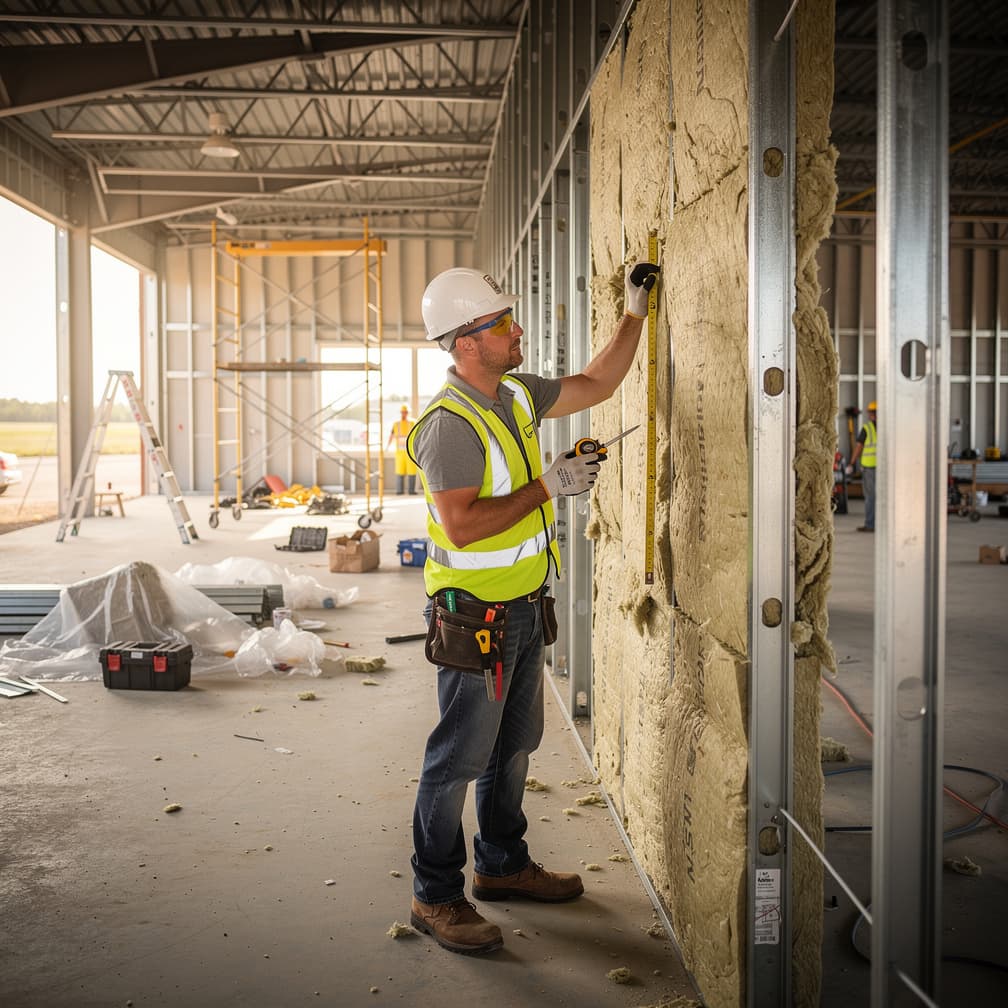

The about 16,500 businesses in Providence County all operate inside buildings with insulation behind the walls, and none of that work stays visible once the drywall goes up. Invisibility is the risk in this trade: a claim usually surfaces long after your invoice was paid and your crew moved on. Anyone buying insulation contractor insurance in Providence should ask how the form treats a loss reported months after the job closed. Completed operations wording holds that answer, and it reads differently from one carrier to the next. A moisture problem blamed on a vapor barrier becomes a slow argument between three parties and their experts. The narrowest form argues the hardest. What follows is meant to make that wording legible before you sign.
What Makes Providence Different
Bigger markets carry bigger jobs, and bigger jobs carry contracts written by lawyers who never met you. The insurance exhibit in those contracts is boilerplate, which means it is strict and rarely open to negotiation. A sub who reads it after signing has bought an obligation without ever pricing it into the bid. Ask for that exhibit while you are still estimating the job in Providence, not after the award lands. It tells you the limits, the endorsements, and whether your current policy already satisfies all of them. If it does not, the fix costs money, and that money belongs inside the number you submit. Participating carriers in Rhode Island treat the same requirement differently, so one submission can produce very different forms. That spread is the whole reason comparing quotes is worth an hour of your time.
Local Risk Factors in Providence
Hurricane season stops insulation work before the storm arrives, since jobsites in Providence shut down and buildings get boarded while your crew waits. Afterward the calls change shape: wet walls, torn roofs, and owners who want everything replaced at once. Working fast inside damaged structures is when installers get hurt, and those injuries are Workers Compensation claims however urgent the job felt. Your own material can go too, if a shop roof gave way while pallets sat under it. Wind damage and water damage are separated in most property forms, and which one caused the loss becomes the argument. Ask whoever quotes coverage in Rhode Island how that split works before the season, not after it.
What Coverage Does an Insulation Contractor in Providence Need?
General Liability
Builders, property managers, and permit offices ask for this one by name before a crew gets on site. It can help cover third-party bodily injury and damage your work does to somebody else's property, from a cracked ceiling to a scratched hardwood floor. Redoing your own faulty installation generally sits outside it, and that boundary decides most disputes.
Example: A hose drags across a homeowner's stair rail on the way to the attic and pulls it off the wall. The repair claim may fall to this policy.
Workers Compensation
Where liability coverage looks after other people, this line looks after your own crew. Medical treatment and lost wages tied to a jobsite injury, or to an illness linked to insulation handling, are typically what it addresses. It rates against payroll and gets audited at year end. Whether an owner is included depends on Rhode Island.
Example: An installer working a summer attic goes down with heat illness and spends the night in a hospital. The treatment and the missed weeks are commonly handled here.
Commercial Auto
A pickup pulling a trailer of batts is doing business work, and a personal policy usually stops applying the moment it does. This line is meant for the vehicles you own or hire: liability after a collision, damage to the truck itself where that coverage was purchased, and the crew riding along. Mechanical breakdown typically sits outside it.
Example: Your driver misjudges a turn with a loaded trailer and clips a parked car outside a job in Providence. Repairs to both vehicles could be addressed under this coverage.
Commercial Umbrella
Limits, rather than gaps, are what this one addresses. It sits above General Liability and Commercial Auto and generally comes into play only once one of those has run out, which is why a subcontract demanding high limits often makes it the practical answer. Whatever the underlying form excludes, it usually excludes as well.
Example: A serious highway collision leaves injuries that run past the limit on your auto policy. The remainder might be picked up by the layer sitting above it.
How Much Does Insulation Contractor Insurance Cost in Providence?
Insulation Contractor Insurance is a bundle of separate policies, priced separately. The ranges below are typical figures for Providence for each line, except workers compensation, which is rated per $100 of payroll; a quote prices each one against your own operations.
| Coverage | Typical range | What moves your price |
|---|---|---|
| General Liability Insurance | $170 - $575 per month | Industry and risk classification, annual revenue, number of employees |
| Workers Compensation Insurance | $0.75 - $2.74 per $100 of payroll | Employee classification codes, total annual payroll, experience modification rate |
| Commercial Auto Insurance | $280 - $800 per month | Fleet size and vehicle types, driver records and experience, coverage limits and deductibles |
| Commercial Umbrella Insurance | $85 - $280 per month | Umbrella limit requested, limits carried on the underlying policies, loss history on those underlying policies |
Prices shown are general estimates, not guaranteed rates or quotes. Your actual premium will depend on the insurer, coverage selected, business details, location, claims history, and other underwriting factors. Learn about our pricing methodology.
What Are the Insurance Requirements for an Insulation Contractor in Providence?
Workers' comp is generally required once you have your first employee. Rhode Island generally requires employers to carry workers' compensation at that point. Common exemptions include sole proprietors and partners. Confirm current thresholds with your state's workers' compensation agency before you hire.
State auto liability minimums apply to business vehicles. Rhode Island's minimum auto liability limits are $25,000/$50,000/$25,000 (bodily injury per person / per accident / property damage). Contracts and lenders often require more than the state floor.
Where to verify licensing and coverage rules. The Rhode Island Department of Business Regulation publishes consumer guidance and current insurance requirements for Rhode Island businesses. When a contract or lease demands specific wording, the Rhode Island Department of Business Regulation's guidance is the authoritative place to check.
Get Your Insulation Contractor Quote in Providence
Compare rates from multiple carriers. Free quotes, no obligation.
Operating in Providence
- Every mid-term change costs something. Adding a vehicle, naming a new additional insured, or raising a limit for a single contract is an endorsement, and endorsements bought under deadline get bought badly.
- Seasonal work swings the crew list, and payroll swings with it. An estimate given in Rhode Island at the start of the term becomes an audit at the end, and the audit is the number that counts.
- Occupied homes have furniture, pets, and people in them while your hoses run up through the hatch. The same slip that is a shrug on a vacant build becomes a photographed claim in a lived-in house.
- A single ceiling repair can need drywall, paint, and a cleaning crew, and the vendors available in Providence County decide how long your customer stays angry while the claim sits open.
How to Buy: Advice for Providence Owners
Pull the subcontract before you pull a quote. Its insurance exhibit names the limits, the additional insured wording, and the notice terms you already agreed to on a Providence job. General Liability written to a lower limit than that page requires is a coverage problem and a payment problem at once, since builders hold retainage until the certificate matches. Ask whoever quotes it to confirm the endorsement exists rather than assuming it comes standard. Workers Compensation belongs in the same conversation, because subcontracts name it separately with its own limits. The Rhode Island Department of Business Regulation publishes the current requirements for coverage employers must carry. With the exhibit in hand you can compare quotes from participating carriers on identical terms, which is the only comparison that means anything.
FAQ
Insulation Contractor Insurance in Providence: FAQ
Annual payroll broken out by role, gross receipts, a list of every vehicle and driver, and your loss runs for the last few years. Each of those prices a different piece, and a guess on any one of them produces a number that changes as soon as somebody checks it. Keep the insurance exhibit from your biggest contract nearby too, since it sets the limits you actually need.
No. Liability coverage exists for harm to other people and their property, and your own equipment is neither. A blower mounted permanently inside a truck is usually addressed on the vehicle side, while portable gear and staged material are a separate conversation with a separate form. Ask specifically about bags of material sitting at a Providence jobsite overnight, because that answer is rarely what owners assume.
That depends on who is quoting and whether the endorsements your contract demands already exist on the policy. A standard certificate can often be issued the same day, while one needing a new additional insured endorsement takes longer and may carry a mid-term fee. Ask about turnaround before you bind, because a builder who needs proof by morning will not wait on paperwork.
Because price is the last thing that varies. One form may exclude work in occupied dwellings, one may carry a lower aggregate, and one may skip an endorsement your contracts already require. Participating carriers in Rhode Island file different wording and price an identical submission differently, which is why the exclusions page deserves reading before the premium line. Compare what each policy agrees to answer, then compare the number.
It sits on top of them instead. A Commercial Umbrella typically requires specific underlying limits and only comes into play once one of those is exhausted, so it raises the ceiling rather than repairing the floor. It also generally follows the exclusions underneath it, meaning a gap in your primary form is usually a gap up there too. For a contractor in Providence County facing contract limits above the standard, quoting both together shows the real cost fastest.
It depends on where the water came from, and that is the whole fight. Damage traced to your installation error gets treated differently from a flood, a burst pipe, or a roof that was already leaking. Standard property forms typically exclude flood entirely and price it as its own coverage. Expect an argument about causation, which is why photographs of the vapor barrier and the finished job matter more than any wording.
Sources
- 1.U.S. Census Bureau, County Business Patterns (2022), Providence County(Providence County has about 16,500 business establishments.)
- 2.Rhode Island Department of Business Regulation(Rhode Island Department of Business Regulation publishes consumer guidance for insurance buyers.)


