Updated July 5, 2026

On-Hook Towing Insurance in Providence
The decision often lands here when you are about to sign a downtown storage-yard lease, add another police, dealer, or apartment account, or tighten your certificate package before winter breakdown volume picks up. On-hook towing insurance in Providence usually gets reviewed at that moment because your exposure changes with the kinds of vehicles you move, where you pick them up, and how often they pass through tight streets, older lots, and mixed commercial blocks before drop-off. This city layer is less about broad Rhode Island rules and more about operating density. A local tower can end up serving retailers, contractors, clinics, property managers, and fleet users in the same week, each with different expectations around handling, documentation, and turnaround. That mix matters because a policy review should match whether you mainly do short urban recoveries, apartment tows, dealer transfers, or after-hours private-property work. Before you request a quote, line up your truck list, max vehicle values, storage locations, and the accounts that require certificates, so the on-hook limit discussion starts from your actual dispatch pattern.
On-Hook Towing Insurance Risk Factors in Providence
Providence changes the risk conversation through density and vehicle mix, not through a separate city insurance rule. A short tow here can still involve narrow approaches, curbside loading, older parking areas, and repeated hook-ups for apartments, retailers, and medical offices in the same service day. That raises a practical underwriting question: what is the **highest value vehicle** you are likely to have attached, and how often do your drivers work in confined pickup and drop-off conditions? County business mix helps frame that exposure. Retail trade accounts for 11.7% of establishments, construction 11.5%, and health care and social assistance 11.3% in Providence County, so your calls may range from customer vehicles in shopping areas to contractor units and staff vehicles around care facilities. Because those jobs create different handling scenarios, review your on-hook limit, driver procedures, and any gap between routine passenger-vehicle work and occasional heavier or higher-value tows before you bind coverage.
Rhode Island has a moderate climate risk rating. Top hazards: Hurricane (High), Flooding (High), Nor'easter (Moderate), Coastal Erosion (Moderate). The state's expected annual loss from natural hazards is $160M, which influences on-hook towing insurance premiums and may affect coverage availability in high-risk areas.
What On-Hook Towing Insurance Covers
In practice, the useful work often means matching coverage terms to the way your company actually accepts and completes jobs across a small, dense service area. Tight parking lots, narrow streets, steep driveways, coastal weather, and after-hours dispatches can all change how damage happens and how clearly it can be documented.
For a towing operation here, the useful questions are operational. Do you handle police-requested tows, private property impounds, dealer moves, repossessions, or recovery work that involves more difficult hookups? Do you move standard passenger vehicles most of the time, or do you also take heavier pickups, vans, or specialty units that can raise the value at risk on a single call? Do your drivers use flatbeds, wheel-lifts, or both, and are your procedures different for each? Those details affect how an underwriter reads your exposure and how a claim may be evaluated later.
It also helps to review how this coverage fits with the rest of your towing program. If a customer alleges damage, the dispute may turn on timing, condition photos, dispatch notes, hookup method, and whether the vehicle was already compromised before the tow began. That is why many operators ask for wording and limits that fit their real job mix instead of relying on a generic description. The state regulator is the Department of Business Regulation, so if you are comparing forms or endorsements, you can verify carrier and agent licensing through their website before binding.
Coverage Included

Collision on Hook
Covers damage to towed vehicles from collisions during transport.

Comprehensive on Hook
Covers theft, fire, and weather damage to vehicles being towed.
Loading & Unloading
Covers damage during the process of loading and unloading vehicles.
Winching Coverage
Covers damage to vehicles during winching and recovery operations.

Multiple Vehicle
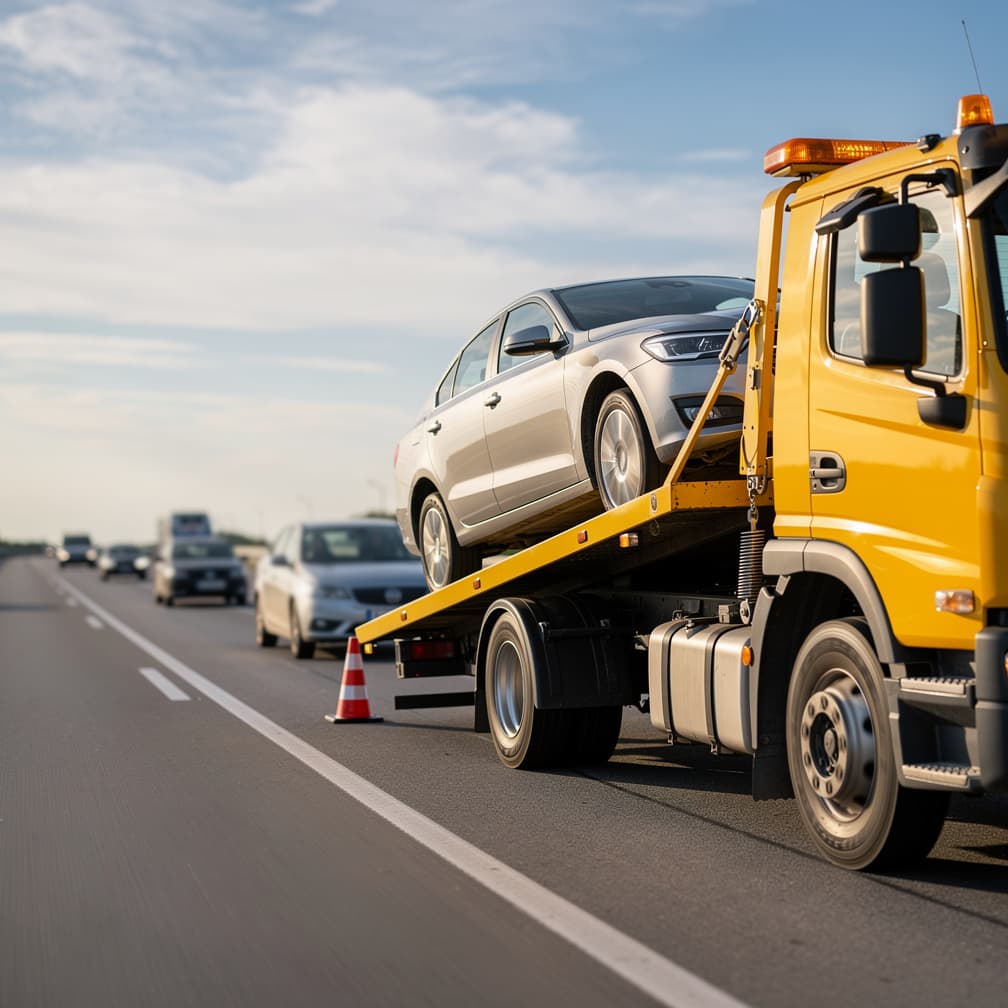
Covers all vehicles on multi-car carriers and rollback flatbeds.
What Makes Providence Different
Density is what changes the calculus here. In a smaller or more uniform service area, you might build your on-hook setup around one dominant job type. Around Providence, the issue is how quickly your book can diversify across property managers, retail lots, contractors, and service businesses without much warning. Providence County has 16,439 business establishments, so even a modest towing company can be pulled into a wide range of commercial relationships that each care about certificates, incident handling, and vehicle custody. That matters because on-hook claims are often argued from the details: where the vehicle was picked up, how it was attached, who documented pre-existing damage, and whether the limit fit the unit being moved. The city difference is not that the policy works differently. It is that your operating pattern can become more varied, faster. If your current coverage was built around one account type, ask for a review before adding new contracts or expanding your dispatch radius.
Our Recommendation for Providence
Start with your real dispatch map, not a generic class code. If most of your work is apartment enforcement, dealer moves, and short private-property tows, say that clearly. If you also take occasional contractor pickups, after-hours commercial calls, or higher-value vehicles, bring that up before the quote is finalized. Providence median household income is $66,772, so many customer vehicles you handle may be essential household assets rather than discretionary extras, which raises the stakes for clean documentation and fast claim response after any damage allegation. It is usually worth asking whether your current on-hook limit still fits the most expensive vehicle you have moved in the last few months, not just the average one. You should also review who can drive, where vehicles are stored between pickup and release, and what photos or condition notes are taken at hookup. Those details often matter as much as the limit itself when you are comparing options.
Get On-Hook Towing Insurance in Providence
Enter your ZIP code to compare on-hook towing insurance rates from carriers in Providence, RI.
Business insurance starting at $25/mo
FAQ
Frequently Asked Questions
Providence towing companies may serve many account types with different vehicle-handling expectations. That is a good reason to review limits, driver procedures, and certificate needs before adding new commercial work.
Providence County business mix matters because retail trade is 11.7%, construction 11.5%, and health care and social assistance 11.3% of establishments. That spread can mean different tow scenarios, so describe your actual call types instead of using a one-size-fits-all application.
Providence operators should review limits before taking new apartment or dealer accounts because short urban tows can still involve tight pickups and disputed damage allegations. Bring your highest recent vehicle values and your common job types to the quote discussion.
Providence has a median household income of $66,772, so many vehicles you tow are core household transportation. That makes photo documentation, condition notes, and a workable claims process especially important if a customer alleges damage after release.
Rhode Island towing contracts often require proof of coverage before work starts, especially for municipal, lender, auction, or motor club relationships. Review the certificate request against your actual services so the policy and paperwork match the jobs you accept.
Insurance oversight runs through the Department of Business Regulation. You can verify carrier and agent licensing through their website, and if you need to file a complaint about policy forms or claim handling, their insurance division is the point of contact.
Operators should not assume a smaller territory means a lower quote. Short local tows can still involve tight access, difficult hookups, coastal weather, and higher-value vehicles, so underwriters usually focus on job type and documentation quality.
Repossession and impound work often needs a separate review because the claim pattern can differ from routine roadside towing. Ask the quoting agent to rate your actual service mix instead of folding every job type into one generic description.
Sources
- 1.U.S. Census Bureau, County Business Patterns, Providence County(Retail trade accounts for 11.7% of establishments, construction 11.5%, and health care and social assistance 11.3% in Providence County, so your calls may range from customer vehicles in shopping areas to contractor units and staff vehicles around care facilities.; Providence County has 16,439 business establishments, so even a modest towing company can be pulled into a wide range of commercial relationships that each care about certificates, incident handling, and vehicle custody.)
- 2.U.S. Census Bureau, ACS 5-Year Estimates, table B19013(Providence median household income is $66,772, so many customer vehicles you handle may be essential household assets rather than discretionary extras, which raises the stakes for clean documentation and fast claim response after any damage allegation.)
Updated July 5, 2026