







































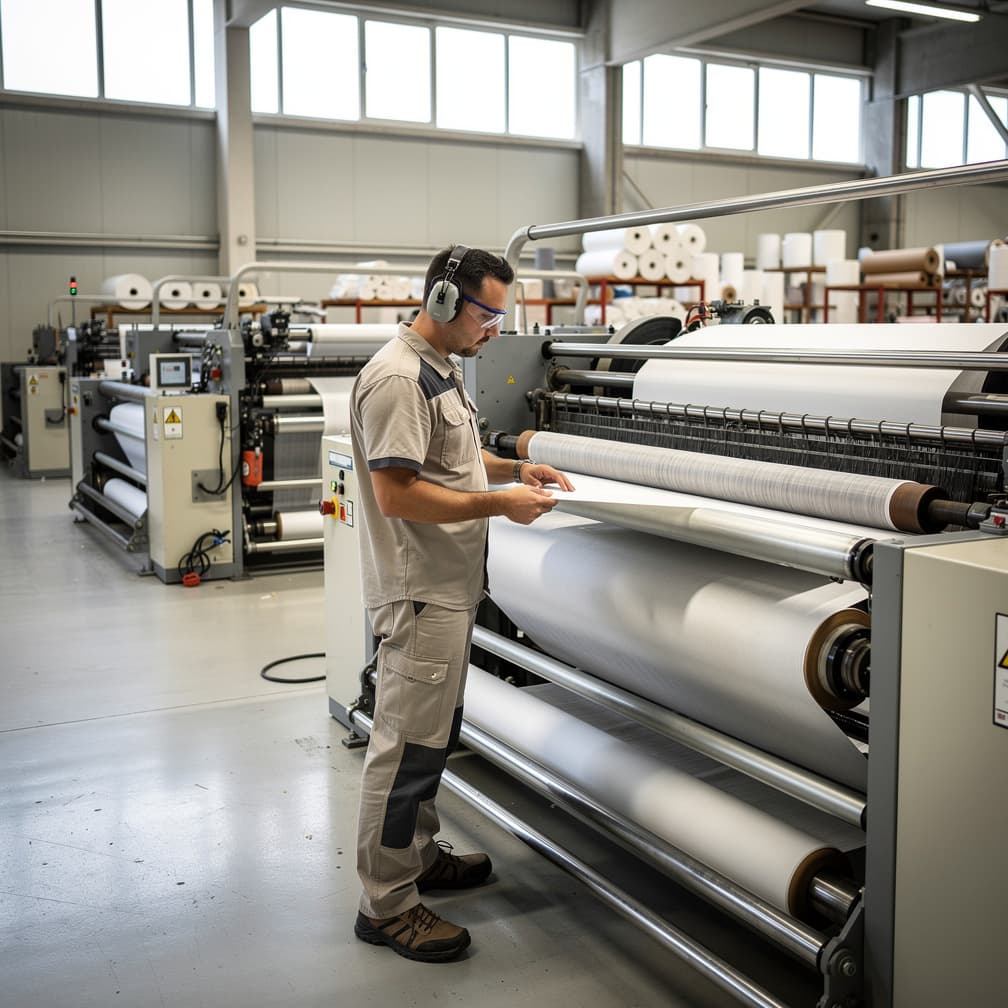

As a small textile manufacturer in Warwick, you likely run a single finishing line with no spare capacity behind it. One fire in a storage room, one water leak across a stock area, one stolen pallet of finished goods, and the season's schedule is gone. Textile manufacturer insurance in Warwick should be sized to how long you would be down, because that number stretches in a thin market. Replacement machines are ordered, shipped, and commissioned; they are not picked up on the way home. Property limits and equipment schedules are most of the conversation, and the liability lines cost little beside them. Buyers still want proof on file before a purchase order goes out. Handle the schedule first, then the certificates.
What Makes Warwick Different
Weather closes roads long before it damages plants, and a closed road is still a missed delivery. Raw fabric that never arrives stops a line as surely as a broken loom does. Your policy answers to physical damage, and an empty road is not physical damage to you. The wording that reaches an upstream supplier's loss is rarely included in a base policy by default. Where Kent County has no supplier within a short drive, more of your inputs travel exposed on the road. Ask whether the form reaches a supplier's shutdown or stops at your own property line. Plants assume the wider answer far too often and learn the truth mid-season. Confirm what a plant in Warwick actually holds while the roads are still open.
Local Risk Factors in Warwick
Hurricane season brings the wind and water that a coastal textile plant has to plan around well in advance. High wind can strip roofing and drive rain into a production area, soaking finished rolls and shorting out finishing equipment. Commercial Property may respond to wind-driven damage, though a named-storm or wind deductible often applies and can be a percentage of the building value rather than a flat figure. Storm surge and rising water, by contrast, sit under the flood exclusion and need separate flood cover. Board and brace what you can, move stock away from roof lines and dock doors, and photograph the plant before a storm approaches Warwick. Confirm how your wind deductible works in Rhode Island before the season, because it changes what a claim actually returns.
What Coverage Does a Textile Manufacturer in Warwick Need?
General Liability
Landlords, buyers, and event venues usually ask for it before they let you operate or ship. General Liability can help cover third-party bodily injury and property damage, such as a delivery driver hurt on your floor or a visitor's damaged goods. It typically excludes damage to your own stock and machinery, which belongs with property coverage instead.
Example: A vendor slips on a wet spot near the dye line and later files a claim for a hurt back. General Liability could respond to the medical bills and your legal defense, up to the policy limit.
Commercial Property
Your building, your looms and finishing equipment, and the raw and finished stock on the floor are the core of what this line addresses. Commercial Property might help cover fire, theft, and sudden water damage to those assets. Flood and slow wear are typically excluded, and a business income limit is what carries the weeks a loss keeps the line down.
Example: A finishing-room fire spreads to a rack of finished rolls one night at a plant in Warwick, and smoke reaches stock the flames never touched. Commercial Property may respond to the damaged goods and the building, subject to your deductible.
Workers Compensation
A loom operator catches a hand in a moving part, or a dye-house worker strains a back lifting a roll: those on-the-job injuries are what this line is meant for. Workers' Compensation may help cover medical treatment and lost wages, and it is rated on payroll and job class. It generally does not respond to a customer or vendor injury, which falls to general liability.
Example: During a night run at a Warwick mill, a sewing operator's hand is caught in a machine, and she needs surgery and weeks off. Workers' Compensation can help with the medical bills and a portion of her lost wages.
Tools & Equipment (Inland Marine)
What a standard building policy leaves behind the moment gear leaves the building is exactly what this line picks up. Inland Marine can help cover portable tools, testing gear, and mobile equipment while off site or in transit. It usually does not reach the fixed production line, which stays with your property policy, and it works best when each item is scheduled at replacement cost.
Example: A portable fabric inspection unit is knocked off a cart and cracked while being moved to a trade show. Inland Marine may respond to the repair or replacement, wherever the damage happened.
Commercial Umbrella
Where an underlying liability limit stops, this layer continues. Commercial Umbrella could help cover a judgment or settlement that runs past your General Liability limit, which matters when a buyer's contract demands a high figure. It sits on top of existing policies rather than replacing them, and it does nothing until the underlying limit is exhausted.
Example: A product-defect suit over a bad dye lot settles for more than the General Liability limit can absorb. A Commercial Umbrella may pick up the excess, so one large claim does not reach the plant's own accounts.
How Much Does Textile Manufacturer Insurance Cost in Warwick?
Textile Manufacturer Insurance is a bundle of separate policies, priced separately. The ranges below are typical figures for Warwick for each line, except workers compensation, which is rated per $100 of payroll; a quote prices each one against your own operations.
| Coverage | Typical range | What moves your price |
|---|---|---|
| General Liability Insurance | $100 - $380 per month | Industry and risk classification, annual revenue, number of employees |
| Commercial Property Insurance | $210 - $775 per month | Building value and construction type, roof age and condition, fire protection class |
| Workers Compensation Insurance | $0.75 - $2.74 per $100 of payroll | Employee classification codes, total annual payroll, experience modification rate |
| Inland Marine Insurance | $35 - $150 per month | Total insured value of the scheduled property, type and age of the equipment, where it is stored and how far it travels |
| Commercial Umbrella Insurance | $80 - $280 per month | Umbrella limit requested, limits carried on the underlying policies, loss history on those underlying policies |
Prices shown are general estimates, not guaranteed rates or quotes. Your actual premium will depend on the insurer, coverage selected, business details, location, claims history, and other underwriting factors. Learn about our pricing methodology.
What Are the Insurance Requirements for a Textile Manufacturer in Warwick?
Workers' comp is generally required once you have your first employee. Rhode Island generally requires employers to carry workers' compensation at that point. Common exemptions include sole proprietors and partners. Confirm current thresholds with your state's workers' compensation agency before you hire.
Flood damage is typically excluded from standard policies. Standard commercial property and builders-risk-type policies typically exclude flood. Given Warwick's coastal flood exposure, a separate flood policy is worth pricing; FEMA's National Flood Insurance Program is the usual starting point.
Where to verify licensing and coverage rules. The Rhode Island Department of Business Regulation publishes consumer guidance and current insurance requirements for Rhode Island businesses. When a contract or lease demands specific wording, the Rhode Island Department of Business Regulation's guidance is the authoritative place to check.
Get Your Textile Manufacturer Quote in Warwick
Compare rates from multiple carriers. Free quotes, no obligation.
Operating in Warwick
- A buyer in Warwick large enough to run automated compliance checks can freeze an order the moment a certificate expires, with no phone call and nothing wrong with the goods themselves.
- Underwriters read your housekeeping as closely as your revenue: lint and fiber dust around heat-producing equipment push the fire rate up, and a documented cleaning routine can pull it back down.
- Vendors, inspectors, and delivery drivers cross a plant floor every day, and a single slip near a running machine can become a third-party injury claim that lands on your general liability.
- An equipment list that was never updated after the last upgrade quietly underinsures the plant, because a machine carried at an old purchase price pays out far less than it costs to replace.
How to Buy: Advice for Warwick Owners
Compare on the same submission or you are not really comparing at all. Two carriers can quote the same plant and differ mostly because they were handed different facts. Give each the identical payroll, stock values, equipment list, and loss history, then read the coverage forms side by side. A General Liability quote that looks cheap often just carries a lower limit. Workers' Compensation rates vary between carriers in Rhode Island for the identical class code, so the spread there is worth chasing. Look past the monthly figure to the deductible and the exclusions, where the real differences hide. Hand a plant in Warwick one clean packet, and let participating carriers bid on exactly that.
FAQ
Textile Manufacturer Insurance in Warwick: FAQ
Start with the regulator rather than a rumor. The Rhode Island Department of Business Regulation publishes consumer guidance on the coverage small businesses commonly need, and it lays out what is mandatory versus what is merely customary. Contracts usually demand more than any statute does, so read your buyer and lease agreements alongside it. Between the two, the contract usually sets the higher bar.
It can, through products and completed-operations coverage inside a general liability policy. If a finished roll fails a wash test or a dye lot is off spec after delivery, a third party may claim damages and the policy might respond to defense and settlement. Intentional acts and simply reworking your own product are usually excluded. Ask how defense costs are treated, because on a disputed lot they can outrun the claim itself.
Likely, because payroll is the main driver of the Workers' Compensation line. Adding people raises the payroll the rate applies to, and a night shift can move some duties into different class codes. Report changes honestly rather than waiting for the audit, which reconciles the real figures with interest. Carriers in Rhode Island may rate the same duties a little differently, so it is worth comparing at renewal.
Gather annual payroll split by job, the replacement value of stock and machines, a current equipment list with model and age, and a few years of loss history. Vague inputs get priced as though the worst assumption were true, so precision lowers the number honestly. If contracts require specific limits or additional insureds, bring those too. One clean packet lets several carriers quote the same plant.
Recovery takes longer, and the delay is the expensive part. Where a county supports few mills, the adjuster who has seen a dye range may be hours away, and replacement parts and techs travel to reach you. A plant in Kent County can wait weeks for a repair a dense market would finish in days. Size your business income limit against that real timeline, not against the visible damage.
Often, yes. A standard property form may exclude mechanical or electrical failure of the machine itself even while it answers for the building around it. Equipment breakdown is usually added by endorsement, and the stopped weeks after a loom failure are frequently the larger cost. Check the Rhode Island Department of Business Regulation's guidance before deciding, and ask any quote whether breakdown and the resulting downtime are both included.
Sources
- 1.Rhode Island Department of Business Regulation(Rhode Island Department of Business Regulation publishes consumer guidance for insurance buyers.)
- 2.FEMA / FloodSmart(Flood coverage is typically purchased separately; FEMA administers the National Flood Insurance Program.)


