







































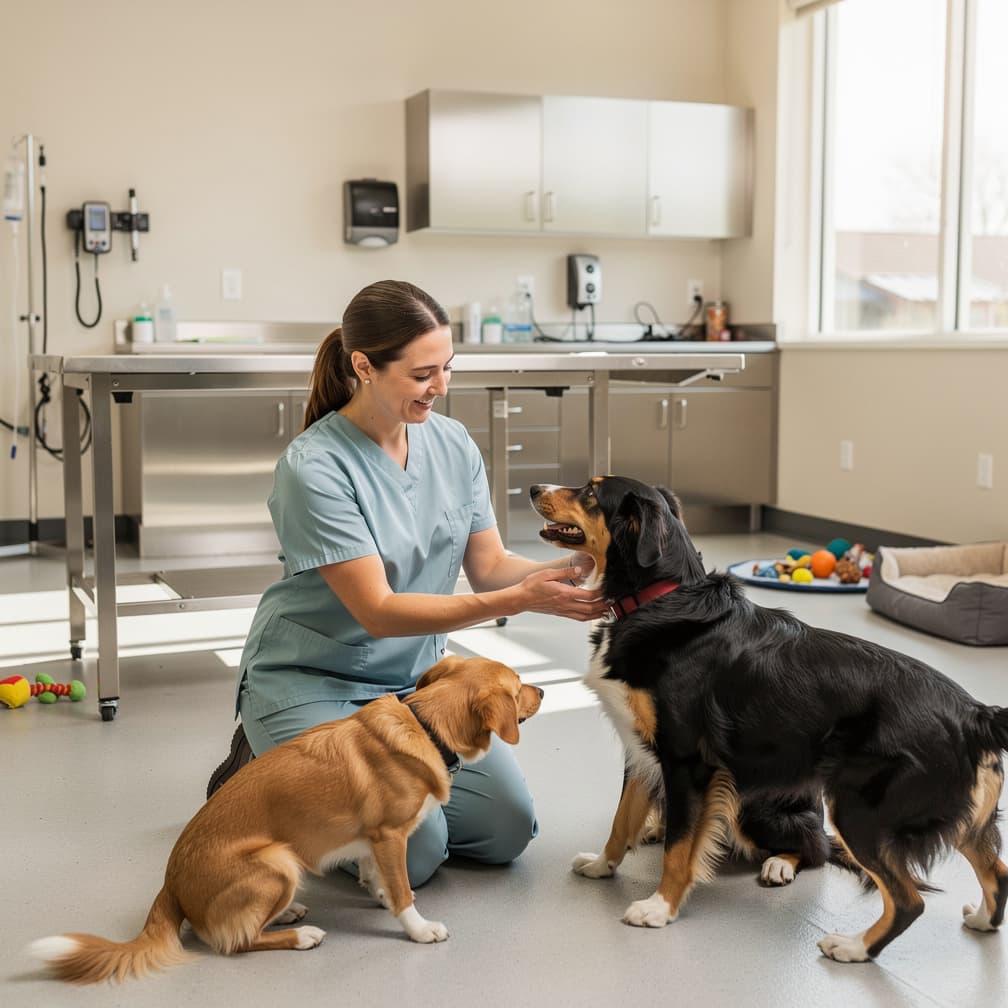

As a doggy daycare in Charleston, the wet floor at check in is a bigger liability question than most owners expect it to be. Dogs shake, bowls tip, and a parent in slick shoes crosses the same tile forty times a day. A slip claim from a human being is often the plainest claim a facility ever sees, and it is the one most likely to get filed. Doggy daycare insurance in Charleston is generally where that claim lands, alongside bites and escapes. Mats, signage, and a mop schedule are cheap. The defense of a fall claim is not cheap. The sections ahead lay out published ranges, what a quote requires, and how participating carriers in South Carolina price the same submission differently.
What Makes Charleston Different
Corporate clients change what a doggy daycare has to prove before the first dog arrives. An employer offering on-site pet benefits can ask for wording most small facilities have never seen. Waiver of subrogation, primary and noncontributory language, thirty day notice: those are requests, not laws. Every one of them is an endorsement, and endorsements cost something and take time to add. If a company in Charleston sends you a vendor packet, read the insurance exhibit before signing. The exhibit, not the sales conversation, is what your policy has to match on paper. Participating carriers in South Carolina will quote to that exhibit if you send it up front. Signing first and shopping later is how facilities end up buying limits they cannot use.
Local Risk Factors in Charleston
Fence lines are the first thing a coastal storm takes, and a play yard without a fence is not a play yard. Reopening after wind damage often waits on the same contractors every business in Charleston County is calling, so the closure at your Charleston facility runs longer than the storm did. Income lost during those weeks is a separate part of a property quote from the limit on the building, and it runs on its own clock. Ask how many days that clock allows and what the claim requires you to document while the doors are shut. Photographs taken before the season are worth more than a memory afterward. Storm surge, unlike wind, is usually treated as flood and priced apart.
What Coverage Does a Doggy Daycare in Charleston Need?
General Liability
Landlords, lenders, and corporate clients ask for this line by name before you open, and it is generally the one aimed at claims from the people and dogs who are not yours: a parent who falls in the lobby, a passerby hurt by an escaped boarder. Injuries to your own staff belong on a payroll policy instead, and animals in your custody are often limited by separate wording worth reading.
Example: Two boarders tangle over a toy during afternoon play and one needs surgery; the owner's demand and an attorney's letter arrive together, and general liability can help cover the defense.
Commercial Property
Wear and tear on your dryers is your own problem; a fire that starts in one is a different question. This line generally addresses sudden accidental damage to your building, improvements, crates, gates, play structures, laundry equipment, and the office computer. Standard forms typically exclude flood and gradual breakdown, and the income you lose while the doors are shut is usually a separate part of the quote.
Example: A storm peels back a section of roof over the play room in Charleston, soaking bedding and shorting the ventilation; commercial property may respond to the repairs and the ruined contents.
Professional Liability
Judgment is a product a daycare sells: which dogs play together, which medication gets given, whether a temperament test happens on a busy morning. When an owner argues that a decision, rather than an accident, hurt their dog, this is the line built for that argument. It typically does nothing for a customer who slips in your lobby, which sits with your liability policy instead.
Example: You pair a nervous rescue with a rough play group after a rushed intake and the dog is injured; the owner's claim about that call is what professional liability is meant to reach.
Workers Compensation
Client claims and staff claims are different animals, and this is the staff side. Handlers get bitten separating dogs, wrench shoulders lifting a big boarder into a tub, and slip on hosed floors, and this line generally addresses their medical care and lost wages. Requirements for employees vary by state, and rating runs on payroll rather than on headcount.
Example: A handler's hand is bitten breaking up a scuffle and the repair costs weeks of restricted duty; workers compensation could take on the medical bills and part of the missed pay.
How Much Does Doggy Daycare Insurance Cost in Charleston?
Doggy Daycare Insurance is a bundle of separate policies, priced separately. The ranges below are typical figures for Charleston for each line, except workers compensation, which is rated per $100 of payroll; a quote prices each one against your own operations.
| Coverage | Typical range | What moves your price |
|---|---|---|
| General Liability Insurance | $140 - $500 per month | Industry and risk classification, annual revenue, number of employees |
| Commercial Property Insurance | $120 - $420 per month | Building value and construction type, roof age and condition, fire protection class |
| Professional Liability Insurance | $65 - $230 per month | The services you actually perform, annual revenue or billed fees, limit and retention selected |
| Workers Compensation Insurance | $0.75 - $2.74 per $100 of payroll | Employee classification codes, total annual payroll, experience modification rate |
Prices shown are general estimates, not guaranteed rates or quotes. Your actual premium will depend on the insurer, coverage selected, business details, location, claims history, and other underwriting factors. Learn about our pricing methodology.
What Are the Insurance Requirements for a Doggy Daycare in Charleston?
Workers' comp is generally required once you have 4 or more employees. South Carolina generally requires employers to carry workers' compensation at that point. Common exemptions include sole proprietors, partners, and agricultural workers. Confirm current thresholds with your state's workers' compensation agency before you hire.
Flood damage is typically excluded from standard policies. Standard commercial property and builders-risk-type policies typically exclude flood. Given Charleston's coastal flood exposure, a separate flood policy is worth pricing; FEMA's National Flood Insurance Program is the usual starting point.
Where to verify licensing and coverage rules. The South Carolina Department of Insurance publishes consumer guidance and current insurance requirements for South Carolina businesses. When a contract or lease demands specific wording, the South Carolina Department of Insurance's guidance is the authoritative place to check.
Get Your Doggy Daycare Quote in Charleston
Compare rates from multiple carriers. Free quotes, no obligation.
Operating in Charleston
- Your loss run travels with you between carriers, so a claim you paid quietly to keep it clean still cost you the thing it was meant to protect.
- The cooling system is not a comfort item in a room full of dogs; when it fails, you are closing early and calling forty owners before lunch.
- Charleston County has about 15,500 businesses, and the vendors who can rebuild a kennel run come from that same pool, so repair timelines depend on how busy they are.
- Staff turnover resets your safety record in practice, since the person who knows which two dogs cannot share a yard is the one who quit last month.
How to Buy: Advice for Charleston Owners
Gather the numbers before you shop, because every carrier asks for the same ones and inconsistent answers slow everything down. You need annual revenue, total payroll by role, square footage of your Charleston facility, average dogs per day, maximum dogs per day, and the number of handlers on the floor at peak. Add your loss run for the last three to five years, even if it is empty, since an empty one is worth saying out loud. Note whether you accept intact dogs, whether you board overnight, and whether you groom or train on site, because each answer changes underwriting appetite. Workers compensation quotes hinge on the payroll split, and general liability hinges on the headcount and ratio. The South Carolina Department of Insurance publishes consumer guidance on how business insurance quotes are put together. CPK then lines up participating carriers against that single set of facts.
FAQ
Doggy Daycare Insurance in Charleston: FAQ
General liability is generally the line aimed at third-party bodily injury and property damage, and a client's dog injured in your care is often treated as property rather than as a person. Some policies handle animals in your care under separate wording, and the details differ between carriers. Ask specifically how a dog in your custody is treated before you assume anything. That single question separates otherwise identical quotes.
An escape usually turns into a claim from the dog's owner, and sometimes from a driver or a neighbor as well. Liability wording could respond depending on how the policy treats animals in your care, custody, and control. That phrase is the one to look for, since many standard forms limit or exclude it. Read the endorsement, not the summary, before you decide how your own policy treats it.
It extends certain protection under your policy to another party for claims arising out of your operation. Landlords ask for it so a claim from your play yard does not start with their own insurer. It does not give them a separate limit; they share yours. Adding several parties tightens the same aggregate, which is worth knowing before you agree to a list of them.
Yes, and that is what the aggregate limit means. Per-occurrence is the most a policy may pay for one incident, like a single fight that injures two dogs. The aggregate is a yearly ceiling that every bite, fall, and escape claim draws from together. A rough season at a busy facility can erode it even when no single claim looked large. Ask what the aggregate resets to and when, because that date matters more than owners expect.
Standard commercial property forms typically exclude flood, meaning water that rises from the ground outside. A burst supply line inside the building is a different question and is often treated apart from flood. Flood gets priced as its own decision, and a yard that pools every heavy rain is worth mentioning to whoever quotes you. Check what the form says about surface water before assuming either way.
A signed waiver at intake does not stop a lawsuit; it shapes the argument. Clients bring claims after a bad outcome, and the defense costs money whether the claim has merit or not. Liability coverage is generally where the defense of that claim starts, and defense expenses can sit inside or outside your limit depending on the form. Ask which arrangement your quote uses.
Sources
- 1.U.S. Census Bureau, County Business Patterns (2022), Charleston County(Charleston County has about 15,500 business establishments.)
- 2.South Carolina Department of Insurance(South Carolina Department of Insurance publishes consumer guidance for insurance buyers.)
- 3.FEMA / FloodSmart(Flood coverage is typically purchased separately; FEMA administers the National Flood Insurance Program.)


