







































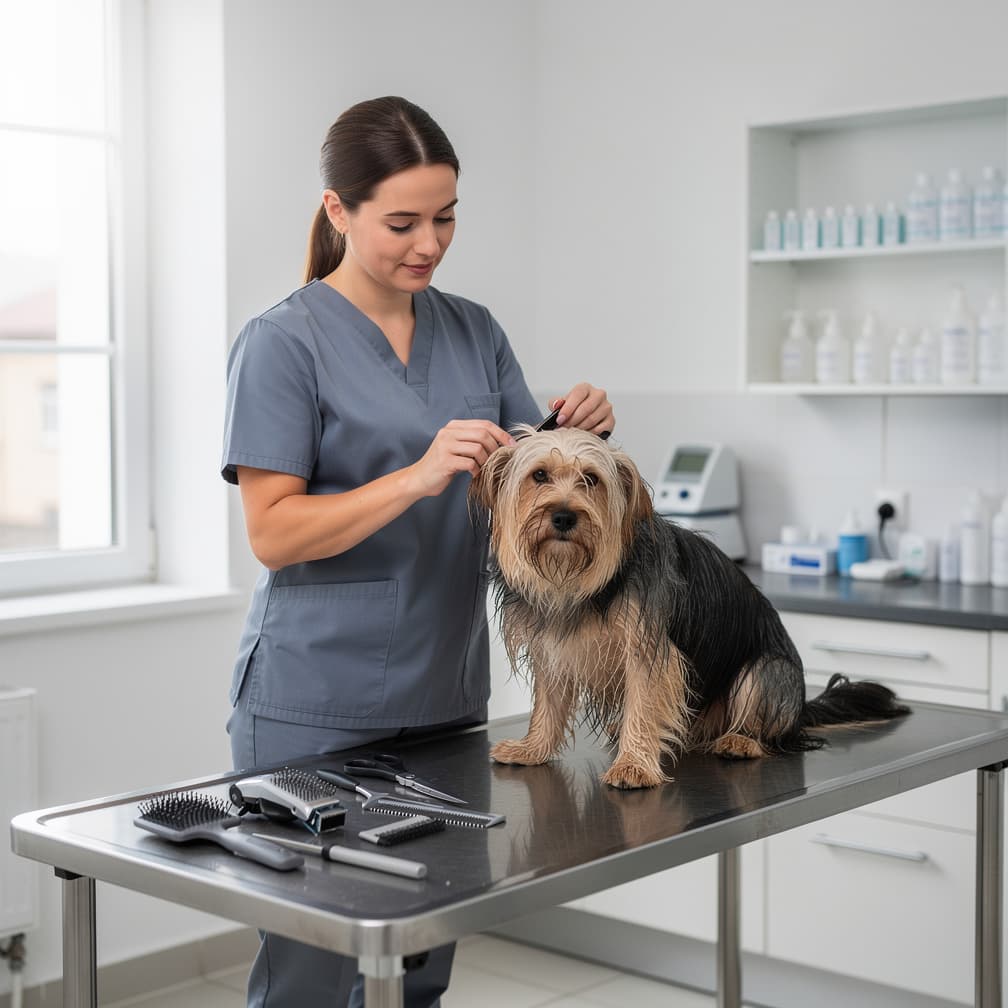

As a pet groomer in Charleston, the wettest part of your day is also the part a claims adjuster will ask about first. A floor gets slick between a bath and a blow dry, a client steps in to collect a dog, and the fall becomes a third-party injury with medical bills attached. Pet grooming insurance in Charleston treats that as bread and butter, which is exactly why the interesting questions live elsewhere: what happens when an employee is bitten, what happens when an owner says the cut caused the sore, what happens when the shop burns. Mats and signage cut the frequency. They do nothing for severity. Price the policy against the worst version of your day, not the average one, and compare quotes on limits before you compare them on premium.
What Makes Charleston Different
A landlord can hold your keys until a certificate with the right limits lands in the leasing office. That single document decides your timeline more than any underwriter does, and it is written before you shop. Grooming leases often carry water language too, because tubs and dryers sit above someone else's ceiling in a stacked building. If the space in Charleston you want has a tenant below you, expect the clause to be specific about it. Read the limits, the additional-insured wording, and the notice period before you price anything at all. A quote that cannot produce that certificate on the lease's terms is not cheaper, it is useless. Bring the clause to the comparison instead of guessing at round numbers you invented. Coverage in South Carolina is bought to satisfy documents at least as often as to satisfy risk.
Local Risk Factors in Charleston
Boarded-up windows and a shop full of gear lifted off the floor is the reality of a storm week, not a metaphor. Moving hydraulic tables and dryers up takes hours you would rather spend grooming, and it is loss control that costs you nothing but time. A shop in Charleston that loses power for four days loses the hot water, the dryers, and every appointment on the calendar. Spoiled product and a soaked wall are claims; the empty week is a business interruption question that often needs its own agreement to answer. Ask how a quote handles income during a closure and what documentation it wants from a paper appointment book. Then ask what the wind deductible would actually cost you at a building anywhere in Charleston County.
What Coverage Does a Pet Grooming in Charleston Need?
General Liability
Landlords, host clinics, and corporate accounts ask for this one by name. It is the line typically aimed at people rather than pets: the client who slips on a wet floor at pickup, the person bitten in your waiting area, the damage you cause to somebody else's property. Injury to an animal in your care is often excluded and usually needs separate wording, so ask.
Example: A client leans over the desk to sign, slips on water tracked from the tub room, and lands hard; General Liability can help cover the medical bills and the claim that follows.
Professional Liability
Nobody was hurt and the owner is still furious: the coat came off too short, the shave down was never authorized, a sore is blamed on your blade. Those complaints are about the service rather than an injury, and General Liability generally leaves them alone. Professional Liability is the line meant for that argument, and it often funds the defense even when a claim goes nowhere.
Example: An owner books a full groom before a show, returns to a coat clipped shorter than agreed, and demands compensation; Professional Liability might answer the claim and the lawyer's bill.
Commercial Property
Tubs, hydraulic tables, high-velocity dryers, clipper sets, and the product on the shelf are the money in a grooming shop, and they all sit in one room. This line is intended for that room: fire, theft, vandalism, and sudden water from inside the building. Flood is typically excluded and bought separately, and wear on an aging dryer motor is treated as maintenance.
Example: A break-in overnight empties the clipper drawer and takes both dryers from a salon in Charleston; Commercial Property may respond up to the values you scheduled, which is why the inventory matters.
Workers Compensation
A bite to a client and a bite to your bather travel down different roads. This is the employee road: medical care and lost wages when a groomer is hurt lifting a ninety-pound dog, scratched on the table, or injured on a wet floor at work. Rules on who must carry it vary by state and headcount. Rating runs per hundred dollars of payroll rather than as a flat monthly figure.
Example: A bather reaches into a tub, takes a bite that needs stitches, and misses a week of shifts; Workers Compensation is generally intended to handle the medical care and the lost wages.
How Much Does Pet Grooming Insurance Cost in Charleston?
Pet Grooming Insurance is a bundle of separate policies, priced separately. The ranges below are typical figures for Charleston for each line, except workers compensation, which is rated per $100 of payroll; a quote prices each one against your own operations.
| Coverage | Typical range | What moves your price |
|---|---|---|
| General Liability Insurance | $60 - $170 per month | Industry and risk classification, annual revenue, number of employees |
| Professional Liability Insurance | $50 - $150 per month | The services you actually perform, annual revenue or billed fees, limit and retention selected |
| Commercial Property Insurance | $95 - $310 per month | Building value and construction type, roof age and condition, fire protection class |
| Workers Compensation Insurance | $0.75 - $2.74 per $100 of payroll | Employee classification codes, total annual payroll, experience modification rate |
Prices shown are general estimates, not guaranteed rates or quotes. Your actual premium will depend on the insurer, coverage selected, business details, location, claims history, and other underwriting factors. Learn about our pricing methodology.
What Are the Insurance Requirements for a Pet Grooming in Charleston?
Workers' comp is generally required once you have 4 or more employees. South Carolina generally requires employers to carry workers' compensation at that point. Common exemptions include sole proprietors, partners, and agricultural workers. Confirm current thresholds with your state's workers' compensation agency before you hire.
Flood damage is typically excluded from standard policies. Standard commercial property and builders-risk-type policies typically exclude flood. Given Charleston's coastal flood exposure, a separate flood policy is worth pricing; FEMA's National Flood Insurance Program is the usual starting point.
Where to verify licensing and coverage rules. The South Carolina Department of Insurance publishes consumer guidance and current insurance requirements for South Carolina businesses. When a contract or lease demands specific wording, the South Carolina Department of Insurance's guidance is the authoritative place to check.
Get Your Pet Grooming Quote in Charleston
Compare rates from multiple carriers. Free quotes, no obligation.
Operating in Charleston
- A property manager behind a Charleston storefront can hold your keys until a certificate with the lease's limits lands in the leasing office, so a policy that renews late can push an opening back by weeks.
- Water reaches the front door on paws and shoes, which is why the slip claim in a grooming shop usually happens where clients wait rather than beside the tub.
- A veterinary clinic or a boarding kennel in Charleston can send you steady referrals and can stop the day your certificate on file expires, because trust in this trade includes paperwork.
- Intake photographs of mats, sores, and existing limps cost nothing and are the strongest evidence you will ever collect, and they settle arguments that no policy wording can settle for you.
How to Buy: Advice for Charleston Owners
Buy before the first appointment, not before the first complaint. Coverage typically responds to claims from incidents that happen while the policy is in force, so a policy bought today does nothing about last weekend's dog. Groomers learn this after an owner waits three weeks and a vet bill before calling. If you are opening a shop in Charleston, start the policy the day you take possession, because your build-out and your gear are already at risk. General Liability should be in force before a client walks in for a consultation. Commercial Property should be in force before the equipment is delivered to the room. The South Carolina Department of Insurance publishes consumer guidance on when coverage begins. Set the dates first, then compare quotes from participating carriers through CPK with the same effective date on every one.
FAQ
Pet Grooming Insurance in Charleston: FAQ
Location moves premiums through the things attached to it: the limits a lease demands, the value of the space and the build-out, weather exposure at the building, and local claim costs when someone is hurt. Two identical shops in different parts of South Carolina can price differently for those reasons alone. Ask each quote what it assumed about your address and your limits before you compare monthly figures.
You can be named in a claim regardless of fault, which is why defense costs matter as much as any payout. A pre-existing sore or a heart condition discovered on the table becomes an argument, and arguments cost money before anyone decides who was right. Intake photographs and a signed condition note are what cut that argument short. Ask whether defense sits inside or outside your limit.
Hold four things fixed: the limits, the deductible, your payroll figure, and your equipment values. Then read what actually differs, which is usually the animal-injury wording, whether defense erodes the limit, and what is excluded. CPK lets you compare quotes from participating carriers in Charleston on the same inputs rather than on headline numbers. The differences in wording are the decision; the monthly figure is the last step.
Most commercial landlords ask for proof of coverage before they hand over keys, and the lease usually names a minimum limit and asks to be added as an additional insured. That request is contractual rather than legal, so the numbers vary from building to building. Get the clause in writing, then buy to it. A policy that cannot produce the certificate the lease describes will not get you the space.
Price moves on a handful of inputs: payroll if you have employees, annual revenue, the value of your equipment, the limits you choose, and your claims history. A solo groomer with one table prices differently from a three-station shop with a lease. Published ranges are statewide starting points, and a quote for your own shop in South Carolina may land anywhere across them. Bring accurate figures, because an estimate corrected later reprices the whole year.
Not automatically. Many General Liability forms exclude damage to property in your care, custody, or control, and an animal you are handling is legally property. Some carriers add that exposure back by endorsement; others handle it through a different form entirely. Ask the specific question before you buy, because this is the claim a grooming shop is most likely to see and the one where wording decides the outcome.
Sources
- 1.South Carolina Department of Insurance(South Carolina Department of Insurance publishes consumer guidance for insurance buyers.)
- 2.FEMA / FloodSmart(Flood coverage is typically purchased separately; FEMA administers the National Flood Insurance Program.)


