







































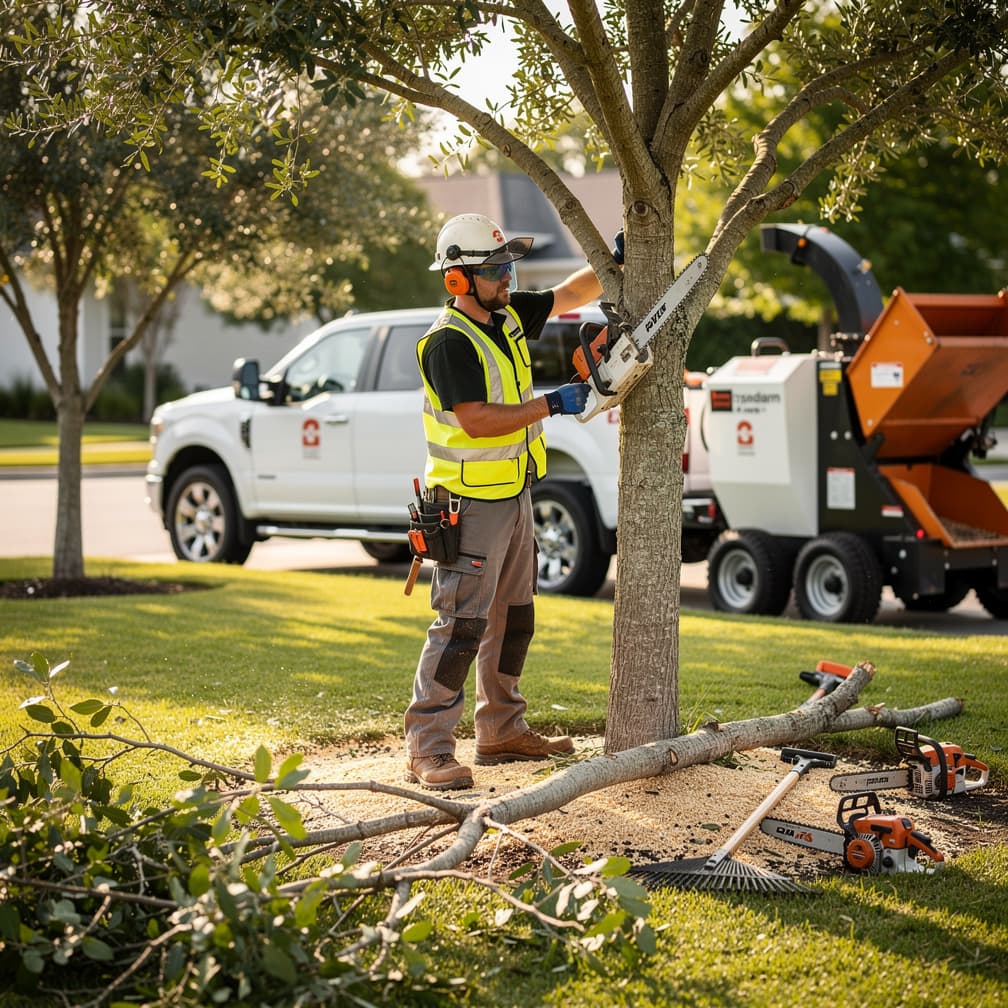

Chippers walk. So do climbing saws left in an open trailer while the crew hauls brush to the dump, and that loss shows up less as a repair bill than as a week of jobs you cannot run. Stolen gear is a separate question from the fence you cracked, and both are separate again from the climber who fell. Tree service insurance in Charleston is the phrase people search, but what they are buying is several distinct promises stacked together, each with its own limit and its own deductible. The one that matters is the one that matches your worst realistic week. Price the stack against the gear list you actually own in Charleston, not against a neighbour's quote for a smaller truck and a shorter ladder.
What Makes Charleston Different
Certificates expire, and that single fact explains more stalled jobs than any pricing argument ever will. A vendor portal can drop you the day your expiry date passes, without a phone call first. Nobody tells you; the work simply stops arriving, and you find out from the silence. Renewal dates therefore matter as much as limits when you work for anyone running a portal. Your Charleston clients may never read the policy, but their software reads the expiry field. Keep the certificate current, keep the named parties current, and keep a copy on your phone. Participating carriers in South Carolina can issue updated certificates, though the request has to come from you. The policy that lapses quietly is the one that costs you a season of work.
Local Risk Factors in Charleston
Yards flatten in a hurricane. Trailers move, sheds go, and a bucket lift can end up somewhere nobody parked it, all before a single cleanup call comes in. Gear that survives then gets run hard for weeks with no maintenance window at all. An Inland Marine schedule can address equipment that moves between jobs, though wind and water terms differ and named-storm deductibles are common enough to look for. That deductible is the detail that surprises owners in Charleston County: a percentage of value rather than a flat figure. Read it before the season in South Carolina rather than during it. Values on the schedule matter too, because replacing a chipper after a regional storm rarely happens quickly.
What Coverage Does a Tree Service in Charleston Need?
General Liability
A fence crushed under a trunk section, a passerby struck by a falling limb, a driveway cracked by a stump grinder: those are the third-party losses General Liability is meant for. Nearly every client who asks for a certificate is asking about this line. It typically excludes damage to the tree you were hired to remove, and it leaves your own crew's injuries to another line entirely.
Example: A rigged limb swings wide and takes out the neighbour's carport instead of landing in the drop zone. The neighbour's insurer comes looking for the crew that cut it, and this is the line that claim would be tested against.
Workers Compensation
Builders and facilities managers ask for proof of this one before a saw comes on site, because an uninsured worker on their property becomes their problem. Workers' Compensation is built around medical bills and lost wages when a climber or a groundman gets hurt cutting, rigging, or dragging brush. Rules on who counts as an employee vary by state, and the South Carolina Department of Insurance publishes the current requirements for employers.
Example: A groundman's shoulder goes while he is hauling a hung-up limb, and he is off the crew for six weeks. His medical bills and a share of his lost wages are what this line is intended to take on.
Commercial Auto
Personal auto policies typically exclude business use, which is the whole reason this line exists for a tree service. Commercial Auto is rated on your trucks, your trailers, your drivers, and how far they travel, and it might respond when a rig hauling a chipper ends up in a wreck. It has nothing to say about the saw riding in the back.
Example: A chip truck rolls a stop sign on the way back from the dump and clips a sedan. Repairs, the other driver's injuries, and the argument that follows are what this line is meant to absorb.
Tools & Equipment (Inland Marine)
Chippers, climbing saws, rigging, and a bucket lift spend their working lives moving between jobs, while a standard property form is built around a fixed address. Inland Marine steps into that gap for scheduled gear that travels: theft off a trailer, damage in transit, a loss left at a jobsite overnight. Wear, mechanical breakdown, and flood are common exclusions worth reading first.
Example: You reach the yard and the trailer is open, the top-handle saws are gone, and the first job starts in an hour. A scheduled tool with its serial number on file is the kind of loss this line can pick up.
Commercial Umbrella
Vendor packets and municipal bid documents routinely name a total limit higher than a tree service carries underneath, and a Commercial Umbrella is the usual way to reach that number. It sits above the lines below it and could extend those limits when a single claim runs past them. It follows the terms underneath, so a gap down there stays a gap up here.
Example: A removal goes wrong over an occupied house, and one claim eats the underlying limit before the repairs are even finished. The layer above is what might carry the rest of it in Charleston.
How Much Does Tree Service Insurance Cost in Charleston?
Tree Service Insurance is a bundle of separate policies, priced separately. The ranges below are typical figures for Charleston for each line, except workers compensation, which is rated per $100 of payroll; a quote prices each one against your own operations.
| Coverage | Typical range | What moves your price |
|---|---|---|
| General Liability Insurance | $340 - $1,100 per month | Industry and risk classification, annual revenue, number of employees |
| Workers Compensation Insurance | $0.75 - $2.74 per $100 of payroll | Employee classification codes, total annual payroll, experience modification rate |
| Commercial Auto Insurance | $360 - $1,175 per month | Fleet size and vehicle types, driver records and experience, coverage limits and deductibles |
| Inland Marine Insurance | $75 - $330 per month | Total insured value of the scheduled property, type and age of the equipment, where it is stored and how far it travels |
| Commercial Umbrella Insurance | $150 - $575 per month | Umbrella limit requested, limits carried on the underlying policies, loss history on those underlying policies |
Prices shown are general estimates, not guaranteed rates or quotes. Your actual premium will depend on the insurer, coverage selected, business details, location, claims history, and other underwriting factors. Learn about our pricing methodology.
What Are the Insurance Requirements for a Tree Service in Charleston?
Workers' comp is generally required once you have 4 or more employees. South Carolina generally requires employers to carry workers' compensation at that point. Common exemptions include sole proprietors, partners, and agricultural workers. Confirm current thresholds with your state's workers' compensation agency before you hire.
State auto liability minimums apply to business vehicles. South Carolina's minimum auto liability limits are $25,000/$50,000/$25,000 (bodily injury per person / per accident / property damage). Contracts and lenders often require more than the state floor.
Where to verify licensing and coverage rules. The South Carolina Department of Insurance publishes consumer guidance and current insurance requirements for South Carolina businesses. When a contract or lease demands specific wording, the South Carolina Department of Insurance's guidance is the authoritative place to check.
Get Your Tree Service Quote in Charleston
Compare rates from multiple carriers. Free quotes, no obligation.
Operating in Charleston
- About 184 tree services take calls in Charleston County, so a homeowner who dislikes your paperwork has another estimate booked before you get back to the truck.
- Dropping a limb across a fence line puts you in the middle of a neighbour dispute your customer started. Two property owners with two insurers can turn one afternoon into a year.
- A stump grinder that cracks a buried irrigation line or clips a utility service creates a repair bill nobody bid for. Locate requests are cheap, and the alternative is a claim file.
- Your policy expiry date lives in somebody else's vendor portal, and a Charleston account can go quiet the day it passes without anyone bothering to call and tell you.
How to Buy: Advice for Charleston Owners
Assume nothing about what a policy leaves out, because the gaps are where tree services get hurt. Damage to the tree you were hired to remove is not third-party damage. Faulty workmanship claims are frequently excluded. Gear stolen from an unlocked trailer can fall outside the form entirely. Coverage for an owner who has opted out of Workers' Compensation may not exist at all, and owners forget they opted out. Read the exclusions pages of two Charleston quotes side by side, because that is where the real difference lives. General Liability quotes that look identical often are not, once you get past the declarations page. Ask participating carriers in South Carolina to send the full forms, then compare the exclusions rather than the prices.
FAQ
Tree Service Insurance in Charleston: FAQ
Yes, and institutional buyers do it routinely. A bid packet can name a total limit well above what the underlying lines carry, and a Commercial Umbrella is normally how a tree service reaches that number. Read whether the layer follows the same terms as the policy beneath it, because a mismatch is a gap you own rather than one the client ever notices. Price the layer into the bid instead of eating it after you win.
The saw does not care, but the people who hire you do. A homeowner's insurer can ask for proof before approving a removal, a property manager can refuse entry without a certificate, and a builder can hold your invoice until one lands. The practical answer is that coverage is a condition of getting paid rather than a legal abstraction. Requirements for employers vary by state, so check the South Carolina Department of Insurance's guidance before deciding what reaches your crew.
The monthly number turns on payroll, crew size, whether anyone climbs, what you tow, and your claim history. A two-man pruning outfit and a crane-assisted removal company pay very different money for the same words on a policy. Deductibles and limits then move it again. The cost table on this page shows published ranges by line; treat those as a starting point and let participating carriers in South Carolina price the operation you actually run.
Usually not. The property you were hired to work on tends to sit outside third-party damage, and the distinction catches owners out constantly. General Liability is built around harm to somebody else's person or property, so a limb through a neighbour's roof is a very different claim from a stump you botched. Faulty workmanship exclusions often carry the rest of it. Read those pages before assuming a redo is a claim at all.
Practically anyone with something to lose. A property manager, a builder, a municipality, a community board, and a homeowner's own insurer can all ask before your crew rolls into a Charleston driveway, and each may want different wording. Some want naming as an additional insured. Some want a waiver of subrogation. The certificate itself proves nothing beyond what the underlying policy already says, so the endorsement has to exist before the certificate can mention it.
Injuries to your own crew generally sit with Workers' Compensation rather than with the liability line clients keep asking about. General Liability is for third parties: the customer, the passerby, the neighbour on the wrong side of the fence. Whether a particular helper counts as an employee depends on state rules and how you pay them, and it is rarely obvious with day labour or a subcontracted climber. Check the South Carolina Department of Insurance's guidance before deciding.
Sources
- 1.U.S. Census Bureau, County Business Patterns (2023), Charleston County(Charleston County has about 184 businesses in this trade's category (NAICS group 561730).)
- 2.South Carolina Department of Insurance(South Carolina Department of Insurance publishes consumer guidance for insurance buyers.)


