







































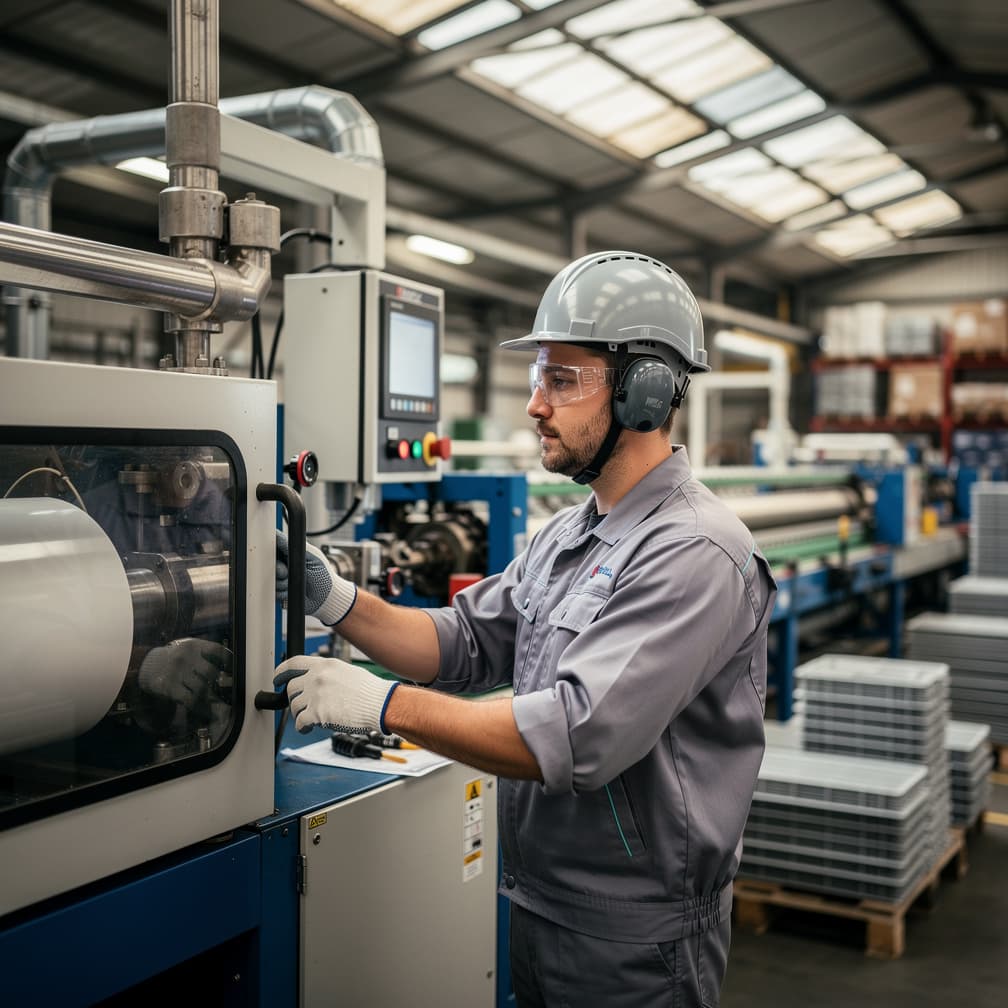

As a plastics manufacturer in Columbia, an equipment failure is a delivery failure, and the contract you signed already decided who eats that. A screw seizes. A chiller quits mid-run. A control cabinet cooks itself and the replacement board is on a boat somewhere. Machinery losses of that kind are handled by specific wording that owners often assume is already sitting inside a property policy, and frequently it is not. Ask the question directly instead of assuming the answer. Plastics manufacturer insurance in Columbia is worth building around the two or three single points of failure on your floor, because those are what turn a bad day into a bad quarter. Name them, price them, and read what participating carriers in South Carolina put in the form.
What Makes Columbia Different
Payroll, and not revenue, is the number driving most of what a plant pays to insure its people. Two shops with identical sales can price apart because one runs a single shift and the other runs three. Class codes split that payroll by what people actually do, and getting the split right is your job. An operator's hours and an office manager's hours are not the same risk and cannot share one code. Underwriters also read your loss runs, which are several years of what has already gone wrong. Nothing you say about safety outweighs what those runs show, so fix the runs before you shop. Claim frequency moves a rate harder than claim size, because frequency reads to an underwriter as process. That holds whether you quote in Columbia or anywhere else in South Carolina, and it is worth acting on.
Local Risk Factors in Columbia
A week of pumping out a warehouse is a week of not shipping, and customers rarely absorb that quietly. Silt gets into everything: dryers, hydraulic reservoirs, the bearings of a conveyor nobody thought about. Electrical gear that sat in water is generally replaced rather than dried and trusted, which stretches a restart well past the day the water leaves. Because flood sits outside a standard property form, the money question gets settled before a storm rather than during it. Ask what a separate flood policy in South Carolina would do for equipment, for stock, and for the time you spend down. Then check whether your plant's address in Richland County changes the answer, since this is priced by geography far more than by industry.
What Coverage Does a Plastics Manufacturer in Columbia Need?
General Liability
Customers and landlords name this line in their contracts, and it is the one meant for harm your operation does to other people and their property: a visitor hurt on your floor, a neighbor's building damaged, a molded part that fails inside somebody else's assembly. It generally has nothing to say about your own machines, your own scrap, or an employee's injury.
Example: A contractor rewiring a panel trips over a hose left across an aisle and breaks a wrist. The medical bills and the demand letter that follows are the kind of claim this line is meant to answer.
Commercial Property
Flood usually sits outside this form, and so does a machine that destroys itself from the inside, which is worth knowing before you assume both are handled. What it is built around is fire, storm, theft, and vandalism reaching your building, your presses, your tooling, and the resin and finished goods stacked inside. Insure it at replacement cost, since a mold on a rack is capital rather than inventory.
Example: A fire starts in a warehouse aisle and takes racked cartons of finished parts along with a month of resin. Rebuilding that stock is the loss commercial property is generally intended to pick up.
Workers Compensation
Hands, backs, and lungs are what this line is about. An operator caught in a press, a material handler who wrenches a shoulder lifting a gaylord, someone who breathed fumes during a purge: their medical care and lost wages are what it typically responds to. Rules on who must carry it vary by state, and customers often demand proof of it regardless.
Example: A press operator's glove catches during a mold change and he loses part of a finger. Treatment, surgery, and the weeks he cannot work are costs this coverage may take on.
Commercial Umbrella
Primary limits are finite, and a product suit naming three defendants can spend them before anyone reaches a verdict. This layer engages only once the underlying limit is exhausted, and it typically inherits the same exclusions the primary carries. When a large customer writes a limit into its contract that sits above what a plant carries, this is often how you get there.
Example: Two defect claims in one year drain the aggregate on the primary policy, and then a third customer files. An extra layer of limit is what might still be standing at that point.
How Much Does Plastics Manufacturer Insurance Cost in Columbia?
Plastics Manufacturer Insurance is a bundle of separate policies, priced separately. The ranges below are typical figures for Columbia for each line, except workers compensation, which is rated per $100 of payroll; a quote prices each one against your own operations.
| Coverage | Typical range | What moves your price |
|---|---|---|
| General Liability Insurance | $250 - $800 per month | Industry and risk classification, annual revenue, number of employees |
| Commercial Property Insurance | $400 - $1,400 per month | Building value and construction type, roof age and condition, fire protection class |
| Workers Compensation Insurance | $0.75 - $2.74 per $100 of payroll | Employee classification codes, total annual payroll, experience modification rate |
| Commercial Umbrella Insurance | $150 - $490 per month | Umbrella limit requested, limits carried on the underlying policies, loss history on those underlying policies |
Prices shown are general estimates, not guaranteed rates or quotes. Your actual premium will depend on the insurer, coverage selected, business details, location, claims history, and other underwriting factors. Learn about our pricing methodology.
What Are the Insurance Requirements for a Plastics Manufacturer in Columbia?
Workers' comp is generally required once you have 4 or more employees. South Carolina generally requires employers to carry workers' compensation at that point. Common exemptions include sole proprietors, partners, and agricultural workers. Confirm current thresholds with your state's workers' compensation agency before you hire.
Flood damage is typically excluded from standard policies. Standard commercial property and builders-risk-type policies typically exclude flood damage. Flood exposure varies address by address, so check your premises in FEMA's Flood Map Service Center before deciding; if you sit in a mapped flood zone, a separate policy through the National Flood Insurance Program is the usual starting point.
Where to verify licensing and coverage rules. The South Carolina Department of Insurance publishes consumer guidance and current insurance requirements for South Carolina businesses. When a contract or lease demands specific wording, the South Carolina Department of Insurance's guidance is the authoritative place to check.
Get Your Plastics Manufacturer Quote in Columbia
Compare rates from multiple carriers. Free quotes, no obligation.
Operating in Columbia
- Resin arrives by the truckload and sits in silos or gaylords until it runs. One fire in a storage aisle can take a month of raw material with it, which is why underwriters ask where you keep it long before a carrier in South Carolina quotes a rate.
- A mold is capital that looks like inventory. Sitting on a rack it reads as scrap to anyone doing a quick count, and owners routinely leave tooling off an equipment schedule until the week it burns.
- Purchasing departments do not call; they email a portal link and wait. If a buyer in Columbia cannot pull a valid certificate out of that portal, your release sits, and nobody in your building hears about it until a plant manager phones.
- Truck drivers walk your floor hunting for a signature. They pass presses, forklifts, and hot barrels on the way, and none of them are employees, which lands an injury in a different part of your program than an operator's.
How to Buy: Advice for Columbia Owners
Sort out who needs to be named before you buy, since endorsements are cheaper to add at binding. Go through every active contract and list the entities your customers want on your policy, parents and affiliates included. Ongoing operations and completed operations are separate grants, and a plant shipping parts generally needs the second one. General Liability carries the endorsement; Commercial Umbrella usually needs a matching one when the contract demands the higher limit. Ask for the forms themselves, and keep copies where whoever answers a buyer's email can find and send them. Check the South Carolina Department of Insurance's guidance before deciding whether the wording you were handed matches what you carry in South Carolina. Then ask participating carriers in Columbia what each endorsement adds to the quote.
FAQ
Plastics Manufacturer Insurance in Columbia: FAQ
Start with the largest number any contract of yours demands, since that is a floor you already agreed to. Then look at aggregate rather than per-occurrence, because aggregate is the annual ceiling across every claim and two product suits can drain it. Where the required figure runs above your primary limit, a Commercial Umbrella is often how plants in Columbia reach it.
Business interruption wording speaks to income lost during a covered shutdown, and it is not automatic in every quote. The terms that decide its value are the ones nobody reads: how a carrier defines your period of restoration, what proof of income it wants, whether expediting costs count at all. Settle those with participating carriers in South Carolina while you are still shopping.
Payroll broken out by job function, annual revenue, an equipment list with values, several years of loss runs, and a plain description of what you mold. Contract exhibits help too, since a limits requirement changes what gets quoted. A complete file is leverage: the less an underwriter has to assume about your floor, the less it prices for the unknown.
Something usually did. A payroll audit trued up an estimate, a claim from two years back finally developed, or your experience modification moved. Property values drift upward as replacement costs rise, even when the floor is identical. Ask for the specific driver instead of a summary, then decide whether it is worth re-shopping with participating carriers in South Carolina.
Yes, and it happens regularly. Being named in a suit is not the same as being at fault, but defense costs begin the day the complaint arrives, months before anyone works out whose design failed. Ask whether defense sits inside your limit or outside it, because a limit that erodes with every legal invoice is smaller than the printed number.
Usually not under a standard property form, which is written around fire, storm, and theft. Equipment breakdown is separate wording that speaks to motors, control systems, and hydraulic failures, and it is frequently an add-on. Ask whether your quote includes it, what it does about material spoiled in the barrel, and how it treats the days you wait on a part in Columbia.
Sources
- 1.South Carolina Department of Insurance(South Carolina Department of Insurance publishes consumer guidance for insurance buyers.)
- 2.FEMA / FloodSmart(Flood coverage is typically purchased separately; FEMA administers the National Flood Insurance Program.)


