







































Updated July 16, 2026

Garage Keepers Insurance in Columbia
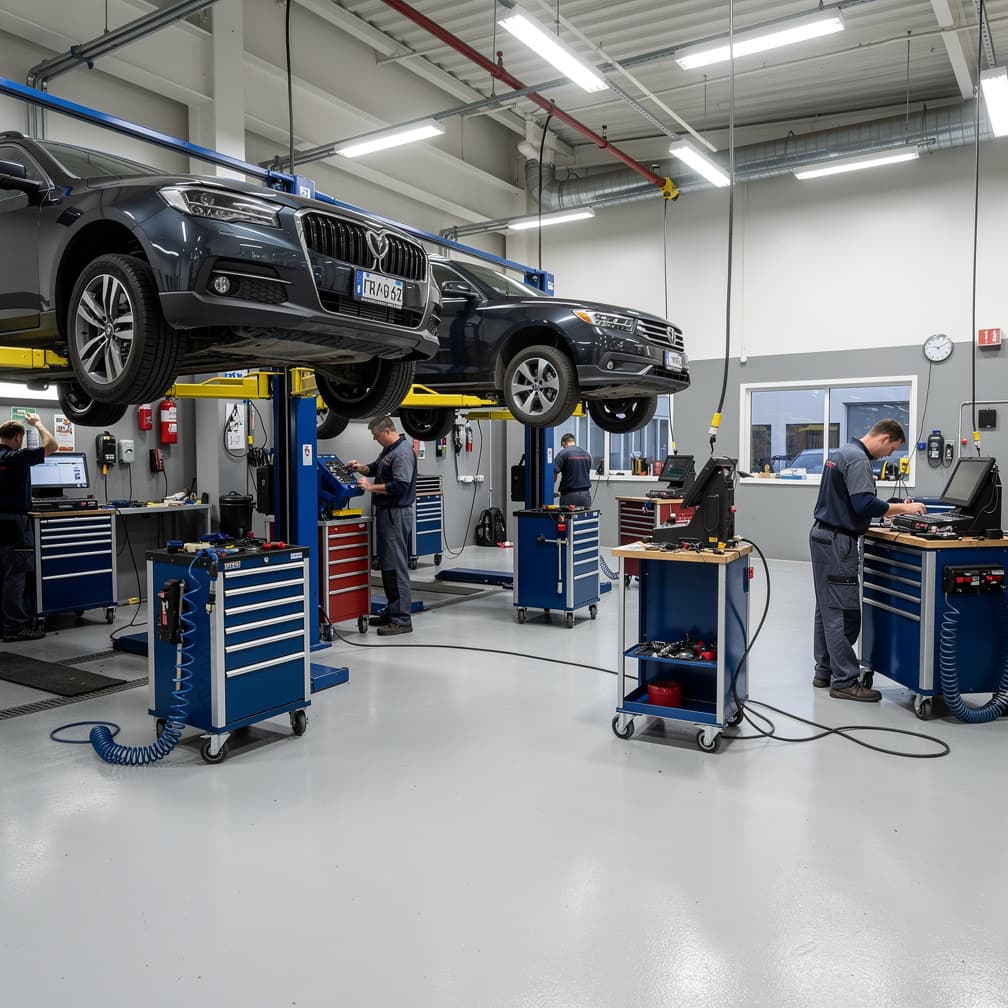
Retail trade is one of the leading business sectors in Richland County at 13.1%, tied with professional, scientific, and technical services. That means a lot of local vehicle work happens around customer errands, shopping-center parking lots, and quick turnaround expectations rather than long restoration timelines. For your coverage in Columbia, that changes how you should present your operation to an underwriter. A shop that handles same-day brake work near busy retail corridors, a tire store with cars queued outside, or a service department moving customer vehicles across a shared lot all create different custody patterns than a low-volume specialty garage. Richland County also has 9,402 business establishments, so your shop likely shares a property line with landlords, neighboring tenants, and vendor traffic that can complicate where customer autos are parked, who can access them, and how after-hours controls actually work. If your operation uses overflow parking, sublets part of the building, or relies on porters during peak periods, it can help to have your policy reflect those real handoff points instead of a simplified vehicle count.
Garage Keepers Insurance Risk Factors in Columbia
Here, the practical risk issue is **vehicle concentration on mixed-use commercial property**. In a market with heavy retail activity and many neighboring businesses, customer cars may be stored behind the shop, along side lots, or in overflow spaces that are easy to use operationally but harder to secure consistently. That matters because garage keepers losses often turn on where vehicles sit, how tightly access is controlled, and whether your written procedures match the way the lot works on a busy day. If your shop shares entrances, parking rows, or lighting with other tenants, review whether your quote distinguishes indoor storage, fenced outdoor storage, and any informal overflow arrangement. You should also flag test-drive routes, key control during shift changes, and who can move customer vehicles when front-office staff are gone. Those details help the policy review match your actual custody exposure instead of assuming a cleaner setup than you really have.
South Carolina has a high climate risk rating. Top hazards: Hurricane (Very High), Flooding (High), Severe Storm (High), Tornado (Moderate). The state's expected annual loss from natural hazards is $1.4B, which influences garage keepers insurance premiums and may affect coverage availability in high-risk areas.
What Garage Keepers Insurance Covers
What matters most is not the broad definition of the policy, but the loss scenarios most likely to create a dispute after a customer hands over keys. Start with where vehicles are kept during the day and overnight. If your lot backs up during parts delays or weekend holds, ask the agent to review whether your limit matches the highest total value of customer vehicles you may have in your custody at one time, not just a normal weekday count.
Storage conditions also matter. A shop that rotates vehicles between service bays, fenced outdoor parking, and overflow spaces has more than one exposure point, and each one should be described the same way on the application and in your internal procedures. If employees road test vehicles, move them between buildings, or leave them awaiting pickup after business hours, those facts should be disclosed up front so there is less room for argument later about how the vehicle was being handled when damage occurred.
South Carolina weather adds another practical review point. If your operation relies on outdoor storage, ask how the policy responds to vehicles left in open lots during severe weather and whether your deductible and limit still make sense when multiple customer vehicles could be affected in one event. You should also review key control, gate access, camera placement, and intake documentation, because claim outcomes often turn on whether you can show when the vehicle arrived, where it was parked, and who last moved it.
Coverage Included
Collision Coverage
Covers damage to customers' vehicles from collisions while in your care.

Comprehensive Coverage
Covers theft, vandalism, fire, and weather damage to customers' vehicles.
Specified Perils
Covers only specifically named perils at a lower premium.

Legal Liability
Covers damage you or your employees directly cause to a customer's vehicle.

Direct Primary
Pays regardless of fault, the broadest garage keepers coverage available.
What Makes Columbia Different
Retail adjacency is the main thing that changes the coverage decision here. In some places, a shop's exposure is mostly about repair complexity or long-term storage. Around Columbia's commercial corridors, the bigger issue is often how customer vehicles move through a busier property footprint, with more neighboring traffic, more short-stay service work, and more chances for a car to be parked outside the clean boundaries shown on a lease diagram. Richland County's business mix supports that concern. Retail trade accounts for 13.1% of establishments, so many garages sit in denser commercial settings where access, signage, lighting, and lot control deserve closer review. If your business depends on convenience and fast turnover, it may help to confirm the quote assumptions match your real parking pattern on your busiest days, not just where vehicles are supposed to sit on paper.
Our Recommendation for Columbia
Start with a site map, even if your operation is small. Mark every place a customer vehicle can sit, including fenced areas, side yards, overflow rows, and any shared parking you use during peak hours. Then match that map to your key-control process, employee driver list, and after-hours access rules. If your shop serves customers who expect quick retail-style turnaround, document who moves vehicles when bays back up and where unfinished jobs stay overnight. It may also help to review your lease language before binding coverage if the property is part of a larger commercial center, because access responsibilities and lot maintenance may affect how a claim is described. If you run a service department attached to another business, consider a coverage review that separates customer-auto custody from general premises exposure. That usually produces a cleaner quote than trying to fit everything into one broad description.
Get Garage Keepers Insurance in Columbia
Enter your ZIP code to compare garage keepers insurance rates from carriers in Columbia, SC.
Business insurance starting at $25/mo
FAQ
Frequently Asked Questions
Columbia shops often operate near busy commercial property, and shared access and overflow parking are common. You can tell the underwriter exactly where customer vehicles sit, who can reach them, and what changes after hours.
Convenience-driven vehicle movement is a real underwriting issue, not a minor detail, because it directly affects how often customer cars leave the shop's controlled interior and sit in exposed areas. Disclose your same-day turnaround patterns, outside queueing, porter use, and any overflow storage so the underwriter understands your actual daily flow.
Business density can affect your review because neighboring tenants, vendors, and customer traffic may change how your lot is used. The more detail you provide about shared entrances, lighting, fencing, and access control, the more accurately an underwriter can picture your real exposure.
Columbia customers often expect quick drop-off and pickup, especially around retail areas, which can increase handoffs and outside parking. If your operation promises fast turnaround, it can help to have your policy reflect real custody patterns during peak hours, not just your standard workflow.
Columbia's median household income is $55,653, so a typical claim deductible that feels manageable on paper could still strain cash flow if multiple customer vehicles are damaged in a single lot event. You want coverage terms that fit the vehicles you hold and the out-of-pocket amount your business can realistically absorb. It may help to ask for a quote that accounts for your actual lot layout, custody handoffs, and peak-hour parking reality.
If customers leave vehicles with you and your staff decides where those vehicles are parked, stored, or moved, you should review this coverage. The right quote starts with your actual lot setup, overnight storage pattern, and key control process.
Weather here makes outdoor storage details important because one event can affect several customer vehicles at once. If you use open lots or overflow parking, review your peak vehicle count, combined values, and deductible before you bind coverage.
You usually need a current vehicle count, peak lot load, photos of storage areas, loss runs, intake procedures, and key control details. If you road test, tow, or store vehicles off-site, include that early so the quote reflects real operations.
Sources
- 1.U.S. Census Bureau, County Business Patterns, Richland County(Retail trade is one of the leading business sectors in Richland County at 13.1%, tied with professional, scientific, and technical services.; Richland County has 9,402 business establishments.)
- 2.U.S. Census Bureau, ACS 5-Year Estimates, table B19013(Columbia's median household income is $55,653.)
Updated July 16, 2026





