







































Updated July 5, 2026

On-Hook Towing Insurance in North Charleston
Space costs shape towing decisions here before a truck ever rolls. With North Charleston median household income at $62,789, many customer vehicles you pick up are essential daily transportation, so even a short repair delay after an on-hook loss can turn into a harder claim conversation about use, condition, and value. That is why on-hook towing insurance in North Charleston is less about buying a generic limit and more about matching limits and deductibles to the kinds of vehicles you actually move, where you store them between calls, and how much damage your business can absorb without disrupting cash flow. If you run short local tows, dealership transfers, apartment-complex removals, or police-ordered impounds, review whether your deductible fits the jobs that happen most often, not just the worst case. A lower deductible can make more sense if one damaged customer vehicle would strain working capital. A higher limit may be worth pricing if you regularly handle newer pickups, SUVs, or commercial vans. Bring your dispatch mix and storage setup into the quote request so the policy is built around real operations.
On-Hook Towing Insurance Risk Factors in North Charleston
North Charleston sits in a part of South Carolina where storm and weather exposure stays part of the towing picture, but the local issue for on-hook coverage is **operational concentration**. You may pick up disabled vehicles from dense retail corridors, apartment properties, restaurant lots, and roadside calls that stack up fast during bad weather. That raises the odds of hurried hook-ups, tight turns, and temporary storage decisions made under pressure. For this market, ask how the policy responds while a vehicle is attached, during winching or loading if applicable, and while it is being held briefly before release. Also review where keys are kept, how condition is documented at pickup, and whether drivers use photos consistently. Those habits do not replace coverage, but they can help you defend the claim when damage timing is disputed. If your schedule spikes during storms or after-hours property removals, tell the agent that up front so limits and deductibles are reviewed against your busiest loss scenarios.
South Carolina has a high climate risk rating. Top hazards: Hurricane (Very High), Flooding (High), Severe Storm (High), Tornado (Moderate). The state's expected annual loss from natural hazards is $1.4B, which influences on-hook towing insurance premiums and may affect coverage availability in high-risk areas.
What On-Hook Towing Insurance Covers
Coverage disputes usually start at the handoff points, so the most useful review begins there. You want the policy language and quote assumptions checked against how your drivers document a vehicle before hookup, how they note pre-existing damage, when they use wheel-lift versus flatbed equipment, and whether they regularly handle disabled vehicles after heavy rain or wind events.
If your routes include coastal counties, inland flood-prone roads, or storm cleanup calls, ask whether your policy can help cover vehicles exposed during loading delays, roadside positioning, or transport after a weather event. The goal is to understand where your policy terms, exclusions, deductibles, and limits may leave you carrying part of the loss yourself.
You should also review whether your operation creates different exposures by job type. Private property impounds, accident recovery, dealer transport, and municipal rotation work can each produce different documentation needs and different customer expectations about vehicle condition. If one truck handles routine tows and another takes more difficult recoveries, separate that in the submission.
Coverage Included
Collision on Hook
Covers damage to towed vehicles from collisions during transport.
Comprehensive on Hook
Covers theft, fire, and weather damage to vehicles being towed.
Loading & Unloading
Covers damage during the process of loading and unloading vehicles.
Winching Coverage
Covers damage to vehicles during winching and recovery operations.
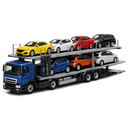
Multiple Vehicle
Covers all vehicles on multi-car carriers and rollback flatbeds.
Industries & Insurance Needs in North Charleston
Charleston County's largest establishment shares are professional, scientific, and technical services at 14.2%, retail trade at 13.6%, and accommodation and food services at 10.1%, so local towing demand often comes from parking enforcement, customer lot removals, employee vehicle issues, and service calls around commercial properties rather than only long-haul recovery work. That matters for on-hook coverage because frequent short-distance tows can create a different loss pattern: more hook-ups, more handoffs, more tight access points, and more chances for a damage dispute over bumper contact, wheel position, or pre-existing condition. If a large share of your work comes from retail centers, restaurants, hotels, or office properties, ask for a quote built around high-frequency local moves. Your application should spell out whether you mainly do consensual tows, private-property impounds, roadside assistance, or fleet transfers, because the exposure is not the same.
What Makes North Charleston Different
Commercial density is the difference here. In a market tied to a county with 15,484 business establishments, a tow operator is often not just moving disabled vehicles from open roadside locations. You are working around shopping areas, hospitality properties, office sites, apartment access lanes, and managed parking lots where space is tighter and the handoff chain is longer. That changes the on-hook calculus because many claims start as disagreements over exactly when damage happened, who authorized the tow, how the vehicle was positioned, or what condition it was in before loading. A standard quote can miss that if it treats your book like mostly open-road recovery. Here, it is smarter to shop with your dispatch reality in view: how many calls are private-property removals, how often you tow after hours, whether vehicles sit in storage before release, and how often drivers work in confined lots. Those details can matter as much as the truck schedule when you choose limits and deductibles.
Our Recommendation for North Charleston
Start your quote review with your last few months of dispatches, then sort them by roadside, private-property impound, dealership or fleet transfer, and police-directed work. That breakdown gives the clearest picture of where on-hook losses are most likely to happen. If your work is concentrated in retail and hospitality areas, ask whether the quote assumptions reflect frequent short tows and repeated hook-up activity, not just mileage. If you store vehicles even briefly, review how that handoff is documented and whether your procedures match the policy language. It is also worth checking whether your deductible is realistic for your cash reserves. A deductible that looks manageable on paper can feel very different after a disputed damage claim ties up payment. If you are comparing options, send the same driver count, truck list, service radius, and tow mix to each carrier setup so you are comparing terms on equal footing. Request the quote with photos of equipment and a clear description of storage and release procedures.
Get On-Hook Towing Insurance in North Charleston
Enter your ZIP code to compare on-hook towing insurance rates from carriers in North Charleston, SC.
Business insurance starting at $25/mo
FAQ
Frequently Asked Questions
North Charleston operators should set the limit around the vehicles they actually tow most often, not a generic average. If one damaged pickup, SUV, or van would strain cash flow, review a higher limit and a deductible your business can realistically absorb.
North Charleston private-property towing can change the claim pattern because tight lots, after-hours removals, and disputed vehicle condition create more room for disagreement. Ask for a quote that reflects frequent hook-ups, short moves, storage handoffs, and photo documentation practices.
Charleston County has a large commercial property base, so many local tows can originate from tighter access points and involve more handoffs. That makes it important to describe your tow mix clearly, especially if retail, hotel, restaurant, or office calls dominate dispatches.
North Charleston towing around retail and restaurant properties should be described as high-frequency local work with repeated hook-ups and confined access points. Include whether you handle impounds, customer-requested tows, or roadside calls, because each creates a different on-hook loss profile.
North Charleston policies are regulated at the state level by the South Carolina Department of Insurance. That matters most when you are reviewing policy forms, complaint channels, or licensing questions, but your quote still turns on your local towing operations and claim exposure.
Local towing can still create on-hook exposure if a customer's vehicle is damaged while attached, loaded, carried, or unloaded by your truck. Even short routes may be quoted around your actual vehicle types, towing methods, and documentation process.
Coastal towing can change the risk profile because weather and road conditions may complicate loading, transport, and unloading. When you request quotes, describe storm response work, wet-condition calls, and any higher-value vehicles you accept near the coast.
Insurance oversight runs through the South Carolina Department of Insurance, which oversees policy forms, consumer complaints, and licensing. If you are comparing forms, notices, or complaint procedures, keep copies of quotes and policy wording so you can review the exact terms before binding.
Sources
- 1.U.S. Census Bureau, ACS 5-Year Estimates, table B19013(North Charleston median household income)
- 2.U.S. Census Bureau, County Business Patterns, Charleston County(Business establishments in Charleston County; Leading business sectors in Charleston County by establishment share, Professional, scientific, and technical services 14.2%, Retail trade 13.6%, Accommodation and food services 10.1%)
- 3.South Carolina Department of Insurance(South Carolina's insurance regulator)
Updated July 5, 2026





