








































Updated July 16, 2026

Business Owners Policy Insurance in Sioux Falls
Sioux Falls has roughly 5,005 business establishments, which means you are operating in a crowded field where standing out requires protecting your assets. A bundled approach can give you commercial property and general liability in one package with business income protection layered in. The city's crime index is 104 and property crime sits at 111, both above the national average of 100, so theft and vandalism are real cost drivers you should weigh when setting property limits. Nine percent of Sioux Falls sits in a flood zone, so your specific building elevation can affect how a policy is structured. With a cost of living index of 88, your overhead stays lower than the national baseline. A median household income of $79,181 signals a solid local customer base with spending power. Many owners want a quote that balances protection with budget discipline without stripping out the coverage that keeps a small business operating after a covered loss.
Business Owners Policy Insurance Risk Factors in Sioux Falls
Sioux Falls businesses face a mix of property and business interruption exposures that can change a BOP decision. Severe weather remains the most obvious driver, because storm-related damage can affect roofs, signage, windows, inventory, and shutdown time for small businesses with physical locations. Flooding is another local factor, but it is not citywide; with 9% of Sioux Falls in a flood zone, the building’s exact location matters when you are thinking about property coverage and business income coverage. Local crime data also matters for businesses that store inventory, tools, or furnishings on site: the city’s property crime index is 111, and motor vehicle theft is a leading crime type. For a BOP, that makes secure premises, monitored access, and accurate contents limits more relevant than in a lower-risk area. If your business depends on equipment to operate day to day, equipment breakdown coverage may also be worth reviewing as an endorsement, since a temporary shutdown can be as disruptive as physical damage.
South Dakota has a high climate risk rating. Top hazards: Severe Storm (Very High), Tornado (High), Hailstorm (Very High), Winter Storm (High). The state's expected annual loss from natural hazards is $480M, which influences business owners policy insurance premiums and may affect coverage availability in high-risk areas.
What Business Owners Policy Insurance Covers
A South Dakota BOP combines commercial property and general liability into one small business insurance bundle, and it usually adds business income coverage so a covered shutdown can help replace lost revenue and some ongoing expenses. In this state, the Division of Insurance regulates the market, but the exact requirements still vary by carrier, industry, and business size, so the policy form is not identical from one insurer to another. Property protection is aimed at your building, equipment, and inventory, while liability coverage addresses third-party claims tied to your premises or operations. Business income coverage is often important for weather-related closures because storm exposure can interrupt operations even when physical damage is limited. Many carriers also allow equipment breakdown coverage as an endorsement, and some offer hired and non-owned auto coverage if your business uses vehicles you do not own. A BOP does not automatically include every protection a business may want, and endorsements, limits, and exclusions vary, so review the policy carefully before binding.
Coverage Included
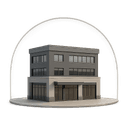
Commercial Property
Can help repair or replace your building, equipment, inventory, and furnishings after covered events like fire, wind, or theft.

General Liability
Can help cover customer injuries, damage to property owned by others, and related legal costs your business becomes responsible for.
Business Income
May replace lost income and help pay rent, payroll, and other continuing expenses while covered damage forces a temporary shutdown.

Equipment Breakdown
Typically covers repair or replacement when equipment like air conditioning, refrigeration, or computers fails from a sudden mechanical or electrical breakdown.
Hired & Non-Owned Auto
May respond when vehicles your business rents or employees' personal cars are used for work and cause an accident.
Business Owners Policy Insurance Cost in Sioux Falls
Average Cost in South Dakota
$45 - $140
per month
Businesses in South Dakota typically see business owners policy insurance premiums of $45 - $140 per month, which tends to run 12% below the national range of $50 - $160 per month.
- Annual revenue and industry class
- Building and contents values
- Square footage and building age
- Catastrophe exposure at your address
- Liability limits and property deductibles
- Claims history
Contact CPK Insurance for a personalized quote.
Prices shown are general estimates, not guaranteed rates or quotes. Your actual premium will depend on the insurer, coverage selected, business details, location, claims history, and other underwriting factors. Learn about our pricing methodology.
Your final price depends on coverage limits, deductibles, claims history, location, industry, and endorsements, though the state's below-average premium environment can work in your favor. The typical small business here pays starting at $45 to $140 per month, which means a comparable operation may pay less than the national benchmark. Broader small-business figures show a typical range of $50 to $160 per month and an annual range of about $500 to $2,000, so quotes can move meaningfully depending on the account. South Dakota's premium index is 88, a score where anything below 100 signals lower-than-average rates for comparable coverage. Location matters here because storm and hail risk can raise property and business interruption pricing for businesses in exposed areas. A business in Sioux Falls with updated protection, modest inventory, and lower limits may price differently than a larger operation in Rapid City or a property in a county with repeated storm losses. The best way to interpret your quote is to compare the bundled price against the separate cost of commercial property and general liability, then see how endorsements like equipment breakdown coverage affect the total.
What Makes Sioux Falls Different
The biggest Sioux Falls difference is the combination of a dense small-business base, measurable property-crime exposure, and localized flood pockets inside a city that also faces severe weather risk. A BOP here is not only about keeping premium manageable; it is about making sure the property piece reflects the real contents at risk and the business income piece reflects the real downtime risk. A restaurant with $80,000 of refrigerated inventory faces a very different loss scenario than an accounting office with $15,000 of furnishings, even if they share a ZIP code. Two businesses only a few miles apart may need different property assumptions based on flood exposure alone. The right coverage depends heavily on address-level details, security features, and how much of the operation lives on the premises.
Our Recommendation for Sioux Falls
Start with a quote that separates property, liability, and business income so you can see what each piece is doing for your Sioux Falls location. Then test the limits against what you actually keep on site. Whether you run a retail shop with seasonal inventory, an office with custom fixtures, or a food business with expensive kitchen equipment, each carries a different replacement cost you need to price accurately. If your address is in or near a flood zone, ask how the property form handles that exposure before you bind coverage. For businesses with higher theft sensitivity, document your locks, alarms, cameras, and inventory controls. If your operation depends on machinery, refrigeration, or other critical systems, ask whether equipment breakdown coverage is available and how it would fit into the BOP. Compare a few quote options so you can weigh the bundled structure against separate commercial property and general liability pricing without guessing at the right limits.
Get Business Owners Policy Insurance in Sioux Falls
Enter your ZIP code to compare business owners policy insurance rates from carriers in Sioux Falls, SD.
Business insurance starting at $25/mo
FAQ
Frequently Asked Questions
A Sioux Falls retailer should size property limits to what it would actually cost to replace seasonal inventory and rebuild a damaged storefront, since the city's above-average property crime rate makes physical loss more likely than in many comparable markets. Business income coverage matters too, because a forced closure during a peak sales season can erase a quarter's profit in a matter of weeks.
Flood exposure is not the same everywhere in the city, with 9% of Sioux Falls in a flood zone. If your building sits in one of those pockets, a standard policy form may exclude water damage entirely, which means you could need a separate endorsement or standalone flood policy to avoid paying for repairs out of pocket.
Business income coverage can help replace lost revenue after a covered loss interrupts operations, which can keep your doors open and payroll running when a fire or storm forces you to shut down temporarily.
Food service operators carrying perishable inventory and retailers whose seasonal stock represents a large share of annual revenue face the highest stakes. If a single event could wipe out both your property and your ability to generate sales for weeks, a BOP review becomes urgent.
Many carriers offer it as an endorsement, though availability depends on the policy form. If your business relies on equipment to operate, ask about that endorsement when you request a quote.
A South Dakota BOP usually bundles commercial property, general liability, and business income coverage, with endorsements sometimes available for equipment breakdown or hired and non-owned auto exposure.
The typical small business here pays starting at $45 to $140 per month, while broader premiums typically run $50 to $160 per month, and the final price depends on limits, deductibles, location, claims history, and endorsements.
There is no single universal BOP rule for every business, but the market is regulated by the South Dakota Division of Insurance and carriers set eligibility based on business size, revenue, premises, and risk profile.
Updated July 16, 2026





