







































Updated July 5, 2026

Garage Keepers Insurance in Sioux Falls
Do you need garage keepers insurance in Sioux Falls if you already carry general liability and property coverage? Usually yes, if customer vehicles stay in your care beyond the handoff, because this city’s operating pattern often means cars sit on your lot, in your bays, or in overflow parking while owners are at work, shopping, or waiting on parts. Here, the question is less about what your shop does in theory and more about how long you actually control someone else’s vehicle on a normal day. A downtown service shop handling commuter drop offs, a body shop near retail corridors managing delayed pickups, and a dealer service department stacking repair orders all create different custody exposure even before you look at limits. That is the local angle to review. Sioux Falls households report median income of $74,714, so many customers drive vehicles they rely on daily and expect a clear process if damage, theft, or weather loss happens while the unit is with you. Before you request terms, map where customer vehicles wait after hours, who moves them, whether keys stay on site, and how often work backs up into outdoor storage.
Garage Keepers Insurance Risk Factors in Sioux Falls
Local storage pressure is the practical issue to review here. Sioux Falls is the kind of market where customers often combine vehicle service with a workday, errands, or weekend timing, so a car that was supposed to leave by noon can still be on your premises after closing. That matters because garage keepers exposure follows **custody, not just wrench time**. If your operation uses a fenced side lot, shared parking, alley access, or seasonal overflow space, ask your agent to match coverage assumptions to those real storage patterns. South Dakota weather hazards are already a state page issue, but the city-specific buying step is operational: document exactly which vehicles stay indoors, which are parked outside, who has authority to move them, and whether your intake process notes preexisting damage before keys change hands. If your busiest days create stacked parking or overnight holds, review whether your limits still fit the maximum number and value of customer vehicles you control at one time.
South Dakota has a high climate risk rating. Top hazards: Severe Storm (Very High), Tornado (High), Hailstorm (Very High), Winter Storm (High). The state's expected annual loss from natural hazards is $480M, which influences garage keepers insurance premiums and may affect coverage availability in high-risk areas.
What Garage Keepers Insurance Covers
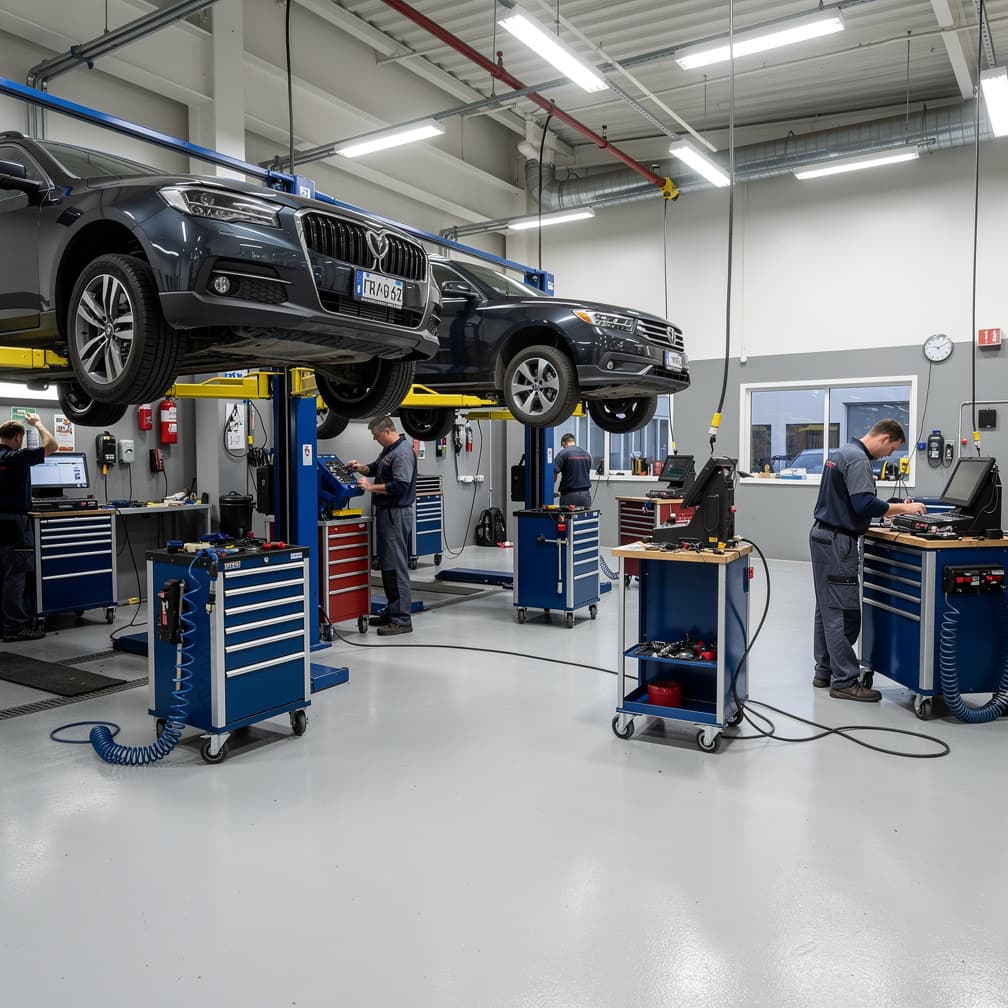
If your operation leaves vehicles outside overnight, the review should center on weather exposure, lot security, lighting, fencing, and whether employees reposition units during the day. If you store vehicles indoors, underwriters still want to understand fire controls, key handling, and how tightly vehicles are parked inside the building.
This matters in South Dakota because severe weather can turn a routine service schedule into a custody loss quickly. The state averages 30 to 40 hail days per year, and a single storm can damage every vehicle on an open lot at once. A shop that takes in vehicles for diagnostics in the morning may still have them on site after closing if parts are delayed, and that changes the exposure from a short service visit to overnight storage. A towing or impound operation has a different pattern again, because vehicles may arrive damaged, disabled, or outside staffed hours, which makes condition documentation and photo intake more important.
You should also review how your policy lines up with your actual workflow. Ask whether your operation ever road tests customer vehicles, where keys are stored during business hours and overnight, who is allowed to move vehicles, and whether subcontractors ever touch units on your lot. If your business handles higher value pickups, collector vehicles, or seasonal equipment, ask for limits that reflect the total value parked on site at one time.
Coverage Included

Collision Coverage
Covers damage to customers' vehicles from collisions while in your care.

Comprehensive Coverage
Covers theft, vandalism, fire, and weather damage to customers' vehicles.

Specified Perils
Covers only specifically named perils at a lower premium.

Legal Liability
Covers damage you or your employees directly cause to a customer's vehicle.

Direct Primary
Pays regardless of fault, the broadest garage keepers coverage available.
Industries & Insurance Needs in Sioux Falls
County business density changes the conversation because it affects how many customer vehicles can move through local service operations and how often commercial accounts expect quick turnaround. Minnehaha County has 6,195 business establishments, so many garages here are not serving only walk-in personal auto work. They may also handle contractor pickups, retail fleet units, home health vehicles, or employee cars tied to nearby employers that need the vehicle back fast. The county mix reinforces that pattern: retail trade accounts for 13% of establishments, construction 11.9%, and health care and social assistance 9.4%. That means a local shop should not estimate exposure from an average day alone. Review your peak custody count, the mix of personal versus business-use vehicles, and whether any account regularly leaves multiple units with you at once. Those details can change the limit and deductible discussion more than a generic class code ever will.
What Makes Sioux Falls Different
Vehicle turnover is what changes the calculus here. In Sioux Falls, many repair and service businesses operate in a city rhythm where customers drop off before work, pick up after work, and sometimes leave a vehicle through the next day if parts, approvals, or scheduling slip. That creates a custody window that is easy to underestimate because the service itself may be routine while the storage exposure is not. The local question is not simply whether you touch customer vehicles. It is whether your operation regularly becomes a temporary parking and key-control business without treating it that way on the insurance application. A shop with tight indoor capacity, a dealer service lane with overflow rows, or a specialty installer holding vehicles pending owner pickup can all look similar from the street but present different garage keepers needs. The useful buying move is to describe your actual handoff, parking, and after-hours procedures in plain operational terms so the quote reflects how vehicles are really controlled on site.
Our Recommendation for Sioux Falls
Start with your maximum custody scenario, not your average ticket. Count the most customer vehicles you might hold at one time during a backed-up weekday, a weather delay, or a parts shortage, then separate indoor units from outdoor units before you review limits. Next, walk your premises the way an underwriter would. Note where customer vehicles are parked, whether spaces are shared with employee cars, how keys are stored, who can move vehicles after hours, and whether intake photos are taken consistently. If you service commercial accounts, ask whether any one client could leave several units with you at once, because that can change the loss picture quickly. If your operation has grown from a small bay setup into multiple lots or overflow parking, update the application details instead of relying on last year’s assumptions. If you have a claim or a close call, keep the file organized and ask how that event affects future terms before renewal. That gives you a cleaner basis for comparing quotes.
Get Garage Keepers Insurance in Sioux Falls
Enter your ZIP code to compare garage keepers insurance rates from carriers in Sioux Falls, SD.
Business insurance starting at $25/mo
FAQ
Frequently Asked Questions
Sioux Falls shops often face an all-day custody pattern, and that is the point to review. If vehicles stay from morning drop off through evening pickup, your exposure includes storage, key control, and lot movement, not just the repair itself.
Sioux Falls applications should describe where customer vehicles actually wait, indoors or outdoors, and how many can be on site at one time. That operational detail usually matters more than a broad description of the work you perform.
Minnehaha County has 6,195 business establishments, so local garages may handle more employer, contractor, and service-related vehicles than they first assume. That is a reason to review peak vehicle count and any account that leaves multiple units with you.
Sioux Falls households report median income of $74,714, so many customers depend on vehicles that are costly to repair and hard to be without. A shop should review limits, intake documentation, and after-hours storage procedures with that expectation in mind.
Minnehaha County’s establishment mix includes retail trade at 13%, construction at 11.9%, and health care and social assistance at 9.4%, so ask whether any commercial client regularly leaves several vehicles at once and whether your limit still fits that peak exposure.
Yes. Any South Dakota repair shop where customer vehicles remain overnight, especially on outdoor lots, should carry this coverage. The longer a vehicle stays in your custody, the more important it is to review storage conditions, key control, and how damage is documented at drop off.
South Dakota averages 30 to 40 hail days per year, and a single storm can damage every vehicle on an open lot. If your operation regularly stores customer units outside after closing, your quote should reflect that exposure rather than a standard indoor service bay assumption.
South Dakota insurance oversight runs through the South Dakota Division of Insurance. If you are comparing policy language, filing a complaint, or confirming state oversight, that is the regulator your agent and policy documents should align with.
Sources
- 1.U.S. Census Bureau, ACS 5-Year Estimates, table B19013(Sioux Falls households report median income of $74,714, so many customers drive vehicles they rely on daily and expect a clear process if damage, theft, or weather loss happens while the unit is with you.)
- 2.U.S. Census Bureau, County Business Patterns, Minnehaha County(Minnehaha County has 6,195 business establishments, so many garages here are not serving only walk-in personal auto work.; The county mix reinforces that pattern: retail trade accounts for 13% of establishments, construction 11.9%, and health care and social assistance 9.4%.)
Updated July 5, 2026





