







































Updated July 6, 2026

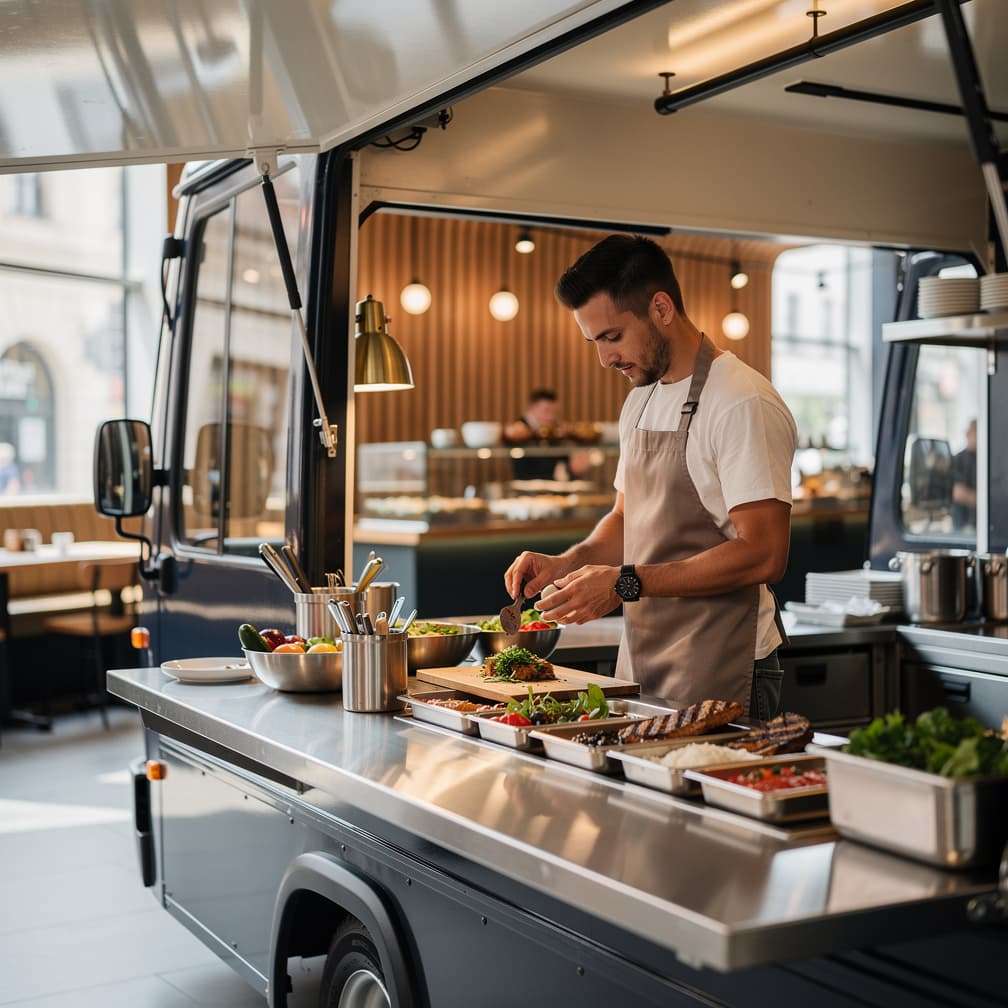
Street parking and event-driven service are the sharpest differences for a mobile kitchen here. Food truck insurance in Nashville needs to account for a business that may work a lunch stop near an office cluster one day, then serve a late crowd near Broadway or a private event the next. Davidson County has about 22,000 business establishments. That gives you a wide weekday customer base and more reasons to shift stops during the week. A tight service setup changes slip-and-fall exposure and backing risk. It also changes what you should review on general liability, because a claim can start with a customer at the order window, not just with the truck itself. In Nashville, the practical question is less about whether you are mobile and more about how often your route shifts between curbside service, private property, and event space. Each setting can bring different vendor rules, different parking constraints, and different expectations around additional insured wording. Before you renew, map your real week, not your ideal week. Count the places where you serve. Count where you prep. Count where you store the truck overnight. That operating pattern usually tells you more than a generic food-service application.
What Makes Nashville Different
The big Nashville difference is route volatility. In many Tennessee markets, a food truck may settle into a simpler pattern around a plant, a school, or a small run of recurring stops. Here, your week can swing between office lunch service, entertainment-area foot traffic, and booked private events with very different site rules. That changes the insurance calculus because the exposure moves with the setting. A curbside stop can create a pedestrian claim at the window. A private event can require specific additional insured language before you are allowed to set up. A late-night service block can raise concerns about where the truck is parked, how it exits, and who is driving after a long shift. The city also rewards operators who can pivot fast. That can leave your policy behind your calendar. That is where underinsurance starts. The practical fix is simple: build your insurance review around your actual calendar. Separate recurring lunch stops from one-off events. Separate owner driving from employee driving. Separate overnight storage from service locations. Once those pieces are clear, you can ask better questions about commercial auto insurance and avoid buying a policy built for a much steadier route than the one you really run.
Local Risk Factors in Nashville
Nashville adds a weather problem that hits mobile kitchens in a very specific way: tornado risk and freeze risk can interrupt both the truck and the equipment inside it. A tornado warning can force a same-day cancellation after you already bought perishables and staffed the shift. A hard freeze can damage plumbing, water lines, or onboard systems while the truck sits overnight, which can leave you down for repairs before the next booked event. Those are not abstract weather concerns. They affect whether you can open the service window, keep food at safe temperatures, and move to the next stop without losing inventory. Review where the truck is parked after hours and whether that location changes by season. Then review how your policy handles physical damage to the vehicle versus damage to attached cooking equipment, because those are not always treated the same way. If you rely on a commissary or rented lot, ask how that arrangement should appear on the application so the storage routine matches the risk the insurer is pricing.
The Cost Environment in Nashville
Nashville cost conversations often turn on operating pattern more than menu type. Many operators try to balance weekday office traffic, neighborhood events, and private bookings rather than rely on one low-ticket stop all week. That matters for insurance because a truck with frequent venue changes, longer driving loops, and higher-value event days can present a different loss profile than a truck that parks in one familiar place. Premiums may also move with where the truck is garaged, how often employees drive it, and whether cooking equipment is permanently installed or recently upgraded. If you add delivery support, late-night service, or a second driver for event days, bring that up before binding coverage. Those details can change how an underwriter looks at both vehicle exposure and customer-facing liability. A cheaper quote on paper can miss the way you actually earn revenue if the application treats you like a mostly stationary vendor.
How Much Does Food Truck Insurance Cost in Nashville?
Food Truck Insurance is a bundle of separate policies, priced separately. The ranges below are typical figures for Nashville for each line, except workers compensation, which is rated per $100 of payroll; a quote prices each one against your own operations.
| Coverage | Typical range | What moves your price |
|---|---|---|
| Commercial Auto Insurance | $220 - $650 per month | Fleet size and vehicle types, driver records and experience, coverage limits and deductibles |
| General Liability Insurance | $60 - $230 per month | Industry and risk classification, annual revenue, number of employees |
| Commercial Property Insurance | $100 - $350 per month | Building value and construction type, roof age and condition, fire protection class |
| Workers Compensation Insurance | $0.75 - $2.74 per $100 of payroll | Employee classification codes, total annual payroll, experience modification rate |
Prices shown are general estimates, not guaranteed rates or quotes. Your actual premium will depend on the insurer, coverage selected, business details, location, claims history, and other underwriting factors. Learn about our pricing methodology.
Get Your Food Truck Quote in Nashville
Compare rates from multiple carriers. Free quotes, no obligation.
Operating in Nashville
- A Nashville food truck often serves a weekday lunch crowd near offices. Then it may head to a private evening booking on different property. Your insurance should match both street service and venue-based operations instead of assuming one routine.
- You may spend more time entering and leaving tight parking areas than a small-town operator does. That is especially true when the truck works a busy block and then relocates before the next rush. Backing exposure and driver use deserve a close review.
- Late bookings can be good revenue here, but late-night service changes who is around the truck. It also changes how quickly lines form and how you shut down and move out. That can affect customer injury risk and vehicle claims.
- Weather interruptions hit harder when your calendar is packed with events. A tornado warning or freeze can wipe out a booked service window, spoil inventory, and leave the truck idle while you still carry payroll and prep costs.
How to Buy: Advice for Nashville Owners
Start with the route map and the parking routine. If the truck serves from different types of property in the same week, ask for a policy review that matches those settings instead of averaging them together. Next, check the driver list. If a family member, manager, or event helper ever moves the truck, that driver should be discussed before a claim tests the paperwork. Then review equipment values with the same care you give the vehicle value. A fryer, generator, refrigeration unit, or point-of-sale setup can be expensive to replace. A generic estimate can leave you short after a loss. If you book private events, ask what wording venues commonly request so you can spot a mismatch early. If you store the truck off-site, confirm that the overnight location on the application is still current. For consumer guidance on policy questions, Tennessee’s insurance regulator is the Tennessee Department of Commerce and Insurance. Bring your schedule, driver list, storage address, and event requirements to the quote request. Get a quote with CPK Insurance and connect with a licensed insurance professional.
FAQ
Food Truck Insurance in Nashville: FAQ
Food truck insurance in Nashville is often shaped by how often you change service settings in one week. A truck that rotates between curbside lunch stops, entertainment-area service, and private events usually needs a closer review of driving, parking, and customer-facing liability than a steadier route elsewhere.
Private events in Nashville often create different insurance requests than street service does. A venue may ask for additional insured wording or proof of certain limits before load-in, so you should review event contracts early instead of trying to fix coverage details on the day of service.
Your overnight parking routine in Nashville should be described the way it really happens. If the truck stays at a commissary, a rented lot, or a different address during busy seasons, that storage pattern can affect how physical damage and theft exposure are evaluated.
Tornado risk and freeze risk can matter a lot for a Nashville food truck. Those hazards can damage the vehicle, disable onboard systems, or spoil inventory after a canceled shift, so it is smart to review both truck damage and attached equipment values before storm season and winter.
A Nashville operator can often improve pricing by giving cleaner operating details, not by stripping the policy down. A current driver list, accurate storage address, realistic annual mileage, and updated equipment values can help the quote reflect the business you actually run instead of a guess.
Busy event service in Nashville is a good reason to review liability limits before the calendar fills up. Higher foot traffic around the order window can raise the stakes of a customer injury claim, and some venues may not let you set up unless your limits meet their contract terms.
Sources
- 1.U.S. Census Bureau, County Business Patterns, Davidson County(Davidson County has about 22,000 business establishments. That gives you a wide weekday customer base and more reasons to shift stops during the week.)
- 2.Tennessee Department of Commerce and Insurance(For consumer guidance on policy questions, Tennessee’s insurance regulator is the Tennessee Department of Commerce and Insurance.)


