







































Updated July 16, 2026

Garage Keepers Insurance in Nashville
Nashville's median household income sits at $75,197, which means a single bumper sensor replacement on a customer's late-model SUV can cost more than your deductible. A deductible that looks manageable on one claim can become a real cash-flow problem when several high-value units are damaged in a single incident. Whether you run a repair shop on 12th Avenue, a towing yard off the I-40 loop, or a valet stand outside a Broadway hotel, per-auto and maximum lot limits deserve more attention than finding the lowest premium. Tell the agent your peak vehicle count and the highest-value units you regularly hold, then ask for quote options that test different limit and deductible combinations against your actual storage and release process.
Garage Keepers Insurance Risk Factors in Nashville
Nashville's top risk factors include Tornado damage, Hail damage, Severe storm damage, and Wind damage.
Tennessee has a high climate risk rating. Top hazards: Tornado (Very High), Flooding (High), Severe Storm (High), Earthquake (Moderate). The state's expected annual loss from natural hazards is $1.8B, which influences garage keepers insurance premiums and may affect coverage availability in high-risk areas.
What Garage Keepers Insurance Covers
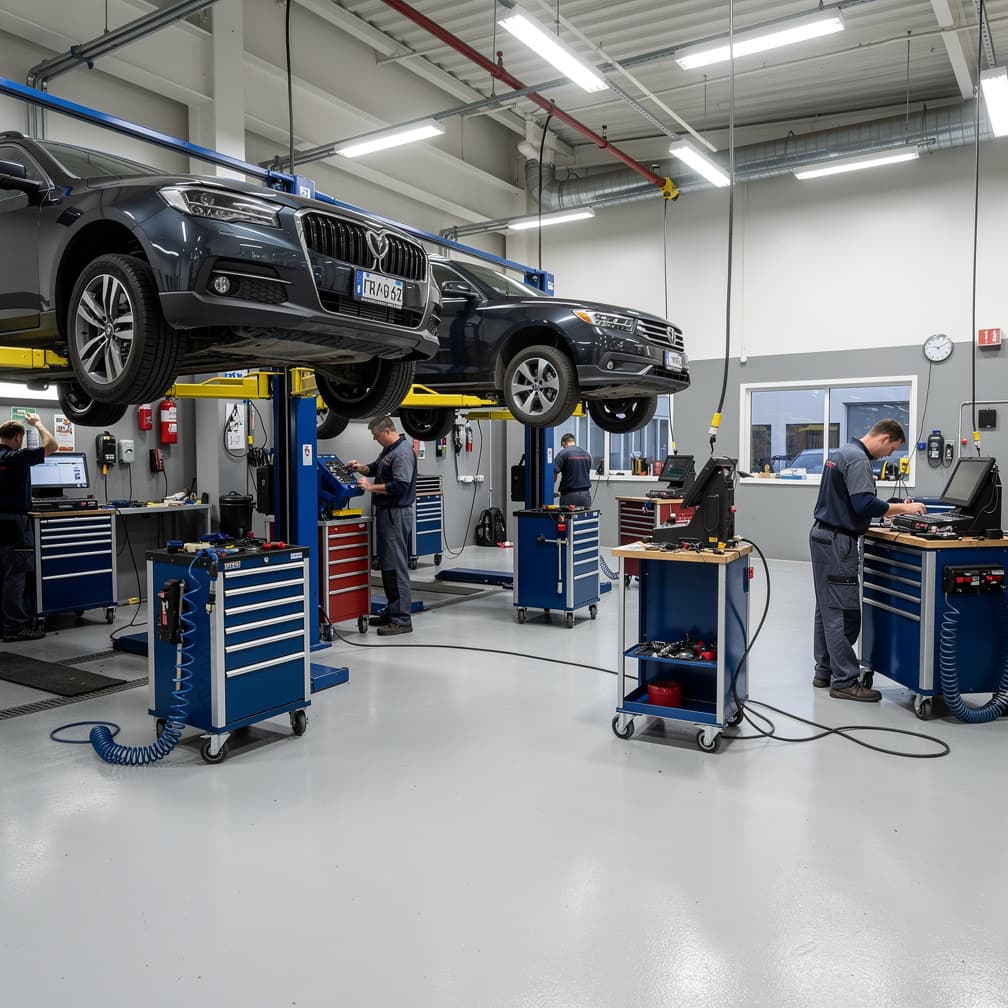
In Tennessee, the practical coverage review starts with your lot layout and custody pattern, not a generic checklist. If customer vehicles are parked tightly behind the shop, staged in a side yard waiting on parts, or left outside after hours for next-day pickup, you need to see how the policy responds to the way those vehicles are actually held between arrival and departure. That review matters most for businesses that combine service, storage, and vehicle movement in the same day.
Ask how the policy treats vehicles stored outdoors versus indoors, whether temporary overflow parking changes the underwriting picture, and whether employee movement between bays, wash areas, alignment racks, and pickup lanes creates any conditions you should disclose. If your business uses a fenced lot, shared parking area, secondary storage location, or tow-in holding space, those details belong in the application rather than in a claim file later.
You should also look closely at your handoff procedures. Photo documentation, pre-existing damage notes, key tagging, and signed drop-off instructions can make a real difference when a customer disputes when damage happened. If you road test vehicles, move them off premises, or leave them waiting for customer pickup after business hours, ask for those facts to be reflected clearly in the quote discussion.
Weather-related exposure is also part of the conversation even when the policy language is the same from one state to another. If vehicles sit outside, review whether your storage plan, drainage, tree exposure, and building access create concentrations of risk that should affect limits, deductibles, or where you park higher-value units.
Coverage Included

Collision Coverage
Covers damage to customers' vehicles from collisions while in your care.

Comprehensive Coverage
Covers theft, vandalism, fire, and weather damage to customers' vehicles.
Specified Perils
Covers only specifically named perils at a lower premium.

Legal Liability
Covers damage you or your employees directly cause to a customer's vehicle.

Direct Primary
Pays regardless of fault, the broadest garage keepers coverage available.
Industries & Insurance Needs in Nashville
Davidson County has 21,694 business establishments, and the leading sectors by establishment share are retail trade at 12.4%, accommodation and food services at 11.3%, and professional, scientific, and technical services at 11%, so local garages, valet operators, and towing businesses often handle vehicles tied to dense commercial activity and time-sensitive customer use. That changes the insurance conversation because a delayed release, lot incident, or damage claim can affect customers who depend on their vehicles for client meetings, deliveries, shift work, or hospitality traffic. It also means your operation may see uneven surges, such as lunch, event, or weekend peaks, rather than a steady flow all day. Review whether your policy limits, employee driver controls, and storage layout still fit those peak periods. If your business serves restaurants, retail corridors, office users, or hotel traffic, ask for a quote built around your busiest handoff windows, not your average day.
What Makes Nashville Different
The issue is not just whether you have custody of customer autos, but how many stack up in a tight window around service appointments, hotel arrivals, and event traffic. A minor backing incident, a key mix-up, or a weather event can involve several customer vehicles before your staff has time to separate or move them. Aggregate lot exposure tends to drive losses more than the value of any single car on the property. That makes it worth reviewing where vehicles wait, who can move them, how keys are tagged, and how overnight units are counted. If your operation has sharp peaks instead of a flat daily flow, review your maximum number of customer vehicles on premises at one time and make sure your quote reflects that real ceiling.
Our Recommendation for Nashville
Start with your peak inventory count, not your average. If Fridays, event nights, or hotel check-in windows create a temporary pileup, tell the agent the highest number you may hold at once and whether any units sit in overflow areas. Then separate who drives customer vehicles and why. The way cars move through your operation matters as much as how many you hold at once, since a valet team parking dozens of vehicles in a short burst faces different risks than a technician easing one car between bays. Higher-value vehicles showing up regularly can justify different limits even if your daily count stays stable. If your customers expect fast turnaround, ask how deductibles would affect your cash position after a multi-vehicle incident. Ask for quote options that mirror your actual operation, including indoor versus outdoor storage, overnight versus same-day turnover, and any off-site or secondary lot use, so you have a cleaner basis for comparing terms before renewal.
Get Garage Keepers Insurance in Nashville
Enter your ZIP code to compare garage keepers insurance rates from carriers in Nashville, TN.
Business insurance starting at $25/mo
FAQ
Frequently Asked Questions
It is worth a close look. With median household income at $75,197, your customers are more likely to drive newer vehicles with costly sensor packages, so a single minor incident can trigger a payout that exceeds a low lot limit. A low maximum lot limit can leave a gap if several customer autos are damaged in one incident.
Davidson County has 21,694 business establishments, which translates to more customers arriving in concentrated waves rather than spreading evenly across the day. Your peak-count figure is what matters most for setting limits.
Include peak vehicle counts, who is authorized to move vehicles, where overflow parking is used, and whether cars stay overnight. Matching your quote to your busiest arrival windows, not your average day, gives you terms that hold up when the lot is actually full.
Nashville repair shops near busy commercial corridors often see compressed pickup and drop-off patterns. Davidson County's leading sectors include retail trade at 12.4% and accommodation and food services at 11.3%, which means more diners and shoppers picking up vehicles during the same narrow windows. That raises the odds of multiple vehicles on your lot at once.
The Tennessee Department of Commerce and Insurance oversees licensing and consumer complaints for insurance in the state.
If you park, store, or move customer cars, the quote should match those exact operations and every location where vehicles may be kept. That holds true even when vehicles stay in your custody only briefly.
Use the same vehicle count, storage setup, deductible, and driver information across every quote. If one assumes indoor storage and another assumes outdoor overflow, the premium difference does not tell you much.
It can change how an underwriter views your exposure because lot security, weather planning, and vehicle concentration all matter. Tell the quoting team where vehicles sit overnight and when overflow parking is used.
Sources
- 1.U.S. Census Bureau, ACS 5-Year Estimates, table B19013(Nashville median household income is $75,197.)
- 2.U.S. Census Bureau, County Business Patterns, Davidson County(Davidson County has 21,694 business establishments.; The leading sectors in Davidson County by establishment share are retail trade 12.4%, accommodation and food services 11.3%, and professional, scientific, and technical services 11%.)
- 3.Tennessee Department of Commerce and Insurance(Tennessee's insurance regulator is the Tennessee Department of Commerce and Insurance.)
Updated July 16, 2026





