







































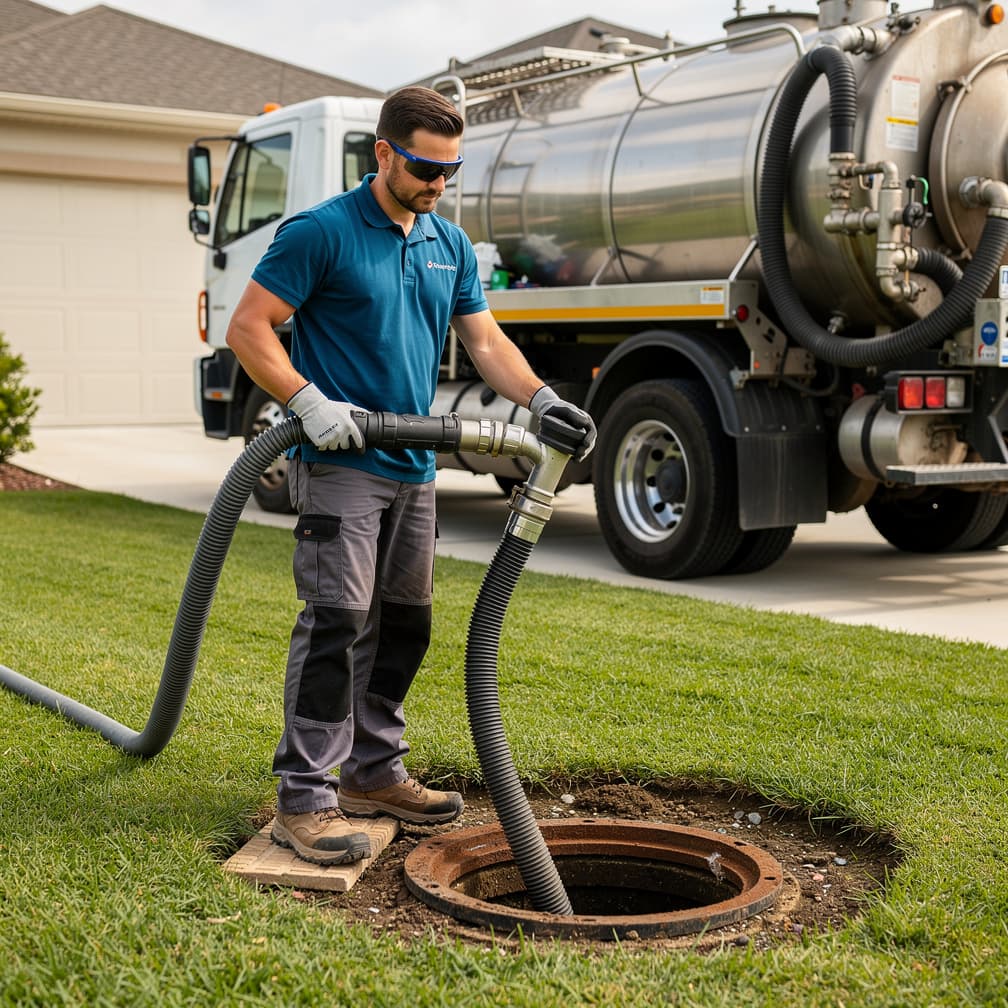

General Liability for a septic operation typically runs from $35 to $130 a month, and that spread is not random. Payroll, the number of trucks, claims history, and the limits your contracts demand all move you inside it. Septic service insurance in Austin gets priced off the work you actually do: how many pump-outs, how much digging, whether you install as well as service. An operation that only pumps prices differently from one that opens ground with a machine, because the ways a job goes wrong are different. Quotes that look identical on the summary page can sit far apart on exclusions and deductibles. Two carriers reading the same Austin submission can land in different corners of the same range. Read what changes the number before you read the number.
What Makes Austin Different
Proof of coverage travels ahead of you on commercial work, and a dense market runs on that paperwork. Vendor portals, approved-supplier lists, and compliance software make the demand automatic, and automation accepts no excuses. A certificate that expires quietly on a residential route can freeze a commercial account the same morning. The obligation is less about risk than about being an approved vendor at all. An account manager in Austin does not need to distrust you to lock you out of the schedule. Owners who treat the certificate as an afterthought lose the accounts that justify a second truck. Keeping the policy current in Texas costs less than winning that account back afterward. Set the renewal reminder earlier than feels necessary.
Local Risk Factors in Austin
Put the equipment list together before storm season rather than after, because memory is a poor inventory. Serial numbers, photos, and purchase dates on every pump, reel, jetter, and locator take an afternoon and settle a claim in a week instead of a quarter. Severe weather in Travis County does not care whether the gear was scheduled on your policy, but an adjuster will. Property nobody listed is property nobody is going to pay for, and that is the most common self-inflicted gap in this trade. Workers Compensation is generally the line that answers for the other side of a storm, the crew putting in long hours on unstable ground, and it prices off payroll rather than off the storm damage. Get the list done while the sky is clear in Texas.
What Coverage Does a Septic Service in Austin Need?
General Liability
Commercial clients demand proof of it before a truck reaches the lot, and it is the line that generally answers when your work damages someone else's property or hurts someone who does not work for you. Cracked driveways, rutted lawns, a visitor going down over a hose: those are the claims. Employee injuries and damage to your own pumps sit elsewhere.
Example: A hose crosses the drive, a delivery driver catches a foot on it, and the emergency room bill arrives with a lawyer's letter; General Liability may take the claim and the defense costs from there.
Commercial Auto
A vacuum truck is not a car, and a personal auto policy generally will not treat it as one. This line is meant for the vehicles you work out of: liability to other drivers, collision, and comprehensive damage such as hail or theft. Waste in the tank and equipment on a trailer can be treated differently, so ask how each gets handled.
Example: A loaded truck rolls a stop sign on the way to a disposal site and clips a sedan; Commercial Auto is typically what stands behind the other driver's repairs and injuries.
Workers Compensation
Lifting lids, hauling hose, and working beside an open tank is how septic crews get hurt, and this is the line built for those injuries. Medical costs and lost wages for an employee typically run through it, rated per hundred dollars of payroll. Whether owners must be included varies by state, and the Texas Department of Insurance publishes the current requirements.
Example: A helper's back gives out lifting a concrete lid on a routine pump-out, and the treatment plus the weeks off work is what Workers Compensation is generally there to absorb.
Tools & Equipment (Inland Marine)
Property riding in a truck is rarely treated the way property in a building is, and that gap is what this line fills. Pumps, hoses, reels, jetters, cameras, and locators moving between your yard and a job can be scheduled here against theft and sudden damage. Wear, rust, and mechanical breakdown typically sit outside it.
Example: A truck gets broken into overnight and the locator and camera are gone by morning; Inland Marine can be what puts the replacements in your hands in Austin instead of on your credit card.
How Much Does Septic Service Insurance Cost in Austin?
Septic Service Insurance is a bundle of separate policies, priced separately. The ranges below are typical figures for Austin for each line, except workers compensation, which is rated per $100 of payroll; a quote prices each one against your own operations.
| Coverage | Typical range | What moves your price |
|---|---|---|
| General Liability Insurance | $200 - $700 per month | Industry and risk classification, annual revenue, number of employees |
| Commercial Auto Insurance | $725 - $2,000 per month | Fleet size and vehicle types, driver records and experience, coverage limits and deductibles |
| Workers Compensation Insurance | $0.75 - $2.74 per $100 of payroll | Employee classification codes, total annual payroll, experience modification rate |
| Inland Marine Insurance | $80 - $300 per month | Total insured value of the scheduled property, type and age of the equipment, where it is stored and how far it travels |
Prices shown are general estimates, not guaranteed rates or quotes. Your actual premium will depend on the insurer, coverage selected, business details, location, claims history, and other underwriting factors. Learn about our pricing methodology.
What Are the Insurance Requirements for a Septic Service in Austin?
Workers' comp is not mandatory for most private employers here. Texas leaves workers' compensation optional for most private employers. Skipping it leaves injury costs on you, and many clients and landlords still demand proof of it by contract — check the Texas Department of Insurance's guidance before deciding.
State auto liability minimums apply to business vehicles. Texas's minimum auto liability limits are $30,000/$60,000/$25,000 (bodily injury per person / per accident / property damage). Contracts and lenders often require more than the state floor.
Where to verify licensing and coverage rules. The Texas Department of Insurance publishes consumer guidance and current insurance requirements for Texas businesses. When a contract or lease demands specific wording, the Texas Department of Insurance's guidance is the authoritative place to check.
Get Your Septic Service Quote in Austin
Compare rates from multiple carriers. Free quotes, no obligation.
Operating in Austin
- Drain field work opens ground, and buried utilities, irrigation lines, and unmarked pipes turn excavation into a different insurance conversation from lifting a lid and running a hose.
- A restaurant grease trap in Austin arrives with a facilities manager, a contract, and an insurance exhibit; the same volume of work behind a house arrives with a check and a wave.
- One vacuum truck out of service cancels a week in Austin or anywhere else, not a day, because there is rarely a spare unit sitting idle nearby for you to borrow.
- Rural jobs across Travis County can put you an hour from a tow, so a truck sunk in a soft yard costs recovery, a lost day, and a lawn nobody wants to pay to rebuild.
How to Buy: Advice for Austin Owners
Ask what happens on the worst day, not the average one, and buy from the answers. Walk each carrier writing in Texas through a real scenario: the truck backs over an irrigation manifold, and the homeowner wants the yard restored rather than patched. Then walk them through the second one: a hose lets go and waste reaches a neighbor's ditch. The claims process, the defense costs, and the exclusions all show up in how they answer those two questions. General Liability, Commercial Auto, and Inland Marine each own a piece of a bad day, and the seams between them are where claims get argued. A policy with no seams does not exist, but knowing where your seams sit is a different way to run a business. Compare quotes from participating carriers in Austin on those answers, then on price.
FAQ
Septic Service Insurance in Austin: FAQ
That is generally what Inland Marine is for: property that moves between your yard and a customer's site. It typically follows a scheduled list, so a pump nobody wrote down can be a pump nobody pays for. Theft from a locked truck, damage in transit, and equipment dropped at a job are the usual triggers. Wear, rust, and mechanical breakdown are usually a separate conversation.
Depends entirely on the wording, and this is the question worth asking twice. General Liability forms treat a release of waste during your work in very different ways, and some narrow it sharply or leave it out. Certain carriers offer an endorsement for it; others decline the risk altogether. Get the exclusion pages from each quote you gather in Austin and read what happens between the tank and the truck.
Rarely, and a vacuum truck is the clearest example of why. Personal policies are written for personal use, and a commercial vehicle hauling waste for pay sits outside what they were built to handle. Commercial Auto exists for that use. A denied claim after a serious collision is an expensive way to learn the difference, so list every vehicle you actually work out of.
A client named as additional insured wants your policy to answer for claims arising out of your work on their property. It is an endorsement, not a checkbox on a certificate. Carriers handle it differently: some issue blanket wording that applies to any client you contract with, others schedule each name one at a time. The second kind slows you down every time a new account opens.
It gets rated per hundred dollars of payroll, using a class code that describes what your people actually do. A helper hauling hose and an operator running an excavator can fall into different codes, and the code matters more than any discount. Whether owners must be included varies by state. The Texas Department of Insurance publishes the current requirements for who has to be included.
Per-occurrence is the most one claim can draw. The aggregate is the most the policy can pay across the whole term, and it does not reset because you had a bad month. An operation with frequent access damage claims can grind the aggregate down on small driveway repairs and find the ceiling lowered when a serious loss lands. Ask whether defense costs count against it, since that changes the real number.
Sources
- 1.Texas Department of Insurance(Texas Department of Insurance publishes consumer guidance for insurance buyers.)


