







































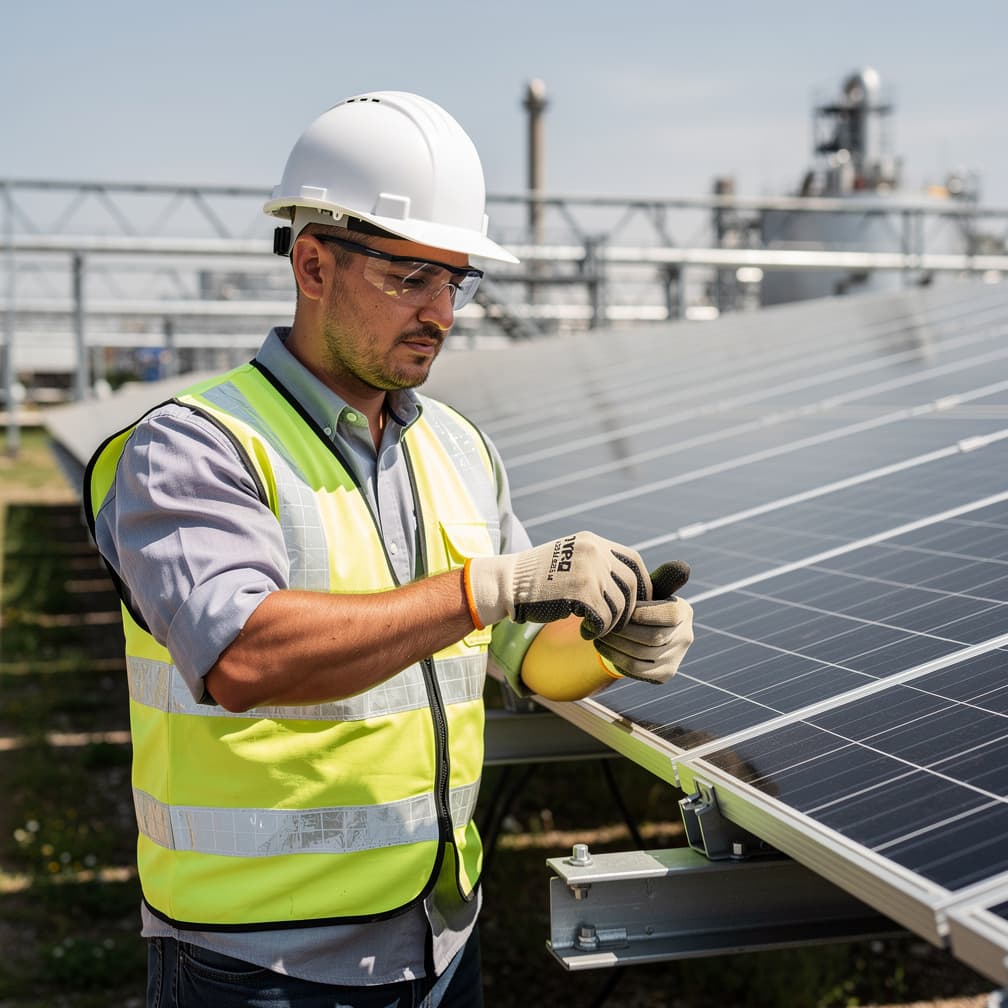

A rail slides off a shoulder during staging and gouges the shingles two courses below the array. That repair lands on your invoice before the system ever produces a watt. Roof and siding damage during a rooftop install drives solar contractor insurance in Austin more than any brochure risk ever will. Modules get walked across finished surfaces, ladders lean on gutters, and a dropped panel can crack a skylight in one second. Your crew handles someone else's property every hour of the job, and a liability limit is what stands between a scuffed slope and a full tear-off. Deductibles, project limits, and how a carrier treats subcontracted labor all move the number you pay. Work out which of those levers you control before a homeowner in Austin calls a roofer for a second opinion.
What Makes Austin Different
Facility managers running leased buildings hand your certificate straight to a risk department before anything gets scheduled. That department reads endorsements for a living and rejects paperwork for reasons your customer never mentions. A rooftop array touches the roof warranty, the tenant's property, and the landlord's structure all at once. Three parties therefore review the same install, and each one can demand its own status on your policy. Adding names is routine, but each addition takes days that your mobilization window may not have. Travis County carries about 41,500 establishments, so the buildings you bid mostly come with a lease behind them. That lease, rather than a homeowner's handshake, sets the terms you actually have to satisfy. Get the insurance exhibit early and price the delay it creates into your schedule.
Local Risk Factors in Austin
A shift lost to a warning is a scheduling problem; a shift spent clearing debris out of a work zone is a cleanup problem, and neither one is a claim. What can become a claim is a crew member hurt clearing wreckage in a hurry, which is where Workers Compensation typically enters and where next year's rate gets written. Storm cleanup injuries look like ordinary injuries on a loss run, and underwriters in Texas do not discount them because the weather caused the hurry. Slow the recovery day down in Austin, and the record stays clean enough to shop.
What Coverage Does a Solar Contractor in Austin Need?
General Liability
Roofs, driveways, and staging areas all belong to somebody else, and this is the line that looks at damage to their property and injuries to people who are not your employees. General contractors and building owners generally require proof of it before site access. Faulty workmanship on the array itself typically sits outside what it will answer.
Example: A crew hoisting rails drops a bundle onto a customer's gutter run and cracks two skylights on the way down. The resulting repair claim may fall to this line, subject to your deductible.
Workers Compensation
General contractors demand proof of it before a crew reaches the gate, and state rules about who must carry it vary enough that any blanket answer is worthless. It is rated against payroll rather than sold per policy, and it typically responds to medical costs and lost wages after a fall or a heat illness on the job. A hurt homeowner sits elsewhere.
Example: An installer slips on frost-covered decking, breaks a wrist, and misses eight weeks of the install season. Medical bills and a share of lost wages would typically run through this coverage.
Commercial Auto
A personal auto policy generally excludes business use, which leaves the truck hauling modules and crews as the gap most solar contractors carry without noticing. This line is rated per vehicle, per driver, and by how far you travel, and it can respond to damage and injuries arising out of a crash. What rides in the bed is usually a separate conversation.
Example: Your trailer of racking rear-ends a stopped car on the way to a site in Austin, and the other driver reports an injury. Defense and settlement costs might sit here, depending on the policy.
Tools & Equipment (Inland Marine)
Where a building policy stops at the wall, this one follows property that moves: panel lifters, inverter testers, ladder racks, compressors, and the trailer they ride in. It is rated on the schedule you declare and settles against those declared values, so a stale list quietly shifts the loss back to you. Modules awaiting install are often treated as stock and fall outside it.
Example: A locked trailer is emptied overnight at a staging area, taking every hand tool and two panel lifters with it. The scheduled equipment could be replaced under this line, less the deductible you chose.
Professional Liability
A shade study, a string layout, a production estimate, or a permitting detail is advice, and advice that costs a client money creates a claim with nothing physically broken. That is the gap this line is intended for, since a liability policy generally reads on injury and property damage instead. Owners on commercial arrays in Austin can require it by contract.
Example: Your estimate promises output the array never reaches once a neighboring building's shadow is properly accounted for, and the client wants the difference back. A dispute of that kind is what this coverage is meant to take on.
How Much Does Solar Contractor Insurance Cost in Austin?
Solar Contractor Insurance is a bundle of separate policies, priced separately. The ranges below are typical figures for Austin for each line, except workers compensation, which is rated per $100 of payroll; a quote prices each one against your own operations.
| Coverage | Typical range | What moves your price |
|---|---|---|
| General Liability Insurance | $190 - $675 per month | Industry and risk classification, annual revenue, number of employees |
| Workers Compensation Insurance | $0.75 - $2.74 per $100 of payroll | Employee classification codes, total annual payroll, experience modification rate |
| Commercial Auto Insurance | $290 - $850 per month | Fleet size and vehicle types, driver records and experience, coverage limits and deductibles |
| Inland Marine Insurance | $65 - $270 per month | Total insured value of the scheduled property, type and age of the equipment, where it is stored and how far it travels |
| Professional Liability Insurance | $120 - $430 per month | The services you actually perform, annual revenue or billed fees, limit and retention selected |
Prices shown are general estimates, not guaranteed rates or quotes. Your actual premium will depend on the insurer, coverage selected, business details, location, claims history, and other underwriting factors. Learn about our pricing methodology.
What Are the Insurance Requirements for a Solar Contractor in Austin?
Workers' comp is not mandatory for most private employers here. Texas leaves workers' compensation optional for most private employers. Skipping it leaves injury costs on you, and many clients and landlords still demand proof of it by contract — check the Texas Department of Insurance's guidance before deciding.
State auto liability minimums apply to business vehicles. Texas's minimum auto liability limits are $30,000/$60,000/$25,000 (bodily injury per person / per accident / property damage). Contracts and lenders often require more than the state floor.
Where to verify licensing and coverage rules. The Texas Department of Insurance publishes consumer guidance and current insurance requirements for Texas businesses. When a contract or lease demands specific wording, the Texas Department of Insurance's guidance is the authoritative place to check.
Get Your Solar Contractor Quote in Austin
Compare rates from multiple carriers. Free quotes, no obligation.
Operating in Austin
- A general contractor in Travis County can require an endorsement your policy does not carry yet, and adding it takes days that the stretch between award and mobilization does not contain.
- Panels ride between supply yards and rooftops across Travis County most days, and the miles your trucks log are what an auto underwriter is really pricing, rather than the roofs you finish.
- About 310 solar contractors work across Travis County, so a bid pulled over a paperwork gap gets replaced by lunchtime and nobody calls to explain what went wrong.
- Subcontracted labor without its own certificate typically lands on your payroll at audit, so the crew that looked inexpensive in spring reappears as an invoice at renewal.
How to Buy: Advice for Austin Owners
Shop with more time than you think you need. Renewal offers arrive close to the expiration date, and a rushed decision is how contractors end up with a policy that misses a contract requirement. Give yourself a month: request loss runs, update your payroll estimate, refresh your equipment schedule, and pull the insurance exhibits from any job you expect to bid across Travis County. Ask about General Liability limits and Inland Marine values in the same conversation, since raising one and ignoring the other leaves an obvious hole. Rates move, and the carrier that priced you well last year may not do it again. That is an argument for looking, not for loyalty. The Texas Department of Insurance publishes consumer guidance on shopping commercial policies before renewal. CPK exists to gather quotes from participating carriers in one place, so the looking takes an afternoon in Austin instead of a month.
FAQ
Solar Contractor Insurance in Austin: FAQ
Yes, and most commercial contracts do exactly that. The status has to be added by endorsement rather than promised on a certificate, since the certificate is only a summary of what the policy already says. Ask for a copy of the endorsement itself. Ask also whether it continues past turnover, because ongoing operations wording stops the day you finish and a roof leak rarely does.
A visitor hurt around ladders, cords, or a pallet of racking at a site in Austin is a third-party bodily injury claim, and General Liability is the line that may answer defense costs and any settlement. It can apply whether or not the person is your customer. Report it quickly, because late notice is a common reason a claim gets contested, and your policy sets that clock.
A shop policy generally stops at the building, and a commercial auto policy is about the vehicle rather than the load riding in it. Tools and mobile equipment in transit are usually written on Inland Marine, rated against the schedule you declare. If a trailer of rails and inverters gets emptied at a stop in Austin, that schedule decides what comes back to you. Update it whenever you buy.
Completed operations is the part of a liability policy meant for finished work, and a flashing leak two winters later lands there. Coverage is generally triggered by when the damage or claim happens, not by when you installed the array. A gap between policies can leave that whole tail unanswered, so ask what becomes of old work when you switch carriers.
Payroll broken out by role, annual revenue, a vehicle list with drivers, a schedule of tools and rented equipment, and three years of loss runs. Underwriters also ask what share of your work is rooftop rather than ground mount, and whether you install storage. Guesses produce quotes that move at audit. One accurate packet sent to several participating carriers is what makes a comparison honest.
Standard property forms typically exclude flood, and that exclusion reaches a room full of modules the same way it reaches everything else in the building. Flood gets written separately through its own program, and it commonly carries a waiting period before it takes effect. If your yard sits low, buying it once a forecast turns is not an option available to you.
Sources
- 1.U.S. Census Bureau, County Business Patterns (2022), Travis County(Travis County has about 41,500 business establishments.)
- 2.U.S. Census Bureau, County Business Patterns (2023), Travis County(Travis County has about 310 businesses in this trade's category (NAICS group 238210).)
- 3.Texas Department of Insurance(Texas Department of Insurance publishes consumer guidance for insurance buyers.)


