







































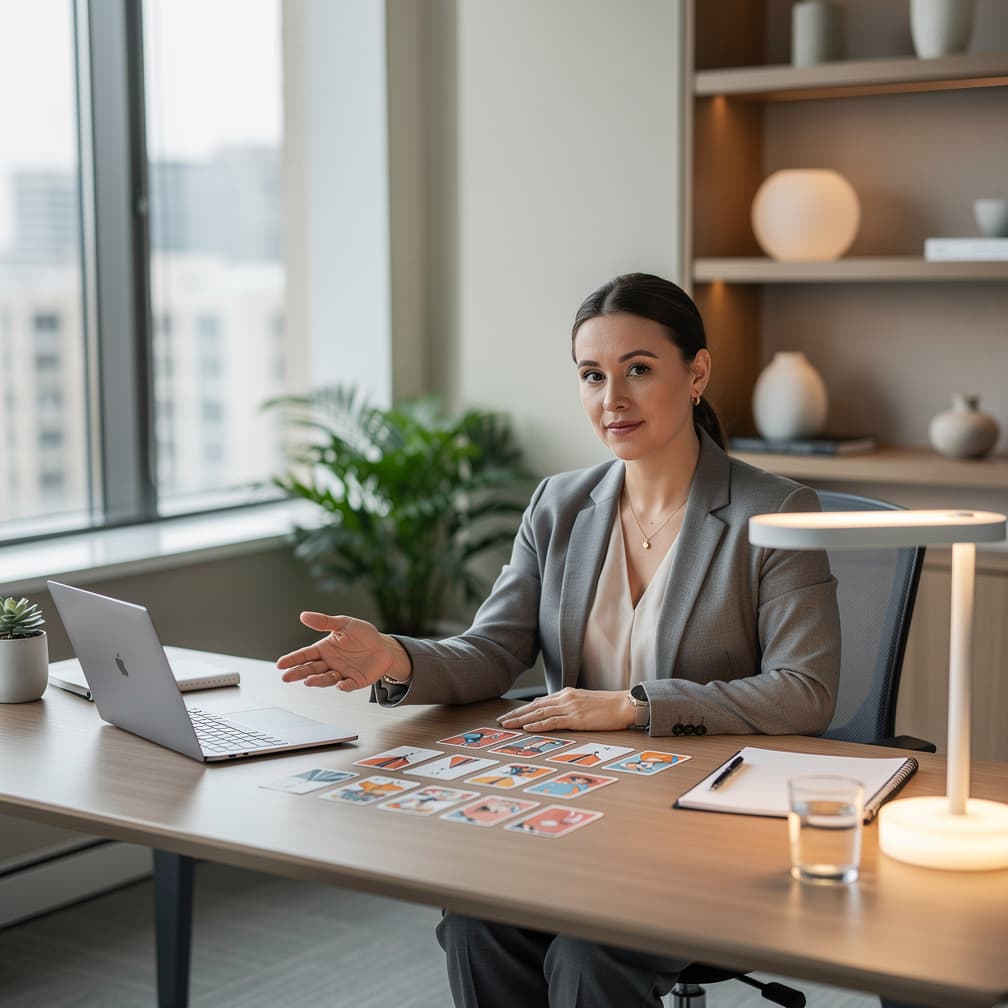

As a tarot and psychic reader in Austin, you are the product, which means a complaint about a session is a complaint about you personally. That is the exposure most owners underrate when they look at tarot and psychic reader insurance in Austin, because the obvious risks are physical and the expensive ones are verbal. A client who feels harmed by guidance does not file a slip-and-fall; they write a letter, then a review, then sometimes a claim. Disclaimers help and do not end anything. Meanwhile the physical side keeps its own schedule: a candle too close to a curtain, a stack of chairs in a rented room, a guest tripping in the dark. Both paths cost money to answer. What follows sets out the lines readers actually carry and what shifts the price.
What Makes Austin Different
About 41,500 businesses operate in Travis County, and that number matters here for one narrow reason. It sets how many separate entities can attach themselves to a single claim about one session. A guest hurt at a shared-space event brings in the tenant, the building owner, and the promoter. Each of them will look for a policy that is not their own to answer first. Your limits get tested by the number of parties arguing, not by the size of the injury. That is an argument for higher limits than a solo practice feels like it ever needs. Defense costs also accrue per file, and files multiply when several parties are involved. Ask what your limit looks like after three lawyers have spent six months on it.
Local Risk Factors in Austin
A canceled evening of readings is a small thing; a booth flattened while you shelter somewhere else is not. Event property is the exposure people forget, because it lives in a car, a tent, and a folding case rather than at the address printed on the policy. Coverage for property away from your described premises is often written separately or capped at a smaller amount. Ask what applies once your table leaves the Austin studio. A Business Owners Policy can sometimes be extended to reach it, though an extension is a request rather than an assumption, and participating carriers in Texas handle it differently.
What Coverage Does a Tarot & Psychic Reader in Austin Need?
General Liability
Landlords, fairs, and venue managers name this line when they ask for proof, and it is the one most often written straight into a contract. It can help cover bodily injury to a client or guest at your table, damage you do to a rented space, and the cost of answering the claim. Allegations about the reading itself typically fall outside it.
Example: A guest catches a foot on a cord in a dim room and lands hard on the way to your table; general liability may respond to the injury claim that follows.
Professional Liability
A client acts on something heard in a session, the outcome disappoints, and the complaint becomes a written allegation of negligence or bad advice. That argument is what Professional Liability is intended for, defense costs included. It does not reach a trip, a fall, or a broken window, and no host will ever demand it, which is exactly why it goes unbought.
Example: A client in Austin demands a refund, then alleges your guidance caused a financial loss and hires a lawyer to put it in writing; professional liability could pick up the defense.
Business Owners Policy
Buying liability and property separately works. Bundling them into a Business Owners Policy often costs less and leaves one renewal date instead of two, packaging the guest-injury side with the decks, furniture, and stock standing in your room. Eligibility turns on revenue, the space, and what you sell alongside readings, so it is not offered to every practice.
Example: A pipe lets go above a rented studio overnight, ruining a table, two shelves of decks, and the rug beneath them; a business owners policy might answer both the property loss and the landlord's claim.
Commercial Property
A landlord's policy stops at the structure, which leaves the contents of your room to you. Commercial Property is written around that gap: decks, cloths, crystals, tables, lighting, retail stock, and the equipment you read by. Theft, vandalism, and sudden storm damage are the usual triggers. Flood typically sits outside it and gets bought on its own terms.
Example: A break-in takes the card reader, a case of decks, and the lamp off your Austin table; commercial property is meant to put the room back together, subject to the deductible.
How Much Does Tarot & Psychic Reader Insurance Cost in Austin?
Tarot & Psychic Reader Insurance is a bundle of separate policies, priced separately. The ranges below are typical figures for Austin for each line; a quote prices each one against your own operations.
| Coverage | Typical range | What moves your price |
|---|---|---|
| General Liability Insurance | $40 - $130 per month | Industry and risk classification, annual revenue, number of employees |
| Professional Liability Insurance | $60 - $180 per month | The services you actually perform, annual revenue or billed fees, limit and retention selected |
| Business Owners Policy Insurance | $80 - $220 per month | Annual revenue and industry class, building and contents values, square footage and building age |
| Commercial Property Insurance | $55 - $170 per month | Building value and construction type, roof age and condition, fire protection class |
Prices shown are general estimates, not guaranteed rates or quotes. Your actual premium will depend on the insurer, coverage selected, business details, location, claims history, and other underwriting factors. Learn about our pricing methodology.
What Are the Insurance Requirements for a Tarot & Psychic Reader in Austin?
Workers' comp is not mandatory for most private employers here. Texas leaves workers' compensation optional for most private employers. Skipping it leaves injury costs on you, and many clients and landlords still demand proof of it by contract — check the Texas Department of Insurance's guidance before deciding.
Flood damage is typically excluded from standard policies. Standard commercial property and builders-risk-type policies typically exclude flood damage. Flood exposure varies address by address, so check your premises in FEMA's Flood Map Service Center before deciding; if you sit in a mapped flood zone, a separate policy through the National Flood Insurance Program is the usual starting point.
Where to verify licensing and coverage rules. The Texas Department of Insurance publishes consumer guidance and current insurance requirements for Texas businesses. When a contract or lease demands specific wording, the Texas Department of Insurance's guidance is the authoritative place to check.
Get Your Tarot & Psychic Reader Quote in Austin
Compare rates from multiple carriers. Free quotes, no obligation.
Operating in Austin
- Hotels and corporate hosts run insurance requirements through a legal department, so a host in Austin that pays well can demand limits a home practice never needed.
- Your busiest weeks are the ones where a lapse matters most, because a host in Austin cannot be handed a certificate for coverage that expired while your calendar was full.
- Cash and a card reader both live in the same room as your stock, which turns one break-in into a payment problem and a property claim on the same afternoon.
- About 230 tarot and psychic readers work in Travis County, so a host needing a replacement on short notice already has a list, and being uninsurable on paper takes you off it.
How to Buy: Advice for Austin Owners
Bundling is worth a real look before you buy the pieces separately. A Business Owners Policy packages liability and property into one form and is often priced under the same parts bought individually, which matters for a practice whose property is modest but real. It is not automatic: eligibility turns on revenue, the space, and what you sell alongside readings. If the bundle does not fit, standalone Commercial Property plus a liability policy still works, just with two renewal dates to track. Ask for both versions in the same conversation so the comparison stays honest. An Austin landlord will care only that the limits match the lease. Whichever route fits, put one submission through CPK and let participating carriers in Texas price both structures against each other.
FAQ
Tarot & Psychic Reader Insurance in Austin: FAQ
The venue is asking to be an additional insured, a party added to your policy so your limits could respond if they get pulled into a claim arising from your work. A guest hurt at your table tends to sue everyone within reach, the building included. Adding a party is routine, and the wording matters: some forms schedule names one at a time, others reach whoever your contract requires. Confirm which you have before you promise it.
Typically not. Standard commercial property forms generally exclude flood, and that coverage gets bought separately through its own program. Water from a burst pipe inside the building is a different event and may be treated as covered damage. The distinction is where the water came from, not what it ruined. If your studio sits anywhere water collects, price the separate option while the question is still theoretical.
Start from the strictest contract on your calendar rather than a number that feels right. Hosts commonly name a per-occurrence figure and an annual aggregate, and the highest requirement you have already accepted becomes your real minimum. Buying to the average leaves you short on the one booking that mattered most. The Texas Department of Insurance publishes consumer guidance on limit selection for small businesses.
Annual revenue, the space you occupy and whether you rent or own it, an honest client count, a list of business property with replacement values, and your event schedule. Underwriters price what you describe, so vague descriptions earn conservative numbers. Have your quietest month and your busiest one ready as well. Precision costs nothing and it is the one thing that keeps a quote honest.
Business property coverage could respond to theft of the things you work with: decks, cloths, crystals, furniture, lighting, retail stock. Two catches sit behind that. The deductible can swallow a small loss entirely, so a stolen deck may cost you the full amount anyway. And property that leaves the studio for an event is sometimes treated differently, which is worth confirming before your first booth of the season.
That depends on how the coverage territory and the described premises are written. A policy built around one address may treat off-site work as a separate question, and a host in Austin can demand proof naming their location specifically. Ask where coverage applies, whether the host can be added, and whether your property stays insured in transit. Three questions, asked once, before you accept the booking.
Sources
- 1.U.S. Census Bureau, County Business Patterns (2022), Travis County(Travis County has about 41,500 business establishments.)
- 2.U.S. Census Bureau, County Business Patterns (2023), Travis County(Travis County has about 230 businesses in this trade's category (NAICS group 812990).)
- 3.Texas Department of Insurance(Texas Department of Insurance publishes consumer guidance for insurance buyers.)
- 4.FEMA / FloodSmart(Flood coverage is typically purchased separately; FEMA administers the National Flood Insurance Program.)


