







































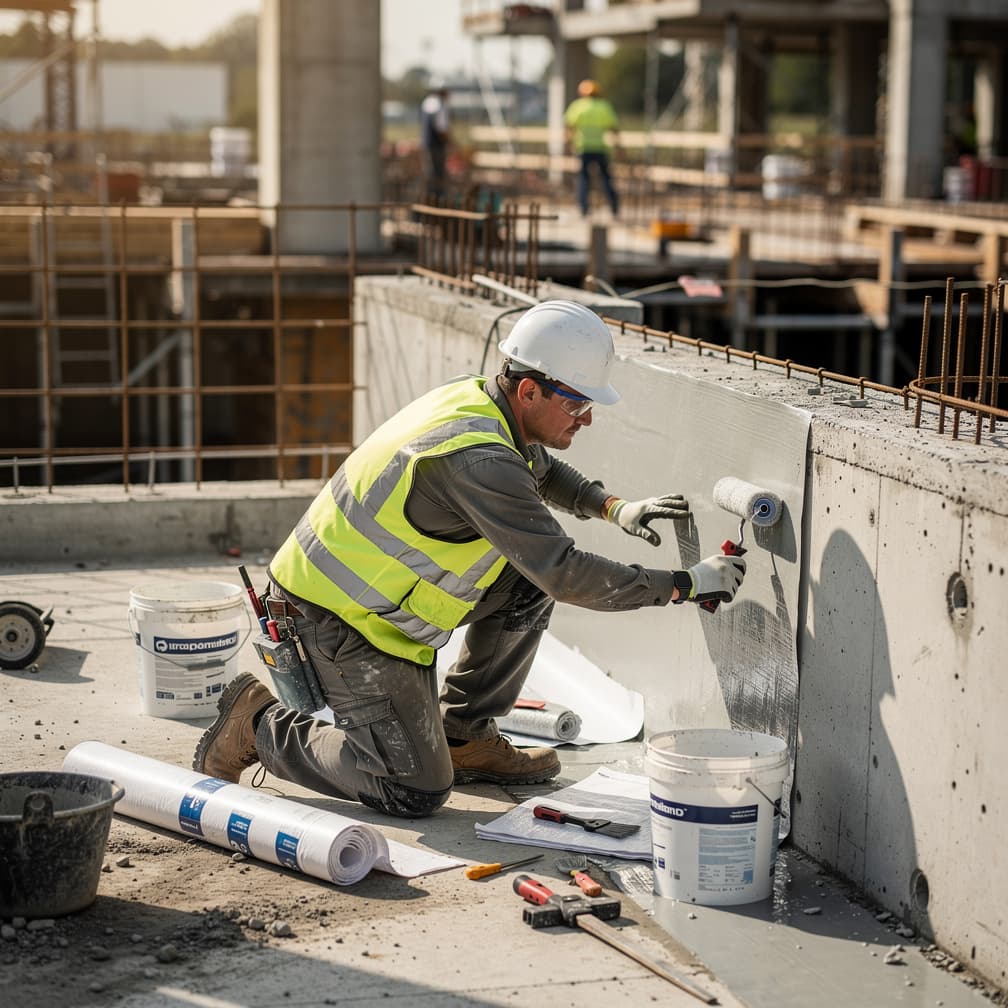

Water that slips past a fresh membrane never stays where you left it. It travels into drywall, subfloor, and whatever the owner stacked against that wall, and the number keeps climbing for weeks after your crew packs up. That gap between a small job and a large loss is what waterproofing contractor insurance in Austin is built around. Most of these start as a callback and turn into a demand letter once the finishes come out. General Liability can help cover damage your work does to someone else's property, while tearing out and redoing your own failed coating usually stays on your books. Knowing which side of that line a loss lands on decides whether you are negotiating with a carrier or writing the check yourself. A contractor in Austin who learns that during a claim has learned it late.
What Makes Austin Different
Competition compresses bids long before it compresses margins, and the policy is where the compression hides. A crowded market of about 41,500 businesses in Travis County produces buyers who shop three prices for everything. Losing on price tempts you to buy thinner limits, which is a bet on a quiet year. The bet has bad odds, because water damage claims scale with the building and never with the fee. A basement in a mixed-use building holds tenants, stock, and mechanical equipment on the other side. Sealing that wall for a modest fee does nothing to shrink what sits behind it. Price the coverage against the exposure you take on, then negotiate the bid on scope instead. Trimming scope is a conversation, while trimming limits is a decision you learn about later.
Local Risk Factors in Austin
Tornado and severe storm activity can flatten staged material, throw debris across an open trench, and hand you a site that looks nothing like the one you left. Nobody schedules that week. Your first exposure is not the storm, it is the crew: an installer clearing wreckage off a foundation in Travis County is doing work he was never trained for, and Workers Compensation is what may respond when a hand meets torn sheet metal. Send people home instead, and hire the cleanup out. Photograph the site in Austin before anyone starts moving things, since an owner who later decides your excavation caused the damage will argue from memory, and you should not have to.
What Coverage Does a Waterproofing Contractor in Austin Need?
General Liability
Water gets past your membrane and into a client's flooring, framing, and stored goods, and the demand that follows is what this line exists for. It could help cover third-party property damage and injuries tied to your work, including a visitor who goes down on a wet garage slab. Tearing out and redoing your own failed installation is work product, and standard forms typically leave it outside.
Example: An injection job seeps overnight, soaking a finished lower level's flooring and the inventory a client stacked against the wall. The repair demand and the lawyer's letter behind it are the kind of claim this line may take on.
Workers Compensation
General contractors and building owners ask for proof of it before your crew reaches the site, and requirements vary by state once you have employees. It may help cover medical care and lost wages after an installer slips on a wet slab, strains a back hauling pails, or reacts badly to fumes in a sealed crawl space. Owners who exclude themselves still have to document that choice.
Example: An installer in an Austin crawl space loses his footing on wet plastic sheeting and tears a shoulder. The medical bills and the weeks he cannot work are what this coverage is meant to address.
Commercial Auto
A personal auto policy typically excludes the trip the moment your van is carrying pails, pumps, and crew between job sites. This is the line that may answer instead, for injuries and property damage after an at-fault accident, and for the vehicle itself where you bought that piece rather than liability alone. Tools inside the van are usually a separate question with a separate answer.
Example: A loaded van rear-ends a sedan on the way to an emergency callback, bending two bumpers and a driver's neck. The claims coming from the other car could land here.
Commercial Umbrella
Limits run out quietly. When one leak reaches several units and the demands arrive together, a primary liability limit can be exhausted before the file closes, and this line sits above the ones you already carry to add height. It generally follows those underlying policies, including the auto line, and it requires minimum limits sitting beneath it.
Example: A membrane failure in a mixed-use building wets two tenants and a mechanical room, and the combined demands run past the primary limit. Coverage stacked above it might pick up the rest.
How Much Does Waterproofing Contractor Insurance Cost in Austin?
Waterproofing Contractor Insurance is a bundle of separate policies, priced separately. The ranges below are typical figures for Austin for each line, except workers compensation, which is rated per $100 of payroll; a quote prices each one against your own operations.
| Coverage | Typical range | What moves your price |
|---|---|---|
| General Liability Insurance | $230 - $675 per month | Industry and risk classification, annual revenue, number of employees |
| Workers Compensation Insurance | $0.75 - $2.74 per $100 of payroll | Employee classification codes, total annual payroll, experience modification rate |
| Commercial Auto Insurance | $280 - $775 per month | Fleet size and vehicle types, driver records and experience, coverage limits and deductibles |
| Commercial Umbrella Insurance | $95 - $300 per month | Umbrella limit requested, limits carried on the underlying policies, loss history on those underlying policies |
Prices shown are general estimates, not guaranteed rates or quotes. Your actual premium will depend on the insurer, coverage selected, business details, location, claims history, and other underwriting factors. Learn about our pricing methodology.
What Are the Insurance Requirements for a Waterproofing Contractor in Austin?
Workers' comp is not mandatory for most private employers here. Texas leaves workers' compensation optional for most private employers. Skipping it leaves injury costs on you, and many clients and general contractors still demand proof of it by contract — check the Texas Department of Insurance's guidance before deciding.
State auto liability minimums apply to business vehicles. Texas's minimum auto liability limits are $30,000/$60,000/$25,000 (bodily injury per person / per accident / property damage). Contracts and lenders often require more than the state floor.
Where to verify licensing and coverage rules. The Texas Department of Insurance publishes consumer guidance and current insurance requirements for Texas businesses. When a contract or lease demands specific wording, the Texas Department of Insurance's guidance is the authoritative place to check.
Get Your Waterproofing Contractor Quote in Austin
Compare rates from multiple carriers. Free quotes, no obligation.
Operating in Austin
- Vehicles running a long radius rate differently than a truck that never leaves one zip code, so describing your real travel across Travis County is what keeps a renewal from being repriced.
- A property manager can withhold building access until your certificate names the right entity, spelled the way the contract spells it. The start date does not move to wait for that document, though your crew does.
- Pumps, core drills, and a generator ride in the van overnight, and a van makes a poor safe. Ask what your policy says about tools taken from a vehicle, since many forms treat that differently than a shop break-in.
- Excavation along a foundation stays open between shifts, and an open trench in somebody's yard is a liability you own every hour it sits there. Backfill it or fence it before you leave, then photograph what you did.
How to Buy: Advice for Austin Owners
Every mile your crew drives is exposure that has nothing to do with waterproofing. A loaded van carrying pails, pumps, and a core drill behaves nothing like a commuter car, and a personal auto policy typically excludes the trip once the vehicle is working. Commercial Auto is the line that may respond, and it prices off vehicles, drivers, and radius. Pull motor vehicle reports on everyone who drives before a carrier does, since one bad record can move the whole account. List the radius honestly if jobs sit across Travis County and beyond, because an understated radius gets repriced at renewal. General Liability and the auto line often come from different carriers, so ask how they coordinate a loss involving both. Check the Texas Department of Insurance's guidance before deciding how to schedule vehicles, then let CPK put participating carriers' numbers beside each other.
FAQ
Waterproofing Contractor Insurance in Austin: FAQ
The certificate itself is often same-day. The endorsement a contract demands is not, and the endorsement is the piece that delays your start. Additional insured wording, waivers of subrogation, and primary and noncontributory language all pass through underwriting first. If an Austin project manager asks for specific language, send it to your carrier the day it lands rather than the week work begins.
That depends on the pollution wording, which varies between forms far more than price does. Many treat a sudden incident differently from gradual exposure, and some restrict coatings and solvents outright. An installer's own exposure in a sealed crawl space is a workers compensation question rather than a liability one. Ask every carrier the same question about sealants, adhesives, and resins, then write the answers down.
A lapse is a hole rather than a pause, and it follows you through every future application, because carriers ask about continuous coverage. Work you finished last year keeps aging while you are uninsured, and a claim on old work generally needs a policy in force when the damage gets discovered. If cash is the reason, ask about payment plans in Texas before cancelling anything.
Most commercial contracts want proof before anyone mobilizes, and the insurance exhibit usually names limits and additional insured wording. A general contractor in Austin can pull your bid if the certificate arrives short of what the exhibit asks for. Get that exhibit early and quote against it, because endorsements take time to add and a start date rarely moves to wait for paperwork.
It reports that a policy existed on the day someone issued it, and little else. A certificate does not grant coverage, add anyone to your policy, or promise the policy is still in force next month. The endorsement behind it does that work. Ask to see the endorsement whenever a contract demands specific wording, since a certificate can be perfectly accurate and still useless to you.
General Liability may respond to the damage the water does to the client's property: flooring, drywall, and whatever an Austin homeowner had stored down there. The cost of tearing out and reinstalling your own membrane is generally treated as your work product and typically excluded. That split catches owners off guard more than any other part of the form, so read the exclusion before you need it.
Sources
- 1.U.S. Census Bureau, County Business Patterns (2022), Travis County(Travis County has about 41,500 business establishments.)
- 2.Texas Department of Insurance(Texas Department of Insurance publishes consumer guidance for insurance buyers.)


