







































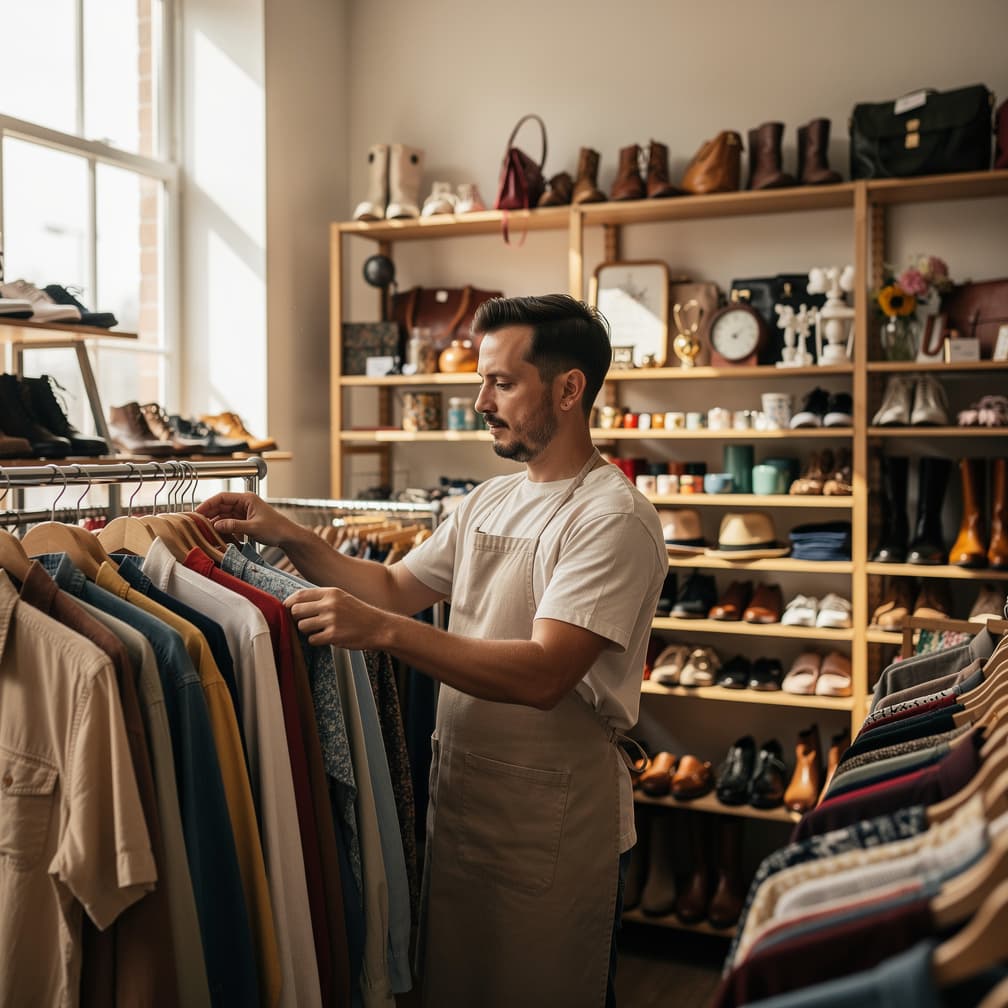

Fire is the loss that ends a secondhand shop rather than bruising it. Overloaded outlets behind a display, a space heater in the back room, cardboard stacked to the ceiling near intake: the fuel load here is nothing like a boutique's. Thrift store insurance in Brownsville has to answer for the building improvements you paid for, the fixtures you bought used, and the inventory that arrived with no purchase invoices. Values on donated stock get argued rather than looked up, so how your policy defines them matters more than the limit printed on the front page, and participating carriers in Texas do not define them the same way. Smoke that never touches a rack can still make a floor unsellable. What follows covers the lines worth carrying and where forms fall short.
What Makes Brownsville Different
Fewer stores in a county means fewer comparable submissions, and underwriters lean harder on your own file. In Cameron County, about 18 thrift stores is a shallow pool of experience for anyone pricing your risk. Shallow pools produce wider quote spreads, so two offers on the same store can differ quite sharply. That spread is opportunity, but only if you actually collect more than one offer before you decide. Owners in thin markets often stop at the first quote because gathering a second one feels like work. The work is an hour, and the difference between offers can outlast several years of premium payments. Ask each participating carrier what documentation they want on donated inventory values before a loss happens. The answers will differ, and those differences tell you more than the monthly price ever does.
Local Risk Factors in Brownsville
Boarding up, hauling stock away from windows, and losing a week of trading is the ordinary cost of a hurricane long before anything breaks. Nobody shops secondhand during an evacuation, and a store built on volume feels a quiet week immediately. Business interruption terms sit inside a property form with their own trigger, and most want physical damage first, which means a closure with an undamaged building may find nothing to answer it. Ask what starts that clock and what stops it. In Cameron County, crews and adjusters work the largest accounts first, so a small store in Brownsville should plan around a wait rather than a promise.
What Coverage Does a Thrift Store in Brownsville Need?
General Liability
Your landlord asks for this one by name, and a center office will ask again before you open the doors. General Liability is aimed at third-party injury and property damage: a customer who slips in an aisle, a shopper struck by falling merchandise, damage you cause to the space you rent. It does not answer for your own employees, and it typically excludes anything done deliberately.
Example: A child tugs a boxed lamp off a top shelf and it catches a shopper's shoulder on the way down. The medical bill and the demand letter that follows are the kind of claim this line is meant to meet.
Commercial Property
Flood is the first thing to know about here, since standard property forms leave it out and price it on its own. What remains is your side of the building: shelving, fixtures, terminals, the improvements you installed, and the donated stock on the floor. Fire, burst pipes, and storm damage are the usual triggers, and the valuation language on inventory without invoices decides what a claim is worth.
Example: A power strip behind a display shorts overnight and smoke reaches every rack in your Brownsville store. The fixtures survive, the clothing does not, and a claim on that stock could turn on the photographs you took.
Business Owners Policy
Buying liability and property apart gives you control; a Business Owners Policy gives you a package that usually costs less. It folds both into one form for a single-location store and often carries business interruption terms inside it. The catch is sublimits: categories like stock may be capped tighter than you would choose, and the package wording is not yours to negotiate.
Example: Your store closes for three weeks after a roof leak soaks the sales floor. The repairs sit on the property side of the package, while the lost trading weeks may fall to the interruption clause and its waiting period.
Workers Compensation
Someone lifts a box of hardback books wrong and cannot work for a month. Workers Compensation is built for your own staff rather than your customers, and it can help with medical treatment and a share of lost wages. It is rated against payroll, so hours at the sorting table drive the price. Whether unpaid help at your intake door counts as staff is a question your state answers, not your policy.
Example: A part-timer pricing furniture drops a drawer front on their foot during an intake rush. The treatment and the days missed afterward are what this coverage is generally intended to handle.
How Much Does Thrift Store Insurance Cost in Brownsville?
Thrift Store Insurance is a bundle of separate policies, priced separately. The ranges below are typical figures for Brownsville for each line, except workers compensation, which is rated per $100 of payroll; a quote prices each one against your own operations.
| Coverage | Typical range | What moves your price |
|---|---|---|
| General Liability Insurance | $60 - $170 per month | Industry and risk classification, annual revenue, number of employees |
| Commercial Property Insurance | $90 - $320 per month | Building value and construction type, roof age and condition, fire protection class |
| Business Owners Policy Insurance | $130 - $360 per month | Annual revenue and industry class, building and contents values, square footage and building age |
| Workers Compensation Insurance | $0.75 - $2.74 per $100 of payroll | Employee classification codes, total annual payroll, experience modification rate |
Prices shown are general estimates, not guaranteed rates or quotes. Your actual premium will depend on the insurer, coverage selected, business details, location, claims history, and other underwriting factors.
What Are the Insurance Requirements for a Thrift Store in Brownsville?
Workers' comp is not mandatory for most private employers here. Texas leaves workers' compensation optional for most private employers. Skipping it leaves injury costs on you, and many clients and landlords still demand proof of it by contract — check the Texas Department of Insurance's guidance before deciding.
Flood damage is typically excluded from standard policies. Standard commercial property and builders-risk-type policies typically exclude flood. Given Brownsville's coastal flood exposure, a separate flood policy is worth pricing; FEMA's National Flood Insurance Program is the usual starting point.
Where to verify licensing and coverage rules. The Texas Department of Insurance publishes consumer guidance and current insurance requirements for Texas businesses. When a contract or lease demands specific wording, the Texas Department of Insurance's guidance is the authoritative place to check.
Get Your Thrift Store Quote in Brownsville
Compare rates from multiple carriers. Free quotes, no obligation.
Operating in Brownsville
- Fitting rooms are unsupervised space the public occupies alone, which raises theft and injury questions together, and underwriters in Texas ask about them by name.
- Incident pads get filled in for falls that look serious and skipped for the ones that look fine. It is usually the second kind that resurfaces a year later as a demand letter.
- Rent keeps running while a floor is closed for repairs, and the weeks between the loss and the reopening are the part of a claim owners underestimate most.
- A center office in Brownsville can hold your opening until the certificate matches its template exactly, and mismatched templates get returned rather than corrected on your behalf.
How to Buy: Advice for Brownsville Owners
Read what a policy leaves out before you admire what it includes. Flood sits outside standard Commercial Property in Texas and gets priced on its own, so a stockroom below grade deserves its own conversation. Wear, mildew, and gradual damage to donated textiles are maintenance rather than sudden events, and no form treats them otherwise. Theft carries conditions attached, often about how the building is secured after hours. Shoplifting from an open sales floor is usually a different animal from burglary, and that distinction is written into the form. Ask each quote to point you at its exclusions page instead of its brochure. General Liability has its own list, starting with anything done on purpose. CPK lets a Brownsville owner set those exclusion pages next to each other and compare participating carriers on what they actually decline.
FAQ
Thrift Store Insurance in Brownsville: FAQ
Not automatically. Property coverage is usually tied to a described location, so stock held somewhere your policy never names can sit outside it. If you rent extra storage in Brownsville, tell the participating carrier and ask whether that address needs to be scheduled. The answer takes one call and heads off a denial that would otherwise arrive at the worst possible time.
Every time the policy changes, and again at each renewal. Certificates go stale quietly: a property manager moves on, your entity name shifts, a limit gets adjusted, and nobody notices until a claim or an audit exposes the mismatch. Keep a list of every party holding one. Check the Texas Department of Insurance's guidance before deciding what a certificate actually proves.
Usually, yes. A commercial lease routinely names an insurance requirement, and a property manager can hold the keys until a certificate lands on file with the right legal name and the right limit on it. Getting a corrected certificate reissued takes days you did not budget for, so read the insurance exhibit before signing rather than during move-in week.
Payroll, floor size, the limits you choose, and your claims history do most of the work. A store with staff sorting and lifting donated goods carries a workers compensation exposure a one-person shop does not, and that single difference moves the total further than address does. Two participating carriers can read the same store differently, which is why comparing beats guessing. Current ranges for each line sit in the table further down.
General Liability is the line usually pointed at a customer injury on your sales floor, and it may help with medical costs and a resulting lawsuit, subject to your limit and your deductible. It does not answer for your own employees getting hurt; that sits with workers compensation instead. Keep an incident pad at the register, because the claim tends to arrive months after the fall.
It can, though the valuation language decides everything that follows. Stock without invoices gets argued rather than looked up, so how a form defines the value of your inventory is the clause worth reading long before a loss. Photograph a full floor, keep intake logs, and write down how you price categories. Documentation is the only evidence an adjuster has to work from.
Sources
- 1.U.S. Census Bureau, County Business Patterns (2022), Cameron County(Cameron County has about 18 businesses in this trade's category (NAICS group 453310).)
- 2.Texas Department of Insurance(Texas Department of Insurance publishes consumer guidance for insurance buyers.)
- 3.FEMA / FloodSmart(Flood coverage is typically purchased separately; FEMA administers the National Flood Insurance Program.)


